
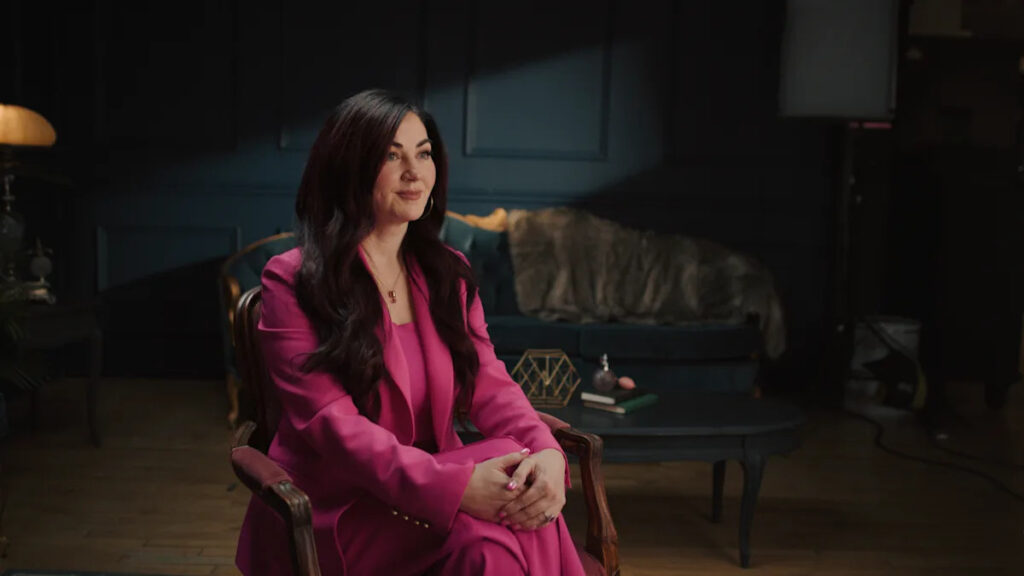
A constant lie that women have been conditioned to believe is that we don’t deserve control of our own bodies, but one entrepreneur, Cindy Eckert, backed by doctors who are experts in women’s sexual health, is pushing against that. In the new documentary The Pink Pill: Sex, Drugs & Who Has Control (on Paramount+), Canadian director Aisling Chin-Yee chronicles the political, scientific and cultural battle to get Addyi, the first treatment of hypoactive sexual desire disorder (HSDD), approved by the United States Food and Drug Administration (FDA) and Health Canada for both premenopausal and postmenopausal women.
The systemic barriers and bias presented in the documentary are enraging. At Eckert’s first meeting with the FDA, she was told, “What do we need a bunch of horny women running around for?” It’s clear just how much libido and women’s sexual health have been missing in the broader medical community for decades.
“I am non-negotiable on this. I am a biological being, and actually, to respect my rights and to respect treating me for things that are going wrong biologically, we have to start there,” Eckert told Yahoo Canada in Toronto. “We can move from there into discussing things like social issues, emotional issues, all of those things. But if we meet women only as emotional beings, we will forever give ourselves permission to dismiss them. We will pat them on the shoulder. We will tell them to go have a bubble bath and just relax. And that is so disrespectful on the basis of our biology.”
“I think that’s actually a piece of this rights discussion as well, is that these are biological issues that deserve biological solutions. … Language choice matters. You see it over and over. … It was the ‘so called,’ the ‘controversial,’ the ‘risky,’ and says who?”
By the time Eckert began her work to get Addyi (named after Kate Walsh’s character Addison Montgomery from Grey’s Anatomy and its spinoff Private Practice) approved by the FDA, she had been through the process previously, but was shocked to discover that, while the FDA defines success, and Addyi scientifically met the criteria, the approval was initially rejected.
While Eckert believed that “science cures bias,” that wasn’t the case when it came to a product for women’s sexual pleasure. The speed at which Viagra was approved in 1998, and the side effects that come with that drug, and other regularly prescribed medications, versus Addyi, reinforces that. As it’s stated in the documentary, women aren’t considered valued members of society, and orgasm is something that’s only seen as a right for men.
There was even a moment when the drug was specifically deemed too dangerous because there was a concern that, with drowsiness as a possible side effect, women would take it at night and would fall asleep while driving their kids to school in the morning.
“I was in the meeting when that actually was said with a brilliant expert in sexual medicine. And you know that moment where somebody feels like they’re going to leap out of their chair? I had the moment, … where my arm went out to keep her in her chair,” Eckert said.
“You think, are you looking at what I’m looking at? I’m just looking at data that is telling you an answer, and you’re resisting that answer because of your own bias. When that happens, I think then you have a choice to make. Are you going to give up and let them just apply their subjective point of view to it, or are you going to stick to the facts? And I really do have a belief that truth prevails, because facts refuse to move, and you’ve just got to keep coming with the facts, keep being in an evidence-based conversation, demand that of others. And ultimately, it’s funny how the tune changes.”
Women being ‘mocked’ for their sex life
One of the most powerful moments in The Pink Pill is when we see women who have HSDD speaking at a FDA hearing in 2015 about how their lives have been impacted, sharing personal details about their lives that largely happen behind closed doors. But their stories weren’t seen as bravery across the board; in many cases, they were mocked, including a woman who said they should “read erotica, find a different partner, get a better shower head.”
Eckert revealed that she never “allowed” herself to look back at those moments, because it was “so painful” to remember how these women were treated when they were being so vulnerable.
“It was really hard on me to sit in those rooms and watch these remarkably brave women who are the heroes of this story be mocked publicly,” Eckert said. “But it’s been almost therapeutic to do it, to go back and allow myself to relive that, to appreciate how much has been done and accomplished, and also just the validation, I think, that culture is now reflecting back to us that they’re ready to have this conversation.”
Interestingly, due to the footage available, we mostly see these women from behind as they speak to the panel in the documentary, which actually adds to the emotional impact.
“We knew that we needed those hearings to be present in the film. It couldn’t just be a sit-down interview. We needed to see, needed to be there in the room when it was all going down,” Chin-Yee shared. “And there are limited amounts of cameras that are in those places. So it took a lot to try to track down the material from something that happened 10 years ago.”
“But then that did become such a great device … to be able to protect their identity. They did say their names, but … to just focus on their stories. And there was such a vulnerability about seeing somebody standing in front of this imposing group of experts to talk about the intimate details of their sex life. So I feel like it really puts you into their shoes and their perspective by standing just behind them.”
But Chin-Yee also revealed that it wasn’t the easiest process to find women who were open to talking about their sexual health and sex life on camera.
“It was not easy, because … that’s confidential information. You can’t just ask a doctor to tell you who’s on what medication,” Chin-Yee said. “We did a search for people who had either taken the drug or other types of drugs. Some of the doctors, like Dr. [Rachel] Rubin in the film, she put it in her newsletter, and she’s so trusted amongst her patients that we had a lot of response from patients in her office. But we had people turn us down, because it’s not something that they want discussed on television. It’s not something that they even discussed with their friends a lot of the time.”
“So the ones that were open and willing to do it were willing to do it because they knew that when they took this drug, it had a deep impact on their relationship. … You’d see them glow and light up, and you’d see their interactions with their partners, and they would be playful in all these ways, because it really reignites that connection and that spark of love.”
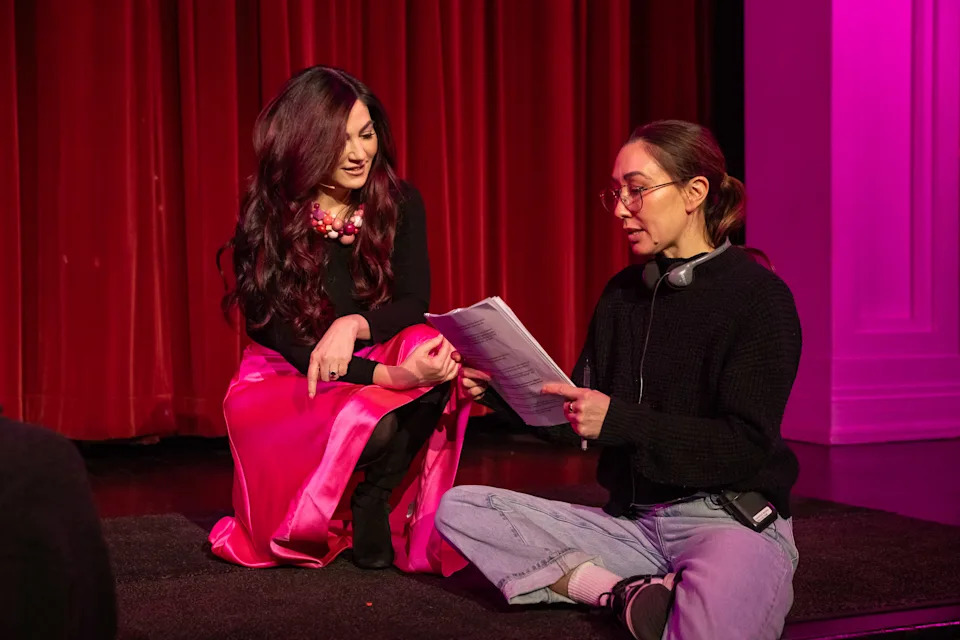
The Pink Pill: Sex, Drugs & Who Has Control on Paramount+
Conversations about pleasure are ‘transcendent of the bedroom’
The Pink Pill is coming out at a time when women’s rights and the rights of women to have bodily autonomy are under severe threat, which gynecologists describe in the documentary as a “bleak” time.
But as Eckert stresses, integrating conversations about sexual pleasure into these discussions can be a catalyst to talk about women’s rights more broadly.
“Here’s my thesis: you can’t go through a sexual revolution and not take it all the way to pleasure. And once you take it through to pleasure, you sort of give up some of that tug of war that happens on who has the right to make these decisions along the way,” Eckert said. “Own your pleasure in life, whether it’s in the bedroom, it’s in your relationship, it’s in your work. I think pleasure is an interesting conversation that is transcendent of the bedroom, but that ownership and that right to it is something that I think breaks the door open on a lot of the other things that we, as society, aggressively try to control.”
You can’t go through a sexual revolution and not take it all the way to pleasure.
But the documentary ends with a hopeful message that this is a fight that can result in real change.
“I feel like it has to be hopeful, because there is so much that we can do and demand. And political systems, they fluctuate. Cultural systems, they change all the time. And I think at this moment, it’s not a very positive time for women’s health and marginalized people, and so making sure that we’re having that conversation in tandem about talking about this issue of having agency over your body, that these things are all tied together,” Chin-Yee said. “But there is a groundswell of people and informed physicians and patients, and so many people that are not going to accept the status quo of right now, and that only moves forward if we are hopeful.”
“And so it’s laying bare the situation that we’re currently living in, but also that if we don’t rise up and do something, if we don’t inform ourselves in all the different ways possible, then we’re just not going to move the needle. And we have to do that in a real way, right now. … I saw it with those physicians, they work incredibly long hours, but they’re so … passionate about making sure that everyone gets equitable health care.”
With any drug, there’s also a question about making it accessible to patients, which is what Eckert says she wakes up every day thinking about. And with that comes the work to ensure that physicians have a comprehensive understanding of women’s sexual health, and the drug, to even present Addyi as an option to their patients. But Eckert says that element has been “very difficult.”
“They’re humans too, with bias, and they consumed headlines that were leading them in a direction. So it’s been quite a challenge,” Eckert said.
“But I may be most proud of our work that we’ve done with the medical community, not only these spectacular doctors that you see in the film, but that we’ve really changed that now, at least in the U.S., you can’t even become a board certified physician without answering a question about this issue for women, and that’s how change happens. We start to create education among the medical establishment.”
While it’s easy to be inspired by Eckert and her determination, she identifies that having just one woman come up to her, saying that her work has impacted her life, keeps Eckert motivated.
“One woman walking up to me after I’ve given a talk, or has seen this film, and saying, ‘This changed it for me.’ It might be that she pushed back the next time in the doctor’s office. It might be the light bulb moment that she had her own bias toward this discussion. That’s all I need, just that one,” Eckert said. “And I’m so grateful.”
“Maybe the best privilege of all of this is that women have so openly shared those stories with me, or sent me a DM on social media, or sent me a random email … That’s where you find the strength, I think, is in community.”