
Get the latest entertainment news, reviews and star-studded interviews with our Independent Culture emailGet the latest entertainment news with our free Culture newsletter Get the latest entertainment news with our free Culture newsletter
In Liza Minnelli’s new memoir, several paragraphs into a section in which she accuses Lady Gaga of “sabotaging” her dignity at the Oscars in 2022, the Cabaret star says something that rings profoundly true. “I ask you to please remember how important it’s always been that sympathy never be part of my art and work,” she writes. “I worked years, decades, to send that message.”
Throughout her book and throughout the 80 years of public life that preceded its publication, Minnelli has expressed an abject disinterest in courting sympathy. Perhaps she knows she is ill-placed for it, as a brash, attention-stealing daughter of show business – “the original nepo baby”, by her own admission. This is, after all, the woman who in 1973 staged a press conference to announce her love affair with Peter Sellers – abruptly ending her engagement to another man (Desi Arnaz Jr), while still married to her first husband. Elsewhere in the book, she recalls the time she and her second husband, Jack Haley Jr, ran into Martin Scorsese on the street. Scorsese and Minnelli were having an affair at the time, and the filmmaker began chastising her for cheating on him with Mikhail Baryshnikov, while her husband watched on. This is to say: Minnelli was messy. Even by celebrity standards.
Thankfully, her memoir, titled Kids, Wait Till You Hear This!, doesn’t shy away from the mess, or skimp on the Liza-isms. Often, it’s hard to see daylight between Minnelli and Sally Bowles, Cabaret’s self-absorbed, name-dropping, bon mot-ing anti-heroine. She can be full of bluster – I lost count of the number of times Minnelli suggests her work was responsible for influencing this or that modern phenomenon, whether that’s MTV music videos or hip-hop. Other times she’s eager to air grievances. She describes Gene Hackman, whom she worked with on 1975’s Lucky Lady, as “downright rude”. She complains about Stephen Sondheim’s conduct when a licensing dispute led to the delay of her album Live at Carnegie Hall (“I never forgot what he put me through”). She says she was snubbed by Scorsese when she approached him at the 2014 Oscars. “Unfortunately, he turned away from me. Very sad,” Minelli writes, in one of several instances where her tone takes on a faint air of Twitter-era Donald Trump. Elsewhere, she punctuates an anecdote about her fourth husband, David Gest, with one word: “Loser!”
open image in gallery
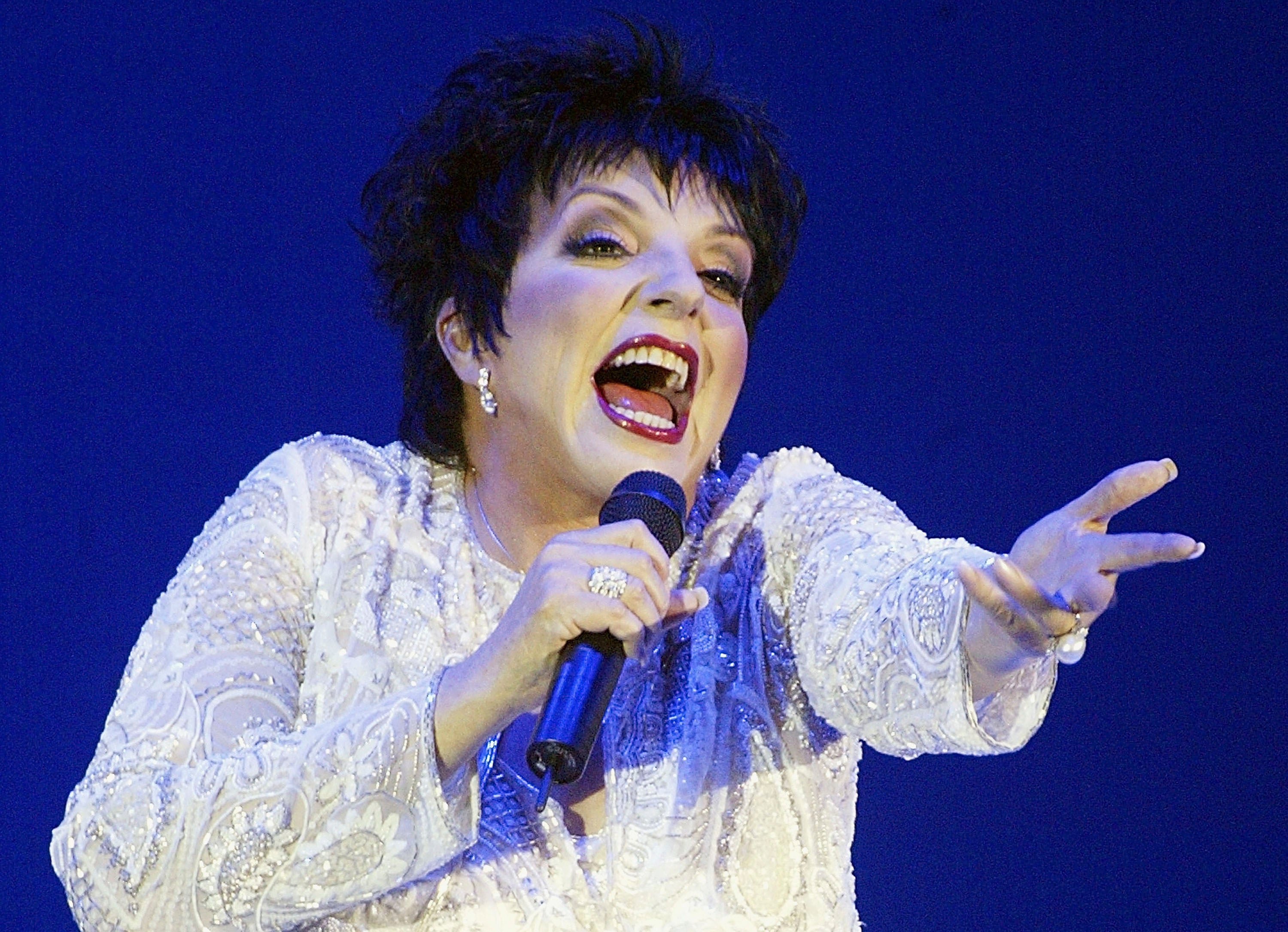
Liza Minnelli, performing in 2003 (Getty)
It would have been easy for Minnelli to use this book instead to reframe herself as an object of sympathy – and it’s fascinating just how stubbornly she resists this. When she discusses the disappointments of her own career, it’s with an air of unmournful matter-of-factness. (Speaking about the failure of the 1977 musical New York, New York, she bluntly notes: Marty [Scorsese] and Bobby [De Niro] went on to have amazing film careers. I did not.”)
Yet there are innumerable ways in which Minnelli has been a victim – of circumstance, of biology, of Hollywood, and of specific, malignant men. She was raised by an adoring father (Meet Me in St Louis director Vincent Minnelli) and, in Judy Garland, a mercurial mother struggling with serious mental illness and addiction issues. (In the book, Minnelli does a good job of demystifying the woman she calls “Mama”, without indulging too many sordid details.) She struggled with substance abuse of her own for most of her life. In one particularly painful section, she recalls passing out on a Manhattan pavement, “almost comatose”, in 2003, at the age of 57. She has now been sober for more than a decade.
Sellers, the chameleonic star of Dr Strangelove and The Pink Panther, emerges from the book badly (“he would scold me, taunt me, bully me in the voices of many different characters”), though he’s painted with more nuance than Gest, the man who finally convinced Minnelli to never marry again. Gest, a film producer known for working with Michael Jackson, was, writes Minelli, a “treacherous thief” who conned her into a marriage and used it for financial gain. “What in God’s name was I thinking? I clearly wasn’t sober when I married this clown,” she writes. The marriage, she says, eventually took a violent turn, exacerbated in part by her own substance use at the time: “We were fighting physically, like animals […] I throw a mean punch, baby.”
open image in gallery
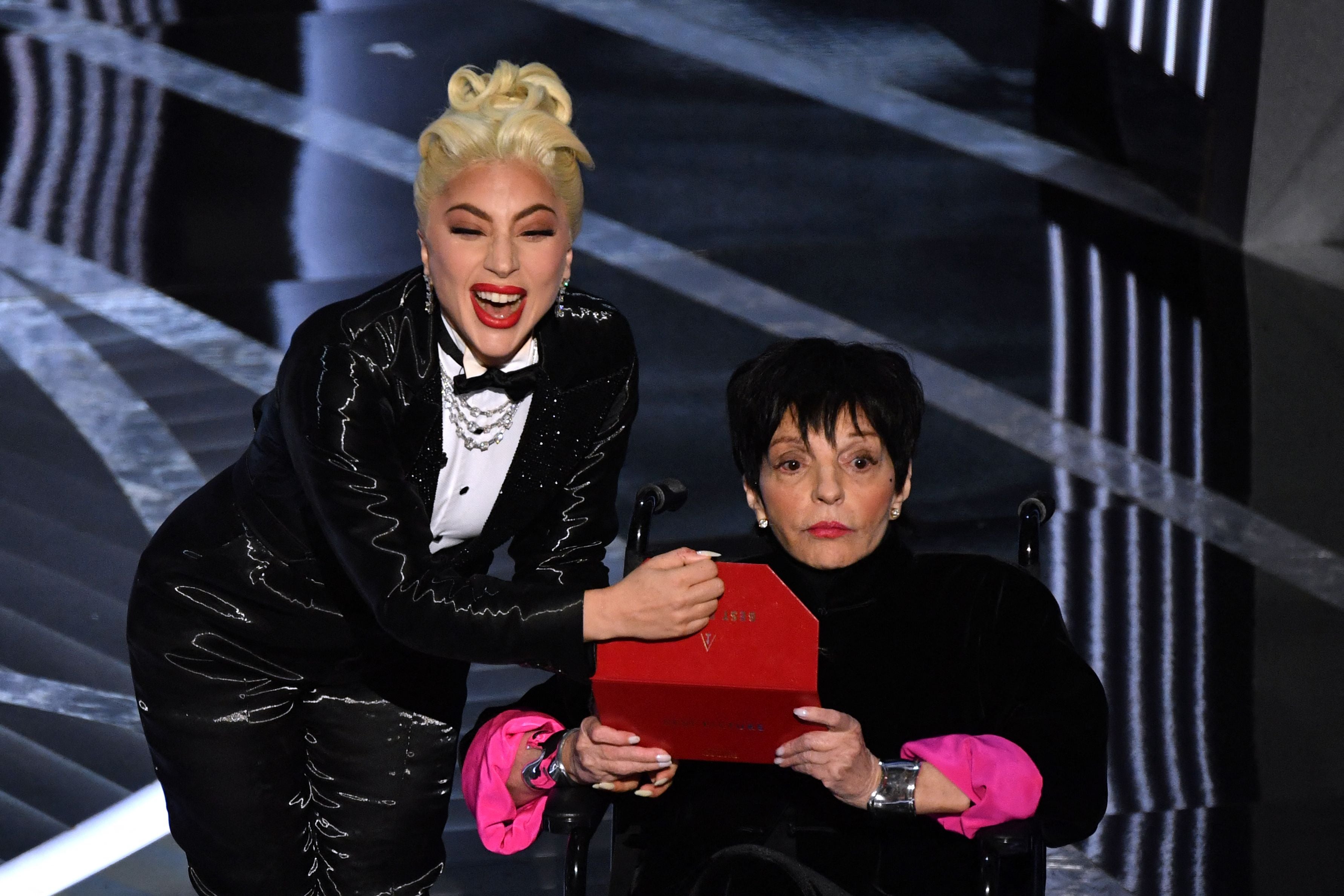
Lady Gaga and Minnelli at the 2022 Oscars (AFP/Getty)
It is near the end of the book that we reach the Oscars incident. In brief: Minnelli was due to present an award onstage with Lady Gaga, in recognition of the 50th anniversary of Cabaret. She claims that Gaga insisted she present while sitting in a wheelchair; Minnelli – and, she claims, her own doctor – deemed it unnecessary. Ultimately forced to comply or not feature, Minnelli appeared frail and uncomfortable onstage, as she struggled to read the teleprompter from her seat, leaving Gaga to “play the kindhearted hero for all the world to see”. It sounds hyperbolic when she says that the moment “cast a shadow over my present career that I’m still fighting to overcome”, but there’s a kernel of truth in it. Perhaps Gaga really had, as she writes, “badly damaged” her lifelong message: that she is not an object of sympathy.
For the first time, Minnelli became someone fretted over and feared for. Online chatter and tabloid headlines expressed concern for her health and wellbeing. Throughout the rest of her memoir, she reminds us that this is never who she was. Minnelli has always been someone defined by her sharp edges – her willingness to be loud, to play the diva, to live a life of turbulent, hedonistic mess. There’s a strange humanity in that, as much as you would find in a woe-is-me celebrity sob story. Ultimately, Minnelli is someone deserving of compassion and, yes, sympathy – as much as she is deserving of judgement. But I don’t think she’s accepting either.
‘Kids, Wait Till You Hear This!’ is out now, published by Hodder & Stoughton