
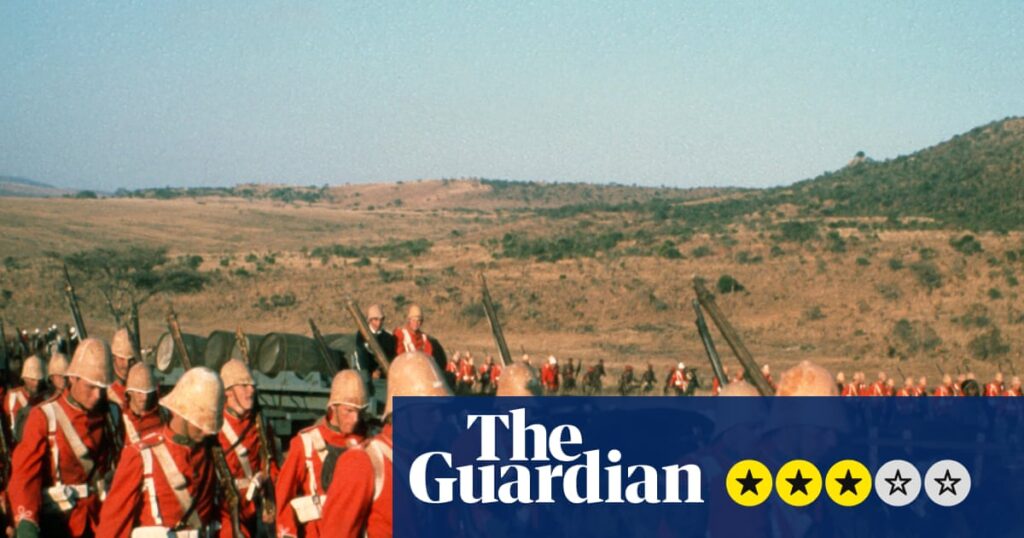
This 1979 film is effectively the stolid prequel to the massively successful Zulu from 15 years earlier, the stiff-upper-lip bloodbath that showcased vivid performances from Stanley Baker and Michael Caine. That was about the battle of Rorke’s Drift between the British army and the Zulus; Zulu Dawn is about the disastrous rout that preceded it: the battle of Isandlwana. The combat scenes are impressively staged, but almost the entire film seems like a second-unit director’s sequence, the battle itself is one very extended, classy B-roll with none of the internal drama, confrontation and light and shade that had made Zulu so potent.
Zulu Dawn was received with hardly more than a shrug at the time, though it inspired a bizarre urban myth that there was a scene showing a British soldier gruesomely killed with three spears to the neck, one after the other – supposedly greeted in cinemas all over the country with facetious shouts of “One hundred and eighty!” (Sadly there is no such scene.)
At the outset, Zulu Dawn has a great deal of very shrewd and well-managed scene-setting showing us an arrogant (though not incompetent) officer class, and the promise of highly-flavoured performances from a starry ensemble cast. Peter O’Toole is haughty Lt Gen Lord Chelmsford; Burt Lancaster is experienced and disillusioned Col Durnford, Denholm Elliott – his face naturally set in that characteristic grimace of suppressed fear – is Col Pulleine; Nigel Davenport is toughly honourable Col Hamilton-Brown who refuses to eat at Chelmsford’s lavish table until his men have been fed; Simon Ward is the stylish adventurer Lt Vereker who finally “saves” the British colours from falling into enemy hands; and John Mills is colonial administrator Sir Henry Bartle Frere. On the Zulu side, the South African actor Simon Sabela plays King Cetshwayo (Sabela had been a footsoldier in Zulu).
There is a very good scene at the beginning, showing a garden party at the garrison, simpering ladies and moustachioed officers and gentlemen, utterly unconcerned about the way their leaders are provoking a needless war with the Zulus to expand their territory and annihilate a perceived threat. “This will be the final solution to the Zulu problem,” says one. Anna Calder-Marshall has a poignant role as a bishop’s daughter for whom Durnford has a gallant tendresse.
And then … well, after that Zulu Dawn grinds capably and watchably into action, although it is possible to spend almost the entire film waiting for something specific to happen, some crucial foregrounded drama in which the top-ranking individuals reveal something about themselves. It doesn’t really happen. The British are defeated at Isandlwana because, despite superior firepower from modern weapons, they are overwhelmed by sheer numbers, and ammunition is finite. As one panicky soldier says: “Bullets run out – and those spears don’t.” The British lost, but in terms of the contest between interest and boredom, it’s a draw.
Zulu Dawn is in UK cinemas from 13 March.