
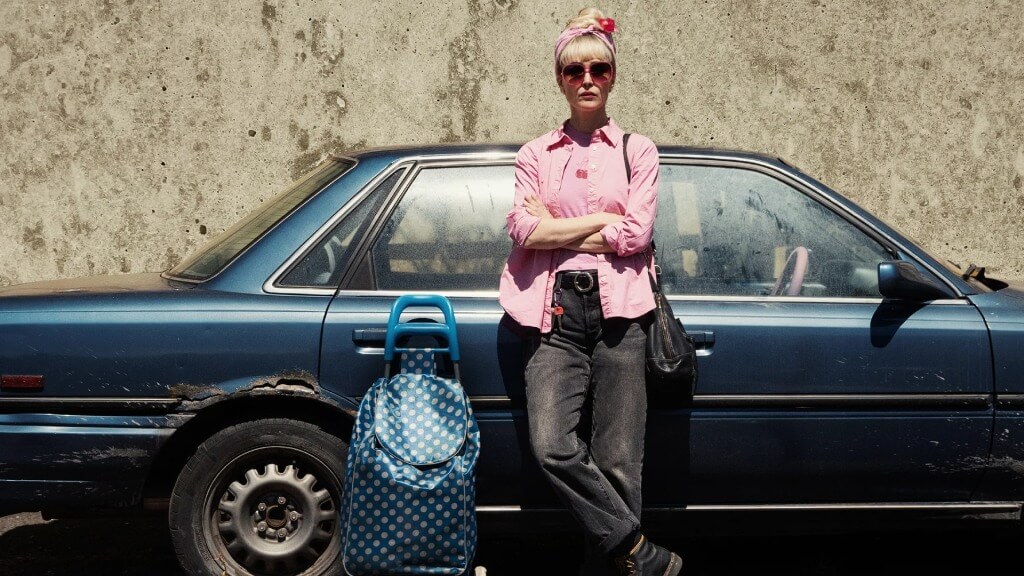
At the peak of her rage Amanda (Rose Byrne), bikes headfirst into a chain-link fence. On the other side is her car, which has been her home for the last several months. The gate, like the petty bureaucracy of Tow, is composed of a series of interlocking, unrelenting parts. It’s the perfect narrative expression of Amanda’s predicament and that of so many Americans who face persistent barriers to basic human necessities. If only the rest of director Stephanie Laing’s film were as articulate in its images.
Tow is based on the true story of Amanda Ogle, a woman who challenged the drudging Seattle civic system to get the car she was living out of back after it was stolen and towed. Forced to either pay the fines or sleep on the street, Amanda—without transportation and struggling to keep a job—is thrust into tenuous social care networks. She survives on support from her new shelter friends (Octavia Spencer, Ariana DeBose, Demi Lovato) and the smarts of a well-intentioned lawyer (Dominic Sessa). Through her court trials and tribulations, Amanda not only tries to reclaim her car but also reclaim her sense of self, and repair her relationship with her daughter (Elsie Fisher), which has grown strained thanks to Amanda’s secret shame.
Tow observes Amanda’s routine, from finding 24-hour spaces to wash up and get something to eat, to the nightly wait in line at a shelter, to rigging her parked car for security when she’s turned away from a bed. Initially, there’s a sense of ubiquity, of watching what so many people have to do every day in America. Amanda feels like one of many. But as soon as the plot begins, Jonathan Keasey and Brant Boivin’s script loses sight of the overarching structural inequities and gets towed away by the melodrama.
Laing sets our expectations for this shallow perspective when the film opens with infotext about the millions of people who live out of their cars in the United States every night, quickly appending that this is one woman’s story. But Tow is not a social-realist movie. It is not a social-justice movie. It’s not even a fight-the-system drama. It’s a use-the-system dramedy about one woman, to the detriment of the other characters, the audience, and the film’s relevance. Her network of friends is a chain of tissue-paper dolls. Spencer is only around when Amanda needs a dose of “common sense,” while DeBose and Lovato are on screen just long enough to drop tragic character details about drug addiction and heartache; because we barely know these people, it all comes out as unearned, theater-kid hot air.
But if Tow must follow one woman, it’s good that Rose Byrne plays her. While not as close up as Mary Bronstein’s If I Had Legs I’d Kick You, Liang’s film provides still moments to watch as Byrne legibly shifts and swallows her feelings, confronting setback after setback. Tow works best when Amanda feels like Erin Broke-ovich, filled with anger and determination to win through study and tenacity. Her early success is moving because we’ve seen her earn it, but for much of the film, she’s told to “be patient,” that “it takes time,” which is difficult to make captivating in a film.
But Liang’s structure does a disservice to its own tension. Because Tow makes lurching leaps in time, the film is more like a series of events than a story. The accruing time doesn’t compound Amanda’s frustrations or reinforce how untenable it is for her to wait as the civic gears slowly grind. It’s just to get us to the next event. Liang hopes the audience will infer emotions from the circumstances alone, because she doesn’t provide strong connections to the material or the legal realities of poverty.
Amanda walks through a web of jurisdictional nightmares and paperwork, yet we learn very little about it or about its specifics in Seattle. The system is the film’s villain and savior, yet it remains wholly opaque. The “bad guy” in this story isn’t the towing company or the city of Seattle, it’s the systemic criminalization of homelessness with its cascading networks of policing and fines. Including a lone grumpy defense lawyer does not constitute a structural critique. In fact, it absolves the unjust laws that kept Amanda and her friends on the street by suggesting that the biggest problem is one self-interested asshole (Corbin Bernsen, playing the tow company’s lawyer) who can’t be bothered to follow the rules.
But Amanda is not put into her predicament because of an aberration. It’s because of a system that’s working. Her small wins come through loopholes. But Tow seems to believe the opposite. “The good lord helps those who help themselves,” Spencer’s Bible-thumper quotes to Amanda when she first arrives at the shelter, and it seems Tow has taken this to heart. By making the film about one woman (kind of) helping herself, with only vague connections to the world and the people around her, the filmmakers give up any worthwhile point about poverty, injustice, or community.
Director: Stephanie Laing
Writer: Jonathan Keasey, Brant Boivin
Starring: Rose Byrne, Dominic Sessa, Demi Lovato, Ariana DeBose, Octavia Spencer, Simon Rex, Elsie Fisher
Release Date: March 20, 2026