
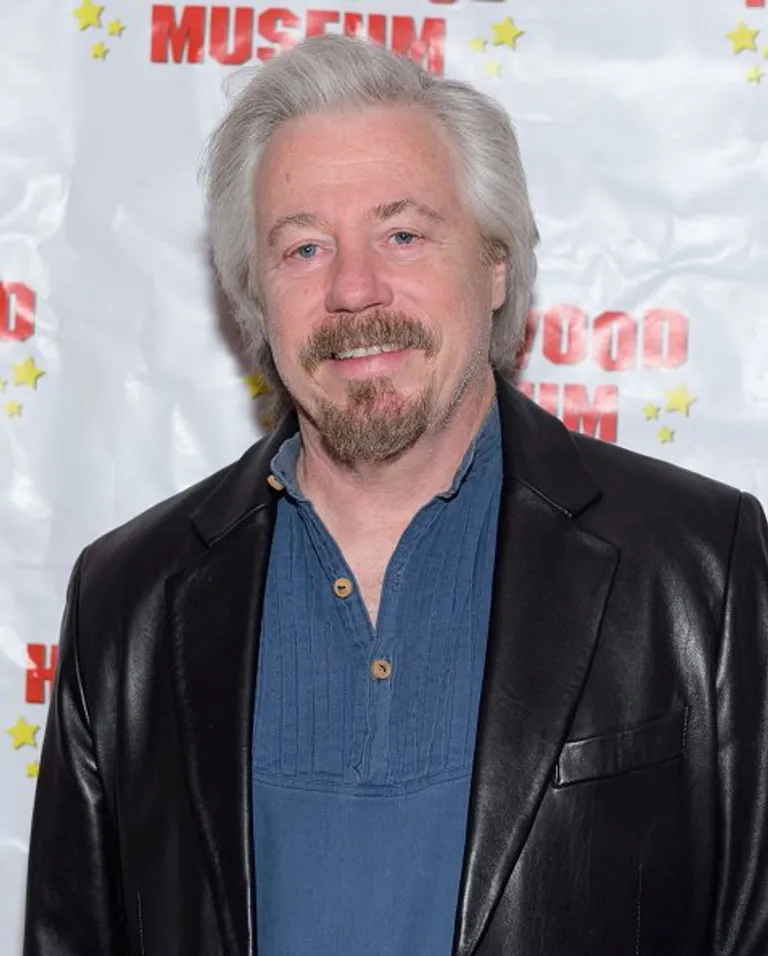
The most instructive career in this hub does not belong to the actress who won back-to-back Emmys, the soap star who outlasted his genre, or the CBS procedural lead who built eight million dollars in front of twenty million invisible viewers. It belongs to the man who simply stopped.
Stanley Livingston net worth is estimated at $2 million. Modest by Hollywood standards. Exceptional by child actor standards. Built almost entirely by someone who understood, at twenty-one, that the version of himself the industry wanted to keep selling was not a version worth selling.
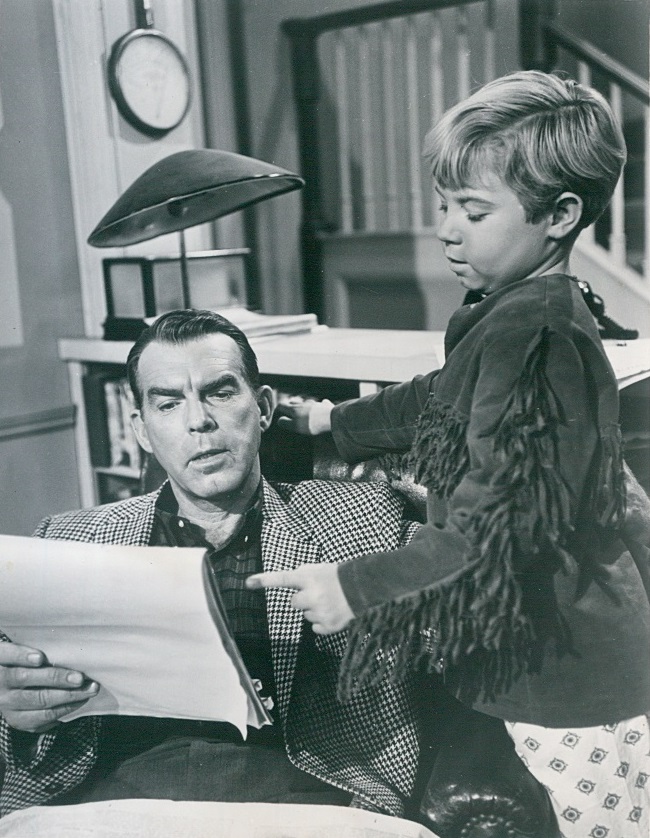 Fred_MacMurray_and_Stanley_Livingston_-_My_Three_Sons,_Season_1,_Episode_19_(Organization_Woman)_1961
There is a specific kind of courage required to walk away from something that is still working. Most people do not have it. Livingston did. The story of what he walked away from, and what he built in its place, is one of the cleaner parables in American entertainment — and nobody has written it down yet.
The Before: California, Fred MacMurray, and Twelve Seasons of American Childhood
Growing Up on the Set of an Institution
Stanley Livingston was born on November 24, 1950, in Los Angeles, California. His brother Barry was also an actor. The family was embedded in the industry from the start — in the practical, working way of Los Angeles families where the studios are the largest local employer and acting is a trade rather than a dream. Their father pushed both boys toward the business. Stanley was the one who landed the job that defined a decade.
In 1960, at nine years old, Livingston was cast as Ernie Douglas — later renamed Chip — in My Three Sons on ABC, later CBS. Fred MacMurray played Steve Douglas, the widowed aerospace engineer raising three boys. The show was built on the architecture of early 1960s American domestic television: warm, stable, reassuringly competent fathers, children who learned lessons without serious consequence, a world in which problems resolved within twenty-two minutes.
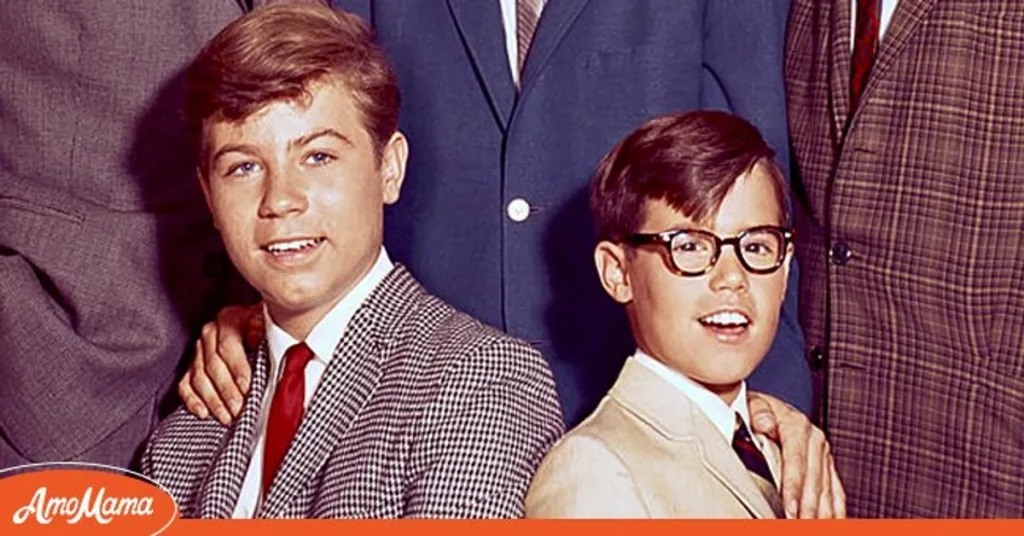 Brothers Stanley Livingston and Barry Livingston on My Three Sons
Notably, Livingston grew up on that set in the literal sense. He was nine when the show began. He was twenty-one when it ended. Twelve years. Three hundred and eighty episodes. The camera recorded his childhood in the literal sense. Voice changes, physical transformation, the full accumulation of experience between nine and twenty-one — all of it broadcast to millions of families who felt, by the final season, that they had watched him grow up in their living room. Because they had.
The Pivot Moment: The Show Ends and the Choice Appears
My Three Sons concluded in 1972. Livingston was twenty-one years old with twelve seasons of network television on his résumé and a face that twenty million people recognized as Chip Douglas. The industry expected a transition: guest roles, perhaps a lead in a new series, the standard post-sitcom trajectory that child actors of his era were supposed to follow.
What He Saw That Most People Missed
He did not follow it. The reason requires understanding what the post-My Three Sons landscape actually looked like from inside it. That show had run from 1960 to 1972 — twelve years during which American television had transformed entirely. By 1972, the comfortable, consequence-free family drama that made Chip Douglas a household name was not coming back in any form that would employ its adult version.
Furthermore, the child actor landscape of the early 1970s was beginning to produce the cautionary narratives that would define it for the next thirty years. That mechanism was already visible: a child becomes famous for a specific quality — youth, innocence, a particular uncomplicated charm — and then ages out of it. The industry, and the audience, continue expecting the original version. The gap between what the performer has become and what everyone wants them to stay produces the specific damage that fills the celebrity recovery memoir genre.
Livingston saw the mechanism. He chose not to enter it.
Read the full Legacy TV and Film Deep Cuts hub — and where Livingston’s exit fits the larger story →
The Climb: Behind the Camera and Off the Radar
After My Three Sons, Livingston took some acting work — guest roles, small film appearances, the kind of credits that keep a name technically active without rebuilding a career. By the late 1970s, he had shifted his focus behind the camera. By the late 1970s, he had shifted his focus behind the camera — production, directing, the operational infrastructure of the industry rather than its visible surface. No announcements accompanied this transition. No interviews explained it. He simply moved.
The Discipline of Not Explaining Yourself
This is the detail Gay Talese would have noticed: the public silence. In an industry structured entirely around the management of public narrative, Livingston’s decision to stop managing his was itself a form of statement. Most fading stars generate explanations — the talk show appearance, the memoir, the documentary rehabilitation, the reality television slot. Each explanation is also an audition for continued relevance. Livingston declined the audition. He had seen twelve years of what relevance costs and decided the price was not worth paying indefinitely.
His brother Barry continued acting, appearing in projects including work alongside Stanley in occasional projects. Their trajectories diverged cleanly from the same starting point — same family, same industry, same foundational credit. Barry stayed visible. Stanley went quiet. Neither outcome is obviously wrong. Together, they form the kind of natural experiment that reveals how much of celebrity survival is temperament rather than circumstance.
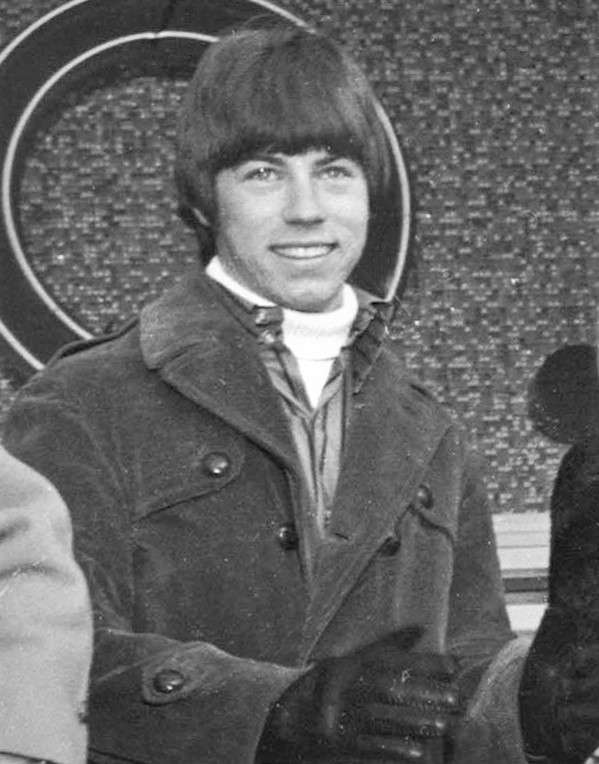 Stanley_Livingston_at_Lindale_Mall,_1969
The Hamptons Chapter: The Ghost at the Table
What the East End Knows About Quiet Exits
The Hamptons social circuit has its own version of the Stanley Livingston story. It runs through the estates and the dinner tables and the charity events where someone mentions, carefully and without elaboration, that they sold the company three years ago and have been doing other things since. The room nods. Nobody asks what the other things are. The exit itself communicates the success — you only walk away cleanly from something that was worth walking away from.
Livingston’s career reads the same way to the Social Life Magazine reader. He did not exit because the options dried up. He exited because he understood, at an age when most people are still figuring out what they want, that staying meant becoming a prisoner of a character he had finished playing. That is a sophisticated calculation. It is also the calculation the Hamptons understands better than most places. The difference between the person who keeps working the room because they need to and the person who already has what they came for.
Explore Hamptons luxury real estate and the celebrity estates of the East End →
What He Built: The Accounting on Quiet Terms
Stanley Livingston net worth is estimated at $2 million. That number arrives via a career that ended its most visible phase fifty years ago and was never rebuilt for public consumption. It reflects residuals from one of the longest-running sitcoms in network television history, some ongoing production work, and the accumulated returns of a life managed without the overhead that celebrity maintenance typically requires.
The Child Actor Comparison That Makes the Number Look Different
Context sharpens the figure considerably. The child actor cohort of Livingston’s era became household names between 1955 and 1975. Many produced outcomes ranging from bankruptcy to addiction to the specific kind of public deterioration that becomes a tabloid franchise. Gary Coleman. Diff’rent Strokes, broadly. The Brady Bunch cast’s well-documented struggles. Danny Bonaduce. Secondary players from The Partridge Family.
Against that baseline, $2 million and a quiet life is not a modest outcome. It is a remarkable one. Livingston avoided every mechanism that converts childhood fame into adult damage. No manager who needed the income stream to continue. No identity built entirely on audience recognition. Rather than crumbling under the silence that follows the last camera, he built something inside it. He tolerated the silence. He built something in it. The number reflects that.
Explore all celebrity net worth profiles and origin stories at Social Life Magazine →
Where Are They Now: The Door, Still Closed
Stanley Livingston is seventy-four years old. He maintains a low public profile by any contemporary standard — no significant social media presence, no recent interview cycle, no nostalgia circuit appearances beyond occasional fan convention appearances that suggest engagement without requiring performance. He has spoken, in limited contexts, about his years on My Three Sons with warmth and without the complicated ambivalence that characterizes many child actors’ relationships to their foundational work.
The Hemingway Ending This Story Earns
Ernest Hemingway believed that courage was grace under pressure. The entertainment industry applies pressure in one direction only: stay visible, stay relevant, keep trading on whatever the audience originally bought. Grace, in that context, means knowing when to stop trading.
Livingston stopped at twenty-one. He has not resumed. The ghost economy runs on people who agree to be haunted — who keep showing up at the door of their former fame, knocking, waiting for the version of themselves that lived there to answer. Some wait for decades. Some wait forever.
Livingston closed the door. Not dramatically. Without a press release or a memoir or a documentary about closing it. He simply stopped knocking, built a life in the quiet, and left the door closed. Stanley Livingston net worth is $2 million. The accounting behind it is worth more than that.
For the Social Life Magazine reader who watched Chip Douglas on a Wednesday night in 1967 and never thought to look up who played him: the man behind the character made the smartest exit in that era of television. He just did not tell anyone.
The Hamptons dining guide: where the East End’s most discerning visitors eat →
Related Reading:
Legacy TV and Film Stars: The Deep Cuts That Actually Mattered
Jean Smart Net Worth: The $12M Career Nobody Saw Coming
Where This Story Lives Now
There is a version of the cultural conversation that only covers the people who stayed. You already know it. And then there is the version that understands a clean exit — made young, made deliberately, made without requiring an audience for the decision — as the more interesting case study. Social Life Magazine has been running that version for twenty-three years. If your brand belongs in that conversation, let’s talk about a feature.
Every week, 82,000 readers open our newsletter because they trust us to find the angle the algorithm missed. Hamptons house. Family office. Discretionary budget. Attention span for something that actually goes somewhere. If you want to be in their inbox, join the list — or get your brand inside it.
The real meetings at Polo Hamptons happen between the chukkers. The right two people end up at the same tent — no agenda, suddenly one. That’s not an accident. That’s what we build. Sponsorships for 2026 are being confirmed now. The people you want access to are already on the field.
Twenty-three summers. Five issues per season. Twenty-five thousand copies from Westhampton to Montauk, through the boutiques, restaurants, and hotel lobbies where the Hamptons actually happens. If you want your name printed in something people keep, the print edition is Further Lane — and it goes places digital doesn’t reach.
This magazine runs on people who believe cultural memory is worth funding. If you’ve read this far, you’re probably one of them. A $5 contribution keeps independent luxury publishing alive in a media landscape that keeps trying to replace it with content.