
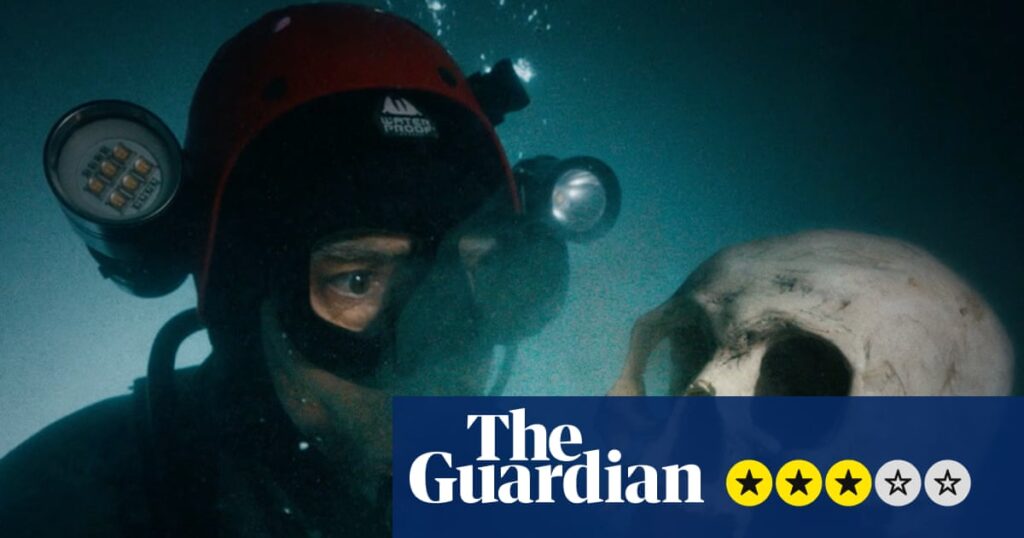
There are some arresting questions and potent images in Rob Petit’s ruminative essay-documentary Underland, based on Robert Macfarlane’s bestselling book of the same name about the spaces under the Earth’s surface and what they tell us – or withhold from us – about human existence and the Anthropocene.
Mexican archaeologist Fátima Tec Pool descends into a cenote, a freshwater sinkhole, on the Yucatan peninsula, the entry point to a mysterious subterranean zone; these were revered by the Maya people as Xibalba, the underworld, and once upon a time explored by them using just firelight. Meanwhile, theoretical physicist Mariangela Lisanti studies dark matter in a special ultra-clean facility constructed miles below the Earth’s surface in Canada, and urban explorer Bradley Garrett roams the scary and dark storm-drain tunnels below Las Vegas and discovers evidence that people live there; poor people driven underground.
These experiences are interspersed by Sandra Hüller reading portentous and borderline-silly prose poetry about the “nether” in a faintly Americanised accent; perhaps the images should have been allowed to speak for themselves. The film raises intriguing, if disparate, ideas and perhaps fails to acknowledge the fundamental difference between natural underground spaces and those that are human-made. Caves like the ones in Yucatan exist in the vast reaches of deep time – but not places like the abandoned cold war bunkers where we see dusty newspapers from 1978. The most disquieting scenes, for me, are those showing Lisanti’s work searching for dark matter, and acknowledging, with hardly a tremor of concern, that all this work miles below the Earth’s crust may not yield anything in her lifetime. Perhaps Lisanti herself is succumbing to deep time.
Underland is in UK and Irish cinemas from 27 March.