
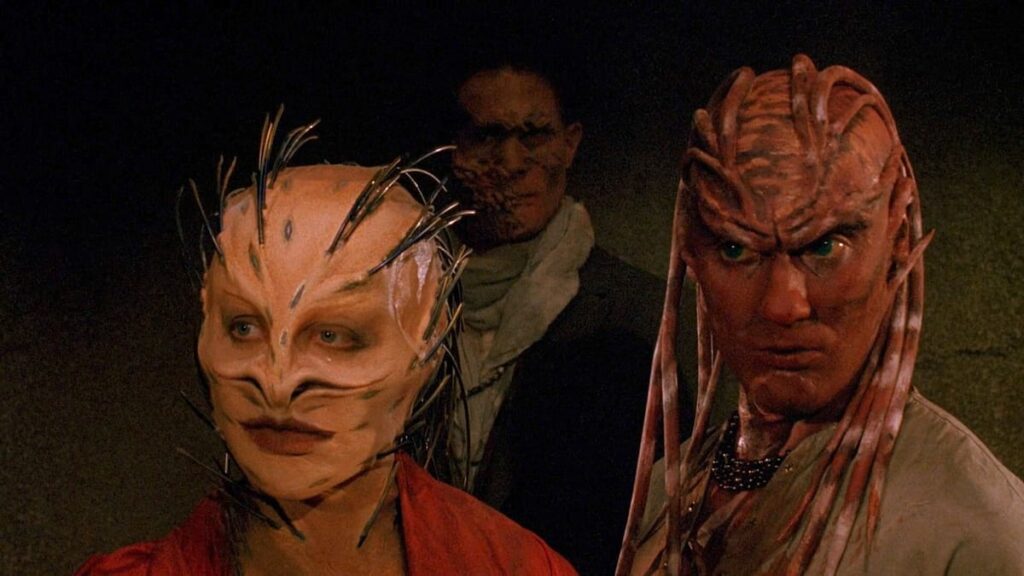
Clive Barker’s Nightbreed lived two lives, first as a tragedy then as a miracle. An ambitious adaptation of Barker’s novella Cabal, the film was meddled with against his will before its release. What was released was, unlike Hellraiser, not the film Barker wanted and was panned by critics. But as time went on, knowledge of the far more ambitious movie it could have been spread, and an extended cut known as the Cabal Cut was assembled using VHS workprints. In 2014, a restored director’s cut was recreated from the restored parts of the film, uncovered in a random warehouse in the middle of America.
That restored director’s cut of Nightbreed is a work of art – an avant garde camp masterpiece about grotesque, intentional living at the margins of society. The monsters of Barker’s Midian are strange, beautiful, bizarre and horrifying. Their lives are their own, and they stand as a grotesque proxy for every person who does not fit into what society deems normal. Like Toshio Matsumoto’s Funeral Parade of Roses, to watch it is to be shocked that anyone even nominally let this be made. If we are to playfully enshrine a Woke 2 canon of movies – of films that gesture towards a more just, interesting, and fun future – Nightbreed is firmly in that canon.
Background on Barker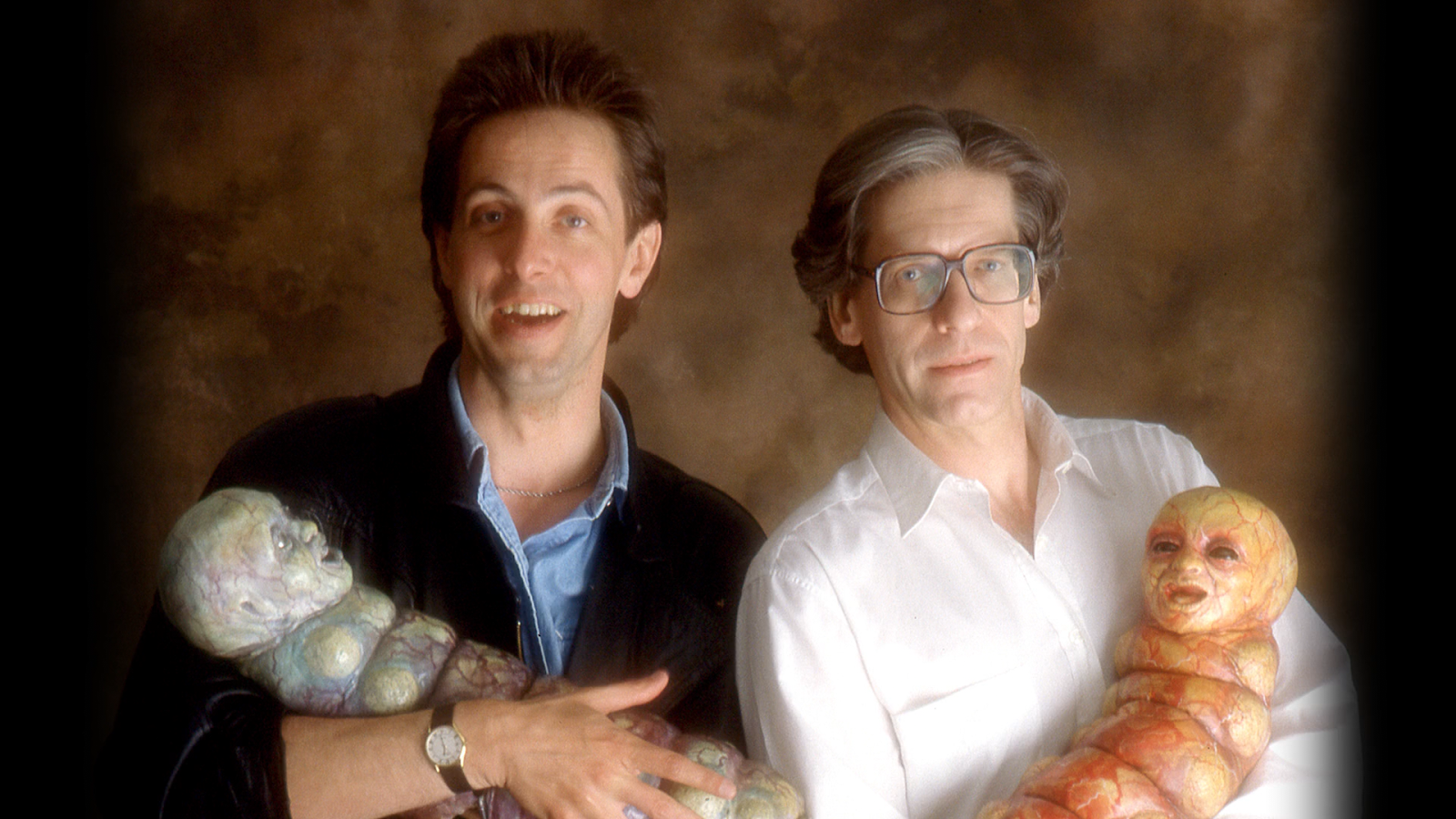 Clive Barker with David Cronenberg in a promotional image for Nightbreed. Credit: Shout Factory“I must Create a System, or be enslav’d by another Man’s” – William Blake, a quote dear to Barker.
Clive Barker has been unapologetically out as gay since he was a teenager, a fact that is evident in his works. But Barker lived many lives before becoming a pulp author and filmmaker. Aside from stints as a hustler, Barker was in experimental theater with Doug Bradley (the actor who would go on to play Pinhead), the two having a fringe theater group known as The Dog Company. That spirit of avant garde theater is unmistakable when you read his prose or see the movies he went on to make. Like Japanese polyglot filmmaker/dramatist Shūji Terayama, many of his theatrical regulars would become staples in his films later.
Experimental theater doesn’t pay the bills, and eventually Barker would strike it big writing horror. But even during his career, Barker would have to fight against a deeply homophobic publishing industry that forced him to sanitize his works. “I’m a gay man who made creations of which my family did not approve,” Barker told the Telegraph in 2020. “Creations in drawing form and writing form that were not looked upon kindly by my father, or my mother. And then when I got into publishing books I found there was a prejudice. I was told, especially with ‘In the Hills, the Cities,’ ‘do not publish this – if you publish this you’ll destroy everything you have’. That was simply not true.”
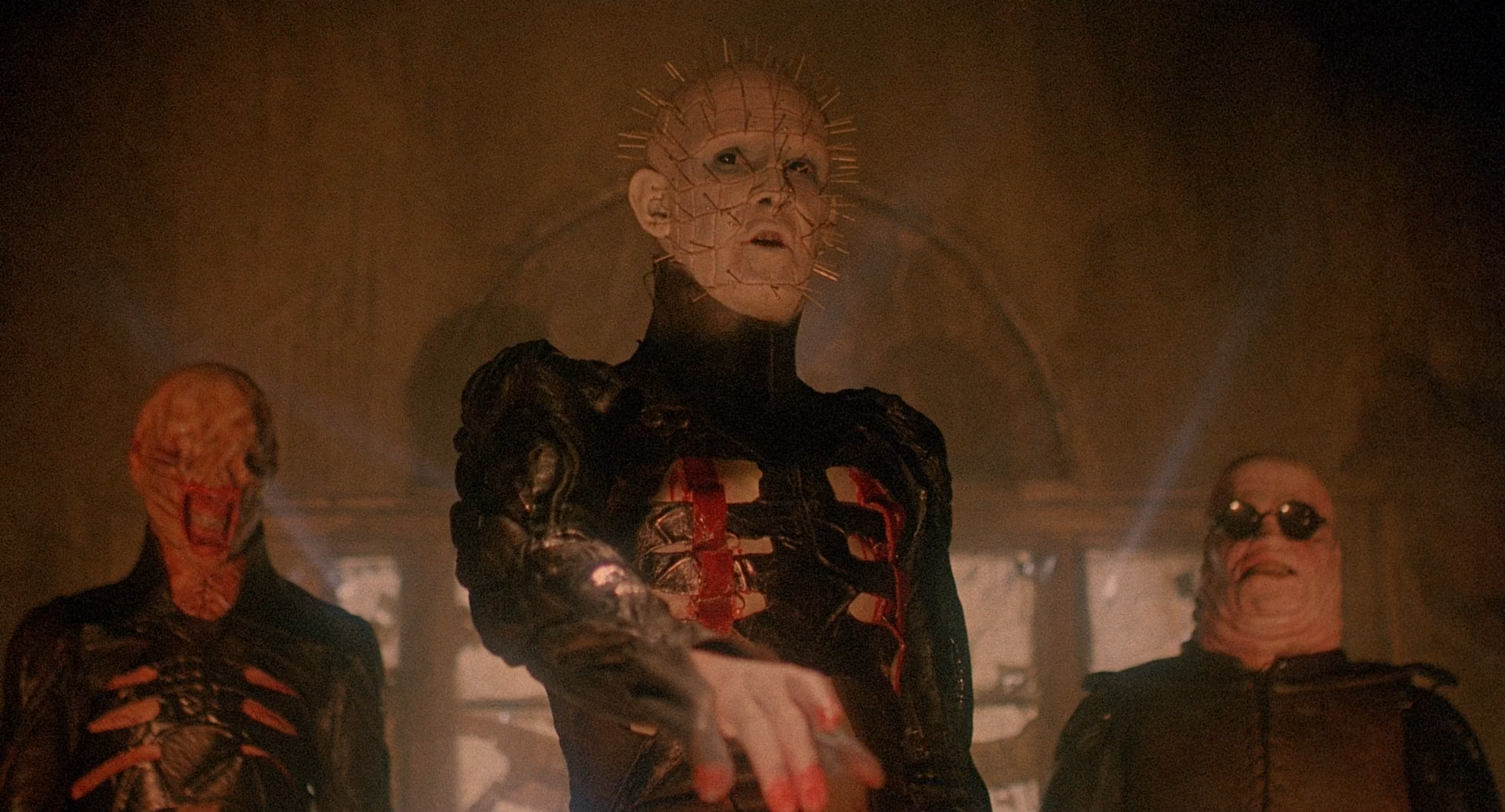 Left to right: Nicholas Vince, Doug Bradley and Simon Bamford in Hellraiser. All three appear in Nightbreed as the moon faced Kinski, the sagely Dirk Lylesberg, and the foolish Ohnaka respectively. Credit: Entertainment Film Distributors
Though a few of his works would go on to be adapted to film (none of which he was satisfied with), his turn in the director’s chair would eventually come with the adaptation of his novella The Hellbound Heart, which would eventually become the film Hellraiser. The Cenobites, the central supernatural creatures in both the novella and film, are extradimensional beings of pleasure and pain that torture those who summon them, “angels to some, demons to others.” The Cenobites only come to those who summon them. For them, consent is key.
Barker has been explicit about Hellraiser’s roots being deep in the gay S&M scene, citing a gay club in the Meatpacking district called Cellblock 28 as his point of entry into that world. In addition, Barker would end up meeting a member of the experimental gay band Coil at Forbidden Planet in London. Eventually the members of the band would bring him into their home, showing Barker their stack of PFIQ, an extreme underground body modification publication, that would serve as inspiration for the final film. Coil was briefly attached to do the soundtrack for the film, but that version remains incomplete, never making it to a final cut.
 You watch Hellbound: Hellraiser II and read Berserk and you’re like “ohhhhh” Credit: New World Pictures
Made on a shoestring budget, Hellraiser became a hit, spawning eleven films in total and injecting Barker further into the mainstream. That Barker’s first film was not only loyal to his original vision but something he felt in total control over is something felt in its enduring cultural legacy as a work of art. Barker stepped back from the directing role with Hellbound: Hellraiser II, a process which exhausted the first-time filmmaker. But when he was allowed to direct a film a second time, he found that he was not afforded the same kinds of liberties.
On Nightbreed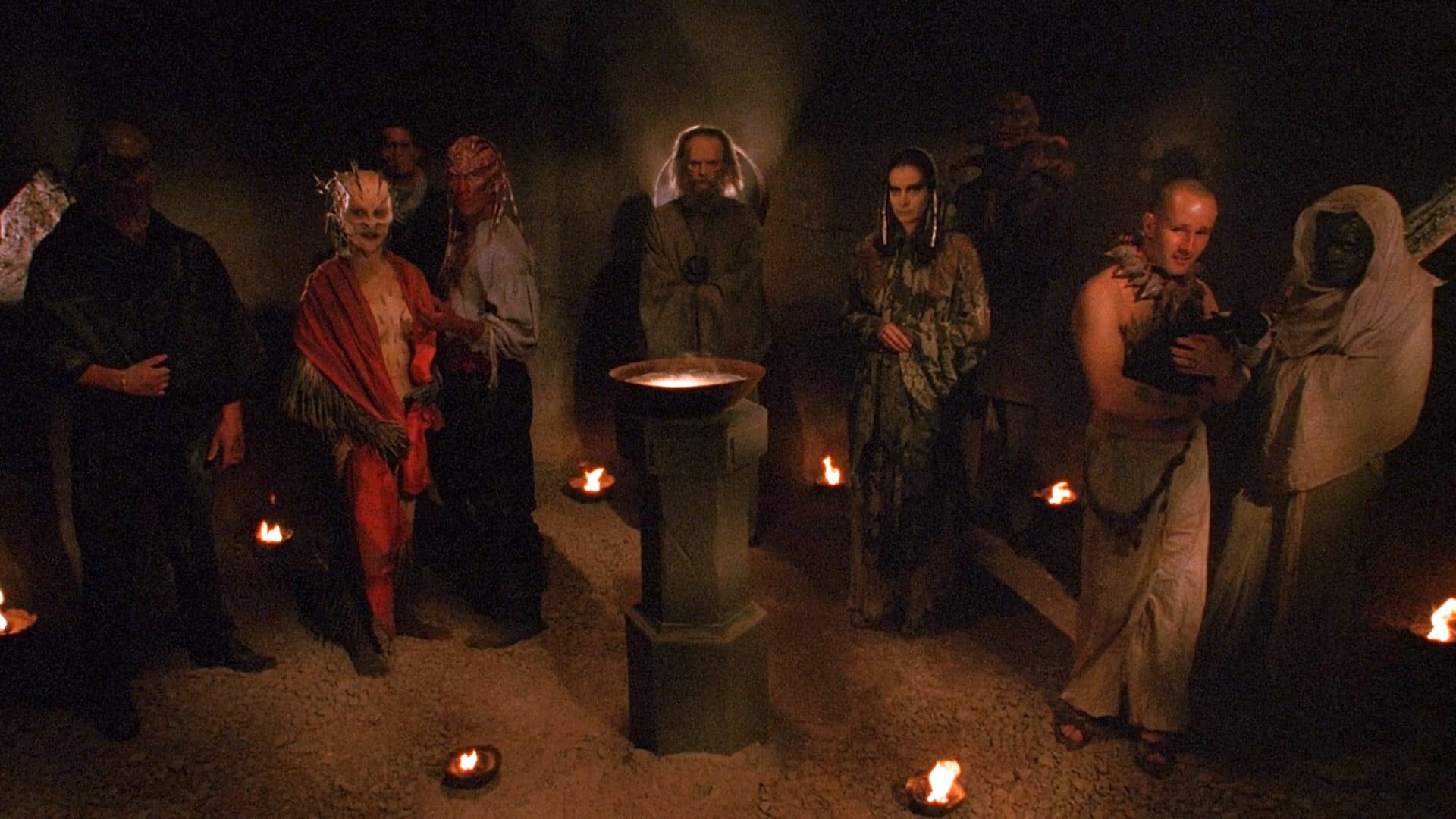 The gang’s all here. Credit: Scream Factory
Both Nightbreed and the novella it is based on, Cabal, tell the story of Boone, a working class Calgary lug under the care of a calm and controlled psychologist named Decker. Boone has been experiencing visions of an otherworldly place, dreams of grotesques in a fantastical world. Eventually Decker confronts him with disturbing news, gaslighting Boone into thinking he is responsible for a series of grizzly murders. In a panic, Boone flees into the woods of Alberta, finding himself drawn towards the world of his visions – a mysterious city of monsters known as Midian inhabited by creatures known as Nightbreed. Boone is rejected by them at first, but then pursued by both his girlfriend and the authorities. He is murdered in cold blood by the police, only to be revived as one of the Nightbreed.
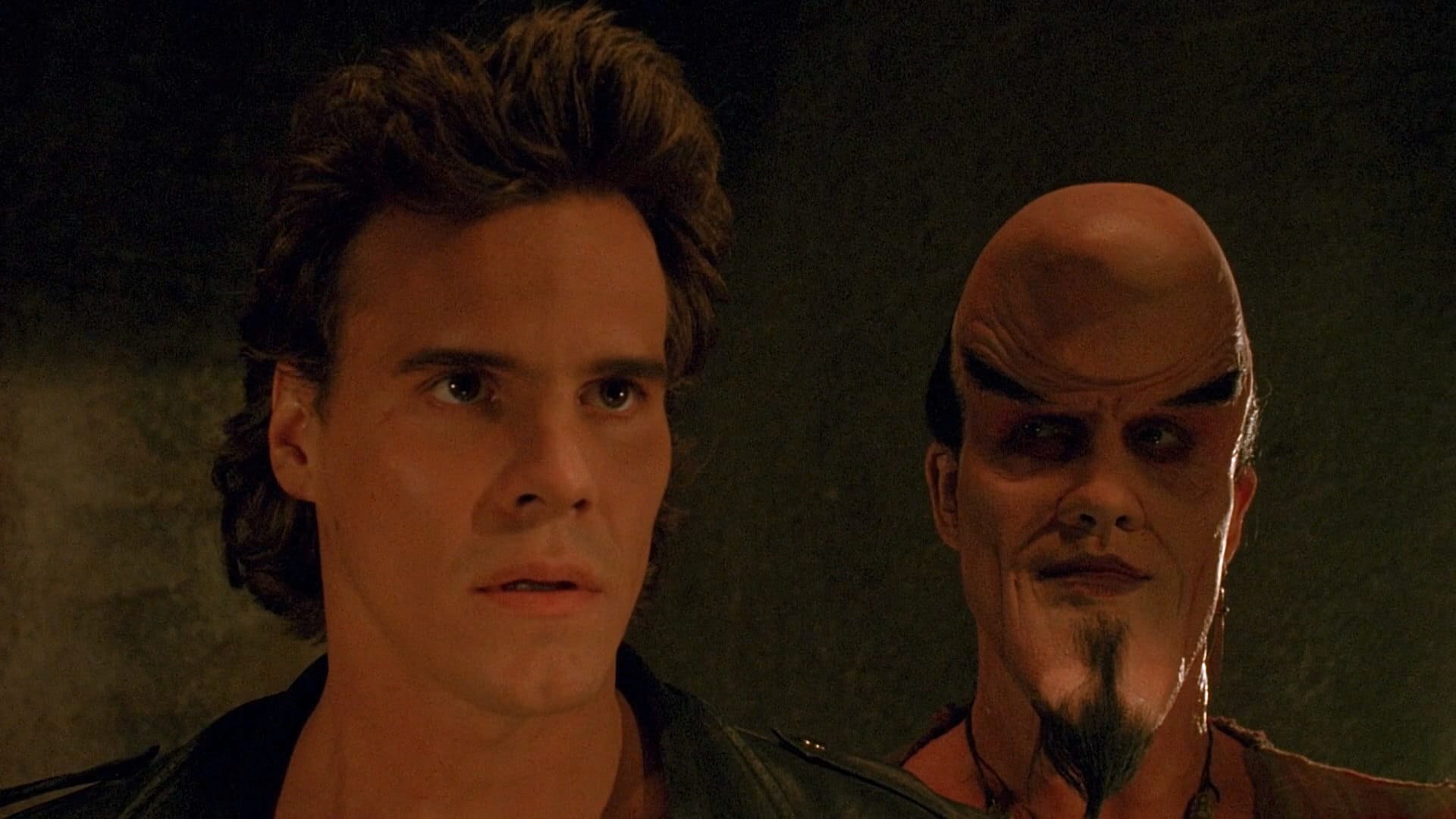 Boone, the Tom Of Finland-esque every-man and Kinski, the fun moon guy. Credit: Scream Factory
Nightbreed, at least as it was intended, is a lurid and fascinating piece of anti-establishment fiction. Boone’s doctor Decker, played wonderfully in the film by director David Cronenberg, is revealed early on to be the true identity of the cold-blooded murderer Dollface – ritualistically inflicting violence on people in a horrifying mask while presenting a cool and professional demeanor of authority to straight society. Throughout the film, Decker not only abuses his authority to drug and mislead his patients into taking the fall for his crimes, he repeatedly uses the full strength of the state to do it. During the standoff, he assures Boone that he believes him, before shouting “he’s got a gun!” to signal the police to destroy him.
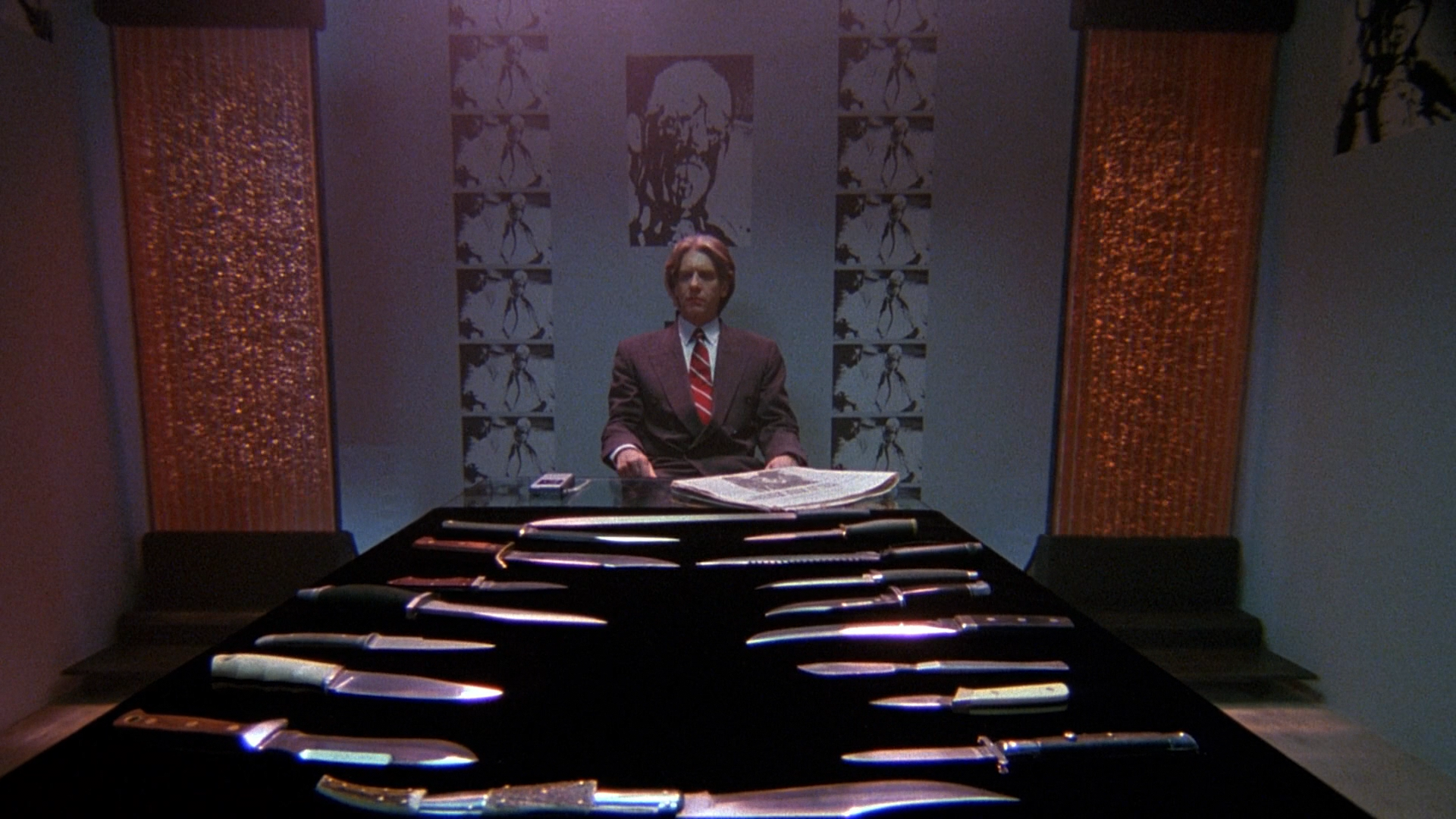 Credit: Scream Factory“It was only the monster, the child of Midian, that altered its flesh to parade its true self. The rest hid behind their calm, and plotted the deaths of children.” –Cabal, Clive Barker
Though the residents of Midian are beastly, dead, and have a taste for human flesh, the ghastly nature of their being, like that of the Cenobites, is in the eye of the beholder. The Nightbreed are revealed to be an ancient tribe of shapeshifters who were almost extinguished by the tribes of men (Midian itself being a biblical reference to a tribe attacked by the Israelites in Numbers.). They have lived in shadows, worshiping their god Baphomet hiding from the eyes of men and making a space for themselves in niches away from the sunlight that will kill many of their kind.
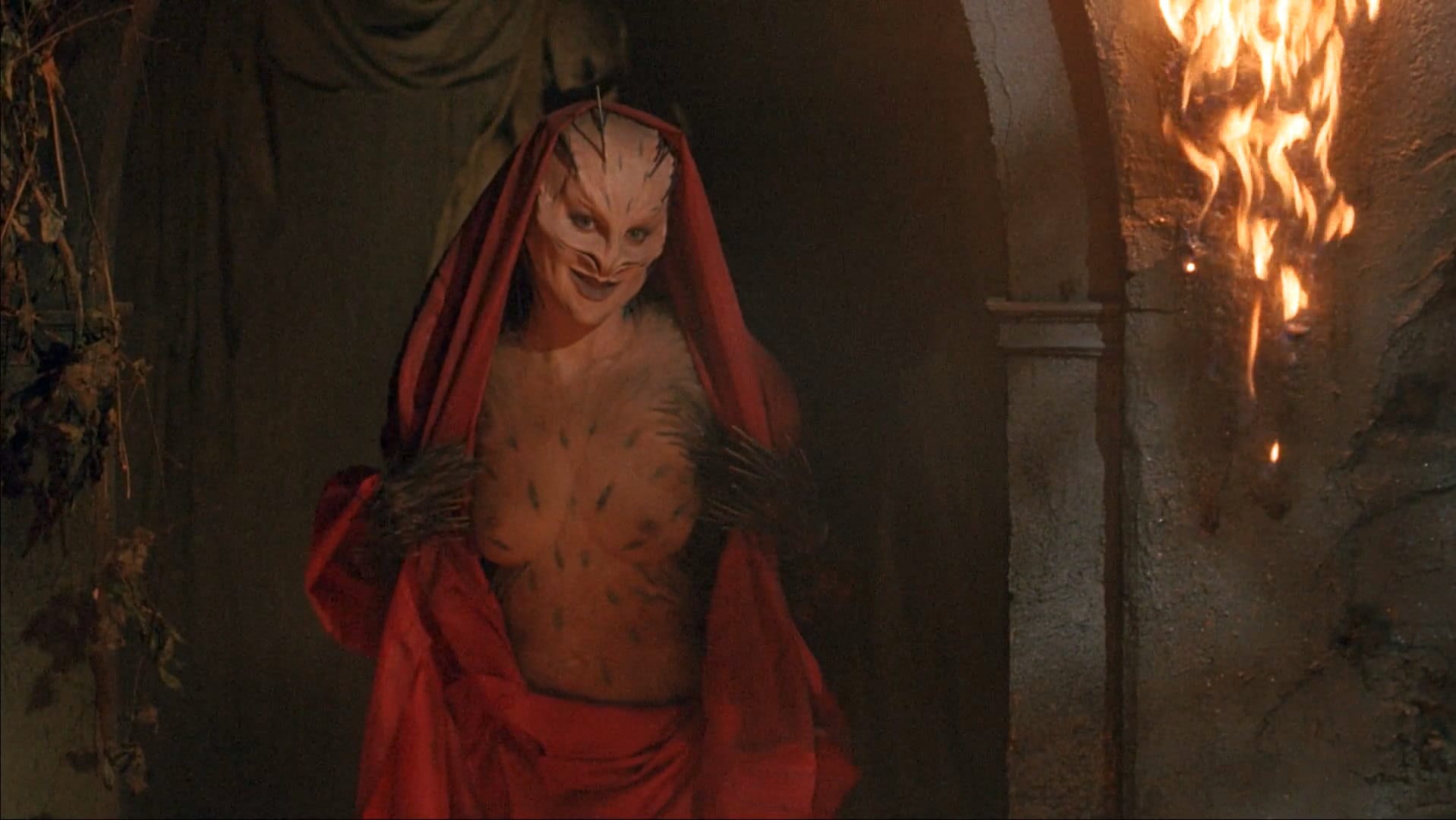 Shuna Sassi has become iconic. Credit: Scream FactoryLORI: “This is too weird” RACHEL: “To be able to fly? To be smoke? Or a wolf? To know the night and live in it forever? That’s not so bad. You call us monsters but when you dream, you dream of flying and changing, and living without death. You envy us, and what you envy…” LORI: “We destroy.”
Many of the Nightbreed have claws and fangs, they breathe smoke and their eyes and skin shimmer. One is corpulent with insect-like tendrils living in his flesh; another is a sensual nude woman with quills like a porcupine’s; another still has a face like a crescent moon. In the novella one is described as “turning into birds,” while another is described as a “dog painter.” All of them are overly campy and theatrical, gayly dressed and conceived of by Barker as carnival-like. Not only are many of them played by Clive’s longtime collaborators, including Doug Bradley of Pinhead fame, the entire vibe of Midian is that of gay, experimental theater.
Some of the most elaborate, theatrical monster makeup ever committed to film, rivaled only perhaps by Screaming Mad George’s work. Credit: Scream Factory
The most overly queeny of all the Nightbreed is Narcisse, played impeccably by Hugh Ross. Boone meets Narcisse in the hospital as a former patient of Decker before Narcisse tears the flesh from his face with bladed rings. Described by Barker in the director’s cut commentary as “the most bisexual monster in Midian,” Narcisse is constantly blasting cigs and wearing a cowboy hat while delivering impeccably horny one-liners. “Sailors,” Narcisse wryly exclaims after flirting with and scaring off Ohnaka, a male member of Midian with tattoos of suns around pierced nipples. “My monsters are kinda working class monsters I think…they smoke, they fuck.” Barker said in a director’s commentary, “To me the monsters are the thing which are closest to your heart and closest to the truth of you.”
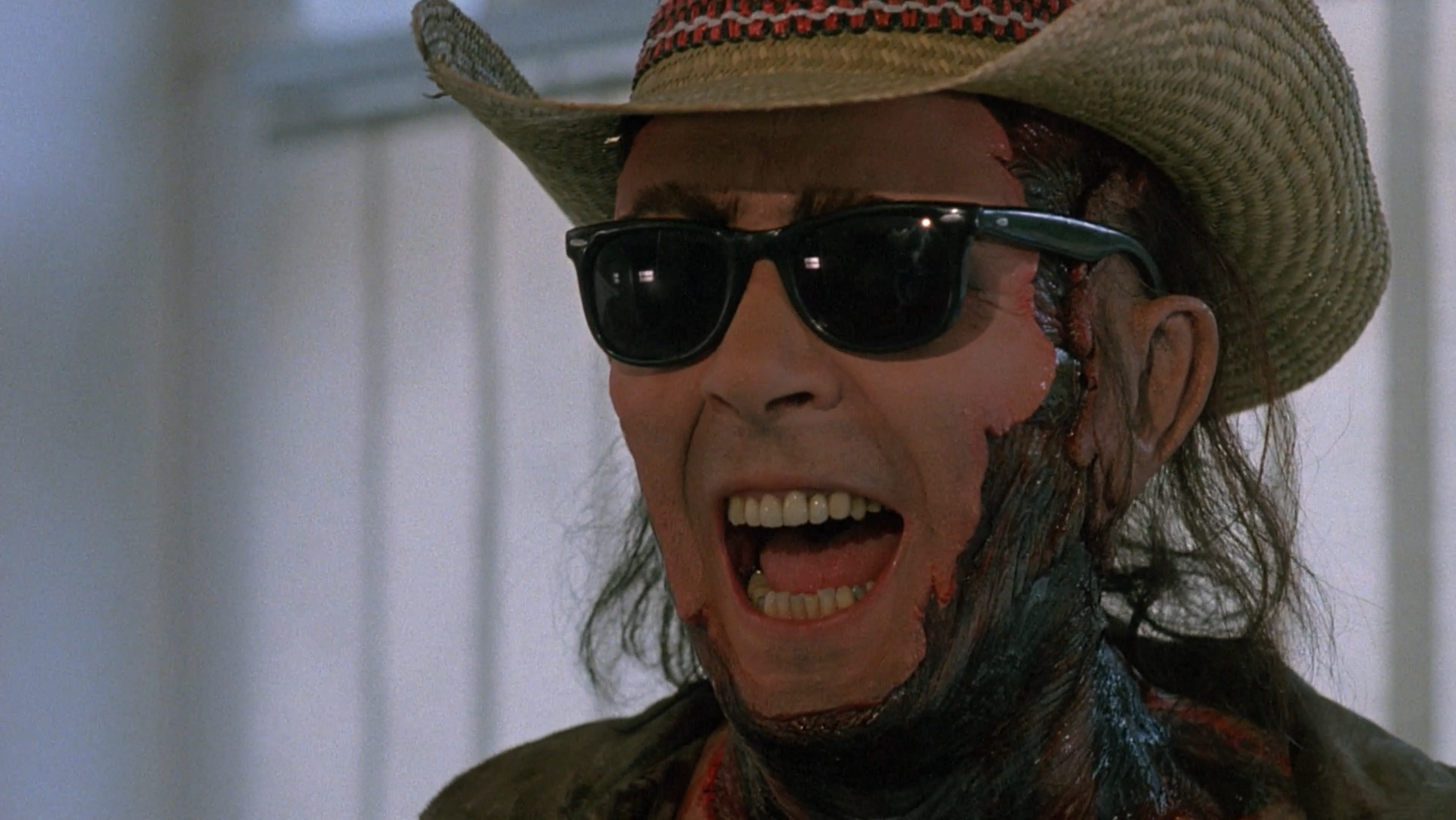 Narcisse rocks, all my homies love Narcisse. Credit: Scream Factory
Nightbreed not only takes special care to empathize with its fruity dead commune, it also goes out of its way to point out the sheer, sexualized cruelty of the cops. In a later sequence Decker coerces the local police to raid Midian. Led by the deranged J. Will Eigerman, a cigar-chomping fascist in the same vein as Steven J. Lockjaw in One Battle After Another, the local Alberta police summon a lynch mob of drunk hunters and police officers itching to kill anything different then them with a sexual glee. Little distinction is made between the cops and drunk local bigots. Charles Haid, who played Eigerman, used Nazi war criminal Klaus Barbie as inspiration for the role. During the sequence, the officer in charge of the gun locker sensually lists the various weapons about to be used to commit murder before he drags a garrote over his bottom lip. “Whether it’s Commmies, freaks, or Third World Y-Chromosome mutants, we are there: sons of the free,” Eigerman says, holding a pump action shotgun.
ACAB (Canadian) Credit: Scream Factory
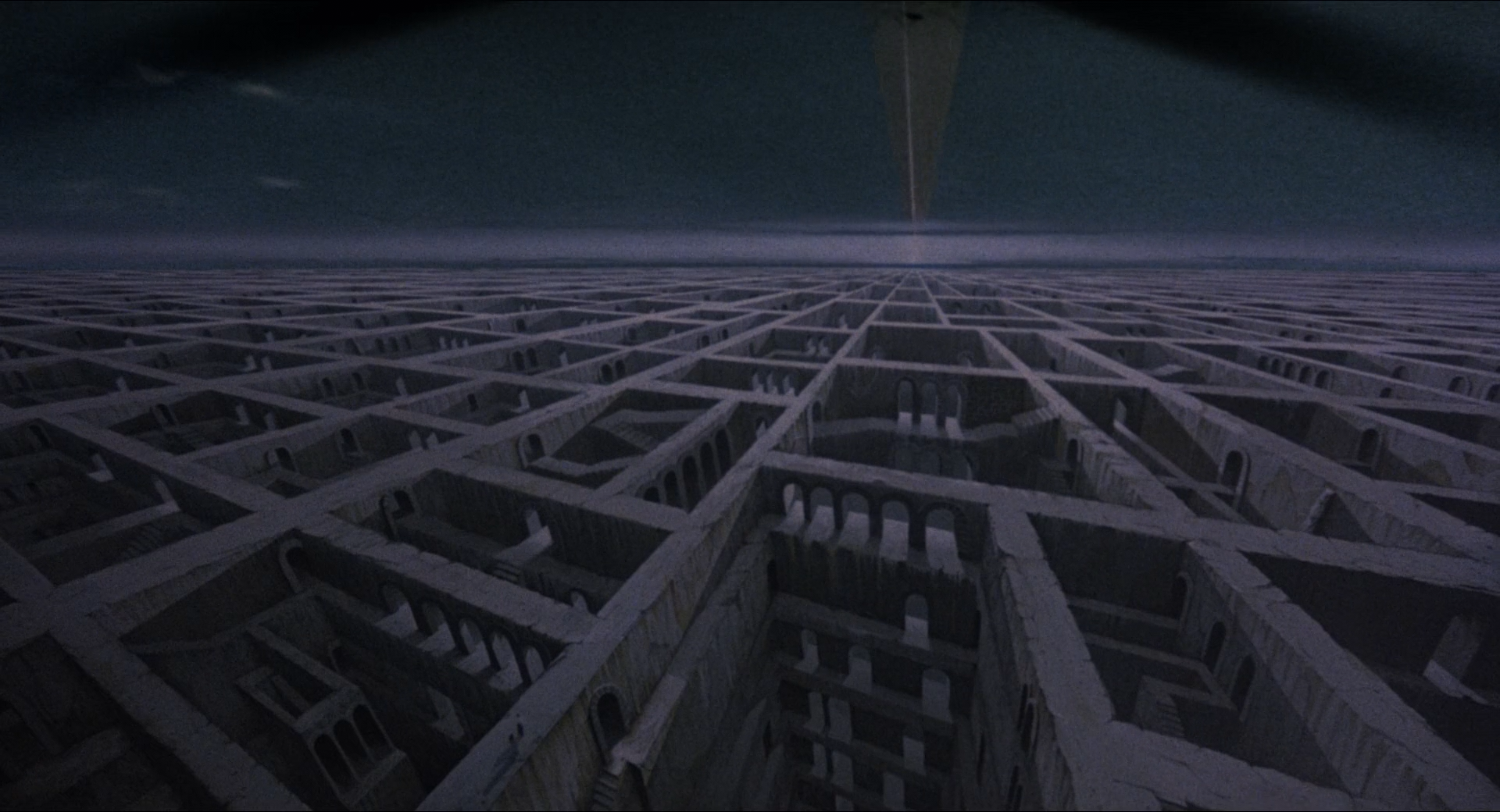
So much love and talent is in Nightbreed — the title sequence mural by Star Wars concept artist Ralph Maquarry, the music by Danny Elfman, the incredible makeup on the countless grotesqueries which are themselves interpretations of Barker’s own abstract ink blot illustrations by the makeup department. The set of Midian’s central Necropolis alone is a dizzying sight to behold, a gargantuan central hub of swinging rope ladders that has a tactility that most modern movies only wish they had.
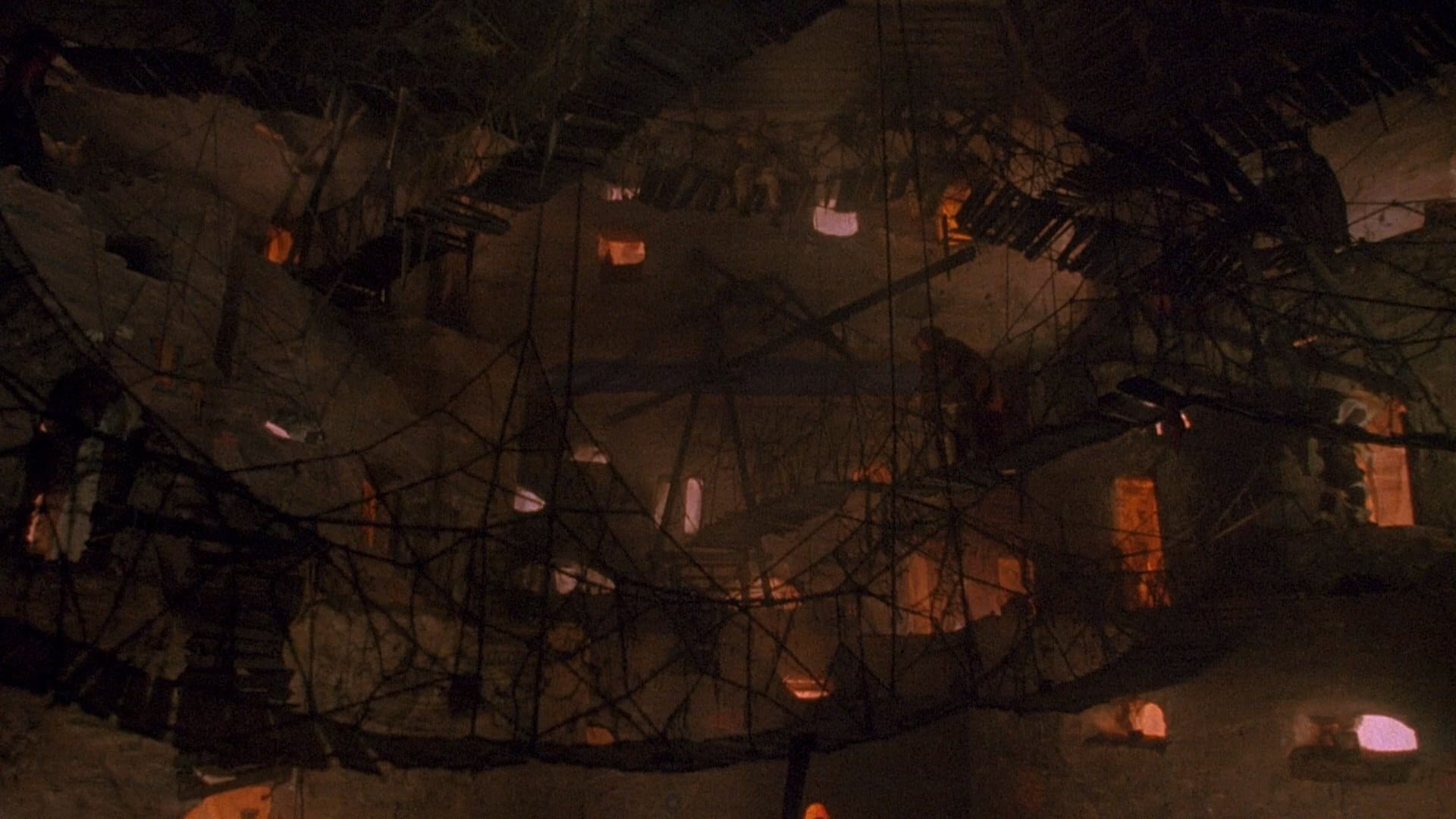
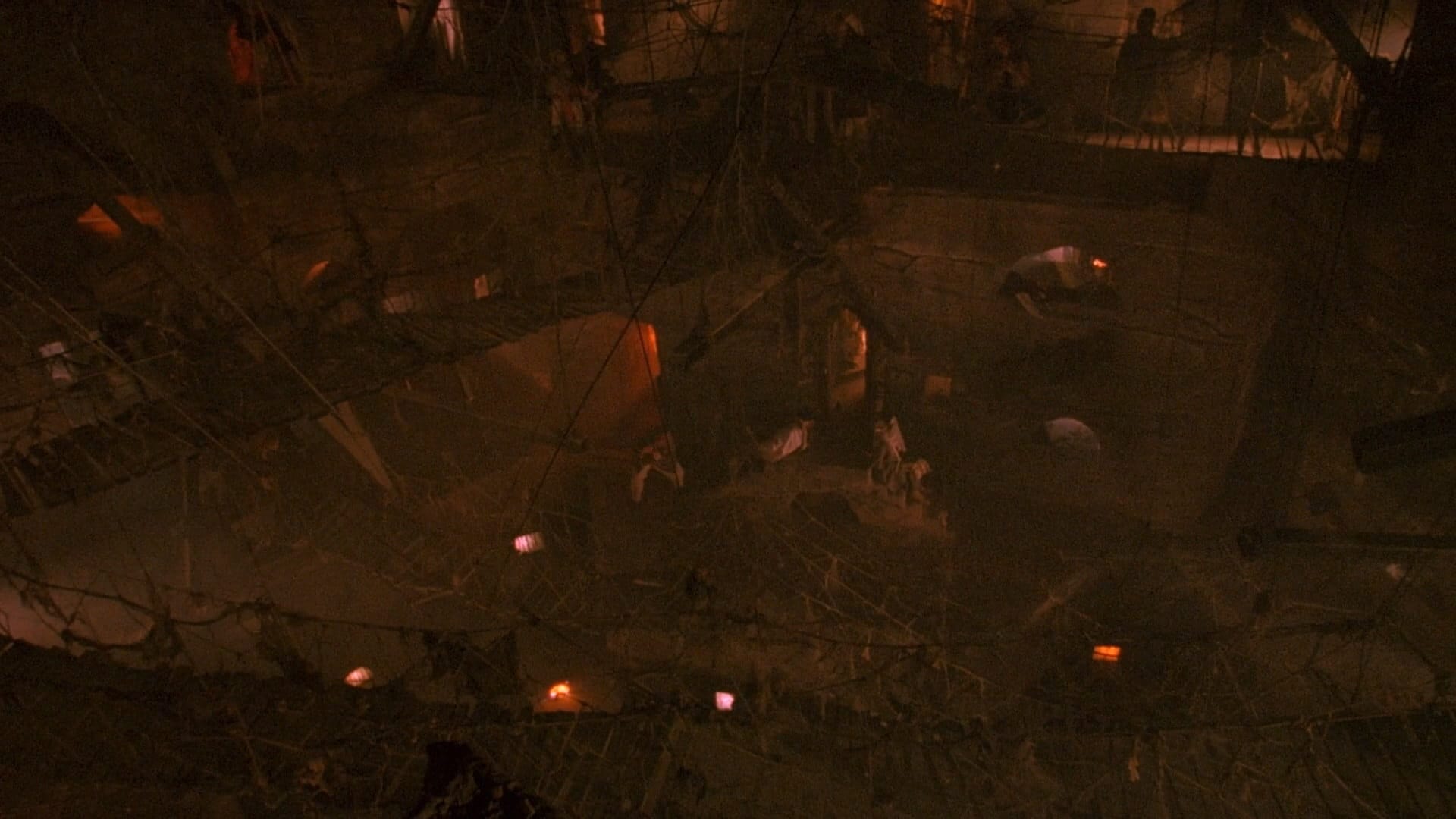
The main set was a gargantuan maze of rope ladders. Credit: Scream Factory
Cut down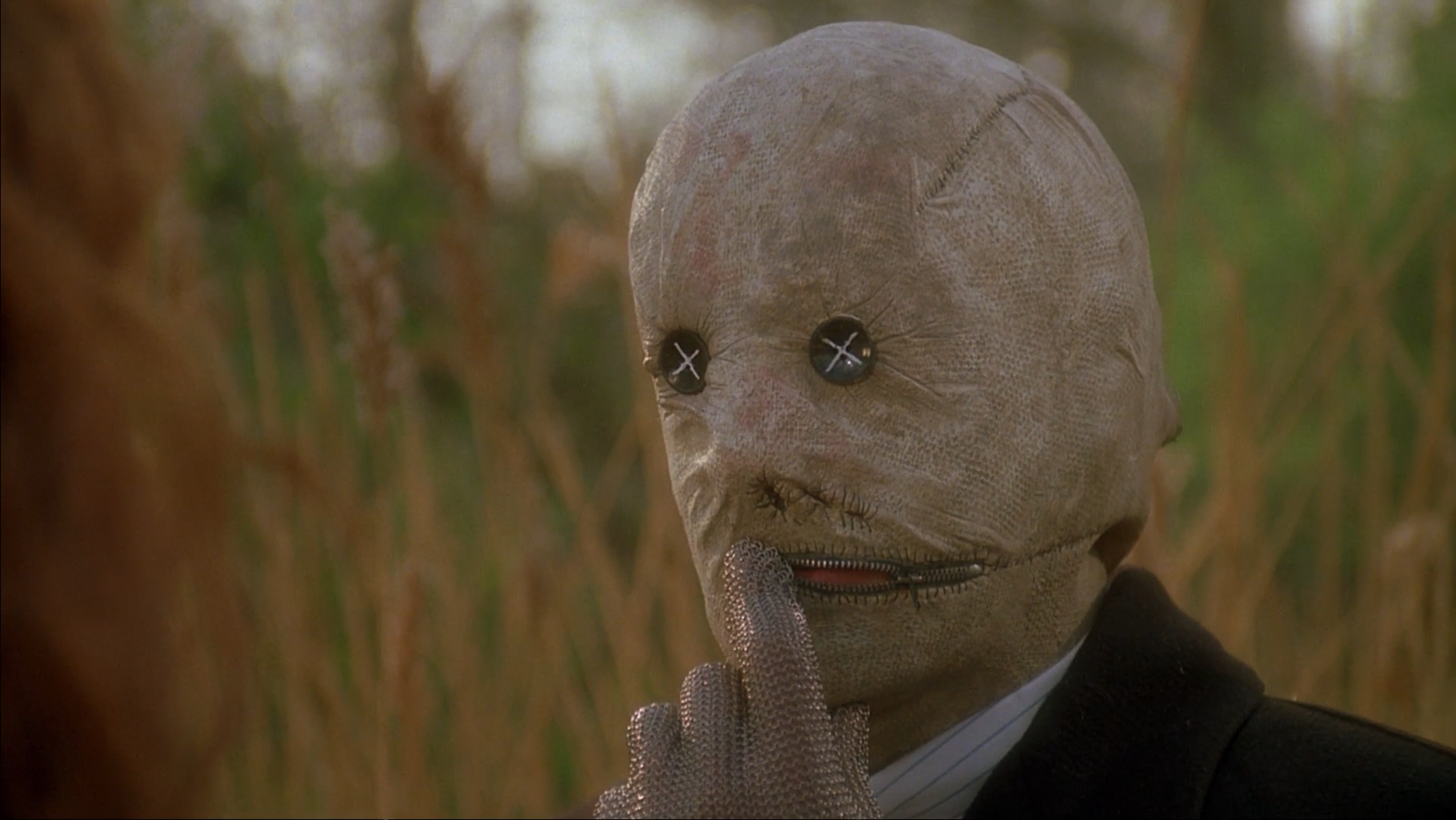 Buttonface, Decker’s murderous alter ego. Credit: Scream Factory
Nightbreed was taken away from Clive Barker by the suits, but even in its ideal form it is a harder sell than Hellraiser. Whereas Hellraiser has a lurid but straightforward structure that does not deviate from standard horror structure, Nightbreed swings for the fences. It is more loving towards its monsters, and more nakedly upfront about the evil of the state. It is a film that presents, in nightmarish dream logic, a case for the Tribes of the Moon — against the heterosexual world that seeks to gaslight, pathologize, hunt, torture and exterminate those who have a freedom they wish they had.
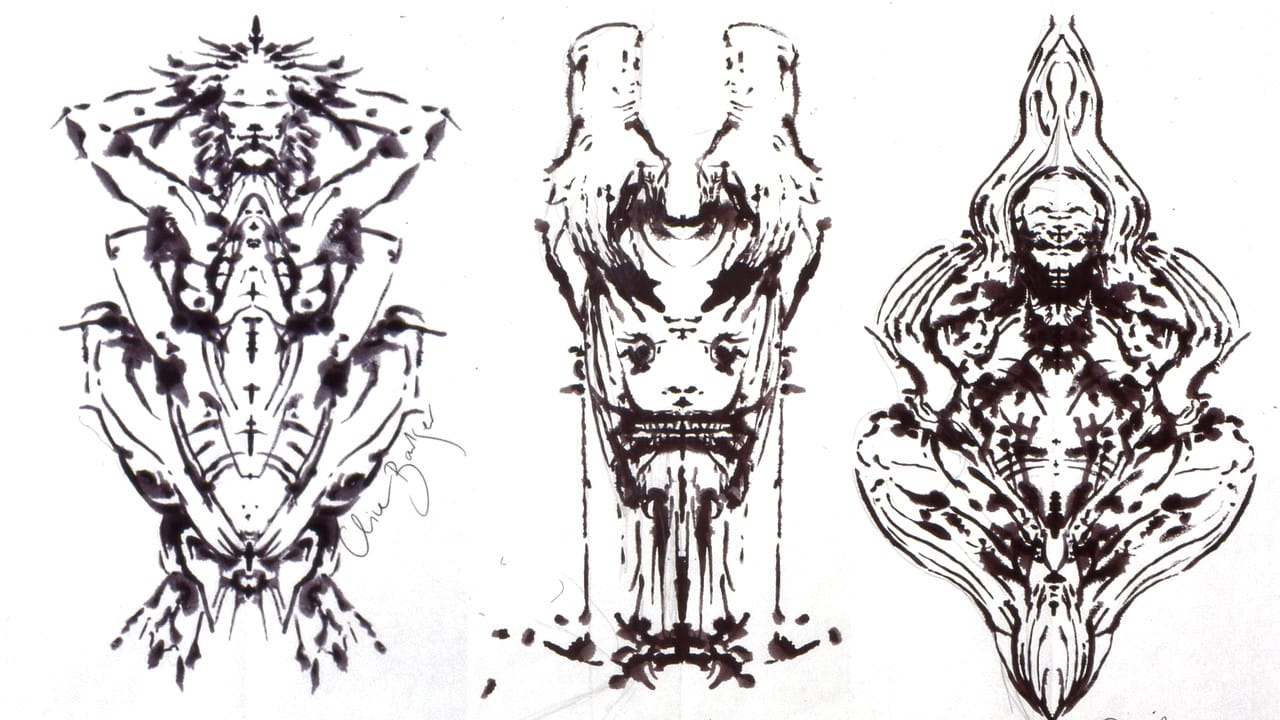 Barker’s ink blot illustrations would serve as a mood board for the makeup team. Credit: Scream Factory
What the executives wanted was something they could market, and the cut that hit theaters was severely scoped down and pitched as a simple slasher film with Decker as the main focus and the monsters as, well, monsters. Scenes were added, reshoots were done, and the ending was radically changed. “Someone at Morgan Creek said to me, ‘You know, Clive, if you’re not careful some people are going to like the monsters,’” Barker recalled. “Talk about completely missing the point! Even the company I was making the film for couldn’t comprehend what I was trying to achieve!”
“It had the heart and soul ripped out of it,” actor Simon Bamford said in Tribes of the Moon: The Making of Nightbreed. “It was so deeply flawed,” echoed Doug Bradley. “I felt very depressed when I came away from it and it quite honestly…doesn’t make sense in a lot of places because of the editing.” Given Barker’s history of facing homophobia and censorship in publishing despite his repeated success, it is hard not to feel a twinge of that same institutional bigotry into the manhandling of Nightbreed.
“I wanted to make a movie that was a celebration of monsters, a movie that was a Bosch canvas come to life,” Barker said. “It wasn’t going to be this rational, logical thing. Instead of trusting the movie, they tried to do something which is reprehensible – they tried to represent the movie as something that it wasn’t.”
Redemption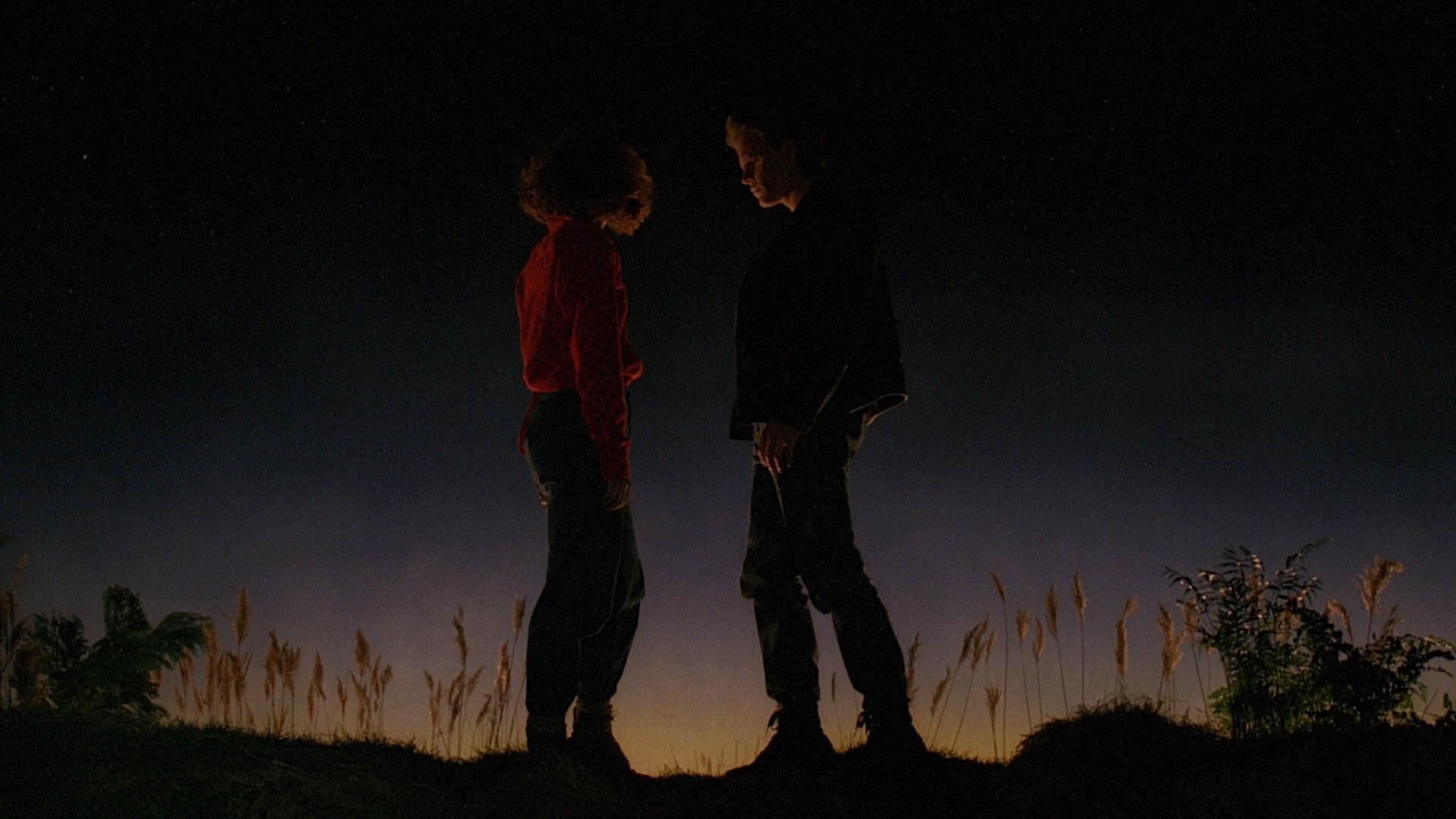 Restored. Credit: Scream Factory
Eventually, Nightbreed would have its day. Even in its butchered form, Nightbreed is unlike other movies. Eventually a cut of the film closer to Clive’s intended vision upon release, a two hour and twenty five minute version called The Cabal Cut, was assembled from an amalgamation of existing material and poor quality VHS transfers. After the announcement of the Scream Factory Blu-ray, several reels of lost material were miraculously found in a warehouse. Under the supervision of producer Mark Alan Miller, a tighter director’s cut was produced, one that had no placeholder footage and kept the brisk pace of the theatrical cut while still being quite loyal to the novella. This is the best version of the movie, and the one I would recommend to people who have never seen it. What’s more, Arrow UK has announced that a limited edition version of Nightbreed (in the UK) featuring a 4k transfer of the theatrical release and a mixed 4k transfer of the director’s cut using the already existing elements is going to be released in May of this year.
What Clive Barker had taken from him only to be reconstructed is a lurid delight that fills my heart with joy. There are so many stories that were butchered by marketing men with limited vision, and countless more that never had a chance to see the light of day. The Nightbreed you can watch today feels like a message from the past, an affirmation that people have always wanted to tell stories of other ways of living, and how even someone as big as Barker could be bossed around and gaslit to doubt his vision. “It feels like a validation,” Barker said on the commentary for the director’s cut. “It feels like the reclamation of something that was always there but as time went by I began to doubt was there.”
Long live Midian.