
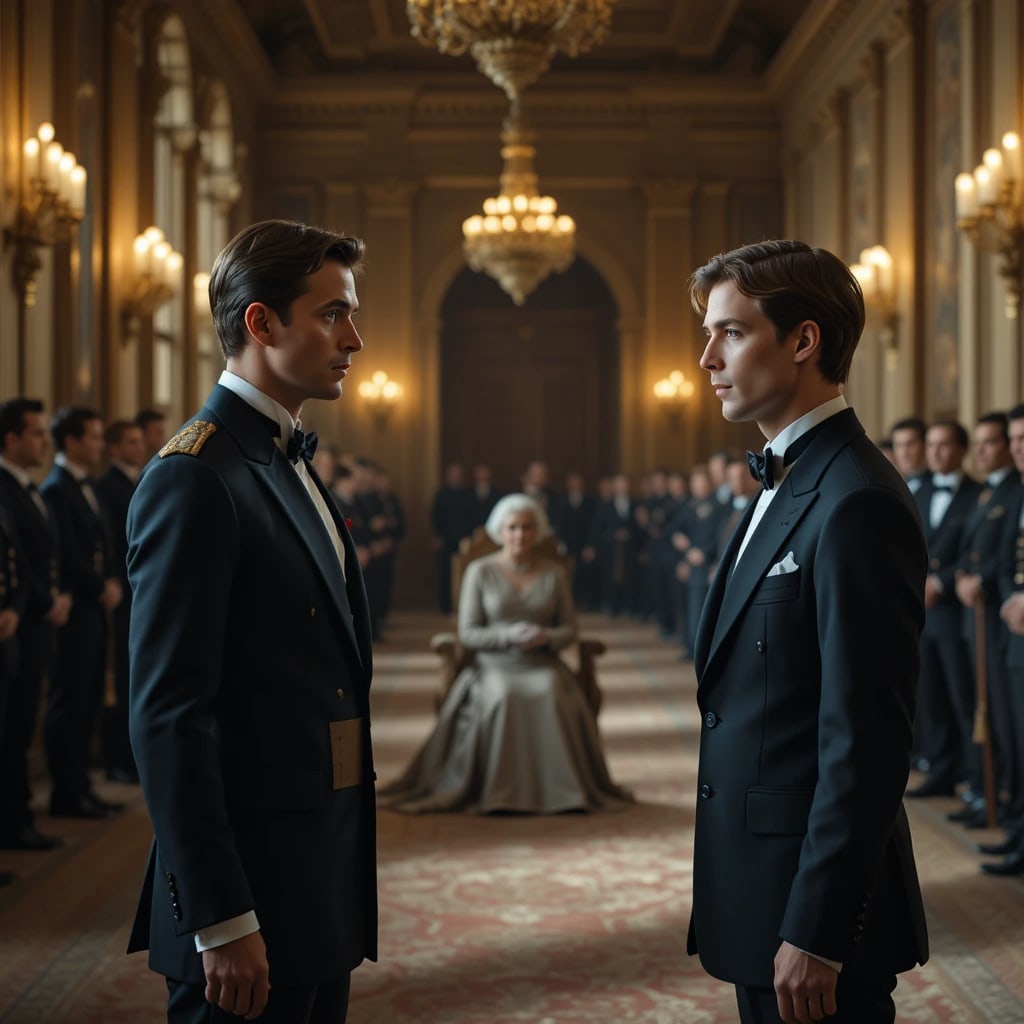
There are stories the world sees—and then there are the ones that never quite make it past palace walls.
For years, the relationship between Prince Harry and Prince William has been discussed, debated, and dissected from every possible angle. But sometimes, the truth isn’t found in headlines or bestselling books. Sometimes, it lives quietly in moments that were never meant to be public.
This is one of those stories.
Long before tensions became global news, subtle signs were already there. Those who observed closely noticed a difference between the two brothers—not just in duty, but in temperament. William carried himself with a growing sense of responsibility, shaped by a future he could never escape. Harry, on the other hand, often leaned into humor and spontaneity, creating a public image that felt more carefree, even rebellious at times.
But behind that image, there were cracks forming.
At royal events, where precision and protocol ruled, the differences became more visible. William approached these occasions with increasing seriousness, understanding their long-term significance. Harry, though charming, sometimes appeared restless—less interested in the structure that defined royal life. What seemed like personality contrast to the public may have been something deeper beneath the surface.
And then, there was the quiet influence of history itself.
Inside the royal family, tradition is not just respected—it is taught, carefully and deliberately. Queen Elizabeth II understood this better than anyone. Having spent decades on the throne, she knew the importance of preparing the next generation, not just the heir, but those who would support him.
William received that preparation firsthand.
It’s said that he spent private time with the Queen, listening, learning, absorbing the complexities of a role that would one day be his. These weren’t formal lessons, but conversations—moments of guidance from one of the most experienced monarchs in modern history.
But here’s where the story takes a turn few talk about.
According to accounts from within royal circles, similar opportunities were extended to Harry. The Queen, aware of how important the “supporting role” could be, reportedly offered to guide him as well—to help him understand how he could shape his place within the institution.
Yet, those opportunities didn’t unfold as expected.
The reason, as quietly suggested by insiders, was simple—and striking. Harry, knowing he would never be king, struggled to see the purpose in those lessons. From his perspective, the future had already been decided. The crown would never be his. So why invest deeply in a role that, to him, felt secondary?
It’s a perspective that, while human, may have carried consequences far beyond what anyone imagined.
History had already offered a blueprint for this kind of dynamic. The relationship between Queen Elizabeth II and Princess Margaret showed how delicate the balance between siblings in royal life could be. Despite their differences, the Queen made consistent efforts to include her sister, ensuring she never felt entirely outside the fold.
That lesson, it seems, may not have fully translated to the next generation.
As time passed, the gap between William and Harry didn’t just remain—it widened. What began as differences in personality slowly evolved into differences in purpose. William moved steadily toward his destiny, embracing the weight of expectation. Harry, meanwhile, appeared to question the very system that defined his role.
Then came a turning point.
When Meghan Markle entered Harry’s life, everything intensified. She brought a new perspective—one shaped outside royal tradition, one that challenged long-standing norms. For Harry, this may have been both empowering and unsettling. Questions that had once been quiet became louder. Doubts that had lingered in the background moved to the forefront.
The dynamic between the brothers shifted dramatically.
What was once playful rivalry became something heavier—something harder to repair. Conversations grew more complex, expectations more strained. And perhaps most significantly, the path Harry chose began to move further away from the one William was bound to follow.
Looking back, it’s easy to assign blame or draw conclusions. But the truth may be more complicated than that.
This wasn’t just a story of conflict. It was a story of missed alignment—of two brothers shaped by the same past but pulled toward very different futures. One embraced the structure of royal life; the other questioned its meaning.
And somewhere along the way, the distance between them became more than just physical.
It became personal.
In the end, what makes this story so compelling isn’t its royal setting, but its deeply human core. It reflects a reality many can relate to: siblings growing apart, expectations creating pressure, and choices leading to paths that no longer run side by side.
The crown may symbolize power and tradition, but behind it are individuals navigating emotions, identity, and purpose—just like anyone else.
And sometimes, the greatest divides aren’t caused by a single moment…
…but by the quiet decisions made long before anyone was watching.