
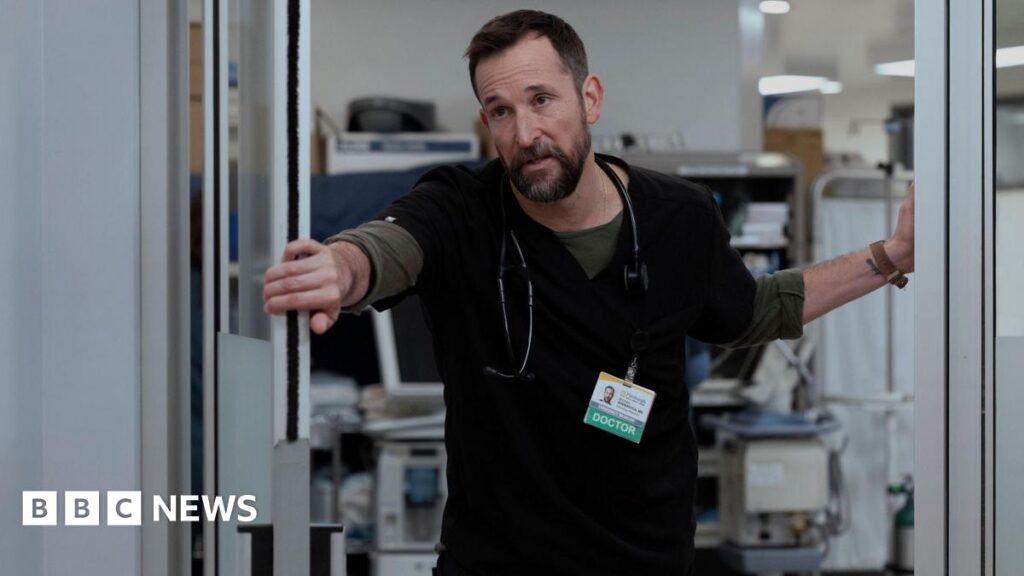
The idea for the show was sparked by the global pandemic.
“It was during Covid, which was a tricky time for everybody, but first responders in particular were being hit extremely hard,” Wyle explains.
“And I was getting a lot of mail from them, sort of chronicling what that experience was like. And I assumed they were reaching out to me because they felt that I had a relevance to their career, having been part of what motivated them to go into that line of work.
“It didn’t sit well with me that I didn’t have current relevance. I had nothing really to offer back except empathy.”
So he got in touch with John Wells, who had been the showrunner on ER, and the rest, as they say, is history.
“He agreed immediately that everything was going to be different after Covid. So that became the focus, can we do a version, a very up-to-date look at the American healthcare system?”
Wyle muses on the profound effect the pandemic had on so many in different ways.
“You don’t really forget about it, it lodges somewhere within you, unexamined, un-exhumed, it turns into something that becomes quite toxic.
“The Pitt is a sort of proverbial pit that we’ve all found ourselves in since Covid that we can’t quite climb out of. And Robby is at the centre of this narrative. He’s a guy who’s on a mental health journey he doesn’t know that he’s on.”
Dr Robby is, in fact, suffering with PTSD following on from his experiences working through the pandemic.
“We’re using Robby as a bit of an avatar for everybody who doesn’t quite recognise themselves or why they’re behaving the way they are,” Wyle explains.
The Pitt covers everything from a measles outbreak, a shooting at a festival, the opioid crisis, medical abortion, black maternal care, homelessness and more besides.
“Emergency rooms are the catch-all of all of society’s bad choices, and who helps the helpers becomes a really interesting question when these people attend the worst day of your life four times an hour, 12 hours a day.”