
(Credits: Far Out / Premier Productions / MGM)
Sat 28 March 2026 7:00, UK
I credit Blow-Up as a film that really made me think about what I’m watching, and to dig deeper and deeper. The boundary between philosophy and cinema blurs, and with every abstract image, every unanswered question, Michelangelo Antonioni’s masterpiece helped me to understand just how powerful a film could be.
Initially drawn in by the 1960s setting as a teenager, Blow-Up (the first English-language film from the Italian filmmaker) certainly is a time capsule of an era, and I soon appreciated my fondness for the decade as something more than a love of wearing mini skirts and knee-high boots. Antonioni’s film captures the landscape of the swinging sixties as a symbol of post-war confusion and itchiness. At the centre of the film is Thomas, a sleazy photographer who shoots models with their xylophone ribs protruding from skimpy outfits, serving as the vision of a new era for fashion, femininity, and sensuality.
Thomas plays with them, gets on top of them, but he seems bored. This is all emptiness to him. He messes around with some young wannabe models who get naked with him, and there are even brief glimpses of full frontal nudity from the girls, played by Jane Birkin and Gillian Hills. He also has a brief fling with Vanessa Redgrave’s character, who simply wants him to give her the roll of film that may or may not contain her indulging in an affair in a park.
What Thomas captures on that roll of film is more than a potential affair, though. When he blows up the images, he finds the image of a gun. When he visits the park, which is actually the unassuming Maryon Park in Greenwich, he finds a dead body. Now life is more interesting for Thomas, who doesn’t want to ‘squander’ his passion for taking photos on soulless, commercial endeavours that don’t reveal any truth. As his earlier photography project at a doss house suggests, in this post-war era of increased commercialism, fashion, celebrity, and artifice, he’s interested in reality. But there’s a fine line between reality and fantasy, and is life ultimately meaningless, anyway?
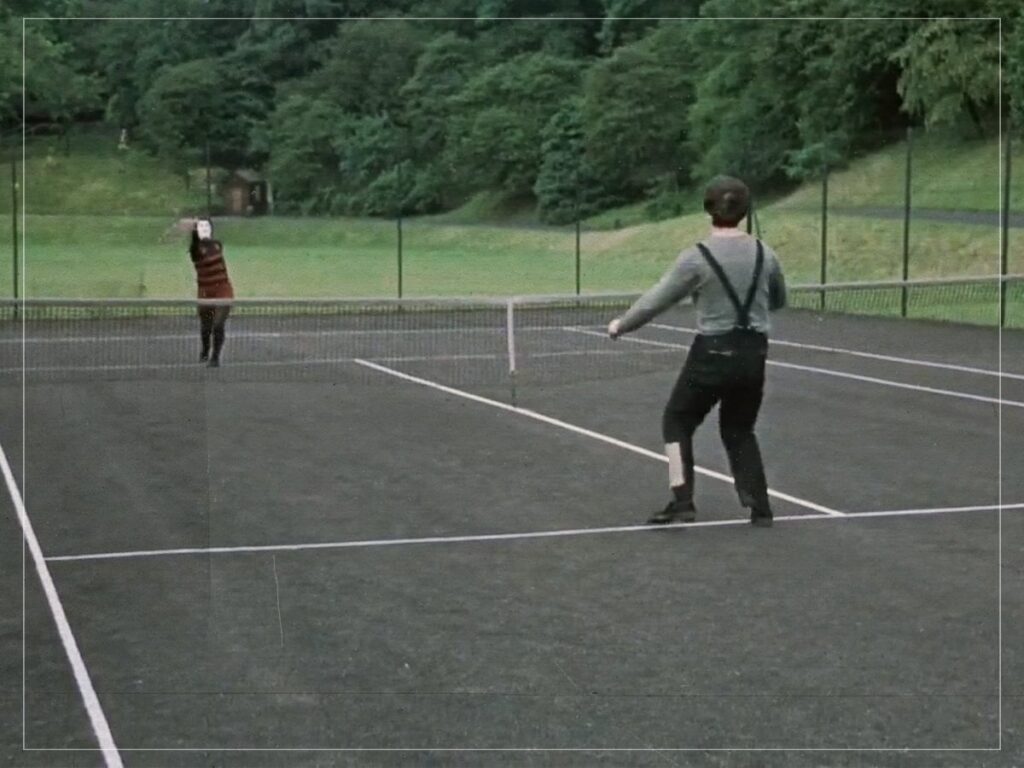
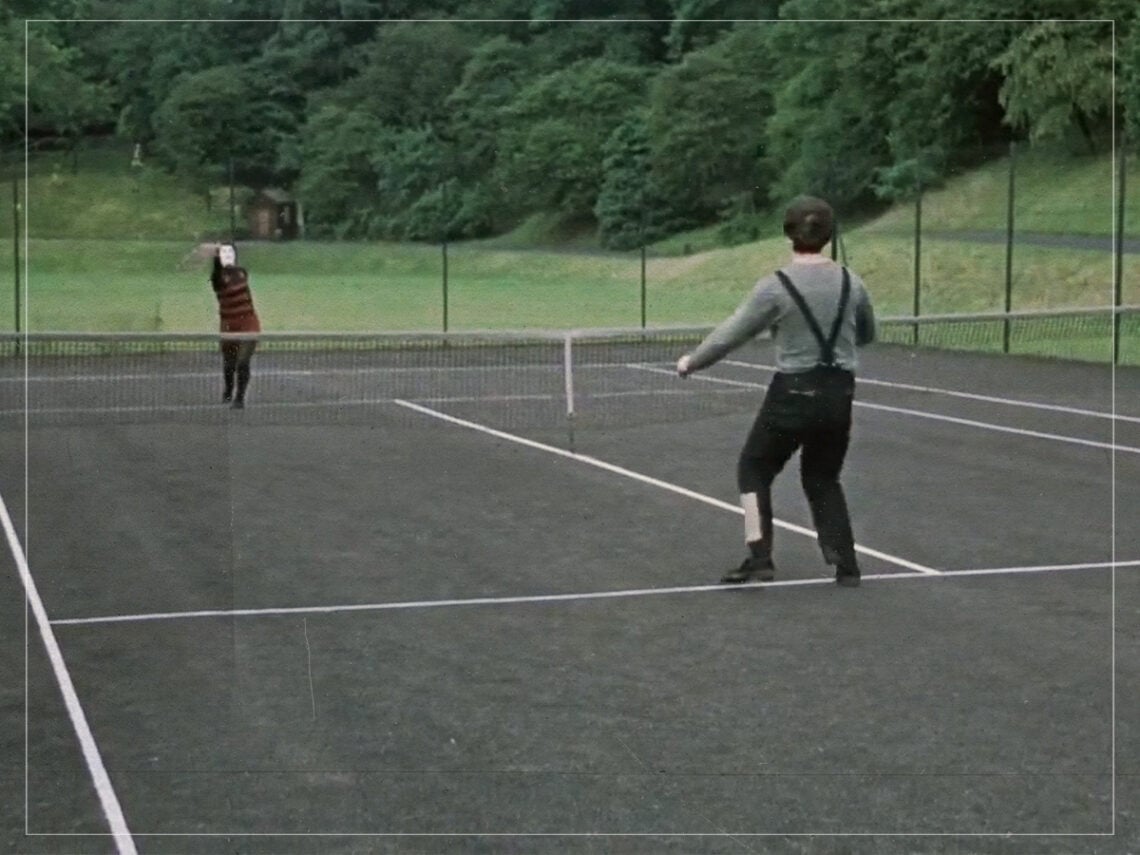
Blow-Up poses a lot of philosophical questions, and it blue-balls its audience into an ending without a resolution. Instead, we’re taken back to Maryon Park (which Antonioni manipulated by actually painting the grass greener), where Thomas witnesses students dressed as mimes playing an imaginary game of tennis. It takes a long time for some audiences to reckon with what they’ve just watched, but you have to sit with it.
The film captures a changing landscape like few others, its depiction of London soaked in mystery, grit, and rock and roll (there’s a performance from The Yardbirds, which plays a prominent part in the film). Antonioni uses a foreign eye to excavate this landscape, which, on the surface, looks all shiny and fun. What he uncovers is a world struggling to reckon with a commercialist explosion, where everything feels like a fabrication, a ploy to sell.
The film was shocking, because it reflected this new era of increased sexual freedom, of filmmaking which refused to tie things up in a neat bow, of ambiguity, alienation, confusion, and philosophical conundrum. When it was made, Hollywood was defined by its Hays Code, a censorship nightmare which had ruled over mainstream American cinema for decades. Anything slightly taboo, ambiguous, or explicit was prohibited, yet Blow-Up was all of these things, which made success in America a doubtful venture.
When the film was scorned by the National Legion of Decency, MGM decided to release the film through its subsidiary distributor, Premier Productions, bypassing the Hays Code as a result, and the movie was a hit, with people eager to immerse themselves in this swinging world of mystery and sex. From that moment, the Hays Code’s dominance proved to be something associated with Old Hollywood, as this new era of filmmaking could not be thwarted by such intense censorship; things had to change, and the MPA rating system was established instead.
So, thanks to a British film made by an Italian director, with key filming locations including a random park in Southeast London, which many people walk through today, unaware, Hollywood cinema changed for good.
ADD AS A PREFERRED SOURCE ON GOOGLE 