
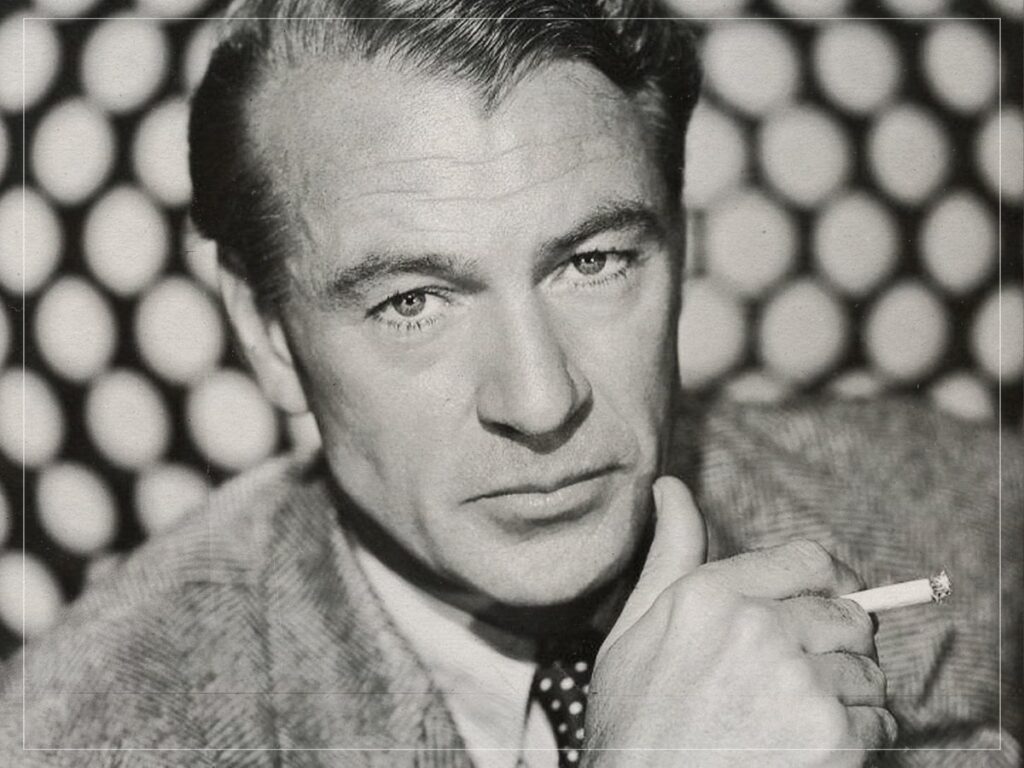
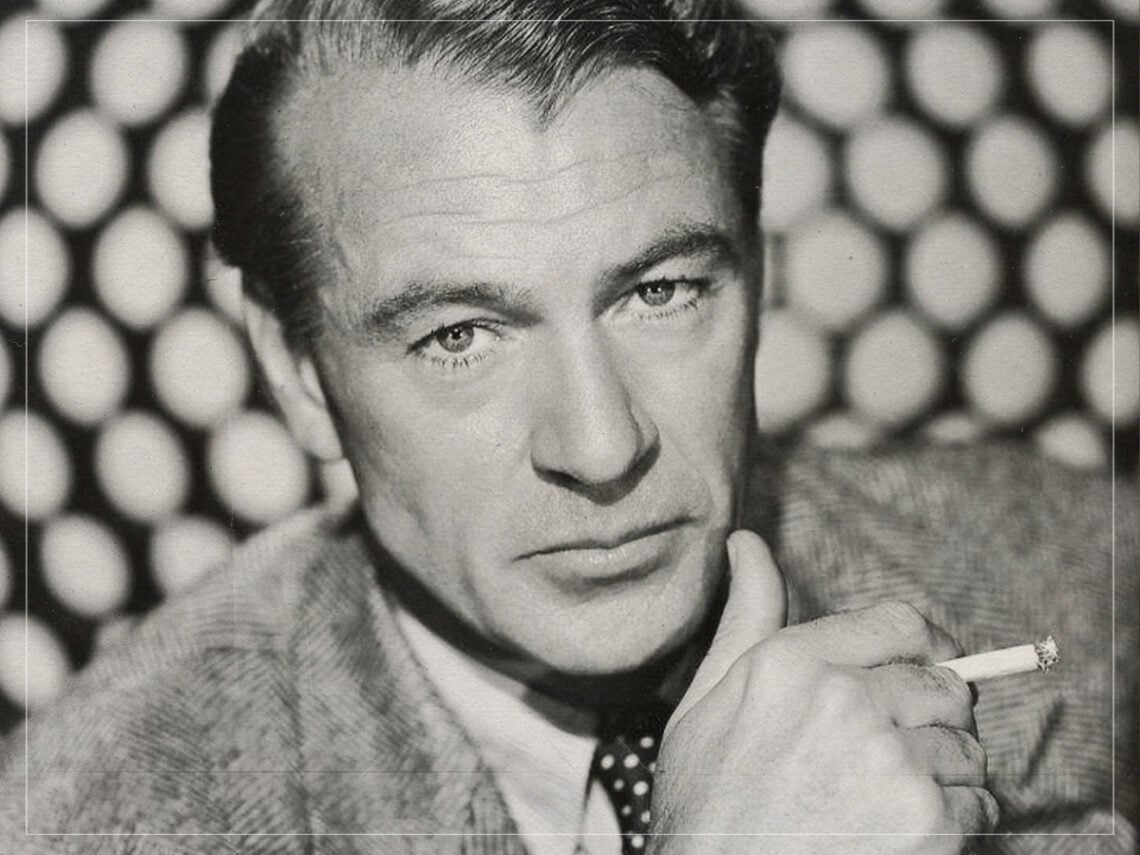
(Credits: Far Out / Whitey Schafer / Public Domain)
Sat 28 March 2026 5:30, UK
While he isn’t really spoken about today anywhere near as often as the silver screen’s other consensus picks for the greatest of all time, Gary Cooper remains in with a strong shout at being named as your favourite actor’s favourite actor.
He was one of the biggest stars of ‘Golden Age’ Hollywood, and he also happened to be one of its most talented thespians. Still, whenever the conversation turns to the best of the best, his name usually won’t come up anywhere near as often as Marlon Brando, Jack Nicholson, Katharine Hepburn, James Cagney, or the rest.
And yet, his influence was massive. If it weren’t for Cagney, then Cooper would comfortably be the biggest inspiration for Clint Eastwood’s on-camera career, Al Pacino summarised him as a “phenomenon,” and even John Wayne, who abhorred High Noon with every fibre of his being, wasn’t stupid enough to even suggest for a moment that ‘Coop’ wasn’t better at his job than most of his peers.
The two-time Academy Award winner and six-time nominee shone in films like Mr Deeds Goes to Town, Sergeant York, Friendly Persuasion, Morocco, and many more, and he spent more than 20 consecutive years as one of the most bankable leading men in the business, meaning audiences were as enthralled by his performances as his contemporaries were.
As much as Wayne would have loved to be remembered as the embodiment of onscreen Americana, Charlton Heston, who admittedly had a lower opinion of ‘The Duke’, would disagree, since he described Cooper as “the kind of man Americans would like to be, probably more than any actor that’s ever lived.”
He left behind an impressive body of work, but even the greats can be left to rue the one that got away. In Cooper’s case, it would have been a pinch-me moment for the picture’s director, since Alfred Hitchcock had repeatedly named him as the one star he desired to work with above all others.
When the perfect opportunity arose, the ‘Master of Suspense’ offered ‘Coop’ the leading role in 1940’s Foreign Correspondent, which he promptly turned down. With the benefit of hindsight, he wished he’d accepted the part of American reporter John Jones, or at least that’s how Hitchcock told the story.
“Afterward, Cooper said, ‘Well, I should have done that, shouldn’t I?’” the filmmaker recalled. “Of course, I don’t think it was Cooper himself; I think the people around him advised him against it.” That was the only time they entered each other’s orbit, and it was a rejection both of them would come to regret.
For Hitchcock, he missed out on the chance to collaborate with the name at the very top of his wish-list, and for Cooper, he could only watch from afar with jealous eyes as Joel McCrea was cast in Foreign Correspondent, a movie he desperately wished he’d headlined instead.
ADD AS A PREFERRED SOURCE ON GOOGLE 