
Throughout an almost two-decade writing career, Rufi Thorpe had written three books. The third and most acclaimed one, “The Knockout Queen,” was optioned for the screen in what she called a “normal way,” by one company trying to make it into a movie.
Then she wrote her fourth novel, “Margo’s Got Money Troubles.” And the process she’d gotten used to was thrown out the window: The novel blew up before it was even on bookshelves, there was a crazed bidding war involving A24 and Elle Fanning, and less than two years after publishing, the adaptation is hitting Apple TV in April.
The overwhelming majority of authors still never get to go Hollywood. But what was once a distant dream is now coming true for more and more authors, all up and down the ladder of literary fame and prestige.
With the streaming industry starving for stories to tell, a writer doesn’t need to have already built up a blockbuster book franchise like “The Vampire Chronicles,” “Harry Potter” or “Twilight,” to see their work become an onscreen pop culture juggernaut.
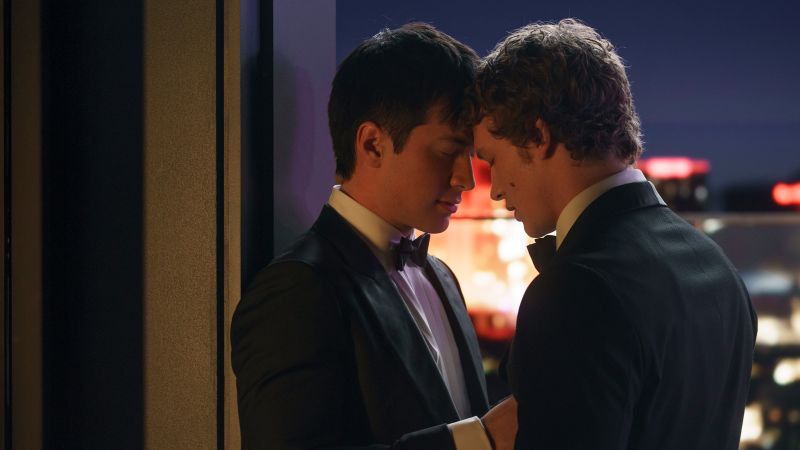
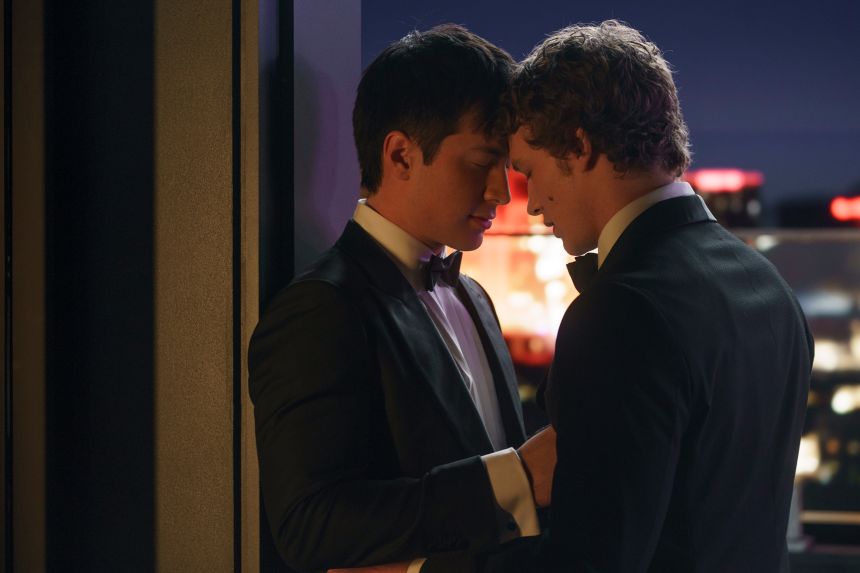
It’s enough to have a niche hit: Rachel Reid’s “Heated Rivalry” didn’t really take off until a viral recommendation by a fellow romance author; Julia Quinn’s “Bridgerton” series was hailed in the romance world but relatively unknown beyond; Mick Herron’s “Slow Horses” did so poorly in its initial publication that the publisher turned down the next book. All have since become runaway hits for their respective streaming services.
Book adaptations have become so important in Hollywood that Netflix, a perennial book adapter, said its book-to-screen content found a spot in the streamer’s global Top 10 every week in 2025. For many streamers, adaptations have become pillars of content, so much so that the platforms offer book adaptations as one of their browsing categories.
Books have always been valuable assets in Hollywood, said Rich Green, who heads book-to-film/TV development at management and production firm the Gotham Group. Decades ago, he said, his small list of book clients were what “kept my phone ringing.”
At that time, movie studios both big and small were the main buyers. Streaming “dramatically” changed the landscape for book adaptations, Green said. Where studios may only make a handful of movies a year, streamers have “infinite bandwidth” to create as much content as they can for hungry consumers scrolling through their televisions at all hours. With an increased need for stories, both published books and upcoming releases present an endless stream of ideas, Green said.
“All of a sudden, you had the streamers coming to those who do what I do,” Green said, “and optioning quite aggressively.”
That trend, he said, quadrupled his business.
For authors, that can mean more involvement in the adaptation process. Thorpe holds an executive producer credit on “Margo,” a role that is becoming more common for authors of adapted works. “Hamnet” author Maggie O’Farrell helped Oscar-winning director Chloé Zhao adapt her novel for the screen — a process that she has said involved lengthy Zoom calls and the exchange of voice notes.
Many authors are still happy to sign a contract and wash their hands of the rest. But others can ask to maintain more creative control if interested, rather than the traditional practice of ceding it to the industry.
“Hollywood is at a place where that request is no longer bothersome, intimidating, or — to the extreme — a deal-breaker,” Green said.
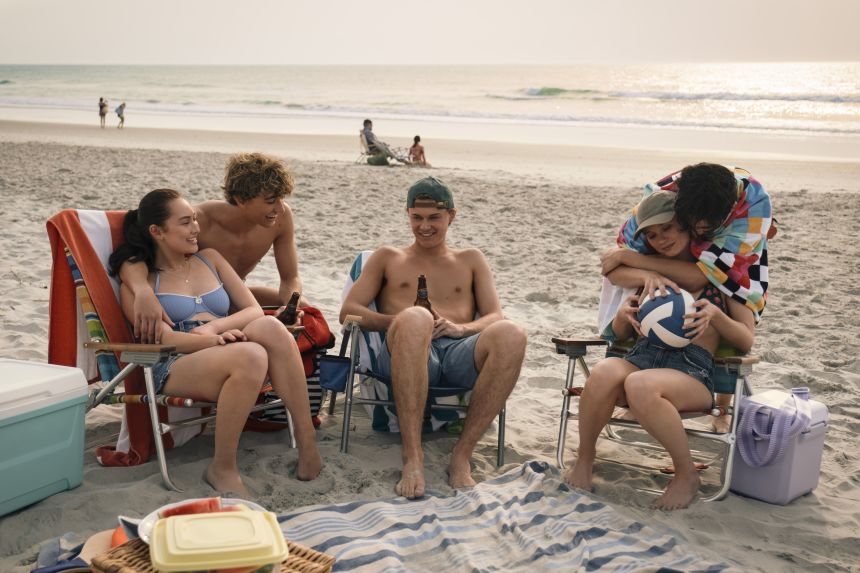
After executive producing the Netflix film adaptation of her novel “To All the Boys I’ve Loved Before” and its sequels, Jenny Han went on to be a showrunner for the hit series “The Summer I Turned Pretty,” adapted by Amazon. That same year, she launched her own production company.
Sarah Dessen, the prolific YA novelist, has witnessed the industry’s change firsthand. Back in 2003, her first two novels, “That Summer” and “Someone Like You,” were smashed together into the film, “How To Deal,” starring Mandy Moore. She never spoke to the screenwriter for that movie, though she was sent the script and asked for her opinion. She doesn’t think her input would have made a difference; there had already been so many eyes on the product, as is the norm when dealing with Hollywood behemoths.
Cut to 2019, when Netflix optioned three of Dessen’s novels and produced the 2022 movie “Along for the Ride.” Even with established stars attached, the entire process felt more collaborative, she said. Dessen developed a personal relationship with the executive producer, who’d been a fan of her books growing up. Later, director and screenwriter Sofia Alvarez spent an hour on the phone with Dessen talking about the book. Once filming began, Dessen visited the set and Alvarez asked for her thoughts about certain scenes.
“I do feel like they were a little bit more interested in my opinion and in what I thought about things,” Dessen said.
There are still many books that are optioned and never actually made into a series or movie. Even with the rise in adaptations, Dessen still called them a “long shot,” a sign of how difficult and extraordinary the process remains. But the heightened demand has affected every part of Hollywood.
Literary scouts, once a luxury only major studios could afford, are now hired by producers and other clients to help sniff out the upcoming books that may be hiding a goldmine, à la “Heated Rivalry.” In the internet age, that means looking beyond upcoming or existing novels from the big publishing houses and into self-published stories and other unconventional publishing avenues.
“There’s so many more books,” one literary scout said. “There’s so much more to wade through, because they’re coming from all directions.”
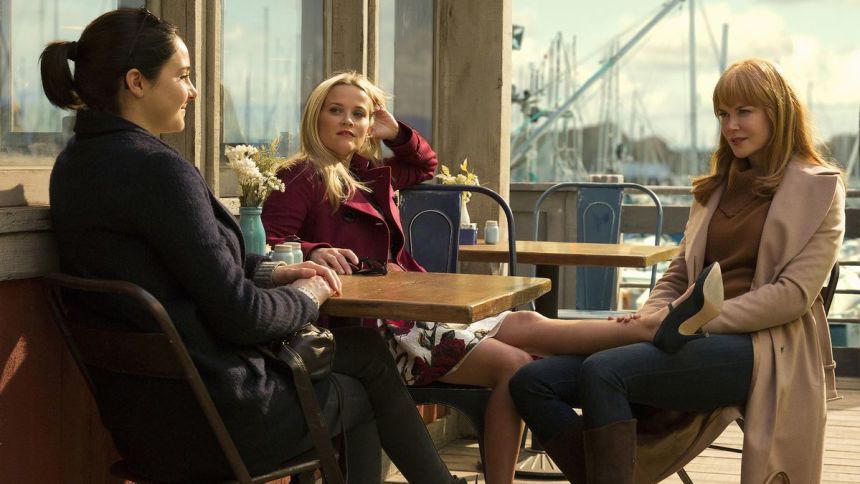
Celebrity book clubs often also try to funnel their high-profile picks into buzzy on-screen adaptations. Reese Witherspoon has been the most prominent: See “Big Little Lies” and “Little Fires Everywhere,” both Reese’s Book Club picks that were transformed into streaming megahits, starring Witherspoon and produced by her own production company. (Just after production was announced for “Little Fires Everywhere,” author Celeste Ng called celebrity book clubs “miracle workers.”)
Studio buyers used to accept printed galleys or Advanced Reader Copies of novels; now, buyers want to see manuscripts as early as possible, Green said. He’ll often take a manuscript to Hollywood at the same time as the author’s publishing agent pitches publishers.
Ten years ago — before scouts were the norm — studios might have paid a fortune to yank a manuscript from the Hollywood market before anyone else knew it existed, the literary scout said. Now, agents field interest from sometimes dozens of potential buyers, and authors can pick the deal most appealing to them. It doesn’t always come down to money; sometimes, the winning bid has more appealing stars attached, or other factors.
“There’s more people in on the action,” the literary scout said.
Wooing the author sometimes just comes down to chemistry, said Marshall, the “Hamnet” producer.
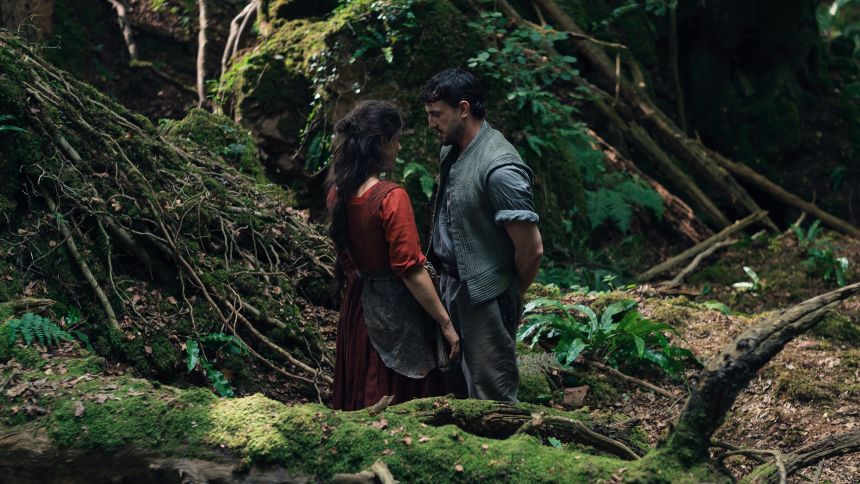
“Do they trust you? I think that’s really key. Do you get along?” she said. “For me, that’s really important, I think, that there’s a rapport between you and the novelist.”
Sometimes, those relationships can get complicated.
After Hulu passed on developing “A Court of Thorns and Roses,” author Sarah J. Maas said earlier this year she now re-owns the rights to her work and still wants to make an on-screen adaptation.
“I look at any TV or movie adaptation as another facet of the worlds I’ve created,” she said on the podcast “Call Her Daddy.” “It’s something I want to be in charge of.”
That negotiation of ownership and control has led to other high-profile clashes. Min Jin Lee was initially set to be an executive producer for the Apple TV adaptation of “Pachinko,” but she later dropped out of the production for reasons she has declined to publicly disclose. (Lee wasn’t available to be interviewed for this article.) Turkish author Orhan Pamuk spent years suing a production company that he felt had taken too many liberties for a television adaptation of his bestseller “The Museum of Innocence.” He won, and later worked with a different company — requiring his sign-off on every page of the script. The series premiered on Netflix in February, to middling reviews.
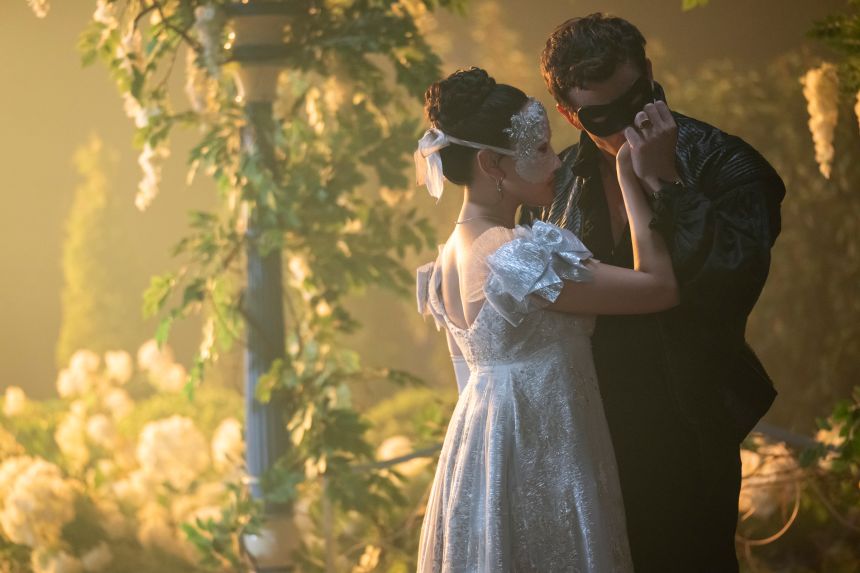
Not every author is so concerned by how their works are reimagined. Julia Quinn, author of the “Bridgerton” series, hadn’t even been shopping the novels in Hollywood when she got a call from Shondaland in 2017. She gave up complete creative control from the start, she said. Hollywood adaptations of romance novels were rare; adaptations of historical romance were even rarer. Now, if another deal came forward, Quinn said she may “do it differently,” but at the time she knew the opportunity was “once in a lifetime.”
Looking back, she said, it’s “pretty obvious I made the right decision.”
Driven by the success of the Netflix show, book sales for her novels have skyrocketed, Quinn said. They’ve been published in new countries, and she’s gone on book tours in places she dreamed of as a child.
And most notably, she’s been able to ease the pace of writing and publishing to try new things. She spent 18 months as an ambassador for EveryLibrary fighting book bans and is also on the board of global nonprofit Landesa, a feminist land rights organization. She used to publish a book a year; now, her last novel was in 2023, a screen-to-page adaptation of “Queen Charlotte.” She still loves historical romance, Quinn said, but the Netflix success has given her time to pursue other interests and avenues of storytelling.
“There’s just a lot more avenues for stories to be told,” Dessen said. “It’s an embarrassment of riches.”