
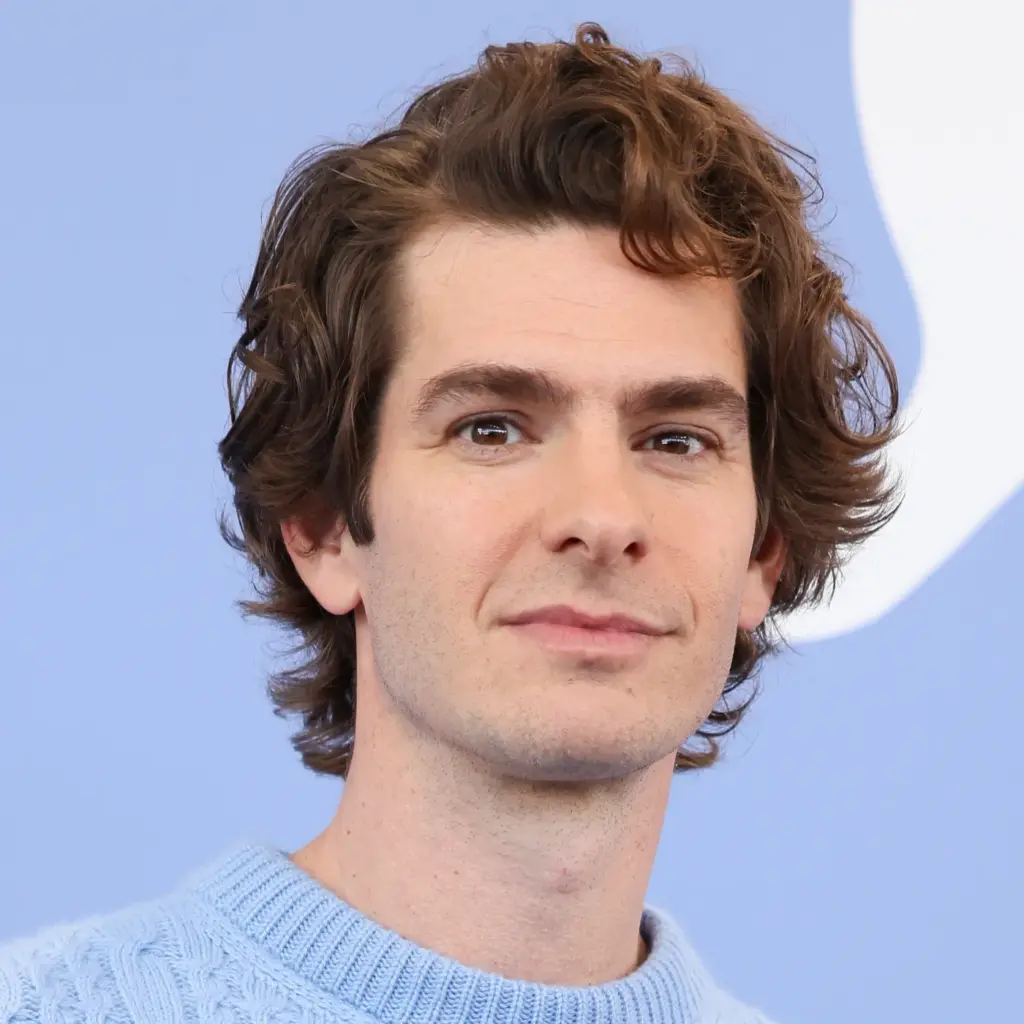
Andrew Garfield net worth in 2026 sits at an estimated $16 million. That is the lowest figure among the four actors who have worn the Spider-Man mask on screen. It also understates his position the way a résumé understates a person who is genuinely good at dinner. Garfield was the Spider-Man who got fired. Sony canceled The Amazing Spider-Man 3. The trades wrote his professional obituary in real time. Then something happened that almost never happens in a franchise-driven industry: the market realized it had mispriced the asset. Not through a comeback campaign. Through four seconds of screen time in someone else’s movie that made an entire theater cry. The net worth figure tells you what he earns. His filmography tells you what he is worth. Those are two different numbers, and the gap between them is the most interesting story in Hollywood.
The Before: Epsom, Drama School, and the Work Before the Fame
Garfield was born in Los Angeles in 1983 but raised in Epsom, Surrey, after his family moved to England when he was three. His father, Richard, was a swimming coach from California. His mother, Lynn, was a teaching assistant from Essex. He attended the City of London Freemen’s School and started taking acting classes at nine. By sixteen, a Theatre Studies course taken as a favor to a friend had converted a casual interest into an obsession. He enrolled at the Royal Central School of Speech and Drama at the University of London. Graduated in 2004. Then he did something that almost nobody does in the age of instant celebrity: he spent years learning the craft before anyone knew his name.
 Andrew Garfield Doctor Who
His early work was in British television. Sugar Rush in 2005. A two-part arc on Doctor Who. Then Boy A in 2007, where he played a juvenile offender reintegrating into society. That performance won him a BAFTA Television Award and announced something specific about his talent. Garfield does not perform emotion. He inhabits it. Consequently, when David Fincher cast him as Eduardo Saverin in The Social Network in 2010, the role felt less like a breakthrough and more like a confirmation. The scene where Saverin realizes Zuckerberg has diluted his shares remains one of the finest moments of silent rage in modern film. Garfield was 27 years old and already operating at a level most actors never reach.
The Pivot Moment: Spider-Man and the Education of Getting Replaced
 the-amazing-spider-man-andrew-garfield
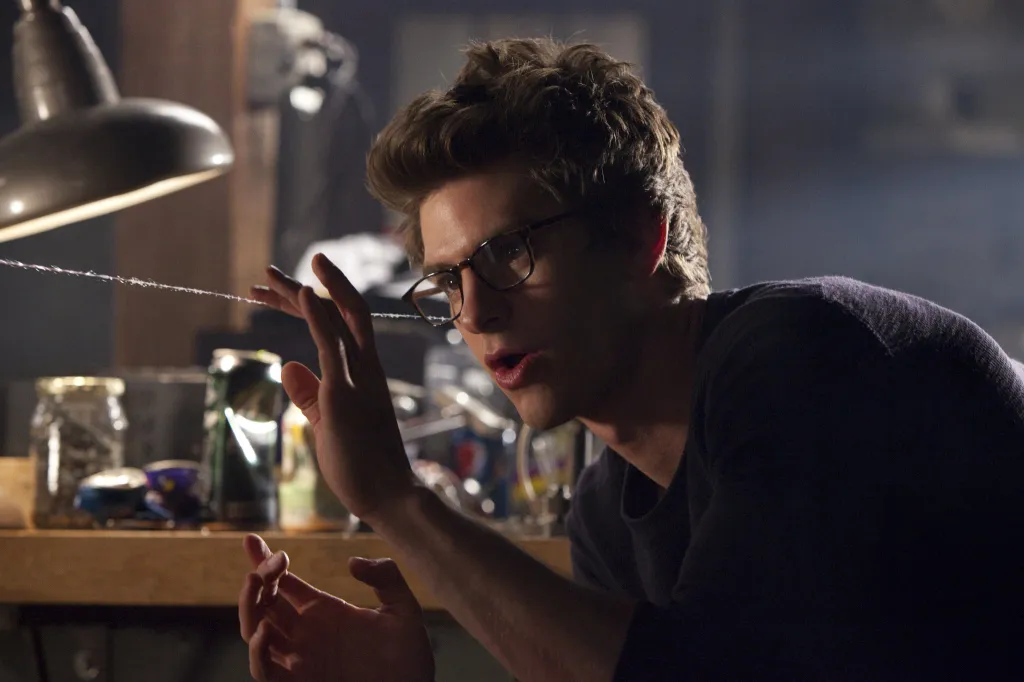
Sony paid Garfield $500,000 for The Amazing Spider-Man in 2012. The contract offered $1 million for the sequel and $2 million for a third film. He made the first two. The third never happened. Instead, Sony pivoted to a deal with Marvel Studios, and Tom Holland put on the suit. The tabloid narrative was simple: Garfield failed, Holland succeeded, the franchise moved on. However, the reality was more complicated and ultimately more instructive. Garfield did not lose the role because of his performance. He lost it because studio politics shifted beneath him. The Amazing Spider-Man 2 underperformed relative to expectations. Sony needed Marvel’s infrastructure. The actor was collateral damage in a corporate restructuring.
For most franchise actors, replacement is terminal. The market writes you off. Audiences associate you with the version that did not work. Garfield treated the firing differently. Rather than chasing another franchise or trying to prove the industry wrong with a splashy comeback, he went quiet. Furthermore, he went to Martin Scorsese. Silence, released in 2016, cast him as a Jesuit priest questioning his faith in seventeenth-century Japan. To prepare, Garfield completed the full Spiritual Exercises of Ignatius of Loyola. The film earned less than half its budget. Nobody cared. Garfield was doing something more valuable than making money. He was proving that his talent existed independent of the machine that had discarded him.
Andrew Garfield Net Worth: The Climb Through Craft
 Andrew Garfield Hacksaw Ridge
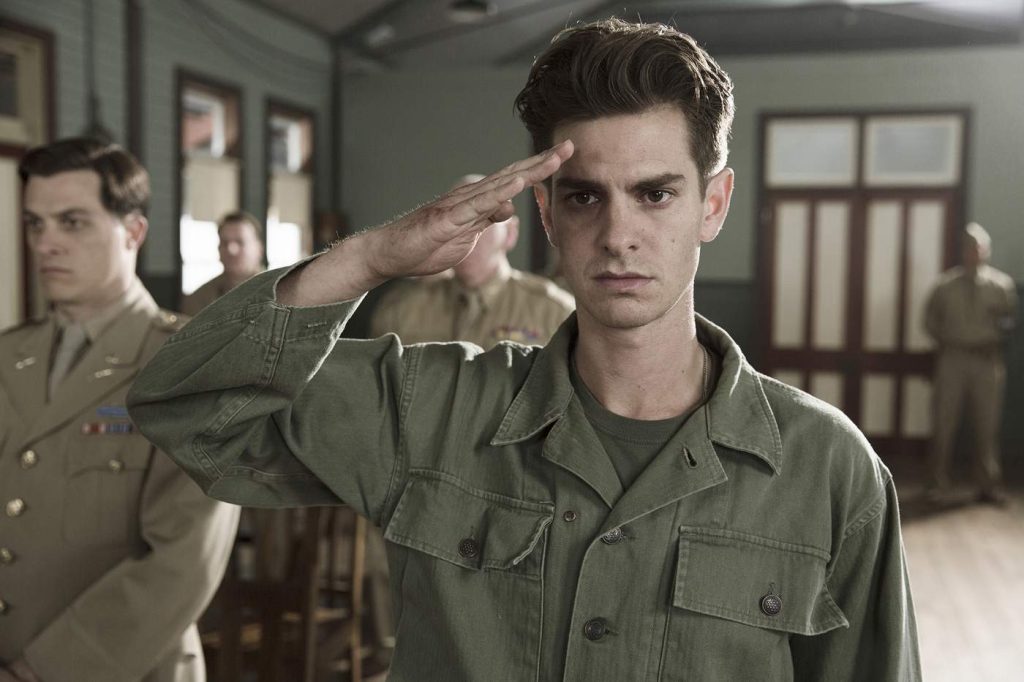
The same year Silence arrived, Garfield starred in Hacksaw Ridge as Desmond Doss, a conscientious objector who became the first person in American history to receive the Medal of Honor without firing a weapon. The film grossed $175 million worldwide. More importantly, it earned Garfield his first Academy Award nomination for Best Actor. That nomination did something no franchise film could do. It told the industry that Garfield was not a failed Spider-Man. He was an actor who had played Spider-Man on his way to somewhere else entirely.
Tick, Tick… Boom! in 2021 confirmed the trajectory with force. Garfield played Jonathan Larson, the Rent creator who died at 35 before seeing his masterwork open on Broadway. The role required Garfield to sing, dance, and play piano. He learned all three. Then he delivered a performance so committed that the Golden Globes gave him Best Actor and the Academy nominated him again. Meanwhile, his Tony Award for Angels in America in 2018 had already established his theater credentials beyond dispute. That $16 million figure does not account for the kind of capital that no spreadsheet tracks: the credibility that comes from choosing difficulty over safety, consistently, for a decade.
The Hamptons Chapter: Four Seconds That Rewrote the Narrative
 andrew-garfield-the-amazing-spider-man
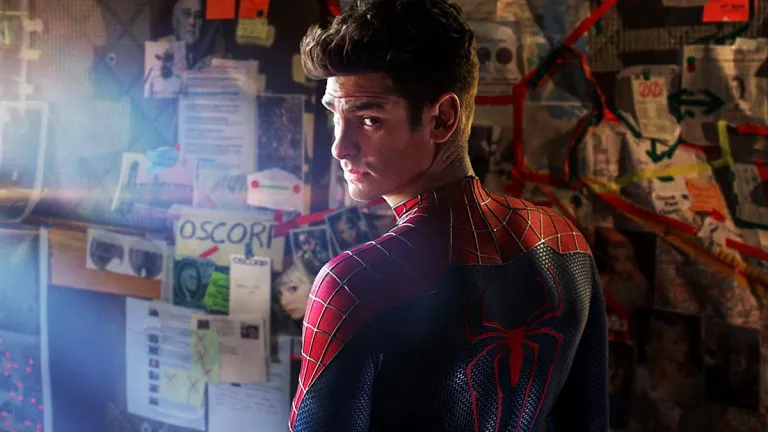
Then came No Way Home. Sony reportedly paid Garfield $1 million for the appearance. Roughly thirty minutes of screen time. And somewhere inside those thirty minutes, he did something that restructured his entire public identity. When his Spider-Man caught MJ mid-fall and his eyes registered grief, salvation, and the specific weight of completing something his own timeline refused to let him complete, the audience was not watching a superhero. They were watching an actor process loss in real time. Holland, the actual lead, could not match that moment with two hours of material.
The scene went viral after No Way Home’s opening weekend. Garfield memes flooded the internet. A generation of viewers who had written off The Amazing Spider-Man suddenly realized they had been watching the wrong metric. The box office numbers said Holland’s version was superior. The emotional data said something more nuanced. For anyone managing a brand in the luxury space, the parallel is precise. Market share is not the same as brand equity. The product that sells less can still be the one people feel more. Garfield proved this with four seconds of screen time and a paycheck that was one-fifth of Holland’s. Technique does not care about billing order.
What He Built: Scarcity as Strategy in the Attention Economy
Since No Way Home, Garfield has operated with the selectivity of someone who learned something permanent from being told he was replaceable. We Live in Time with Florence Pugh in 2024. After the Hunt with Julia Roberts, directed by Luca Guadagnino, in 2025. Under the Banner of Heaven earned him an Emmy nomination. Notably, his upcoming slate reads like a masterclass in refusing to repeat himself. He plays Sam Altman in Guadagnino’s Artificial. Carl Sagan in Voyagers. Roy Horn of Siegfried and Roy in Wild Things for Apple TV+. A peasant revolt leader in Paul Greengrass’s The Uprising. And Martin Scorsese has reportedly cast him in A Life of Jesus.
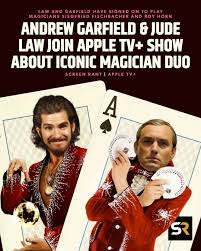 Andrew Garfield Jude Law Siegfried and Roy
Garfield, Guadagnino, Greengrass, Scorsese. That sequence of collaborators tells you everything the net worth figure cannot. He takes fewer roles than any A-list actor working today. Shows up at fewer events. Maintains the lowest public profile in his tier. The strategy runs counter to an era that treats visibility as proof of relevance. However, scarcity applied with discipline converts absence into authority. Harvard Business Review notes the dangers of relying on nostalgia, but Garfield’s play is the inverse. He is not trading on the past. He is making the present so selective that each appearance feels like an event rather than a schedule filler.
The Soft Landing: Why $16 Million Is the Wrong Number to Watch
Garfield’s mother, Lynn, died of pancreatic cancer while he was filming The Eyes of Tammy Faye. He flew home to be with her. Then he returned to set. Later, he discussed his grief publicly with Stephen Colbert, with Anderson Cooper, and in an episode of Sesame Street with Elmo that quietly became one of the most emotionally honest moments in the show’s history. He has spoken about wanting children and the sadness of not yet having them. Openly, he has spoken about faith, about loss, about the cost of giving everything to a role and the cost of not giving enough.
At 42, the Andrew Garfield net worth conversation misses the point in a way that would probably satisfy him. He is not optimizing for wealth. He is optimizing for the kind of career where every project teaches him something and every performance leaves a mark. Tobey Maguire disappeared and became mythology. Zendaya diversified and became a portfolio. Holland is still inside the machine, betting it holds. Garfield is the one who got thrown out of the machine and discovered he could fly without it. The Andrew Garfield net worth of $16 million makes him worth less than all of them on paper. In every other currency that matters, the market is still catching up.
Related Reading
From the Spider-Man Franchise:
From the 2020s Content Empire:
You already know the difference between content that fills space and content that fills rooms. Social Life Magazine has spent 23 years putting the right people in the right story at the right moment. That is not publishing. That is positioning. If you have a brand, a project, or a reputation that deserves the Hamptons’ only serious editorial spotlight, the conversation starts at sociallifemagazine.com/contact.
Want guaranteed placement in front of 125,000 affluent readers across five summer issues and two off-season editions reaching Upper East Side doorman buildings? Submit a paid feature and let our editorial team build your story with the same precision we bring to every page.
Our email list reaches 82,000 subscribers who actually open, read, and act. The kind of people who summer in Sagaponack and winter in Palm Beach. Join them. Subscribe to the Social Life email list for insider access to luxury lifestyle content you will not find anywhere else.
Polo Hamptons 2026 is where $3.6 million average net worth meets brand activation on a polo field. If your brand belongs in front of that audience, you already know. Tickets, cabanas, and sponsorship packages at polohamptons.com.
Subscribe to the print edition of Social Life Magazine and hold 23 years of Hamptons cultural authority in your hands. Delivered to your door, from Memorial Day through Labor Day and beyond. sociallifemagazine.com/subscription.
If this article sharpened your thinking, buy us a coffee. Independent luxury journalism does not sustain itself on algorithms alone. Donate $5 and keep the signal clean.