
In his impeccably researched biography of the late Queen, Hugo Vickers offers us his piercing insights into the innermost workings of the Royal Family. Here, in part three of our exclusive serialisation, he examines the breakdown of Charles and Diana’s marriage…
Back in 1994, when Prince Charles was advised by his private secretary to do a television interview, he had no idea he’d be asked about Mrs Camilla Parker Bowles.
At that crucial point in the filming, he glanced slightly anxiously towards his private secretary, who was also in the room. Meanwhile, the camera moved in to make sure viewers missed not the slightest twitch of his discomfort.
Today, the only part remembered of Jonathan Dimbleby’s interview is Charles’s admission that he had been unfaithful, albeit only after his marriage to Diana had ‘irretrievably broken down’.
Since then, there has been much speculation about those words. What made the breakdown of the marriage ‘irretrievable’ – and when did that happen?
Amid the various theories put forward, there were barely any that lit on the truth…
Camilla had been involved with Charles in 1972, cut short only when his naval duties sent him to sea for eight months.
While he was away, however, she’d married Major Andrew Parker Bowles, a dashing Cavalry officer with whom she’d been involved before meeting Charles. Arguably, the prince then went into a sulk which lasted until his second marriage in 2005.
Camilla’s husband did not have a reputation for monogamy, and in the years before Charles’s first marriage, the prince returned to his lover. Soon, the world would get excited about Lady Diana Spencer, presenting it as a great love story, but the truth is that the real love story was Charles and Camilla.
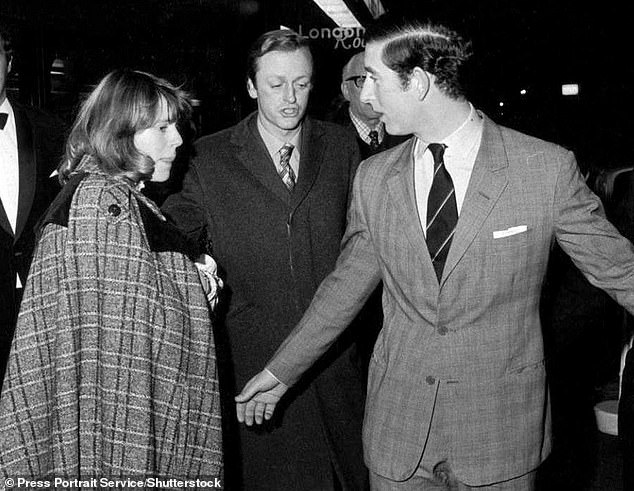
Camilla and Charles had been involved in 1972 which was cut short due to his naval duties. Pictured with her then husband Andrew Parker Bowles and Charles in 1975
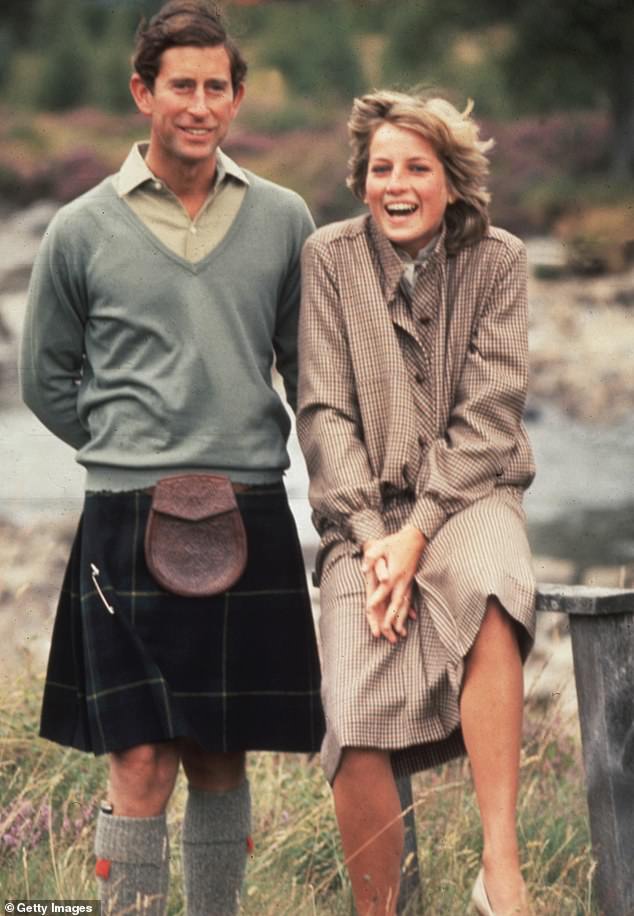
Soon, the world would get excited about Lady Diana Spencer, presenting it as a great love story. On paper, Diana had seemed a perfect royal bride
On paper, the virginal and aristocratic Lady Diana Spencer had seemed a perfect royal bride. When Charles began to contemplate her as a possible wife, he was much encouraged by his friends, including the Parker Bowleses.
As a schoolgirl, Diana had a professed ambition: to marry her childhood playmate Prince Andrew. The truth is she hardly knew Charles, and called him ‘Sir’ until the day of their engagement.
Not everyone was happy about the prince’s choice. Some, who’d known Diana in Norfolk, predicted trouble, aware of her fragile nature. Indeed, during the long months leading to the marriage, her state of nerves increased and she began to suffer from bulimia.
Both bride and groom were having serious doubts. During Ascot week, Prince Charles looked over at Diana at dinner and asked his neighbour: ‘Do you think you can fall in love after you’re married?’
During that same week, on June 17, Diana suddenly burst into tears in the Royal Box.
She claimed she had been stung by a wasp, which was untrue. She was taken back to Windsor Castle for a rest.
Prince Charles was about to fly to New York for one night to attend a gala performance of Sleeping Beauty by the Royal Ballet at the Metropolitan Opera House. She put a note in his dinner jacket saying she loved him.
The next day, with tears in his eyes, he told a friend: ‘I am not sure that I can handle this.’ The friend said it was not too late to abandon the plan. To which Charles replied: ‘I am afraid it is.’
The wedding took place on July 29, 1981, at St Paul’s Cathedral, attended by numerous European monarchs. Years later, Diana claimed she could see Camilla Parker Bowles sitting in the congregation in the cathedral. She may well have seen her in a photograph later, but as one of her bridesmaids, India Hicks, later confirmed to me, it would have been impossible at the time.
At first, the reaction to Diana was universally positive. The heir to the throne had fulfilled his duty by taking a wife and was paving the way for another generation in the Royal House.
Only in time did the problems surface – the eating disorders, the Press’s obsession with her, the suspicions about Camilla, the competition between wife and husband (she diverting attention from what he perceived as his vital work). Which came first – the illness or the unhappiness? The Queen came to find her tiresome. She thought things went wrong as the result of illness.
It is possible that it was the other way around. One thing is sure: Prince Charles could not cope with her.
At Sandringham one day, Diana had a tantrum. The walls are not thin, but what was heard that day was hard to forget. No one could calm her.
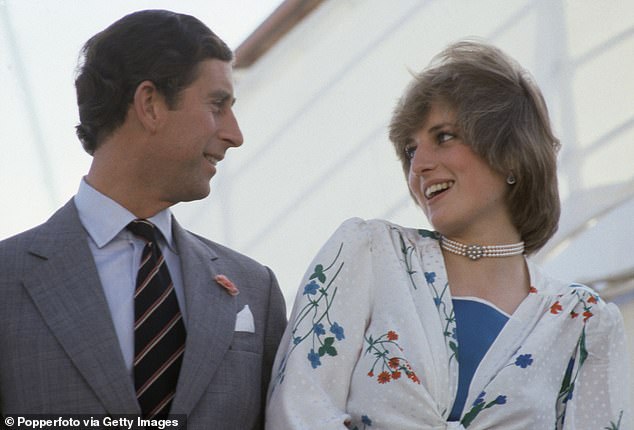
During the long months leading to the marriage, Diana’s state of nerves increased and she began to suffer from bulimia. Both bride and groom were having serious doubts
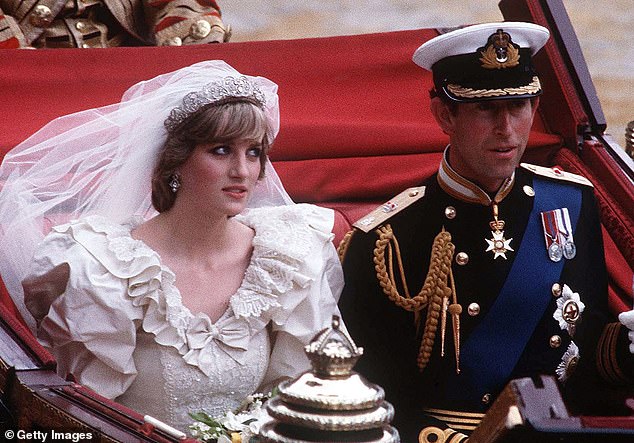
The wedding took place on July 29, 1981, at St Paul’s Cathedral. Years later, Diana claimed she could see Camilla Parker Bowles sitting in the congregation
Years later, when the marriage had unfurled even further, a sympathetic friend spotted Charles in the corner of a room, looking utterly forlorn. ‘Don’t worry. It will go away,’ said the friend.
Charles replied: ‘Oh, no, it won’t.’ He was right.
The birth of Prince Harry in 1984 marked a watershed moment in the fast-declining marriage. Prince Charles emerged from the hospital and told the waiting crowd that he would soon have enough boys for a polo team. He then headed off to play polo.
Diana suffered a severe bout of post-natal depression. Soon afterwards, the Waleses went up to Scotland to stay with Anne, Duchess of Westminster.
During their stay, Charles went out to do some salmon fishing, while Diana read a book nearby.
At some point, she put her book down and took a walk along the riverbank.
Unaware of where she was, Charles cast – and caught Diana just above her eye with his fly, which had to be cut off.
That day, her number three detective, 37-year-old Barry Mannakee, was on duty. It was he who accompanied the injured princess back to the house. She did not need to go to hospital, but she needed sympathy – and Mannakee gave it.
Back in London, her regular protection team soon noticed a change in her behaviour whenever she was in Mannakee’s company, and became concerned about the implications.
In due course, more and more of the people surrounding her started to notice that there appeared to be something going on between the two of them.
Finally, her regular protection officers decided they had no choice but to confront her – a difficult conversation to have, but one they hoped could be resolved discreetly.
Although Diana at first denied she was having an affair, she eventually admitted it. Alarmed, the protection officers pointed out that Mannakee – who had married at 19 in 1966 – had a wife and two daughters. Continuing this inappropriate relationship, they stressed, would present inevitable dangers to her and to her reputation. The affair continued.
QUEEN’S WASPISH WORDS TO PRU
The actress Prunella Scales once stayed at Windsor for a ‘dine and sleep’, so she had the chance to study the Queen’s mannerisms.
This came in useful when she portrayed the monarch in Alan Bennett’s play A Question of Attribution. Some time later, Prunella found herself in a line-up waiting to meet the monarch.
As she passed by, the Queen told her: ‘I expect you think you should be doing this…’
<!- – ad: https://mads.dailymail.co.uk/v8/de/royals/none/article/other/mpu_factbox.html?id=mpu_factbox_1 – ->
The best solution, the protection officers decided, was to arrange for Mannakee to be transferred to non-royal duties – but they faced resistance from Charles, who liked the officer and wanted to keep him on.
The excuse given for the transfer was that the hours had been too long, and that he was too often away from his family. Reluctantly, the prince agreed Mannakee should move on.
Diana herself heard the news from Mannakee in a phone call he made to her direct line. She was extremely upset, but would not tell her husband why.
Charles then turned to her protection team, asking if they knew what had caused her to become so emotional. They told him it was because Mannakee was being removed.
There seemed a simple solution to this: Charles asked that the officer be reinstated. The protection officers were adamant that this could not happen. If Mannakee stayed, they told him, they would resign.
The penny dropped. Mannakee was moved.
Afterwards, his affair with Diana continued for a while, then petered out due to the complications involved in keeping it going. The princess moved on.
It was the Mannakee affair that caused Charles to conclude that his marriage had ‘irretrievably broken down’, as he told Jonathan Dimbleby on camera in 1994. Realising his marriage had no future, he eventually rekindled his relationship with Camilla.
This puts a different perspective on her infamous Panorama interview. When she told Martin Bashir that there were three people in the marriage, there were indeed three – but the third person at the start was Mannakee, not Mrs Parker Bowles.
The Mannakee affair had a tragic postscript. On May 15, 1987, he was killed while riding pillion on a motorcycle driven by PC Stephen Peet, which collided with a car at Woodford in east London.
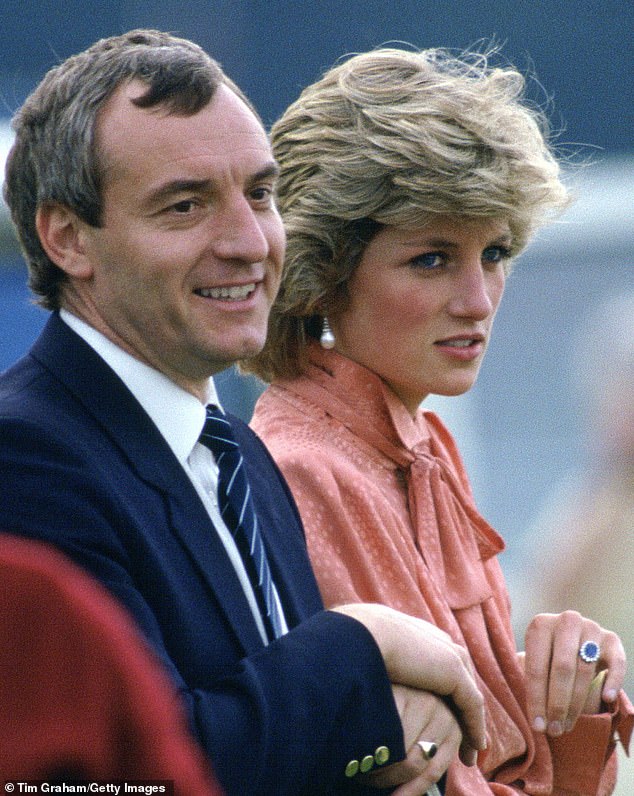
Diana and her bodyguard Barry Mannakee at a polo match. Their affair caused Charles to conclude that their marriage had ‘irretrievably broken down’
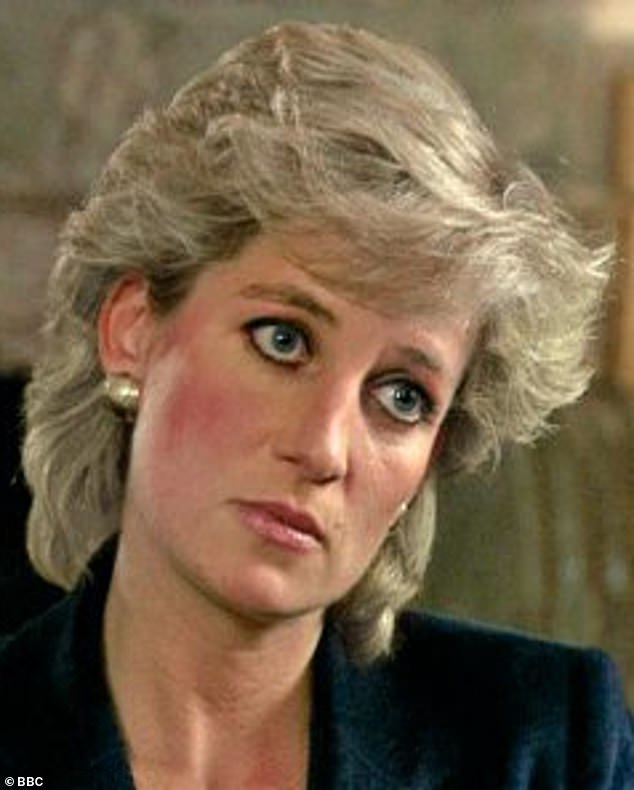
When she told Martin Bashir in the infamous Panorama interview that there were three people in the marriage, there were indeed three – but the third person at the start was Mannakee
When Charles told Diana about Mannakee’s death – while they were flying to Monaco – she was desperately upset.
Later, she came to believe his death was the result of a conspiracy by those around her – that he had, in effect, been killed for her own protection. This was grossly unfair.
From October 1986, Diana became involved in an affair with young Life Guard James Hewitt, with whom she rode in Hyde Park. Camilla’s husband, Andrew Parker Bowles, had thought Hewitt would be a suitable riding instructor.
Hewitt proved over-sexed, and Diana used to have him smuggled into Kensington Palace in the boot of the car. When the affair ended in 1991, Diana behaved – as she had after her liaison with Mannakee – as if it had never happened.
The Wales marriage continued to crumble. Diana hated Highgrove and would come down to find that Charles had left to see Camilla Parker Bowles.
A hammer blow came in June 1992, with the publication of Andrew Morton’s book, Diana: Her True Story. Even before it came out, there was speculation that the princess had assisted its author, as evidenced by her private photos in the book.
An official visit by the Princess of Wales to Egypt was overshadowed by speculation, especially when Morton’s office was burgled, an attempt was made to bribe the printers in Norfolk for an advance copy and the Queen asked close aides to ascertain the intended contents.
A devastating serialisation hit newsstands on June 7. Diana laid every grievance she could muster against her hapless husband.
There were accounts of suicide attempts, and Camilla was publicly named as the other woman in his life.
In retrospect, it seems almost incredible that so many people accepted Diana’s denial of any involvement in the book.
One person who wasn’t fooled, though, was Prince Philip, who read the book on flights to and from Canada in July and clearly detected her hand in it. Feeling that too much had been revealed, he was not impressed.
There was a sticky meeting at Windsor, where the Waleses discussed the issue with the Queen and Prince Philip. Diana’s line was that Charles had never wanted to marry her and that her position was intolerable vis-à-vis Camilla. There was talk of lovers being taken if the marriage did not work.
After that meeting, the Queen maintained her neutrality while Prince Philip wrote to Diana – there were six letters from him and five replies from her between June 18 and October 4, all of which I have read.
In his letters, Philip said he hoped she was aware that Charles had made a great sacrifice for her, that he and the Queen had never been happy about his relationship with Camilla, and that he did not advocate anyone taking a lover.
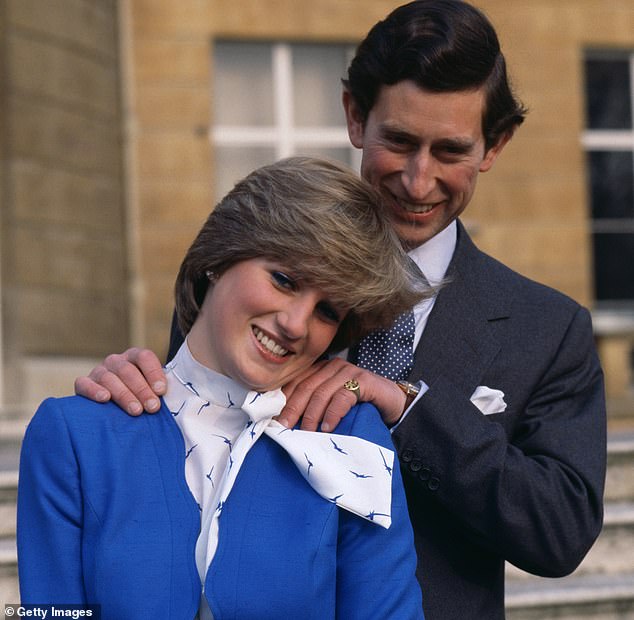
The Wales marriage continued to crumble. A hammer blow came in June 1992, with the publication of Andrew Morton’s book, Diana: Her True Story
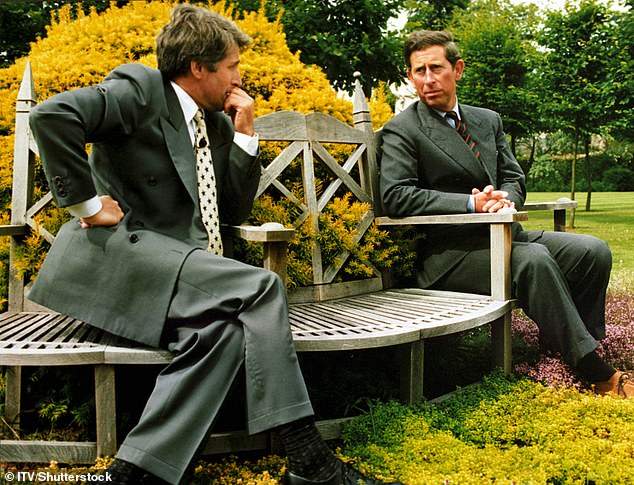
Today, the only part remembered of Jonathan Dimbleby’s interview is Charles’s admission that he had been unfaithful, albeit only after his marriage to Diana had broken down
Indeed, he could not understand why anyone would prefer Camilla to her, he added sarcastically. But his words were not wholly uncritical. He thought Diana was too possessive of her sons, and regretted that he and the Queen did not know their grandchildren better.
In the correspondence, he opened up about his own position. He reminded her that he had been an outsider when he married.
He was sad that he and the then Princess Elizabeth had had only four years ‘before Mama succeeded’ and that he’d given up his naval career, for what? The Head of State had a role. No one else did.
Trying to be constructive, he said as Diana and Charles both loved music, he hoped they could attend more such events together. Meanwhile, Lord Charteris (former Private Secretary to the Queen) or Dean Michael Mann might act as mediator.
For her part, in her last letter to Philip, Diana told him it was clear that he ‘really cared’. To which he replied: ‘Phew.’
Sadly, that well-meant correspondence did not achieve its goal.
During this period, Philip recognised one or two phrases from his correspondence with Diana popping up in the press. This made him worry that every time there was a private discussion between Charles and Diana, details would appear in the Daily Mail.
Hot on the tail of Diana: Her True Story came the ‘Squidgygate’ tape, published on a newspaper hotline.
It was a 23-minute flirtatious conversation between Diana and her friend James Gilbey, seemingly made by a boffin who had stumbled on it. The tape contained such remarks as ‘I can’t stand the confines of this marriage’ and ‘Bloody hell, after all I’ve done for this f***ing family’.
In fact, Diana had known about the existence of this tape – and the likelihood it would soon be aired – before the Morton book was published. She had realised then that she needed to get her version out first. But what she did was unforgivable.
On December 9 that same year, it was announced that the Prince and Princess of Wales were to separate. Princess Margaret asked Prince Charles: ‘Do you mind if I go on being friends with her?’ and he said that was fine.
Three days later, Princess Anne married Commander Timothy Laurence, the Queen’s former equerry. Princess Margaret was seated in the same row as Prince Charles and Prince Andrew, and commented ruefully: ‘We’ve done well. We’re all divorced.’
At around this time a courtier commented: ‘We do our weddings well. It’s our marriages that don’t work.’
Diana now became increasingly paranoid, having her rooms ‘swept’ regularly for bugs.
While she garnered good publicity, the inner royal circle, who had witnessed the marriage unfold, were aware of all that Prince Charles had suffered – uncontrollable tantrums and using the children against him, not to mention Diana’s infidelities.
More trouble came with the airing of the Camillagate tapes – a particularly damaging late-night conversation between Prince Charles and Camilla Parker Bowles. The Tampax reference was especially unfortunate.
As with the Squidgygate tapes, there was a far-fetched theory that a random radio surfer in a shed had stumbled across the conversation. But it is as good as certain that the prince’s telephones were bugged by security services until finally someone realised: ‘We’ve got him.’
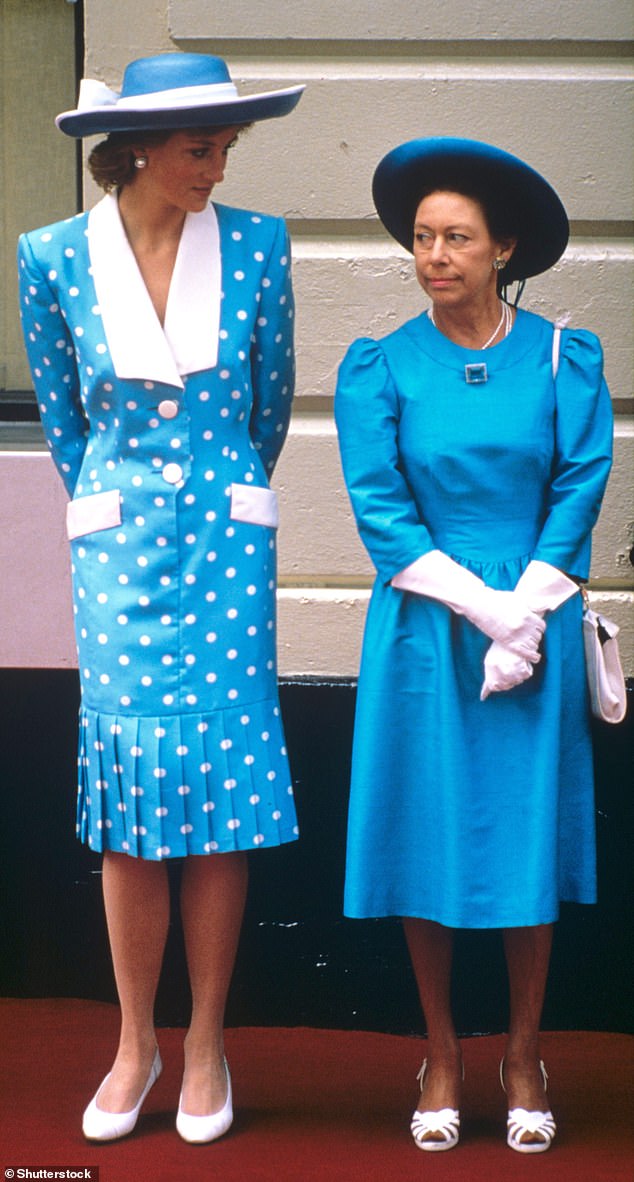
When it was announced that the Prince and Princess of Wales were to separate Princess Margaret asked Prince Charles: ‘Do you mind if I go on being friends with her?’
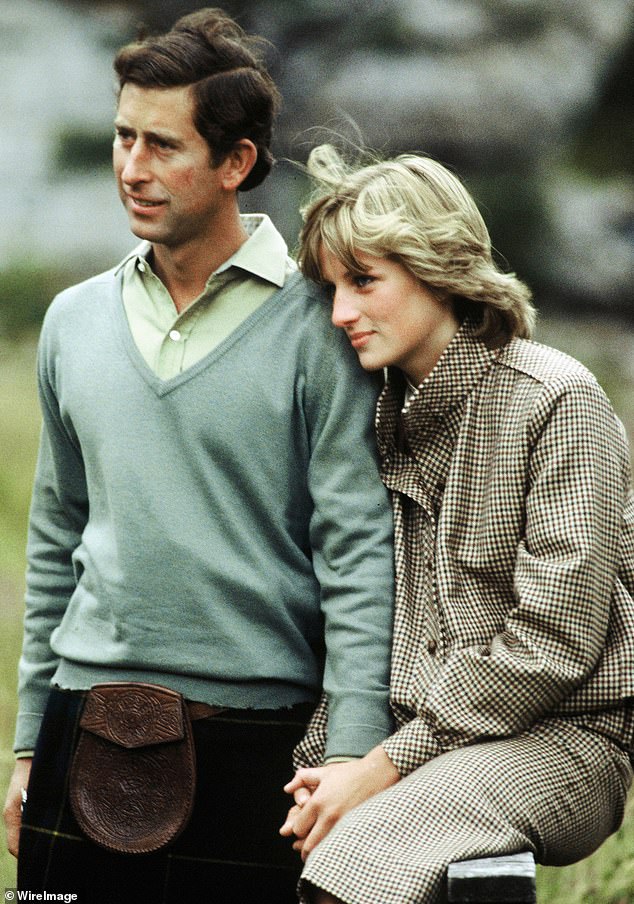
The former couple during their honeymoon in Balmoral in August 1981
In December 1993, Diana made the dramatic announcement that she was stepping down from public life. She needed ‘time and space’, she said in a public speech that greatly irritated the Prince of Wales.
Her so-called retirement did not last long. Sir Michael Peat, the Keeper of the Privy Purse, let it be known that Kensington Palace was for working members of the Royal Family.
In fear of losing her home, Diana returned to work. She also joined the Royal Family at Sandringham that year.
At the end of 1993, Princess Margaret gave me her take on the Waleses’ ill-fated marriage.
‘The trouble was that he undermined her [Diana] consistently from the start, and gave her no support … Then he began to get difficult over the children, which was the cause of all the trouble last year …
‘I don’t know why she wanted to come back [to Sandringham]. I longed to tell her to go away. It was the same with me and Tony [Lord Snowdon]. He undermined me.’
Two years later, on the Queen’s wedding anniversary, the monarchy received another devastating blow when Diana gave her BBC Panorama interview.
It has since been revealed that Diana was tricked into it by devious misinformation – but even so, she was not averse to letting her views be known. Her words were mean-spirited. She had aimed to damage her husband and succeeded, but she also damaged herself.
The Queen intervened, telling the couple that enough was enough and commanding them to get divorced.
The divorce became absolute on August 28, 1996, and tensions between the Waleses subsided to some degree.
But then Diana – used to star treatment – threw in her lot with Harrods owner Mohamed Fayed, who was only too happy to use her as a pawn. He bought the yacht, Jonikal, and invited her to bring her boys on a Mediterranean holiday, with his son, Dodi, in close attendance.
Having accompanied her once, William and Harry had no intention of coming on subsequent trips. They joined the Queen and the Royal Family on Britannia’s final Western Islands cruise, where the newspapers were removed from view. They wanted nothing more to do with the Fayed family.
In August 1997, Diana had further holidays with Dodi in Sardinia and finally Paris, where she died in a car crash. Back home, there was an unleashing of grief – like a frenzied scene from the film Zorba the Greek.
While the media clamoured for the Queen to return to London, she sensibly prolonged her stay in Balmoral to give comfort and strength to her grandchildren.
Princess Margaret seemed to suggest Harry had bottled everything up. She told me later: ‘We tried to get him to break down but he just wouldn’t.’
For years afterwards, there were conspiracy theories about Diana’s death, the worst being Fayed’s claim that she had been murdered, possibly on the orders of the Duke of Edinburgh. In a far-ranging conversation with Prince Philip in Hampshire in the summer of 2000, he told me that he considered Mohamed Fayed ‘a creep’.
As the Royal Family tried to come to terms with Diana’s death, it was to some extent business as usual.
The Queen had horses due to race that week. When Sir Michael Oswald, her National Hunt racing adviser, rang her to say that he did not think it appropriate to run them, she said: ‘Oh, do you think so?’ (In fact, he had already withdrawn them.)
Patrick Mitchell, Dean of Windsor, went up to Balmoral. He said: ‘There were barbecues and long walks and Prince Harry particularly liked driving the Discovery.’
At Birkhall, the Queen Mother refused to allow the television to be on the whole week. Anyone who wanted to see the news had to sneak down to the servants’ quarters.
Speaking of Diana’s death, Princess Margaret was heard to comment: ‘Well, that sorts it out, then.’ Concerted efforts were made to ensure she did not go out and express that view more widely.
Intense media pressure forced the Queen to come down to London a day earlier than planned. As the plane touched down, Princess Margaret was in tears. ‘I can’t bear Lilibet having to go through this,’ she said.
‘We were a day late,’ Lord Charteris conceded.
My conversation with him proved interesting. I said of the Princess of Wales: ‘She had a good heart.’
‘Really?’ he replied. ‘You surprise me.’ His verdict was: ‘She wanted to destroy the monarchy and she damn nearly succeeded.’
Diana’s funeral in Westminster Abbey had contributions from Elton John, and a well-crafted, though ultimately divisive, address from Lord Spencer.
The crowds outside clapped the speech. As one in the Abbey put it, it was like Robespierre riding up the aisle on his horse.
Within a month of Diana’s death, Andrew Morton exposed to the world the full extent of her cooperation with his book. Prince Philip had been right all along.