
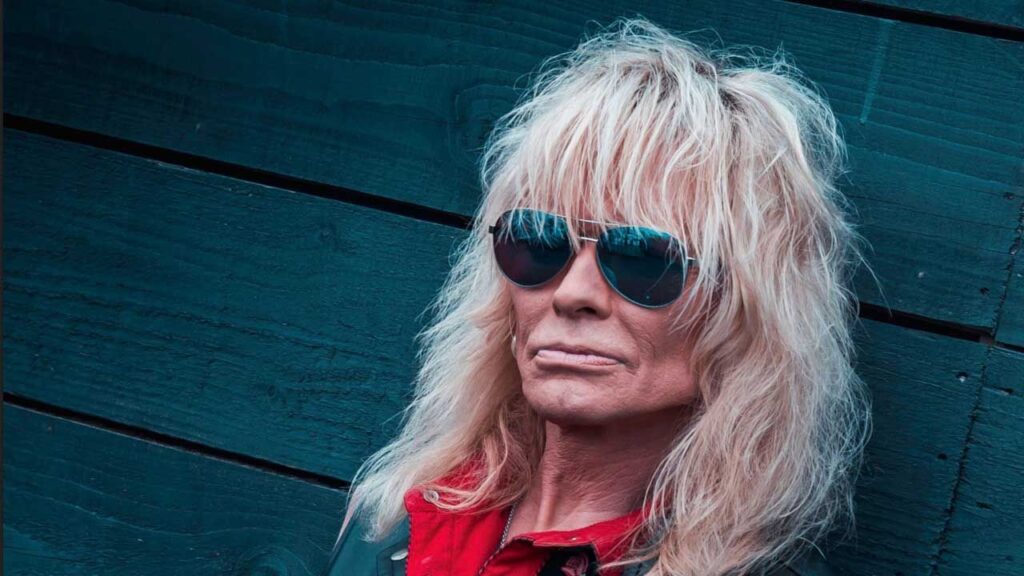
Energetic to the brink of hyperactivity, Michael Monroe, the artist formerly known as Matti Antero Kristian Fagerholm, was born on June 17, 1962. An appropriate juncture for one who’s come to inhabit, if not define, a place where rock’n’roll and glamour intersect. Monroe, a blond who’s clearly still having way more fun than is strictly decent: all Bambi-in-the-headlights eyes, rapid-fire wit, wardrobe set to ‘stun’ and instinctive charisma marks out his time of birth as “the same year that the Rolling Stones were born and two months before Marilyn Monroe died”.
A Swedish-speaking Finn whose anecdote-spattered, mid-Atlantic chat is laced with more than a little gor-blimey-guvnor Tooting Bec wreckage, Monroe grew up as the youngest of three brothers to parents entrenched in the Scandinavian media. No stranger to celebrity, his childhood was comfortable and, as with many of his generation, relatively monochrome and unremarkable until a televisual encounter with an irresistible emissary of rock’n’roll. After setting his eyes upon Ozzy Osbourne, nothing would ever be quite the same for him again.
He re-immersed himself in piano lessons, taught himself to play the guitar, even studied classical flute for a year (it helped him forge an enduring relationship with the saxophone he later perfected by “sucking and blowing” along with Little Richard and Coasters records).
Article continues below
You may like
Graduating through Madness, an unremarkable jam band, he initially hooked up with Andy McCoy, guitarist with the punk band Briard, in their shared rehearsal room in the crypt of a church in Helsinki.
Monroe revealed his plans to be a frontman, they exchanged numbers, and before you could say ‘Bangkok shocks’… Hanoi Rocks.
Hanoi Rocks were a perfect five-piece distillation of 30 years of rock insurrection: they effortlessly matched a flamboyant classic rock sensibility with a no-fucks-given punk attitude. They provided a flawless, if chaotic, template for Guns N’ Roses excess to come but, tragically, the fates intervened. As Michael Monroe prepares to unleash Outerstellar, the thirteenth full-length album in a 40-year solo career that only ever seems to border on its unprecedented climax, our subject settles down to reveal what a long, strange trip it’s been.

The fact that you took piano lessons as a child suggests you come from a musical family and that there was always music in the house while you were growing up.
Yeah, classical music. I had piano lessons when I was about five. I learned how to read music, but it was always easier for me to play by ear than read the notes. Then, when I was eight, I saw Black Sabbath on TV, discovered that I could also play rock’n’roll on the piano, and asked my mom if I could take some more lessons. So at first I only heard classical music, but then I heard this powerful sound, saw this singer with long hair basically going crazy on stage, and I was like, wow, if I could just do that, and make a living from it… What a dream.
You grew up with a certain degree of celebrity because your dad was a well-known radio broadcaster in your native Finland?
Yeah, my dad was a radio announcer. Very softspoken, old-school and respected. Pretty much everybody knew him. My mother worked in radio too. She started out as a recording engineer for radio plays. That’s where my mother and father met. Sometimes when a play needed kids’ voices they’d use me and my brothers. We were in some TV commercials as well. When we first started Hanoi Rocks I was known for being my dad’s son, then before too long he was known as Michael Monroe’s father.
What to read next
Other than Sabbath, what were the formative moments that seduced you into pursuing a career in rock?
Well, after discovering Sabbath I started looking for stuff and buying records. I saved my monthly allowance and bought all the Black Sabbath albums as they came out. But there was also a documentary about rock’n’roll on TV that showed Little Richard and the Rolling Stones, and I was like: “Wow, this is something else. There’s a whole world of this.”
So I got into Deep Purple and Alice Cooper. My father would buy us records. He’d go into the record store and ask: “What are kids listening to these days?” The first album we got as a family was Led Zeppelin II. The first album I actually owned was Deep Purple’s Fireball, which my father bought me for Christmas. Then he bought my brother Love It To Death by Alice Cooper, and that was the one.
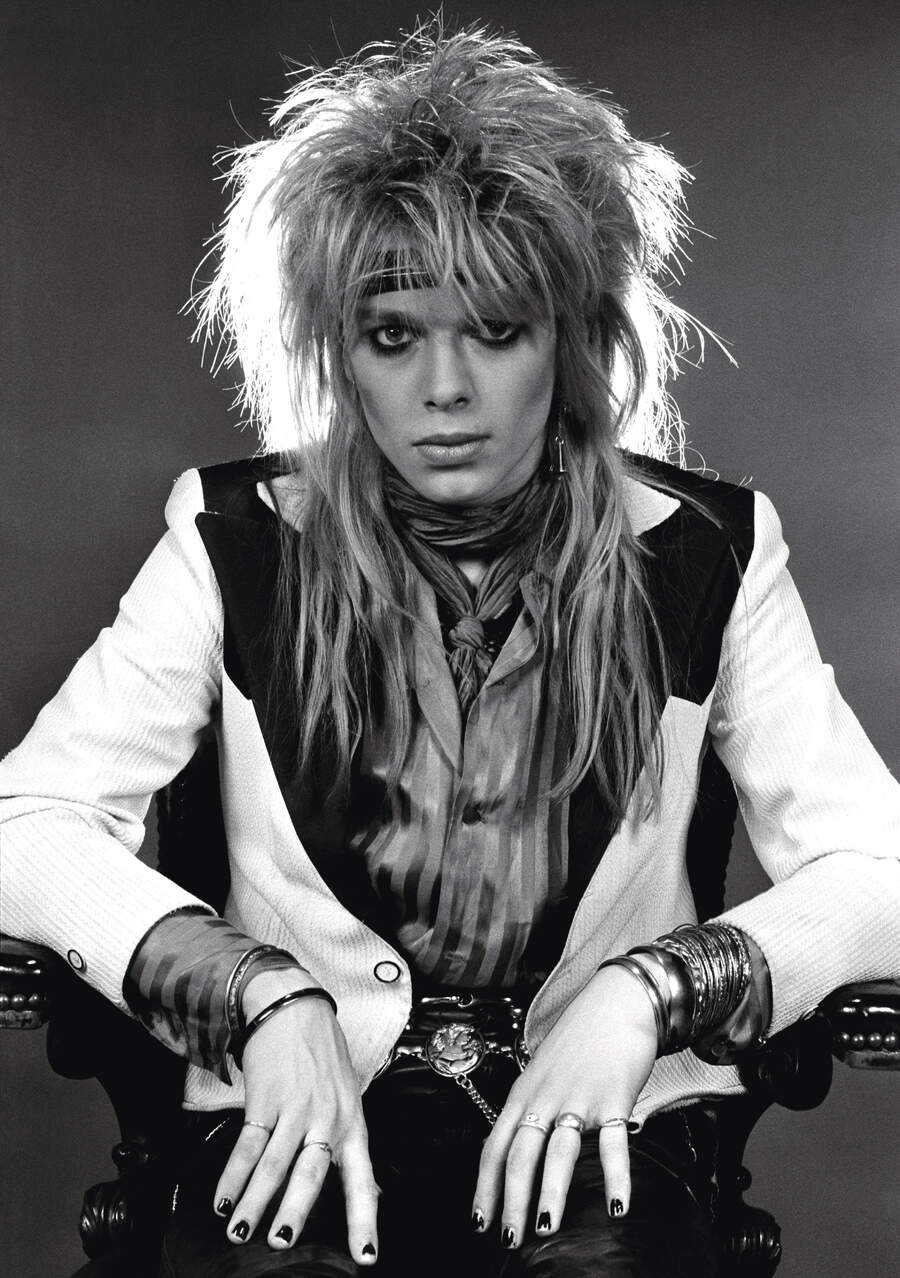
Michael Monroe in October 1982 (Image credit: Andre Csillag/Shutterstock)
Meanwhile, you were at school, how did that work for you?
I could already read when I first went to elementary school because my mother read my older brothers fairy tales and I’d read along with them. So because I already read, and all the other kids were still studying the alphabet, I was bored. Meanwhile, the teacher, who was an elderly woman, had something against me. She picked on me. So I started doing stuff back at her and ended up in the headmaster’s office.
So then I became known as a troublemaker. But the headmaster was really cool. She was really smart, and asked: “If you can read already, do you want to take a break from school?” But I said: “No, I like it here, I’ve got friends here. That teacher’s got something against me.”
So they sent me to a child psychiatrist to see if there was something wrong with my head. Anyway, it was 1969, and I was really excited about the first man on the Moon. I knew the names of all the Apollo astronauts. So I explained to this child psychiatrist how excited I was about it, and spoke about the whole mission in great detail.
So they got in touch with the school and said this kid’s completely normal for his age, send the teacher here. She’s the one who has the problem. And I was like: “Alright! She’s the one who’s fucking crazy, not me.”
Did you consider changing your name an essential step on the road to becoming a rock star?
I was proud of my real name, Fagerholm, but as nobody could pronounce our Finnish names, we all decided when we put Hanoi together that there was no point using our birth names. Even Marilyn Monroe and Alice Cooper didn’t use their own names.
So how did I get to Michael Monroe? Well, there was this Venezuelan guy who was a keyboard player who played in a band I used to jam with, and when he asked me my name I said Makke, which is what they used to call me. My birth name was Matti, but no one called me that except maybe my mother. I’d been Makke since I was about eight. So I told this guy Makke, and he said: “Is it okay if I just call you Mike? So he started calling me Mike, and Michael came from that. I thought it was cooler than Mike. And Monroe? I was born the same summer that Marilyn died and, well, it’s a cool name.
Alice and Ozzy, both remarkable performers fronting significant bands, but both enormous personalities, charismatic, unmistakably stars, showmen, were these the key elements that attracted you to pursuing a career in rock?
Oh yeah. Look at Little Richard in the fifties. A pure showman, the original punk: black, gay, wearing make-up, talking about freedom and fighting the system. He was rebellious and totally outrageous. He was a hero to me because rock’n’roll should be about shaking up the establishment. Punk was about attitude. Telling the truth and being an individual, being true to yourself, not following fashions, doing your own thing on your own terms.
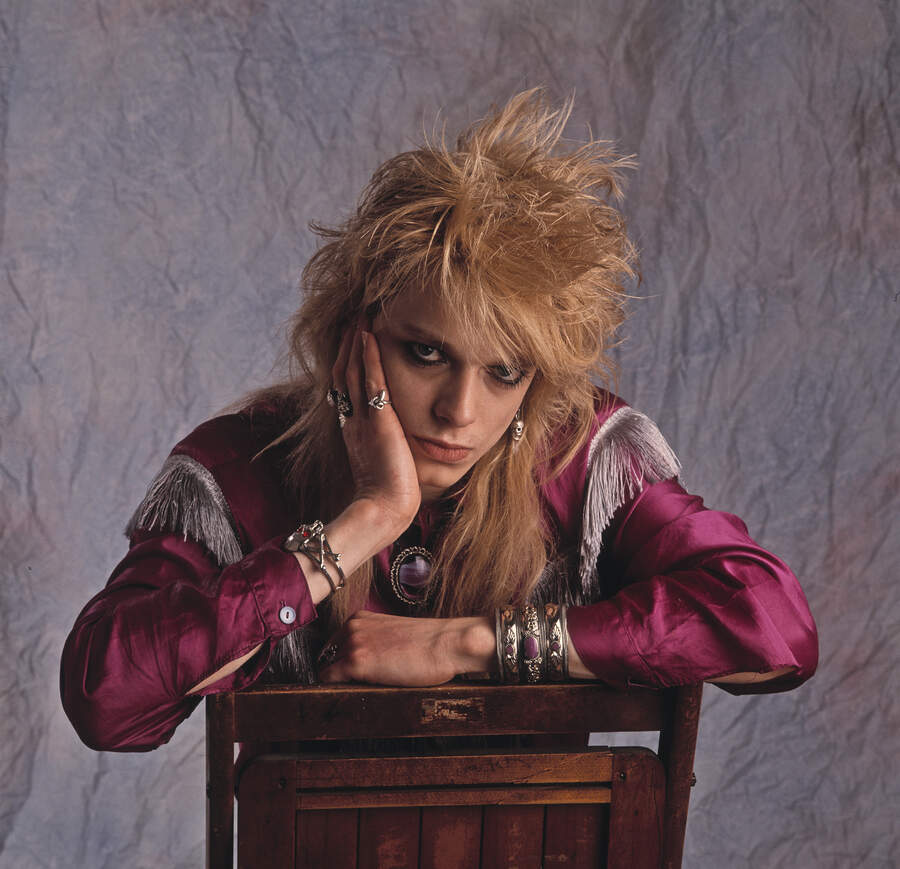
Michael Monroe in New York, 1989 (Image credit: Paul Natkin/Getty Image)
Prior to Hanoi, you’d been in a band called Madness before hooking up with Andy McCoy to play second guitar in Briard.
Madness was just a jam band. My first actual gig was at a school near where I lived in Helsinki. I played guitar and the singer was a couple of years older than me. He was set to be a straight, working guy. His father was Finnish, but his mother was German and she was always like: “Get a real job. You can’t make a living with that music.”
Briard was Andy’s band. It was a punk band and Andy played guitar. We used the same rehearsal place, and one day after rehearsing with a bassist and drummer – I had to play guitar myself by necessity – I went back for something I’d forgotten, and met Andy. We got talking, and Andy said to Briard’s singer that I should be their second guitarist. They went outside to discuss it, came back in and said: “Okay, you’re in if you cut your hair.” And I, with my hair down to my waist, said: “Are you out of your fucking mind, man? No way.” So that was that. But me and Andy kept on talking, and we decided to put a band together ourselves, and that’s when we started planning what would become Hanoi Rocks.
Even though I’d done my first gig as a guitar player, I was determined to be a singer. And my first gig as a singer was with the very first version of Hanoi – without Andy and Sami [Yaffa] – when we did our first few gigs with Nasty [Suicide, guitar] and three Finnish guys [guitarist Stefan Piesnack, bassist Nedo Soininen and drummer Peki Sirola].
By this point presumably you’d left school, and the family home. Wasn’t there a prolonged period of homelessness at some point?
Yeah. I’d met Andy by then, in seventy-six or something, and we’d started planning the band but nothing had really happened yet. I was still going to school for a few of those years… Well, the first version of Hanoi, in seventy-nine, was called The Nymphomaniacs. The guitarist, a mate of Andy’s, was Swedish, and I went to Stockholm to sleep on his floor. There was a manager, of sorts, who took the guitarist to a pawn shop, ran up a huge phone bill and disappeared. But nothing really happened so I moved back to Finland for a while.
Then in 1980 we left Finland for good and moved back to Stockholm. We were supposed to have a flat, but the guy screwed us over. So me Sami and Nasty ended up on the streets. Andy had a girlfriend so he had a home, but we were on the streets when we started Hanoi Rocks for real at the end of the summer and we remained there for the first six months.
Luckily, our drummer, Gyp Casino, had a rehearsal space under a subway station just outside of the city, it was like a fallout shelter, but we weren’t allowed to stay down there overnight. When the trains stopped, a guard would come down to make sure no one was still around before this big metal door came down. But we’d hide behind the speakers until the guard had gone, and play until morning.
One night we went up the escalators, prised the gates open and raided a nearby field of carrots for food. Gyp had a job on the reception of a gymnasium for retired people, so we kept our stuff in its boiler room and could sneak in to have showers and change our clothes before going back on the street. We had nothing to lose back then.
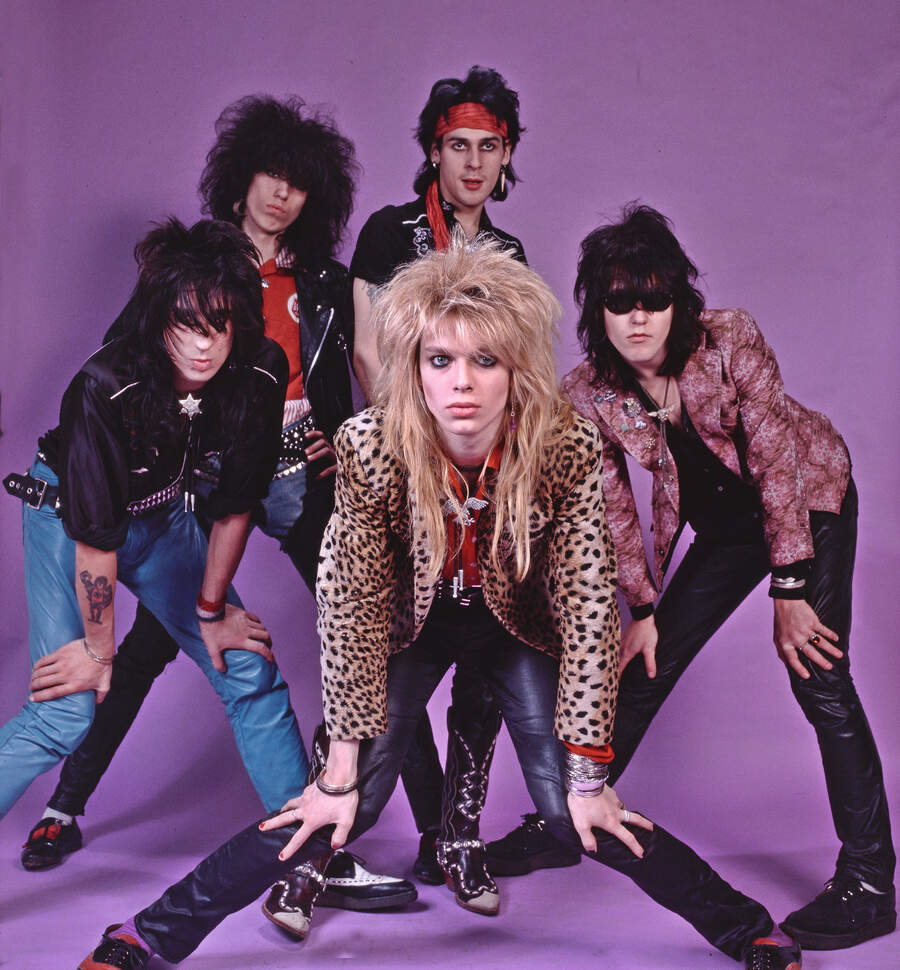
Hanoi Rocks in London, September 1982 (L-R) Razzle, Sam Yaffa, Andy McCoy, Michael Monroe, Nasty Suicide (Image credit: George Chin/IconicPix)
Hanoi Rocks marked an enormous leap forward, a new skin for an old ceremony. You took The Clash dynamic back to its roots: Mott The Hoople, New York Dolls, the Rolling Stones, the kind of swashbuckling, self-mythologising, band-as-gang template.
Yeah, that came from living on the streets, we were for real. Me, Sami and Nasty still have that bond. It’ll never change. Looking after each other on the streets had a lot to do with the Hanoi attitude, that street gang attitude, us against the world, no one can stop us and don’t mess with this gang.
After a couple of albums you seemed to hit a glass ceiling, but a move to the UK and bringing in Razzle seemed to complete the picture.
Yeah, when Razzle joined we became whole. Gyp had problems. He was complaining a lot, and there was a gig in Finland where he just flipped out and jumped on Andy. He pretty much sucker punched him. So he obviously had to go.
Then we played three shows in London – and the first was an absolute disaster. Lords Of The New Church headlined. Me and Andy had been up speeding for five days, and I was so spaced out that when I got on stage I threw up in the middle of Don’t Follow Me I’m Lost Too. Andy and Nasty both broke a string when they hit their first chords, and Sami threw up behind his amp. It was a complete fucking mess. I don’t remember much, but I do remember people saying: “You guys were great!”
At one point I went to the bathroom to take a leak, and Razzle sidled up to me and said: “Hey mate, your band’s great, but I should be your drummer.” So I took his number.
Anyway, back at the hotel room we shared with some giant cockroaches I said to Andy: “What are we gonna do about Gyp?” And he said: “I keep running into this guy who keeps telling me he should be our drummer. He’s almost harassing me.” I said: “It must be the same guy who’s harassing me. Let’s call him.”
Anyway, we tried him out, and while he wasn’t all that great technically, his attitude was brilliant and he looked cool. He had all this hair, black lipstick and platform boots. At the audition we were like: “You’re going to play in those?”
This was at a really low point for Hanoi, we weren’t in good spirits, but Razzle’s arrival gave us a real boost and we felt: “Okay, now it’s all locked in.”
Hanoi soon earned a reputation for overindulgence, but you yourself remained relatively sober.
Well, I didn’t like to drink, alcohol was never my thing. I had my demons, but I wasn’t one of those guys who’d go to a pub, get drunk and talk a bunch of bullshit. I’d stay by myself. Yes, I’d had periods in Stockholm with acid and speed. I experimented, but once I’d seen what I wanted to see, that was enough. Being the only sober one in the band didn’t bother me, I was just glad I wasn’t waking up with their hangovers.
In 1984 [producer] Bob Ezrin suggested I take singing lessons to help my breathing. This classical singing teacher taught me to sing from my diaphragm rather than strain my throat, and I was able to do thirty gigs no problem. Meanwhile, the other guys were drinking all night and pissed off with me because I was smiling in the mornings. If there was a swimming pool in the hotel, I’d swim during the day and then do the gig at night. After ten days of that I’m walking through brick walls while they’re getting weaker and weaker.
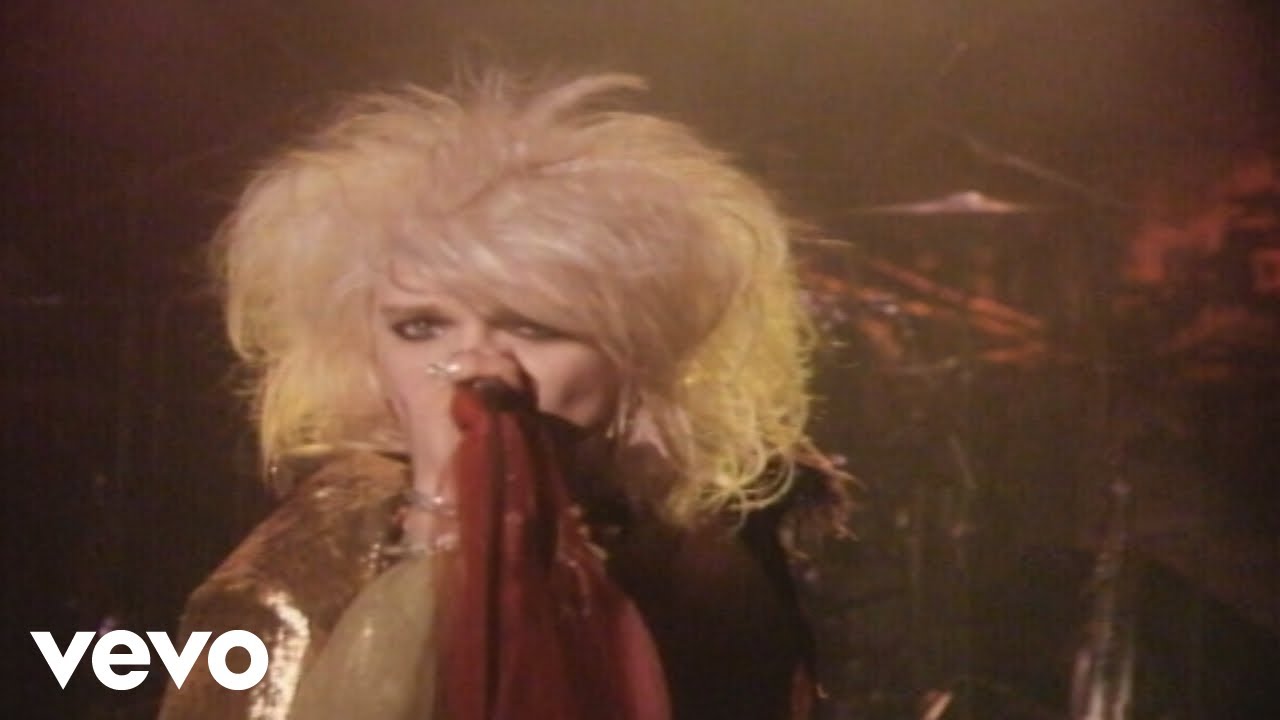
Hanoi Rocks – Don’t You Ever Leave Me (Official Video) – YouTube
Watch On
Then you make Two Steps From The Move, which many consider to be the ultimate Hanoi Rocks album, with dream producer Bob Ezrin, go to America to presumably conquer the place, and everything goes the worst kind of wrong.
Yeah, really bad luck. We could’ve been – considering what happened after – one of the biggest bands in the world. The potential was there, but fate had other plans.
It was so sad to lose Razzle. He was such a great guy, and everything turned to such tragedy [Razzle was killed on December 8, 1984. Mötley Crüe singer Vince Neil, who was driving the car, was charged with vehicular manslaughter and driving under the influence of alcohol in connection with the crash].
Vince Neil’s life was never the same. After meeting him for the very first time a couple of years ago, I saw that – apart from the people that were injured [the two passengers in the other car both sustained brain damage in the collision] – he must’ve suffered the most out of all of us who knew Razzle. His life was ruined because of that whole thing. I don’t know what more to say, other than it was just bad luck.
I was never bitter, I never thought about whether our band was better than any other band, it was more important to me that Hanoi kept our integrity, had the right kind of attitude and were a cool band. When Razzle died, Sami left. Me, Andy and Nasty weren’t connecting at the time, especially me and Andy. I didn’t know what I was going to do next, I just wanted to end Hanoi and leave it as it was. So I moved in with Stiv Bators… And then Johnny Thunders moved in.
What could possibly go wrong?
[Laughs] Everything and anything. Well, it was actually good because Johnny was a good influence on me. And Stiv? It was Stiv that convinced me that I should go solo and go back to writing songs. CBS asked me to make some demos to see if they wanted to keep me on as a solo artist with the same worldwide deal as Hanoi, or drop me. I didn’t really want to stay on the label but I made the demos.
It was around this time Little Steven [Van Zandt] came over to make the Sun City record, by Artists United Against Apartheid, and he agreed I should go solo, that Michael Monroe was better than Mike, and put both me and Stiv on the Sun City song, the first thing that I was a part of when I started my post-Hanoi solo career, which I was very proud of because that was a big thing.
The main reason I moved to New York was because Steve flew us over for the video in Washington Square Park. I looked around and Run-DMC, Springsteen, Peter Gabriel, Grandmaster Flash, Pete Townshend, Miles Davis, Ronnie Wood, Ringo Starr, all the coolest people in music, were there, and I thought: “This summer, make a new start. This is where I belong.” So I moved to New York at the end of eighty-five.
At first I was homeless there too. The Limelight Club was my saviour. It was open until six in the morning, so I could hang out there rather than be on the streets. Eventually I got a flat on East Third Street, across from the Hells Angels. I moved in with my late first wife, Jude Wilder, started to write, and eventually record the Nights Are So Long album on a small budget for release in Scandinavia and Japan. It basically served as an international demo, and from that I got a seven-album worldwide deal with Polygram and started making the No Fakin’ It album.
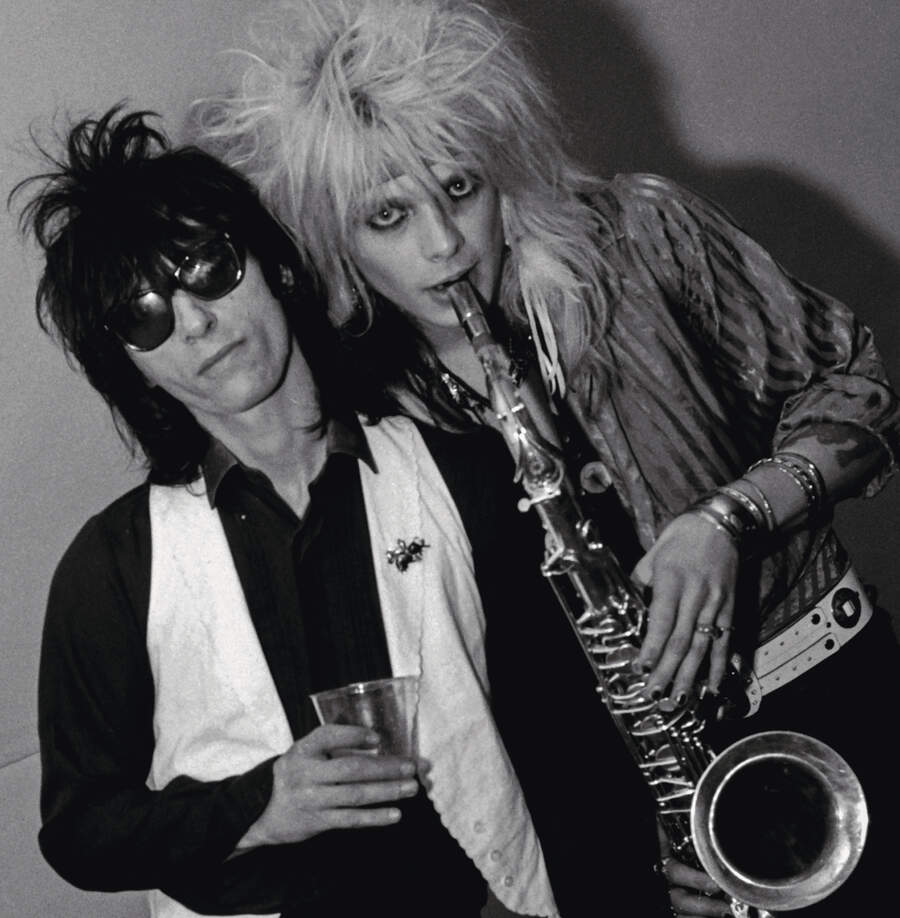
ohnny Thunders and Monroe during the recording of Thunders’ album Que Sera Sera in 1985 (Image credit: Jane Simon/Getty Images)
There followed a frustrating five-year period where you made great records, but that all-important mainstream breakthrough remained elusive.
Not Fakin’ It could’ve been the breakthrough. It was on its way, but then the label made a stupid TV commercial calling me “the brains behind Hanoi Rocks”. There were no brains in Hanoi, that was the coolest part of the band. That commercial made it sound like the whole thing was calculated, so I told them: “Pull it before it destroys my reputation.” So they pulled the ad, and basically decided: “Fuck it, let the record die.”
Then Steve Stevens approached me to be my guitar player. And that didn’t work out. It might’ve worked if the label had let me use Little Steven as producer, but they came up with this German heavy metal producer called Michael Wagener. Long story short, that record [a collaborative project ultimately released eponymously as Jerusalem Slim in ’92] pretty much ruined my career in the States.
After Steve Stevens had finished in the studio it ended up costing around 700,000 dollars, and I ended up owing the label in the region of a million. I just waited it out and they eventually dropped me. I was finally free to make the Demolition 23 album with Little Steven. We made it in two weeks and it’s still one of the best sounding albums I’ve ever done.
Then things went spectacularly wrong when it came to the Demolition 23 tour.
It turned out that [guitarist] Jan Henning had a bit of a habit. He got hit by a car in Alphabet City and ended up in Bellevue Hospital for three months, and then, shortly before the tour, got arrested scoring. I was getting disillusioned, and fed up with having no business in the music business in America. So I planned to move back to London, but my brother had this house in the Finnish countryside that he’d just fixed up, so I went from one extreme to the other. There was so much snow that first summer in that house, with just me, my late wife and our pet cat, Susi, that I started making giant snowmen and ice lanterns.
Looking for some peace of mind, perhaps?
I named the Peace Of Mind album in the hope that the title would manifest into something positive, because everything else… Nothing’s alright, it’s all dysfunctional, and I’m thinking maybe I should be thinking more positively. In any case, Peace Of Mind was an album where Jimmy Clark played drums and I played pretty much everything else.
Life Gets You Dirty was the second album I made in Finland. And, again, other than bass and drums I pretty much played everything. There’s some really good songs on there, but by the time we got to mixing I was so fried the mixes weren’t that great, so I plan to remix it and put it out again with a better sound.
Then after that my late wife passed away [Jude Wilder died of an intracranial haemorrhage in 2001]. I moved to the city of Turku, a couple of hours outside Helsinki. I have a great loft flat in the centre of the city but it still feels very private. I met Andy McCoy after years of us having nothing to do with each other, and he seemed pretty together, but he’d fallen off a balcony and broken his legs. It was a miracle he survived and can still walk. His legs were shattered, they’re mostly titanium now. He was recovering from that and I was recovering from losing my wife, so the Hanoi Rocks reunion was based on two tragic events.
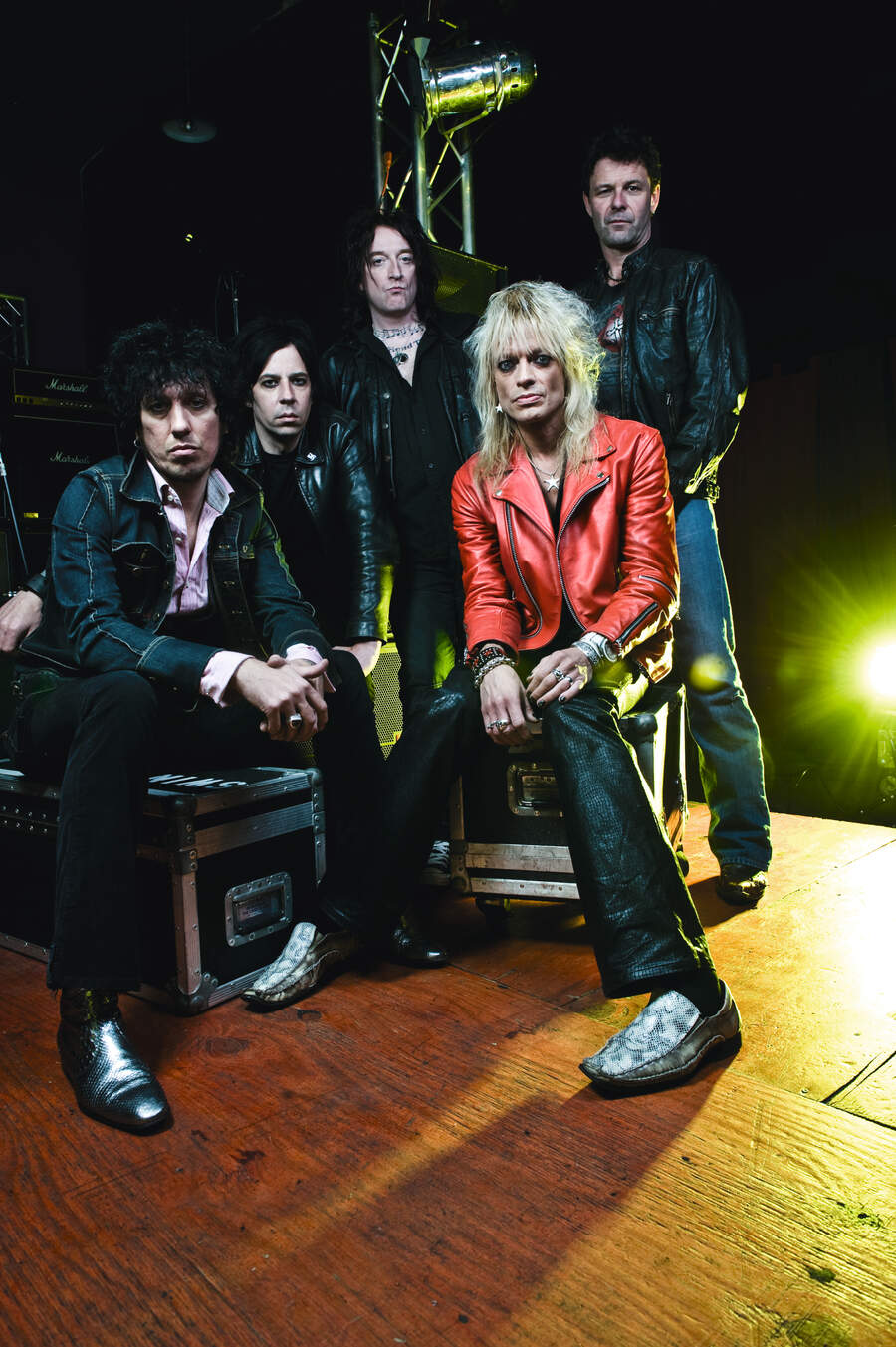
Michael Monroe’s band with Ginger Wildheart (centre), January 2010 (Image credit: Kevin Estrada / MediaPunch)
Reuniting Hanoi Rocks appeared to be quite the success, but how was it on the inside?
Well, the original Hanoi was only four or five years, and this lasted from 2002 until 2009, and it was fun at first. Five or six songs that were meant to be on my Whatcha Want solo album – even the title track – ended up on Hanoi’s Twelve Shots On The Rocks because I figured they probably had a better chance with the Hanoi Rocks name behind them.
Then Andy’s brother and this other guy came in on the business side. And while I didn’t feel right about it, I was so devastated from losing my wife that I just decided to keep working, to keep as busy as possible, and it was good therapy. But the album came out before it was finished. Andy’s brother booked a tour of England, and we had to go and do the dates before we’d finished mixing.
Then, at the end of the UK tour, Andy’s brother and his partner arrived in London with a CD of the album. I was like: “What the fuck’s this?” “That’s the record.” They’d released it in Scandinavia and Japan, where they thought it’d sell most, and it sounded like fucking shit. I was so pissed. You only get one chance to make a first impression, and that’s how the return of Hanoi Rocks was ruined. I was like, it’s never gonna be right, it’s like a curse. Finally, I said to Andy we’re going back into the studio and we’re gonna fix it. So we added three songs and remixed the whole album. And that’s the official first album, how it should’ve been from the start.
The Hanoi thing was exciting at first, to see what we could accomplish with Andy after all these years, getting to know each other again, but then he started slipping back into the same old “You’re nothing without me.” Oh yeah. I have a pretty good solo career without all this shit. But he wasn’t happy. So one day I said: “This ain’t fun any more. Let’s just put Hanoi Rocks to its final sleep.” And I caught him at a good time, he was agreeing, so it was good.
And post-Hanoi Rocks, everything seemed to fall into place about fourteen years ago when you solidified the core of a band you continue to work with today.
After Hanoi, Sami Yaffa came to Finland playing with the [New York] Dolls, and he started talking about wanting to work with me again. Really? It just so happens that I’m going solo again. So we started putting a band together with Steve Conte [guitar] and Karl ‘Rockfist’ Rosqvist [drums], and he mentioned Ginger [Wildheart]. So Ginger came over. We’d been writing songs together already, and that’s how it all started. Ginger was replaced by Dregen, then Rich Jones [guitar] came in and that’s the best line-up. The other records are good, but this is my favourite lineup. So I have the best band I could hope for and I’m happy.
After all the ups and all the downs, do you harbour any regrets?
No. Of course I’d have done things differently if I knew what I know now, but you don’t get a second chance, so there’s no point in regretting anything, really.
Which time in your life are you most nostalgic for?
This time, right now. I really love life and I really want to be here, healthy and happy, for as long as I can.
Do you think the eight-year-old Matti who sat transfixed by the spectacle of Ozzy and Sabbath would consider that you’ve allowed him to live his very best life?
Yeah… The best I know how.
Outerstellar is out now via SilverLining.
Michael Monroe: Outersteller – Today’s Best Prices