
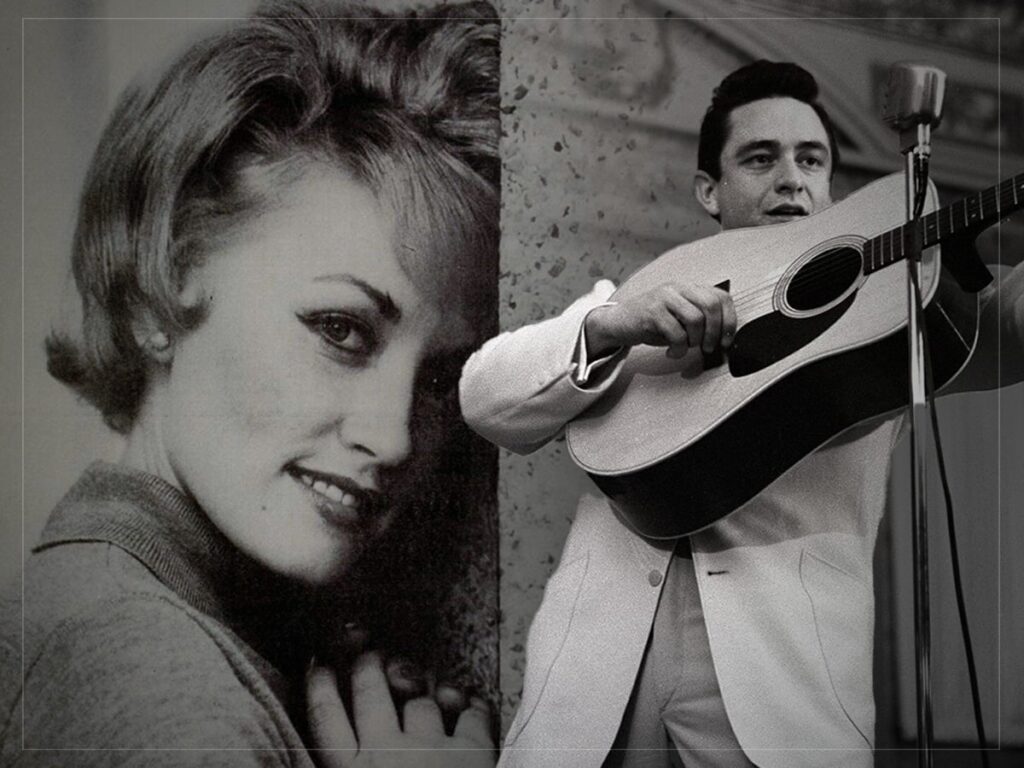
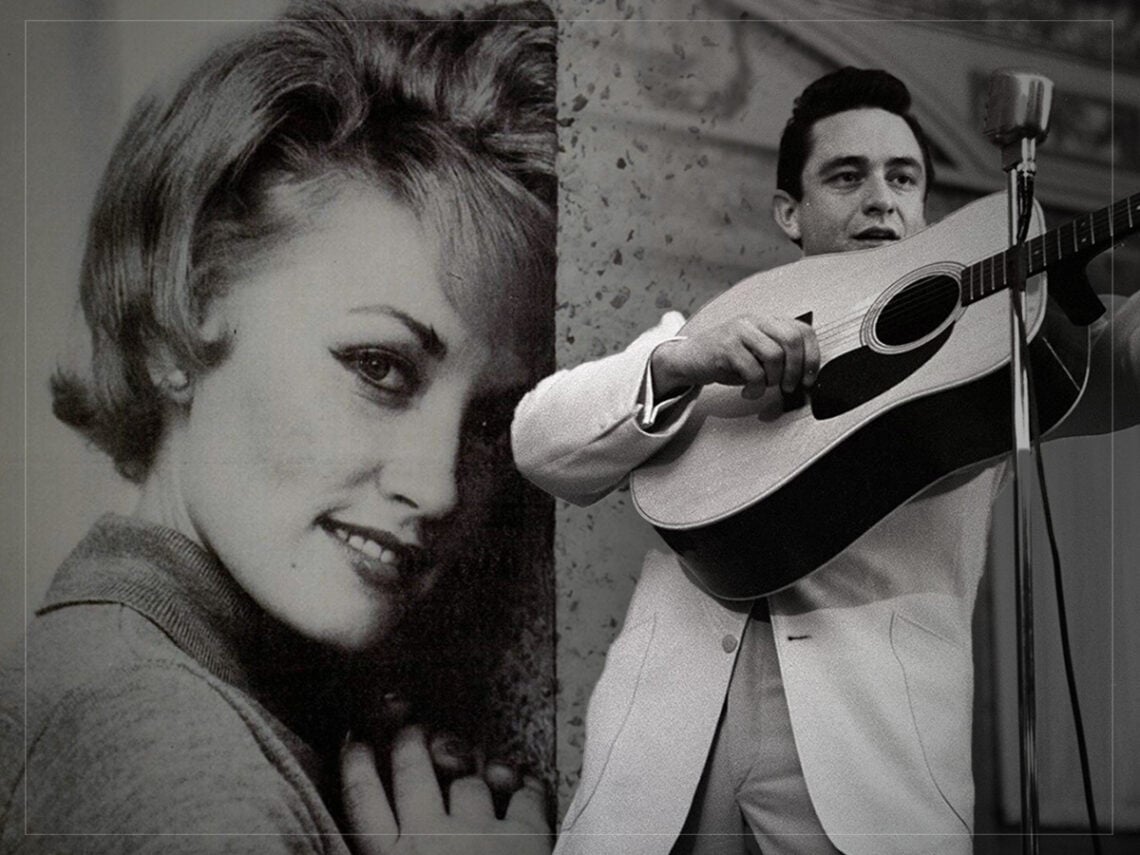
(Credits: Far Out / Monument / Johnny Cash / Don Hunstein)
Wed 1 April 2026 20:15, UK
Although it’s easy to see Dolly Parton as the impossibly charming, glam country icon she is, beneath it all, she’s just like everybody else: a working-class gem who once had a big, all-consuming crush on another legendary country singer, Johnny Cash.
Back then, of course, Parton was just like any other child. She’d later grow up to be a major name in her own right, so much so that she’d be able to call someone like Cash her peer. But as a young teenager with nothing but a handful of heroes and a dream, Cash was like some sort of deity that not only showed her the way, but awakened something deeper beyond simple musical admiration.
One of Parton’s best and most significant memories was, understandably, when Cash brought her up on stage at the Grand Ole Opry at age 13, a turning point that had all the people in the room entirely enchanted from the moment she started singing. A moment that dazzled her just as much, Parton experienced it all: instant audience endearment, a lively, energetic venue, and support from the man who was, at that point, the man of her dreams.
In true Parton fashion, she’d later recall this moment with the kind of down-to-earth honesty that gave her her reputation, saying that, above all else, it was the moment when she first learned what it meant for someone to have sex appeal and charisma. She also said, rather dreamily, that it was the first time “a man had ever made me feel like a woman”.
As Parton eventually grew into her own, both professionally and personally, the familiar Cash-effect remained intact, but so too did other, more mature realisations that both strengthened her connection to the singer and shattered the illusion entirely. After all, alongside realising she was “just being horny”, she was also able to judge and analyse Cash’s legacy with more sense and expertise, and figure out what it really was that drew people, herself included, to him in the first place.
In 2014, during an interview for HBO’s Foo Fighters: Sonic Highways, Parton said that Cash was “not a great singer as far as voice”, but that he had the same kind of John Wayne magnetism that gave him “a presence” and “authority”. In her mind, he had “a way about him” that was unique – the kind that commanded a space and made everybody sit up straight and listen.
She also recalled going on stage with him at the Grand Ole Opry, saying that, while she had an instant crush on the mysterious ‘Man in Black’, it was also the first time she felt “special” in an inexplicable sense – a likely trigger that had her chasing her own musical path with more fervour from that moment on.
She might have felt completely besotted back then, dazed with the heart-eyes of a love-sick teenager, but that kind of magic she never forgot, even when time and distance gave her the chance to reflect on his talent for precisely what it was – her love for him may have been simple at first, but it grew more complex as she became a legend in her own right, especially when she focused more on the art and what it meant to her, personally.
Funnily enough, Parton also had a point about his talent. Vocally, Cash wasn’t exactly the strongest, nor did he ever pretend to be. But it was that dreary, instantly recognisable, gloomy tone that pulled you into other, more visceral realms, even if you didn’t even understand them at first. This was a dream discovery for a young Parton, especially his songs about love and heartache, which Parton already knew all too well.
ADD AS A PREFERRED SOURCE ON GOOGLE 