
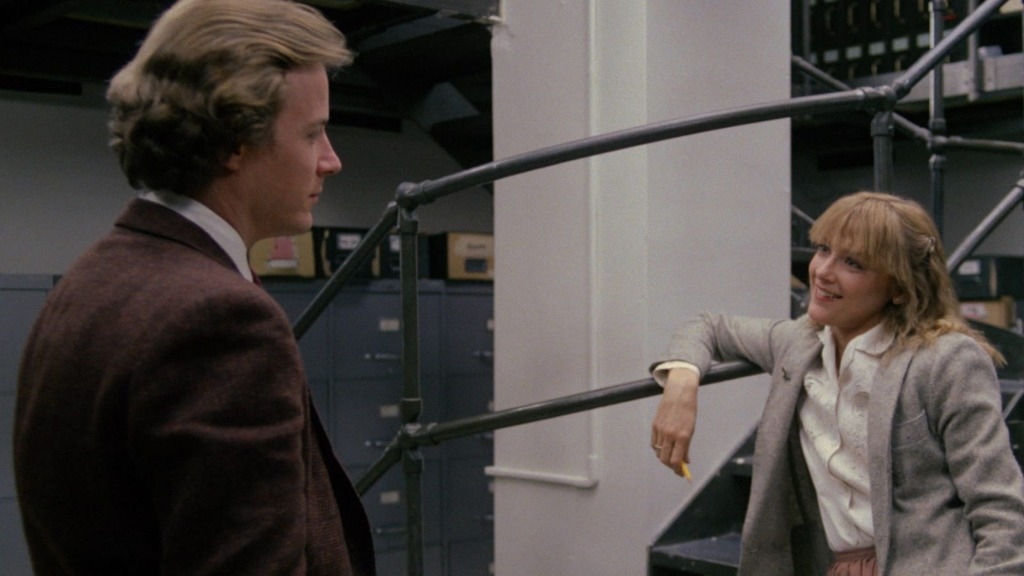
In the competitive world of show business, many actors plan to work their way to the top, graduating from supporting parts to leading roles. There they will bask in the spotlight, see their names above the movie title on the poster, earn a place at the red carpet, maybe even get a few Oscar nominations. While Mary Beth Hurt excelled in supporting roles, she didn’t pursue the traditional path to stardom. Instead, she carved out an idiosyncratic career full of colorful supporting roles and a long list of talented costars ranging from Diane Keaton to Charlize Theron. The actress, who died on March 28 at 79, was a standout even in her first few onscreen appearances—including the reclaimed classic Chilly Scenes Of Winter.
An Iowa native who once counted French New Wave actress Jean Seberg as a babysitter before Seberg went to France, Hurt moved to New York to study acting, making her New York theater debut in 1974. Four years later, she made the jump to the big screen in Woody Allen’s Interiors opposite Diane Keaton and Sam Waterston. Hurt played one of three daughters grappling with their parents’ divorce. Her character is a mousy but stern writer jealous of her sisters’ success and already her presence against other great actors of her generation was a formidable one.
Her second role, in Joan Micklin Silver’s breakup movie Chilly Scenes Of Winter, was underseen during its original release in 1979 due to a botched opening by its distributor. Over time, though, the film finally gained the recognition it so rightfully deserves. It’s a bittersweet romantic dramedy set in the aftermath of a failed romance. In the film, Hurt plays Laura, the love interest of a deeply smitten Charles (John Heard), who won’t move on from the end of their relationship even after she has returned to her husband and child after a period of separation. As he fills the audience in on their relationship through flashbacks, Charles tries to win back Laura in the present as she figures out what she really wants for her future.
Hurt brings a remarkable levity and humanity to the otherwise serious film. She’s a bright-eyed presence that immediately draws the lovestruck main character’s attention like a magnet. Even when he negs her like a boy picking on his crush on the playground, she tosses the comments aside with a smile and an eyeroll, her bubbly personality unscathed. He can’t bring her spirits down until she thinks about her daughter and the marriage she left behind, and in those moments, when she gets quiet and looks away from him, without saying as much, it’s clear she’s rethinking this hot and hurried affair.
Silver and Hurt ensure that the character of Laura has her own realistic flaws: She’s uncertain about the direction her life is taking, waffles on making decisions, and, while she craves Charles’ company, that doesn’t mean she wants him forever. Hurt’s performance is a balancing act through the messiness of charged emotions—she can be flirty but on the defensive, at once restrained in her character’s insecurity but also capable of becoming vulnerable and melting into the arms of her new lover. It’s a tender but ephemeral moment to capture—a relationship that was never meant to last. It’s usually Charles reaching out to her, and rarely does Laura return the affection with the same intensity, a subtle choice from Hurt who lets the audience know she’s not staying long before Charles notices. When Charles tells her “I love you,” Laura responds with an “I know,” reaffirming her decision to walk away.
Despite her shorter screentime, Hurt pinpoints her character’s frustrations with Charles with deft accuracy. She does the dance so many partners have to endure in order to calm their agitated date, quietly assuring him and placating his suspicions until she can’t take it anymore. Then, she fights for her boundaries and retains some control when he spirals. “You have this exalted view of me and I hate it!” she yells after he breathlessly compliments her. “I can’t live up to this thing you have about me.”
Heartbroken that she’s returned to her husband, Charles asks Laura, “Why would you choose someone who loves you too little over someone who loves you too much?” She answers, “Because it makes me feel less of a fraud.” It’s a searingly honest moment delivered with a sense of exhaustion. He’s made her his world, and she never wanted that kind of attention—just as Hurt would continue to avoid the spotlight, shaping a career on her own terms.
Chilly Scenes Of Winter was just the start of a number of great movies Hurt appeared in over a rich decades-long career that included roles in The World According To Garp, The Age Of Innocence, Bringing Out The Dead, and Lady In The Water. She later went on to star in four of her husband Paul Schrader’s films, including Light Sleeper and Affliction. She was an actor’s actor, dedicating herself to her craft through the stage and screen even if it meant avoiding leading parts. As Hurt told The Hollywood Reporter back in 2010, “I’ve never been extremely comfortable playing the lead. I don’t like the responsibility; there’s a feeling that I have to be good.” But she was good, no matter the role, and exemplified the phrase “there are no small parts,” making each role, no matter how long, uniquely hers.