
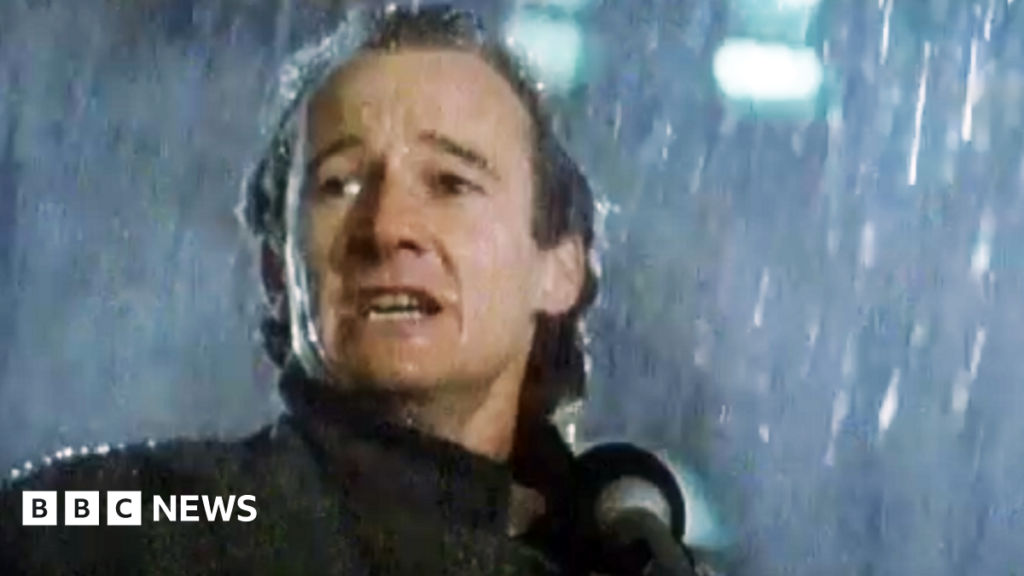
The Holy City was created by Bill Bryden, one of the most significant figures in post-war Scottish theatre and television.
Born in Greenock in 1942, he’d trained with STV before directing plays in Scotland, London and New York.
In 1984, he took over as head of drama at BBC Scotland. His nine-year tenure transformed the department, its output, and Scottish broadcasting.
His biggest and most acclaimed production came in 1987, with the multi-Bafta-winning Tutti Frutti, a series still celebrated for its ambition and quality.
“When he took over as the head of drama at BBC Scotland, he said: ‘I’m going to create a studio here in Scotland where I’m going to bring the best talents to bear’,” says Hayman.
“And he did. He was a man with a very exciting vision.”
A year into the role, Bryden’s vision was The Holy City.
He wrote and directed the film, an ambitious and potentially controversial take on the Easter story, describing the final days, death and resurrection of Jesus Christ.
It was the sort of idea which makes BBC executives very, very nervous.
Norman McCandlish was handed the job of producing. He admits struggling at first to understand what it was meant to be.
“When he told me the bare bones, I said I couldn’t get my head around it at all,” he says now.