
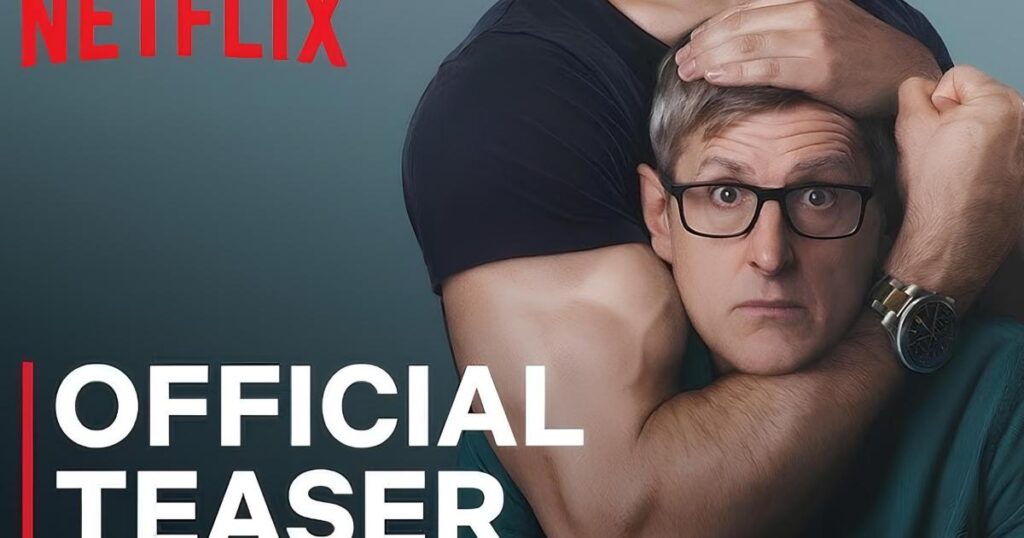
Louis Theroux is back with a new documentary on Netflix that explores the so-called ‘manosphere’.
Talk of the manosphere – a corner of the internet targeting young men that is hyperfocused on masculinity and the belief that society is biased against men – has taken the internet by storm as of late, with overall sentiment being negative. But many of these opinions just scratch the surface of this trend.
Rather than trying to understand the why and how of this phenomenon, most people seem to be limiting themselves to condemning the manosphere in its totality.
Louis Theroux: Inside The Manosphere purports to dig a little deeper. It follows a handful of characters within the so-called manosphere, shedding light on their daily lives, their businesses, motivations and upbringing.
Here are four points to reflect on after watching Theroux’s Netflix documentary Inside The Manosphere.
Misunderstanding masculinity
What does masculinity mean today, and who gets to define it?
The characters presented in the documentary appear to converge around a strikingly narrow and performative interpretation of the term.
Masculinity, in their framing, is not an internal or evolving identity, but a rigid checklist – one that prioritises dominance over women, relentless financial accumulation (often irrespective of ethical cost), and the conspicuous display of wealth and status.
A character that goes by the name of “HS Tikky Tokky” proudly claims he would disown his own daughter if she ever created Only Fans-style content, but has no problem with exploiting other women to produce his own explicit, X-rated content.
What emerges is less an authentic expression of masculinity and more a commodified persona shaped by the incentives of social media platforms and the pressures of modern social validation.
In this sense, the “alpha male” archetype they promote feels more like a cry for help borne out of contemporary anxieties around identity, relevance, and control.
Instead of quiet confidence, these Manosphere characters and their flashy showboating exude a constant need for validation. It comes across as an attempt to compensate for something unresolved beneath the surface.
This then raises a more important question: why has this particular version of masculinity gained so much traction now? What conditions have allowed it to resonate so strongly with so many?
The role of feminism and shifting gender dynamics
The rise of the ‘manosphere’ did not happen in a vacuum. It reflects, at least to some degree, a reaction to shifting gender dynamics, specifically over the past decade.
As a man, it doesn’t feel like an easy time to navigate what masculinity actually means. The strong push over the past few years to critique “toxic masculinity” has led to the term often being interpreted too broadly, to the point where masculinity as a whole feels like it’s under scrutiny.
At the same time, modern gender discourse has shifted heavily towards independence from traditional male roles. While that’s brought a lot of positive change, it has also left some men unsure of where they stand or how they’re expected to show up.
Inside The Manosphere reflects this dynamic in the way two young men named Chris and Matthew travel significant distances to meet one of the characters featured in the documentary, Justin Waller.
Chris and Matthew both say they grew up with little male presence in their lives, and now look to Waller and the Tate brothers as key influences in shaping what they see as a stronger, more masculine path forward.
Manosphere influencers have stepped in to fill a gap felt by young men looking for direction, offering simple, confident answers that feel convincing, even if they lack real depth.
The manosphere is a business model
The characters presented in Inside The Manosphere all use their platforms to make money. This is very obvious from the get-go and their core motivations become more apparent when you look at how easily principles are compromised when money is involved.
HS, for example, openly admits to disregarding ethical considerations as long as he benefits financially. The ideology itself becomes secondary to the profit it generates.
What’s even more telling is the contradiction in behaviour. Towards the end of the documentary, we see HS defer completely to his mother – a woman – despite having built a platform on anti-women rhetoric. In that moment, the persona slips. His so-called “alpha” identity begins to look less like a deeply held belief and more like a performative role.
We could say the same for Myron Gaines, who says his partner (who appears to be a genuine, sweet woman) is accepting of him having multiple sexual partners and potentially multiple wives in the future.
When his partner tells Theroux she is not comfortable with a polyamorous marriage, Gaines immediately retracts. The woman has since dumped Gaines, leaving him to ponder his ‘Alpha male’ persona alone.
The scheming tactics are clear. Their main goal is not to promote lifestyle guidance for disillusioned young men seeking masculine role models. Instead, these influencers appear to follow a formula:
Build a platform where they can promote themselves and their extreme views
Create enough noise until they become a household name and earn a strong social following
Gain the trust of their followers by presenting as masculine and ‘alpha’
Cash in by guiding followers to spending money on anything from training courses to crypto pyramid schemes.
Education starts at home
Freedom of speech laws allow schemers to target, manipulate and then sell to easily influenced young men. That means households, schools and communities must learn to counteract these forces. Never before has education, the instilling of core values and the idea of healthy role models been more crucial.
Inside The Manosphere does a good job of exposing this dark corner of the internet. In Theroux fashion, audiences are given the freedom to interpret what is being exposed without any spoon feeding.
However, there are occasions when the documentary does not probe as deeply as Theroux typically does. A common thread becomes apparent, particularly in his conversations with HS, Waller, and the two younger men, Chris and Matthew: many of these figures appear shaped by unresolved trauma from their childhoods.
Whether it’s the absence of a stable male presence or the influence of an abusive female figure, these experiences seem to underpin much of their worldview. It’s an area Theroux could have explored further, and one that might have added greater depth and nuance to the documentary.
Theroux’s reputation may well have worked against him here. His well-known interview style – patient, disarming, and ultimately revealing – may have made participants more guarded and less willing to engage fully. This resistance is evident in moments like Myron Gaines abruptly stopping his assistant from speaking to Theroux.
In a later interview with Romesh Ranganathan, Theroux also revealed that he had approached the Tate brothers, who he describes as the “gods” of the manosphere, but they declined to participate after being told they would not be paid.
Michael Psaila Debono is a Marketing Manager with a keen interest in film, music and cultural trends.