
The Before: A Boarding School, a Rooftop, and the Guitar on the Street
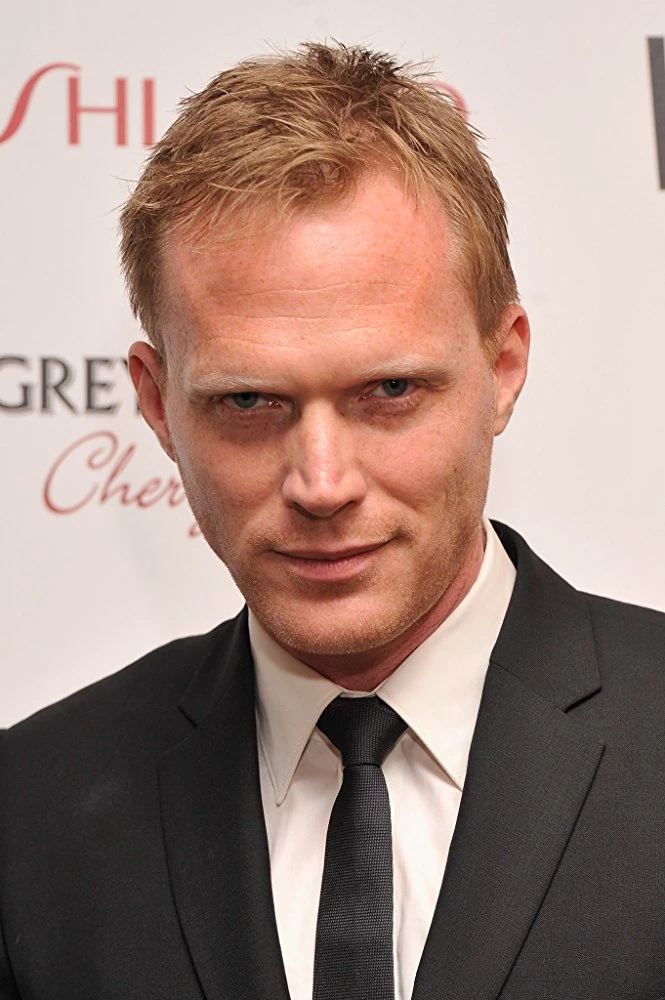
However, paul William Bettany grew up on the campus of an all-girls boarding school in London where his father taught drama. Nevertheless, the detail sounds like something from a Wes Anderson film, and the aesthetic fits: both his parents were theater people. Notably, his father, Thane Bettany, was a dancer, actor, and drama teacher. In fact, his mother, Anne, was a stage singer, theatre teacher, and stage manager. Subsequently, the household was steeped in performance the way other families are steeped in religion — it was the lens through which everything was understood, the language spoken at every meal. Meanwhile, paul was born on May 27, 1971, in Shepherd’s Bush, West London, and raised Roman Catholic in a world that smelled like greasepaint and rehearsal rooms.
Indeed, when Paul was sixteen, his younger brother Matthew, who was eight years old, fell from the roof of a tennis pavilion and landed on concrete. He died from a cracked skull. The loss detonated the family. Paul’s parents eventually divorced. Ultimately, paul dropped out of school, descended into drug use, left home, and began busking on the streets of London — playing guitar for coins in a small flat he could barely afford. By contrast, he was sixteen years old, grieving a brother, numbing himself with whatever he could find, and earning a living by performing for strangers who walked past without looking.
The Turning Point
Furthermore, the busking lasted two years. Then he found a job working in a care home for the elderly, earned enough to pay for drama school, and enrolled at the Drama Centre London at nineteen. Three years of classical training. In particular, royal Shakespeare Company productions of Richard III, Romeo and Juliet, Julius Caesar. The kid who had been playing guitar on the pavement was now performing Shakespeare at the RSC. The distance between those two stages is the entire Paul Bettany net worth story.
The Pivot Moment: Chaucer, A Beautiful Mind, and a Phone Call on September 11
Brian Helgeland was developing a film called The Sin Eater when Paul Bettany’s audition tape landed on his desk. The tape was so good that Helgeland scrapped The Sin Eater and made A Knight’s Tale (2001) instead — a medieval jousting comedy in which Bettany played Geoffrey Chaucer as a degenerate gambler with a poet’s vocabulary and a con man’s nerve. He won the London Film Critics Circle Award for Best British Supporting Actor. More importantly, Helgeland was so determined that Hollywood recognize Bettany’s talent that he showed the audition tape to everyone he knew, including Ron Howard.
 a-beautiful-mind-john-nash-russell-crowe-paul-bettany-charles
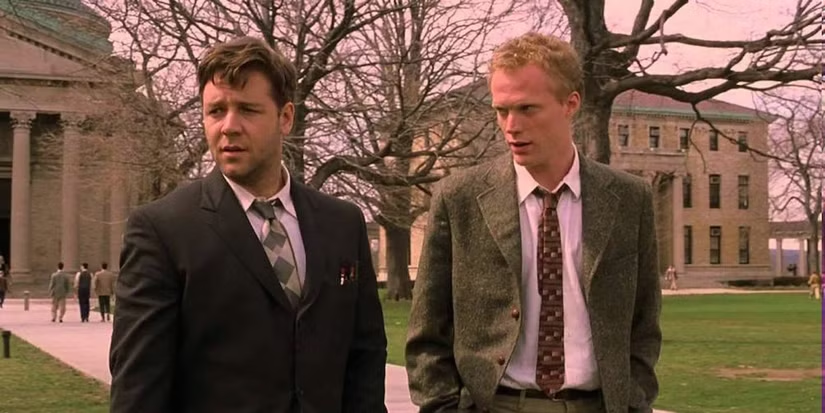
Moreover, howard cast Bettany as Charles Herman in A Beautiful Mind (2001), the schizophrenia drama starring Russell Crowe that won the Academy Award for Best Picture. Bettany played the imaginary roommate — the hallucination that Crowe’s John Nash cannot distinguish from reality. The role required an actor who could be simultaneously charming and terrifying, present and absent, real and impossible. Bettany did all of it.
Behind the Numbers
He also met Jennifer Connelly on that set. She played Nash’s wife. They did not date immediately — both were in other relationships. But something registered. Then September 11 happened. Bettany was in London. Connelly was in New York. He has described being seized by an overwhelming need to know she was safe — a woman he “barely knew.” He called her. While on the phone, he proposed. She accepted. He moved to America. They married in Scotland on January 1, 2003. The story of a man who proposed to a woman he barely knew on the day the towers fell, and then built a twenty-three-year marriage and a $50 million fortune from that single phone call, is either the most romantic origin story in Hollywood or the most impulsive. Bettany would argue it is both, and that the distinction doesn’t matter.
The Climb: JARVIS, Vision, and the Marvel Machine
 Paul Bettany Avengers
In 2008, Bettany landed the role as the voice of JARVIS — the artificial intelligence assistant in Tony Stark’s lab — in the first Iron Man film. The role required no physical presence. He recorded his lines alone in a studio, delivered them with the crisp, patient authority of a butler who happens to run a weapons system, and collected a paycheck for what amounted to a few days of work. It was the easiest job of his career. It was also, eventually, the most lucrative.
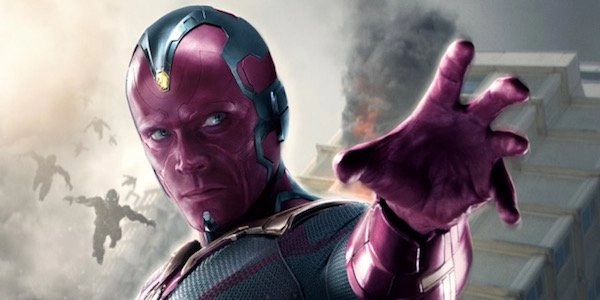
Because JARVIS evolved. In Avengers: Age of Ultron (2015), the AI received a body — the synthezoid Vision — and Bettany stepped in front of the camera in purple makeup and a cape. He appeared in Captain America: Civil War, Avengers: Infinity War, and Avengers: Endgame. Combined, the films in which Bettany has appeared as JARVIS or Vision have grossed over $8 billion worldwide. His individual earnings from the franchise have not been publicly disclosed, but MCU principal cast members typically earn between $2 million and $15 million per film depending on billing and backend participation.
WandaVision (2021) was the payoff nobody predicted. The Disney+ series — a bizarre, genre-shifting exploration of grief disguised as a sitcom homage — gave Bettany his first true leading role in the MCU and earned him a Primetime Emmy nomination. The show was the most-watched Disney+ series at the time of its release. For the first time, the man who had started as a disembodied voice in a recording booth was the emotional center of Marvel’s most ambitious project. The kid who busked on London streets after his brother died was now the star of a show about a woman who couldn’t let go of the man she loved. The thematic symmetry was not lost on him.
The Hamptons Chapter: Brooklyn Heights and the New York Real Estate Portfolio
Paul Bettany and Jennifer Connelly have executed one of the most profitable celebrity real estate portfolios in New York City. In 2003, they purchased a seven-bedroom townhouse in Park Slope, Brooklyn, for $3.7 million and sold it five years later for $8.45 million — a 128% return. In 2008, they paid $6.92 million for a penthouse in Manhattan, which they sold in 2018 for $9 million. They then purchased a townhouse in Brooklyn Heights for $15.5 million — reportedly one of the most expensive residential transactions in the borough’s history. The property spans over 8,000 square feet and offers views of the Statue of Liberty and the Manhattan skyline.
The Brooklyn Heights address places Bettany and Connelly in one of New York’s most architecturally significant neighborhoods — brownstone-lined streets, proximity to the Promenade, a resident list that includes literary figures, finance executives, and the particular breed of celebrity who values neighborhood character over velvet-rope access. Moreover, the choice is consistent with everything else about Bettany: he lives in New York, not Los Angeles. He performs on Broadway (The Collaboration, in which he played Andy Warhol in 2022) and does not chase franchise work beyond the MCU. The $50 million combined net worth with Connelly is substantial but not extravagant by A-list standards, and the couple has been intentional about keeping their family — three children, including Connelly’s son from a previous relationship — out of the press.
What He Built: Will Emerson’s Bonus and the Margin Call Speech
 paul-bettany-stanley-tucci-margin-call-01
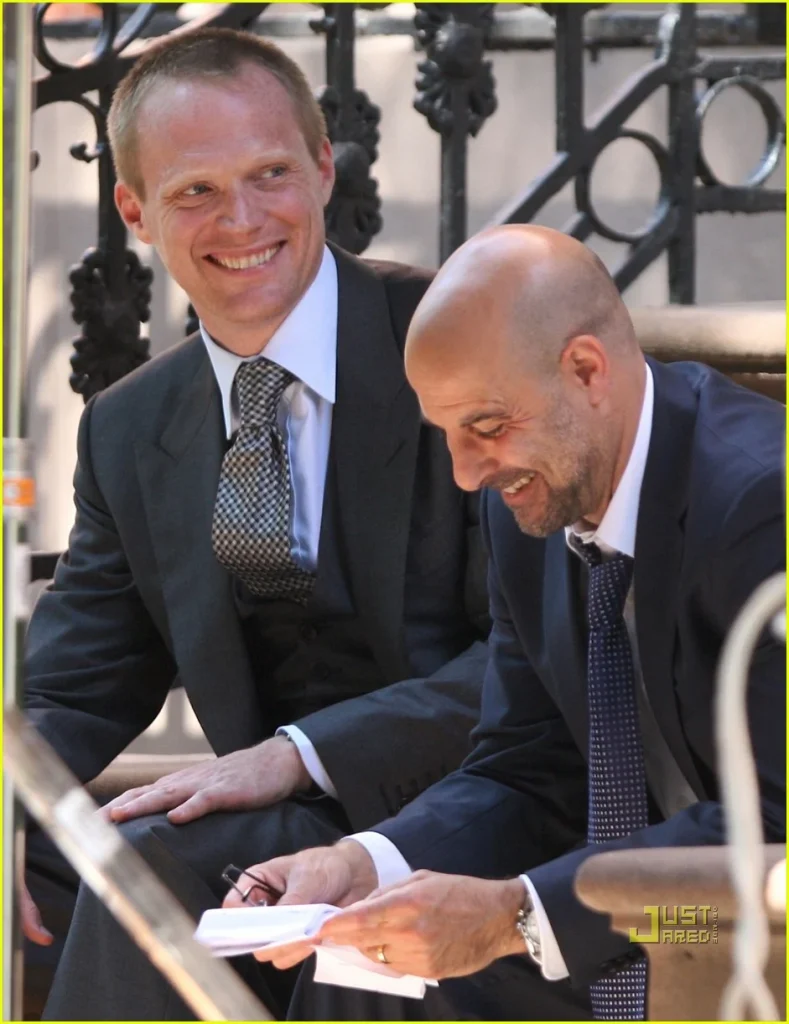
Paul Bettany’s performance in Margin Call as Will Emerson — the senior trader who serves as the emotional translator between the executives and the audience — contains the film’s most quietly devastating scene. Emerson is asked how he spent his $2.5 million bonus from the previous year. He lists it: taxes took half. The apartment cost the rest. Car payments. Food. Drinks. Clothes. A watch.
Consequently, a few vacations. Charitable contributions. And at the end of the year, he had almost nothing left. The speech is not played for sympathy. It is played for comprehension. This is a man who earned $2.5 million in a single year and spent it all because the machine he works inside is designed to make $2.5 million feel like not enough. The golden handcuffs are real. The lifestyle inflates to fill the income. Walking away is not an option because walking away means becoming someone else, and these men have spent their entire careers making sure there is no one else to become.
What the Record Shows
Bettany delivers the monologue with the exhausted clarity of someone who has done the math and knows the answer is zero. The performance works because Bettany understands something about the financial system that most actors who play traders do not: the people inside the machine are not evil. They are trapped. The golden cage is a cage even when the bars are made of gold. The bonus speech is the film’s most human moment — the instant where the abstraction of systemic risk becomes the concrete reality of a man who earns more money in a year than most people earn in a decade and still cannot figure out how to save any of it. That is the crisis in miniature. That is why the system cannot self-correct. The people inside it are too expensive to leave.
The Soft Landing: $50 Million and the Art of Arriving Late
Paul Bettany’s combined net worth with Jennifer Connelly stands at approximately at $50 million. His individual share is not publicly separated, but his career trajectory suggests the majority derives from Marvel — the franchise that started with a voice role and evolved into an Emmy-nominated lead — supplemented by film salaries from projects including Master and Commander, The Da Vinci Code, and Margin Call, plus the New York real estate portfolio that has appreciated by millions across three transactions.
The fortune is modest relative to the cultural impact. Bettany has appeared in films that grossed over $8 billion worldwide. He has performed Shakespeare at the RSC, played Andy Warhol on Broadway, voiced Disney’s most loyal AI assistant, and delivered one of the defining performances of the 2008 financial crisis on a $3.5 million budget. He has also survived the death of an eight-year-old brother, two years of busking on London streets, drug addiction, and the public embarrassment of private text messages surfacing during the Depp-Heard trial — messages he later said did not reflect his values. The survival is the asset no balance sheet captures.
At fifty-four, Bettany continues working across film, television, and stage. He and Connelly raise their children in Brooklyn Heights with the deliberate privacy of two people who understand that fame is a tool, not a destination. The busker who played guitar for coins on London pavements at sixteen is now an Avenger who explained the 2008 financial crisis in a single speech about a $2.5 million bonus that somehow added up to nothing. The math is the point. Jeremy Irons played the CEO who gave the order.
The Hidden Detail
Demi Moore played the woman who warned the room. Stanley Tucci played the man who lost his job for knowing too much. Bettany played the trader who knew exactly what he was doing, knew exactly what it cost, and did it anyway because he couldn’t afford not to. That character is the Margin Call thesis. And the actor who played him understands it in his bones — because the distance between playing guitar for strangers who don’t look at you and earning millions for a voice nobody sees is exactly the kind of arithmetic that only makes sense if you’ve lived inside it.
Related: Margin Call True Story: The Night Wall Street Decided to Burn It All Down · Jeremy Irons Net Worth: The $25 Million Castle Dweller · Demi Moore Net Worth: The $200 Million Comeback · Stanley Tucci Net Worth: From Katonah to CNN · The Wall Street Movies That Rewired How America Thinks About Money
If you’ve ever done the math on your own life and realized the numbers don’t quite add up the way you expected — then you already understand the world Social Life Magazine covers. The people who earn, spend, build, and sometimes discover the arithmetic only works if you change the formula. Reach out to our editorial team to be featured.
Want to position your brand inside the culture where the real conversations happen? Submit a Paid Feature and let our editors build something worth reading.
The Deeper Story
Join 82,000+ subscribers who get our take on luxury, culture, and the Hamptons scene before anyone else. Subscribe to our email list.
Experience the intersection of sport, style, and status at Polo Hamptons — Bridgehampton’s premier luxury polo event, now in its seventh year with BMW as title sponsor.
Never miss a print issue. Subscribe to Social Life Magazine and get five summer issues delivered from Memorial Day to Labor Day.
Love what we do? Support Social Life Magazine and help us keep covering the culture that matters.