
The inspiration for Warner Bailey’s popular Instagram account Assistants vs. Agents was an in-joke among support staffers at WME in 2017. Knowing that reps’ assistants would check out their mail before their bosses did, then-assistant Bailey and his friends would slip printouts of Internet memes into inter-agency communication envelopes for their colleagues to enjoy. “It gave us a little bit of a game to play during the day,” explains Bailey, now repped by UTA.
Eight years after those printouts morphed into a social media account, Assistants vs. Agents has ballooned to 163,000 followers and expanded far beyond memes (though it still posts its share). It’s now a full-on brand catering to ambitious early career pros inside and outside the business, with a job board, newsletter and live events. Bailey is boss to 12 staffers, some full-time, and blue-chip brands including Disney, DoorDash and Meta have partnered with Bailey’s creation. And, on April 8, AvA will bow a live weekly show, focused on bringing hope and info to the Hollywood ladder-climbers that are the brand’s bread and butter.
The 30-minute AvA LIVE will air on YouTube on Wednesdays around the time when assistants are usually taking a well-deserved lunch break (12:30 p.m. PT) and will be available later on other social channels. The show will feature two to three curated interviews with industry professionals and a news segment, plus some other elements that Bailey has yet to announce — though he says the show’s trailer, featuring him putting news headlines about Hollywood dying through a shredder, teases one.
Ultimately, “the underlining theme of all of it is this sense of optimism in a world and industry where there’s so much negativity and headlines,” says Bailey.
Still, though, the Assistants vs. Agents approach isn’t quixotic. This is the account that jokingly created a GoFundMe to buy Warner Bros. Discovery after Paramount won the bidding war for the historic studio and portrayed Disney’s new CEO Josh D’Amaro as the scheming Tom (played by Matthew Macfadyen) from HBO’s Succession.
As the traditional film and television shrinks, Bailey talks to The Hollywood Reporter about what makes him feel positive about starting a career in Hollywood in 2026 and why young people “just have to be flexible in your definition of what entertainment is.”

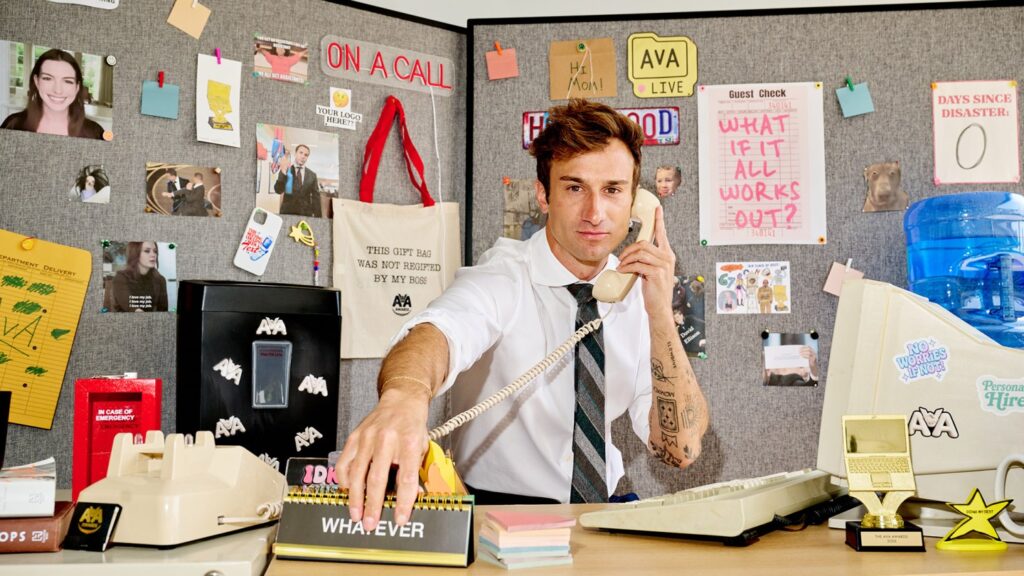
Warner Bailey, photographed March 30 in Los Angeles in his office.
Photographed by Yasara Gunawardena
Why does Hollywood need a new weekly show from Assistants vs. Agents in your view?
I think there’s a tremendous amount of good content out there. But what I decided [on] was a curated live show giving this next generation of entertainment specifically and students direct access to people, insights and opportunities that are shaping the industry in a very approachable way. A lot of shows and content that are currently out there are curated for professionals with a deep understanding of the industry. We’re here to create a more approachable product, to be a curator in a world of an abundance, to help provide a roadmap that didn’t exist when I was trying to break in the industry. And give approachable content that is built and meant for earlier-stage career professionals, as well as students. We have now ambassadors on 135 college campuses in eight countries. We have WhatsApp groups. It’s a valuable feedback loop hearing from [those audiences] that a lot of the content out there goes way over their head. So what we’re trying to do is create approachable content for them on a human-to-human level that’s speaking from a place of authenticity, one that is hopefully, again, digestible for younger generation who may not have that level of understanding of the industry yet.
So why live? Can people ask questions during the show?
Yeah, exactly, it’s going to be interactive. I think the great part about live is it provides a sense of authenticity and real human connection that a lot of polished content doesn’t. The polished content, the podcasts, we’ve dabbled in it, I listen to a lot of amazing podcasts out there, but sometimes it’s so buttoned up and loses that sense of real human connection where you can interact live with your following and take questions live. I think the thing that I struggled with when I was trying to break in is I had so many questions and nowhere to ask them. So we’re taking that and creating a more equitable [access to] execs that will allow for our community to have their questions answered in a live format.
Do you have any creative inspirations for this show?
I’m a big sports fan. I grew up watching SportsCenter, and I think there are current shows, TBPN [Technology Business Programming Network, which was just bought by OpenAI] is one that’s done it in tech, Breaking and Entering is doing it right now in the world of marketing and advertisements and I was on that show, the Breaking and Entering show, and I’m very close with the Breaking and Entering guys. They’ve done an amazing job.
The interesting part for me is I’m not a creator. I am someone who has created a media brand, a brand partnership division and a community without actually being a creator first, which I think is very rare. So we’re trying to reverse engineer a lot of the content side of being a creator, however people want to want to label AvA, but there’s a lot of people that inspire me out there. And I think the goal is to go an inch wide, mile deep, and stay niche, stay in our lane, and service the addressable community that we’ve captured, which is around 300,000 young people that work in entertainment and a lot of students.
I love the idea of a SportsCenter for Hollywood assistants.
The way that I want this show to be is I am a viewer learning as our viewers are also learning in real time from the people I’m interviewing. So it’s not my show, it’s a show where we bring on experts in their fields. It’s a true interview show with news built in, but it’s not my podcast or my show, it really is a bundle of curation of everything going on in the industry and lessons. A lot of it is career-oriented and hopefully inspiring for this next generation breaking in. And the underlying theme of all of it is this sense of optimism in a world and industry where there’s so much negativity in headlines. The young generation is excited about, and we want them to be excited about, jumping into this industry. And from what we hear is that through a lot of headlines and narratives that their dreams are almost getting crushed before they even break in. So we’re trying to flip that on its head and provide a really optimistic lens into the future of our industry.
What makes you optimistic about this business right now as someone who speaks to those on the ground floor and also makes fun of Hollywood?
I want this to shine through that I love the industry we’re in. And I am so grateful to be a part of this because I grew up with zero connections and no access to the industry, hadn’t even been to LA. So for me, I’m so enamored by it. I’m so excited by it. And I’m seeing with the hundreds and thousands of conversations we’re having with students and young people that they’re really excited about the industry and they’re just trying to find where’s the opportunity. And I think the headlines that are out there that are negative are completely fair and warranted. And there’s a shift and change in the industry that starts at consolidation, that starts with the strikes and COVID. I felt that, I was furloughed from my job at Live Nation and a lot of those jobs never came back. There are mergers and consolidation causing a lot of pain for a lot of people, and that’s real, and that is very fair and valid. What we’re trying to find, what we’re trying to show is where the future and the opportunities lie for this next generation. So that’s one aspect.
The other is that because of a fractured and fragmented industry, there are more ways in than ever before to work in entertainment. You just have to be flexible in your definition of what entertainment is. I also think that while the gatekeepers still exist — and I’m not saying this is because of AvA, I think just because of how things have shaken out the past couple years — the gatekeepers don’t control everything like they used to in entertainment. And so I’m seeing people, young people build real careers off the Internet first, bringing leverage into Hollywood. The next generation, they’re not waiting for permission, they’re building their own table versus waiting for a seat at it.
We did touch on the challenges for early-career workers right now. Are there particular ones that you’re worried about? Like AI, or the Paramount-Warner Bros. merger?
I mean, I think you nailed a couple of them. I think [the] job market, we have 250 jobs up on our job board right now that we spend [lots of time] researching, trying to find opportunities, but the job market’s very difficult out there. AI makes me nervous, especially on the generative side. I think there’s good uses of AI that I think can help people. But yeah, I think generative AI is frightening for a number of reasons and the beat at which it’s developed and the lack of guardrails makes me nervous for creatives in this industry, including myself.
If there’s one thing that you wish top execs in the entertainment industry could learn about the next generation coming up, what would that be?
They’re driven, they’re smart, they want to work hard, they want to be in this industry, and they want to learn and adapt to where this industry is going. I think there’s such a negative connotation around the next generation. There always is. And I don’t represent Gen Z. I’m in my 30s, I was an assistant eight years ago. But just talking and speaking to a lot of students, there’s such an interest also to work in legacy Hollywood. I know that this next generation is worth betting on. They have a lot to offer and they just want a seat at the table and a voice. And I think listening and empowering young people, you’re seeing the companies that are being successful [due to that], whether it is streamers or production companies empowering young creators to go and clip content and create fan edits or UTA when they bought JUV Consulting.
So I think what I would say is that this next generation’s worth betting on and give them a seat at the table and you’re going to be able to connect with the community that you’re trying to end up selling content to. It’s better to have them in the room than just assume what they’re excited about, what type of content that they want to see. And I think Gen Z gravitates, especially at the theater level, towards content that represents them on an authentic level versus being told what’s important to them. They define that themselves. So I’m excited to see this next generation come up and lead. And that’s why for me, I’ve only hired people at that age bracket — 21 to 24 — because I want to keep my ears to the ground and I hope other companies do the same.
Warner Bailey is now boss to 12 staffers working on Assistants vs. Agents.
Photographed by Yasara Gunawardena
This interview has been edited for length and clarity.
This story appeared in the April 8 issue of The Hollywood Reporter magazine. Click here to subscribe.