
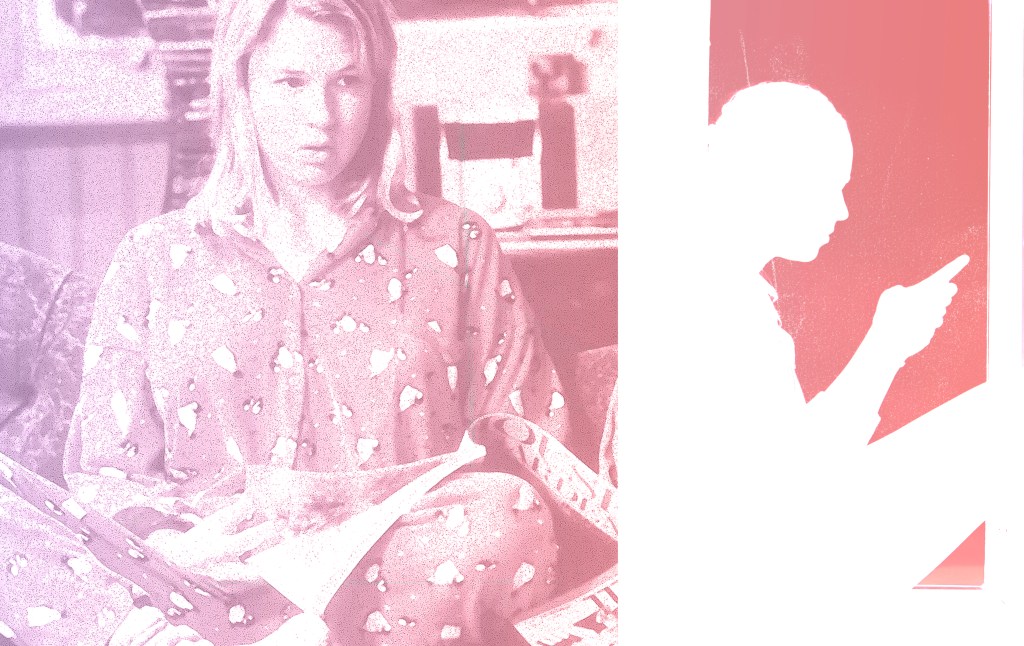
Like many millennial women, I’ve seen Bridget Jones’ Diary an embarrassing number of times. I had not, however, seen the film for many years, until I recently rewatched it in anticipation of its 25th anniversary.
My 2026 reaction to seeing Renée Zellweger’s 2001 Bridget drown the sorrows of her bumbling 30-something singleness in endless booze and loveless hook-ups? Wow, what an innocent time. No, I obviously don’t mean “innocent” in the sense of “pure” or “devoid of vice.” I mean something even deeper than that.
The thesis of Bridget Jones’ Diary, which is based on Helen Fielding’s 1996 novel of the same name, was that a cute but chaotic 30-something single woman could and indeed should, on the strength of her quirky personality, land the eligible bachelor. Today, the notion that a normal every girl would stumble her way into such a happy ending feels credulous to the point of cringe. But why? Have things changed so drastically in 25 years?
I think that they have, and in a way that could be summarized thus: In 2001, we (and by “we” I mean the Anglophone West, encompassing Bridget’s native Britain as well as America) evinced a shocking naivete about the human condition, especially in matters of sex, love, and marriage. We believed that love not only conquered all, but was itself idiosyncratic to the point of fantasy, inclusive of no broader or older moral frameworks or truths.
Today, we have overcorrected.
Cynical to a fault, many of today’s young women have replaced love with calculation and serendipity with algorithms. Out with the single girl with poor judgment and no plan, who somehow gets it all despite zigging every time conventional wisdom would say she should have zagged; in with the single girl with anxiety and arrested development, who will not deign to acknowledge that there might be anything lacking in her life right now.
It’s long past time to find a sustainable middle ground for women when it comes to romance. In short, tying the knot need not be nothing in order not to be everything.
The implicit criteria for and societal investment in women’s coupling will never again be scripted like in a Jane Austen novel, in which the dominant zeitgeist says that any breathing man with a roof over his head is a husband worth having. The model in which women had to marry in order to obtain basic economic security is long gone, and it is not coming back. Some on today’s “new right” may lament this state of affairs, but no quantity of incel tears will alter it.
Meanwhile, the left-inflected mainstream has passed realistic on the turn to jaded: Millennial and Gen Z women who grew up on the Bridget Jones ideal—chase whatever guy makes you giddy, absent any consideration of what makes a solid, committed partner, and then wind up with the solid, committed partner you were too cool to admit you wanted anyhow—now realize they were sold a bill of goods. But they misunderstand how and why.
Today, we blame women’s increasing singleness mostly on a dearth of datable, marriageable men. And, certainly, too few decent male options is a big part of the story of our romantic decline, especially among women without college degrees. But the mainstream female unwillingness to openly define male decency in any way that smacks of sexed chivalry or traditionalism (for fear of seeming uncool or prudish) —and the use of technology to apply all kinds of trivial criteria to potential matches—also deserves a large part of the blame for falling rates and rising ages of marriage, especially among the college-educated.
If Bridget Jones failed to think or plan before she acted (and not just at 23 but at 33), such that her happy ending after ill-advised affairs and ill-timed confessions is really the stuff of self-exculpatory fantasy, young women today are by contrast thinking and planning themselves into oblivion. Moreover, their musings—which militate, by definition, against any action at all—are governed by the same trivia that once motivated Brisget’s actions. So, while Bridget looked for love in all the wrong places, many of today’s similarly rudderless young women are using the dominance of dating app culture, with its encouragement of impossibly elusive standards, as an excuse not to really look for love at all.
Perhaps the only thing worse than Bridget’s human weakness, then, is an inhuman approach to love that unintentionally codifies an incapacity for it.
Patrick T. Brown recently wrote in these pages about the increasing “reservation wage” for marriage, arguing that women today are increasingly reticent—rationally so—to enter into romantic commitments with men who don’t meet their standards. He’s right, of course, and he’s also right that the way to meaningfully raise marriage rates is to focus on reforms that make men without college degrees more marriageable, not just economically but also culturally and emotionally. As women’s economic need for marriage has gone down, and as even the fumes of de facto cultural settings that assumed marriage by 30 if not 25 have disappeared (as they hadn’t quite done in 2001), our expectations for coupledom have gone way, way up.
To land wives, men need to be not only reliable earners and appealing lovers, but also good friends. In the last-named capacity, many men of all classes struggle. And men who are not college-educated struggle far more. Why? Women, whether they went to college or not, tend to be naturally both verbal and social in ways that are, for many men, learned behaviors. And, per Brown, the kinds of homes that send sons to college are more likely, on average, to inculcate those skills, leaving men without college degrees at a distinct disadvantage.
Here’s the thing, though: A lot of men’s capacity as earners, lovers, and friends is now being assessed not in a high school or college hallway, a mutual acquaintance’s home, or a bar, but via the little screen of their potential dates’ smartphones. Moreover, men are often being assessed via shallow criteria that have little to nothing to do with the virtues and qualities that make good husbands.
So, it’s apparently popular for single women to look only for men over 6 feet tall who make six figures, and we’re wondering why there seem to be no decent men? Sure, women have always had these standards for partners, but the plot of many romantic comedies and even more real-life romances (Bridget Jones notwithstanding) was the leading lady realizing that her ideal leading man wasn’t, in fact, the fantasy guy she’d dreamed up at 13 but a living, breathing human being with flaws and idiosyncrasies and secrets.
But that was when we talked to each other in person. Now that men approaching women in public is coded “creepy,” trivia dominates women’s mating choices in a way that it never could before. Bridget Jones at least had to make bad decisions, to choose the bad guy over the good one when both were right in front of her—until she wised up. But when the only men in front of you are mediated through the dehumanizing flatness of a phone, in what context would that wisdom even come?
The guy who is 5-foot-8 and makes $75,000 a year may make you laugh and demonstrate great potential in all kinds of ways; he might also give you butterflies that make you care less about how tall he is and what he earns so long as he treats you well. After all, actual human love—which some women are essentially trying to avoid now, due to its liabilities—isn’t ultimately governed by an algorithm. But, see, knowing that would require actually meeting that guy. And having a moral framework for marriageability that helps you prioritize male virtue over various trendy irrelevancies. Instead, women are sorting disembodied men on a screen, based on criteria that seem more rational (if no more morally salient) than Bridget Jones’ “he gives me butterflies” but turn out to be just as limiting, if not more so.
At least in 2001, a man’s decency, honor, commitment, and kindness could make themselves known, even if a woman misguidedly put lesser considerations ahead of such virtues. Today, the online context militates against sorting for those qualities, even if you wanted to—which, of course, many women making dating profiles apparently don’t. In other words, Bridget Jones may have made poor judgments about men, but today’s young women have no better judgment, and have simultaneously narrowed into near nothingness the moments in which such decisions are made in real time about real people at all.
As a result, the amoral relativism and individualism of Bridget Jones remain—but without the erstwhile ability for women to choose something better in spite of themselves.
Perhaps the biggest lie of Bridget Jones (and of Sex and the City) is the existence of many men in their late 30s or early 40s with oodles of money who suddenly realize that they’re head over heels for women near their own age who are not their equals in any respect. Talk about a fairy tale. Highly successful men of that age do not typically settle down with financially precarious 30-something women. They keep their options open, they marry 28-year-olds, or they marry equally successful women of their own age.
Do you know how you actually make a 40-year-old man into great husband material, though? Meet him when he’s 20 and marry him when he’s 25. Now, I am in no way advocating here for the kind of “just marry him” advice that the writer Helen Roy has correctly coded a right-wing luxury belief. Those who wish to return to the days of “a lid for every pot” by forcing women into unstable relationships with problematic men are both wrong and dreaming.
That said, I am pointing out that highly successful, universally appealing, and virtuous 37-year-old men like Bridget Jones’ Mr. Darcy are very rarely single at 37—because discerning young women who know how to spot promising draft picks fell for those men when they were still boys. As in, before they were highly successful or universally appealing.
To spare the feelings of my male readership, I will omit any detailed summary of a recent conversation with several of my own late 30-something and early 40-something female friends about how wonderful the husbands we all met in college are—and, ahem, exactly how they got that way and alongside whom.
Suffice it to say that The Lion King offers a fair blueprint. Simba’s parents did a solid job inculcating morality and responsibility. But for a host of (admittedly idiosyncratic) reasons, that wasn’t enough to make a man—er, lion?—out of him. It is—as it often is, when young people actually interact with one another—the love (tough love, but love all the same) of a romantic prospect that pushes Simba across the line to a reliable, responsible adulthood worthy of marriage and family.
So, yes, there really is a dearth of datable, marriageable men. But women also have not profited by our belated understanding that Bridget Jones’ story is the stuff of fiction. Instead of jumping into bed with the wrong guys, 2026 versions of Bridget are increasingly lying around alone, deciding that all the available guys are wrong based on the personal equivalent of systemic disinformation.
Today, 30-something female singleness has become so normal that no one assumes it’s a unique premise for a chick flick. After all, missing out on something important, for which you’re searching based on a false understanding of an incorrect map, is not the stuff of comedy, romantic or otherwise.
It is, in the fullest sense of the word, tragic.