

The Before
Bryan Cranston net worth traces back to Canoga Park, California, 1956. His father was a struggling actor who abandoned the family. His mother worked as a radio actress. The entertainment industry was not an aspiration for Cranston. It was the family disease. He grew up understanding that acting could destroy a family as easily as it could sustain one. That understanding is what made Walter White feel so authentic. Cranston knew what it looked like when ambition consumed everything around it.
Before Malcolm in the Middle, his career was a twenty-year grind through guest roles. Seinfeld. The X-Files. Saving Private Ryan. He was the actor whose face you recognized without being able to name. That career position generates steady income and zero cultural leverage.
The Pivot Moment
 Bryan-Cranston-Malcolm-in-the-Middle
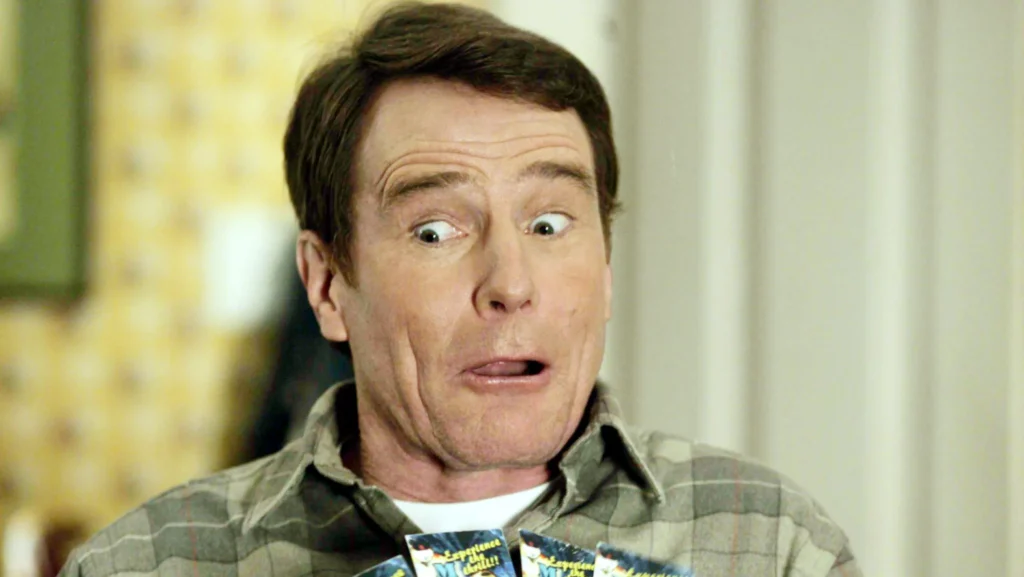
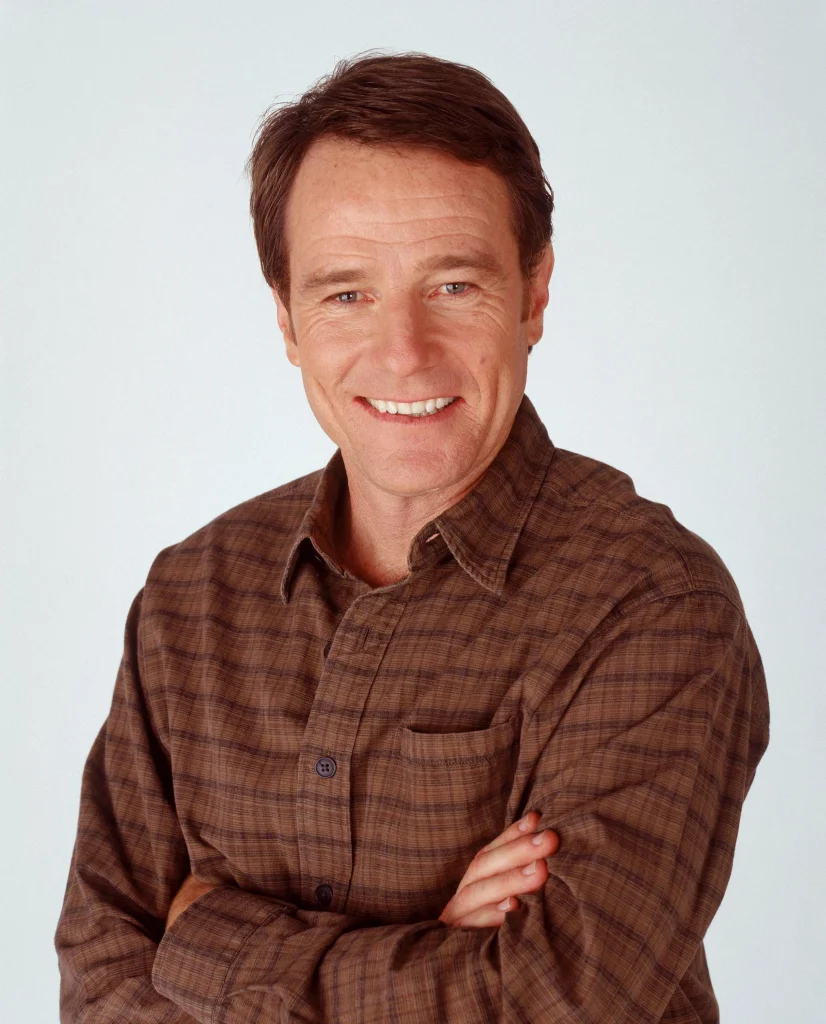
Malcolm in the Middle ran for 151 episodes from 2000 to 2006. Cranston played Hal, the bumbling patriarch, with a physical comedy precision that earned him three Emmy nominations. His per-episode salary reportedly reached $150,000 by the later seasons. Total Malcolm income likely reached $15 million to $20 million across the run. That money built the financial foundation. Breaking Bad built everything on top of it.
The Walter White Transformation
Vince Gilligan has said he cast Cranston after seeing an X-Files episode in which Cranston played a racist kidnapper with such conviction that Gilligan could not forget the performance. The leap from sitcom dad to meth kingpin is the most dramatic career pivot in television history. Cranston earned $225,000 per episode by the final season. Total Breaking Bad income likely reached $10 million to $15 million across five seasons. Four consecutive Emmy wins confirmed the transformation was not a stunt but a revelation.
The Climb
Post-Breaking Bad, Cranston won a Tony for All the Way on Broadway, playing Lyndon Johnson. Film roles in Trumbo earned him an Oscar nomination. Godzilla and Argo added blockbuster income. Your Honor on Showtime ran for two seasons. The Malcolm in the Middle revival, announced for Disney+, will generate nostalgia income connecting his two most iconic roles across a twenty-five-year arc.
The Dos Hombres Business
 Dos-Hombres-Mezcal-Found-Bryan-Cranston-and-Aaron-Paul-1
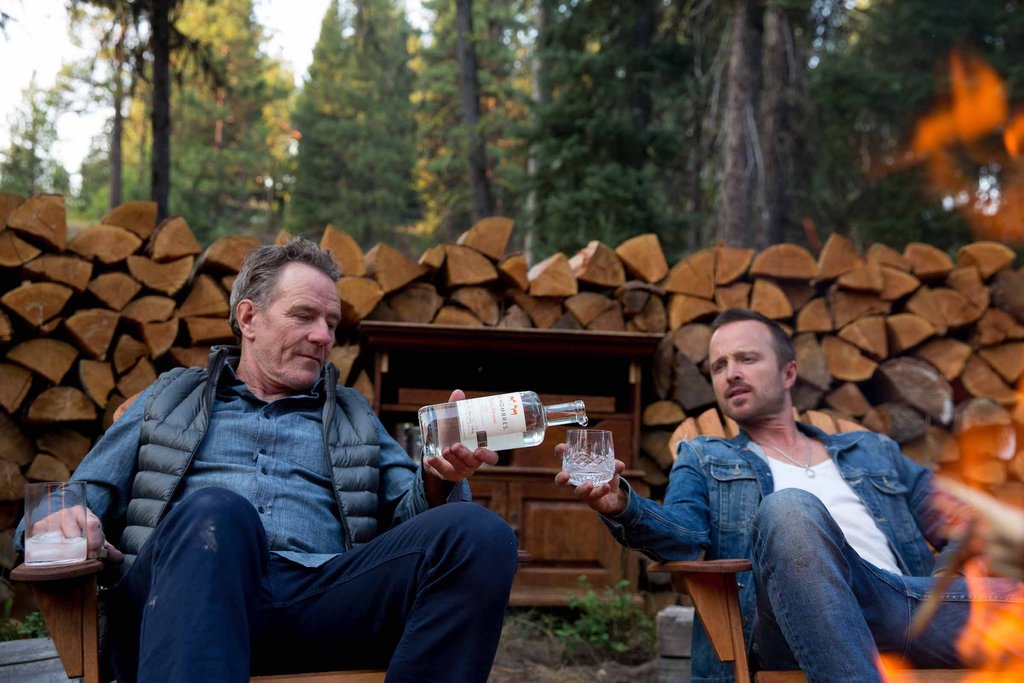
Dos Hombres mezcal, co-founded with Aaron Paul in 2019, is the most commercially significant celebrity spirits brand launched by television actors. The brand generates revenue independently of Cranston’s acting career. It also generates the specific irony that this pillar examines: two actors who played a meth cook and a meth dealer now sell artisanal liquor. The cautionary tale became a brand equity platform. Walter White would appreciate the hustle.
What He Built
Bryan Cranston net worth at $40 million reflects two iconic television runs, a Broadway career, a film career. a spirits brand. The Canoga Park kid whose father abandoned the family built the career his father could not. That biographical symmetry is not lost on Cranston, who has discussed it publicly with the emotional honesty that made Walter White’s vulnerability feel genuine even when Walter was at his most monstrous.
The Soft Landing
Cranston is sixty-nine. He works at a pace that suggests he has internalized Walter White’s philosophy without the criminal application: the work is the point. The $40 million is the scoreboard. The work, the four Emmys, the Tony, the Oscar nomination, the mezcal, the Malcolm revival, is the game. For Cranston, the game is clearly not over.
Read more about the full cast in our Breaking Bad Cast Net Worth hub, or explore the Prestige TV Antihero Cast Net Worth pillar.
The Wider Impact
 bryan-cranston-as-hal-from-malcolm-in-the-middle
The career economics of the Malcolm-to-Breaking Bad transition deserve closer analysis because they illustrate a principle that applies to every actor who has ever been typecast. Malcolm in the Middle filed Cranston under “comedy.” Breaking Bad refiled him under “drama.” The refiling generated approximately $25 million in additional career value because dramatic actors command higher fees, receive more prestigious material, and earn more awards than comedic actors at comparable career stages. Cranston’s willingness to destroy the Malcolm brand in order to build the Heisenberg brand is the most financially productive act of creative self-destruction in television history.
The Market Signal
His Broadway career adds a revenue stream that most television actors never access. All the Way earned him a Tony Award. Network with Bryan Cranston ran on Broadway and the West End. Each Broadway run generates $50,000 to $100,000 per week in actor compensation, plus the prestige that keeps his asking price high for subsequent television and film projects. The Broadway credential signals to the industry that Cranston is a serious actor, not a television personality. that distinction is worth millions in cumulative career value.
The Positioning
Furthermore, his real estate holdings include a New York City property purchased for $2.8 million and a Los Angeles ranch. Real estate acquired with entertainment income has historically appreciated at rates that outperform most alternative investments. It means Cranston’s properties are not just homes. They are financial instruments that generate returns independently of his acting career.
The Long View
The Malcolm in the Middle revival on Disney+ represents the final act of a career architecture built on the understanding that nostalgia is a monetizable asset. The audience that watched Malcolm from 2000 to 2006 is now forty to fifty years old, affluent, and willing to pay streaming subscription fees to revisit the show that defined their Saturday nights. Cranston will earn a premium fee for the revival because he is the reason it exists. Without his post-Breaking Bad credibility, the revival would not have been greenlit. In other words, Breaking Bad made the Malcolm revival possible. It means Breaking Bad is still generating income for Cranston through projects it influenced but did not directly produce.
The Wider Impact
The Trumbo Oscar nomination represents a specific category of career validation that television actors rarely receive. Academy voters historically discount television performers. Cranston’s nomination proved that the Breaking Bad credential could travel from the small screen to the big screen without losing any of its authority. That proof increased his film asking price and established him as a dual-medium performer whose value is not tied to any single distribution platform.
 bryan-cranston-your-honor-season-2
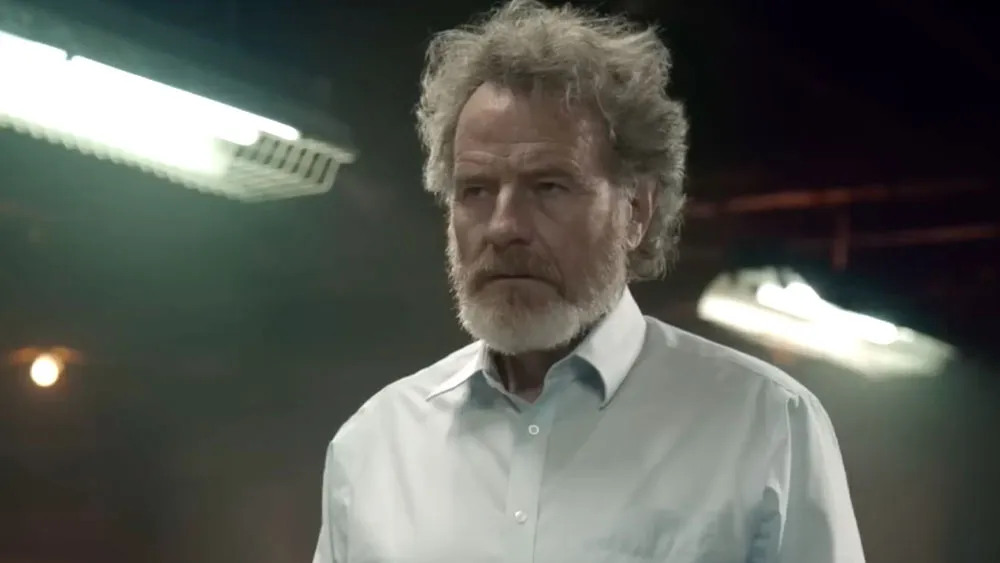
His Your Honor role on Showtime, while less culturally impactful than Breaking Bad, generated two seasons of premium cable income at rates that reflected his post-Breaking Bad market position. The show proved he could lead a prestige drama without Vince Gilligan, which matters because it demonstrates that his star power is portable rather than director-dependent. Portable star power is worth more than project-specific star power because it generates opportunities across a wider range of projects and producers.
Cranston’s net worth trajectory also benefits from the specific timing of his career peak. Breaking Bad ended in 2013. The subsequent decade saw a massive expansion in content demand driven by streaming platforms competing for subscribers. That demand inflation increased compensation for established prestige television talent by an estimated 30 to 50 percent. Cranston, arriving in the marketplace with four Emmys and the most iconic television performance of the 2010s, captured that inflation premium on every project he accepted.
You are reading this because you already understand something most people scroll right past. The intersection of culture, money, and taste is not a Venn diagram. It is a mirror. Social Life Magazine has spent 23 years holding that mirror up to the people who shape the Hamptons, Manhattan, and the corridors between them. If you see yourself in these pages, we should talk. Reach out at sociallifemagazine.com/contact.
Your Brand, Your Launch
Your personal story belongs in front of 82,000 affluent readers and a digital audience that keeps growing, our editorial features are built for exactly that moment. Learn more at Submit a Paid Feature.
Our email list reaches 82,000 subscribers who actually open, read, and act. If your audience is high-net-worth, culturally engaged, and based between Park Avenue and Montauk, you are already in the right place. Join the list.
Polo Hamptons returns to Bridgehampton this July with 1,200 guests, Getty Images coverage, and seven years of BMW title sponsorship behind it. If your brand belongs in that conversation, visit polohamptons.com.
A print subscription to Social Life Magazine puts 25,000 copies per issue into the boutiques, lobbies, and living rooms where decisions get made, from Westhampton to Montauk every summer and Upper East Side doorman buildings for Fall and Winter. Subscribe at sociallifemagazine.com/subscription.
If this publication has added value to your world and you want to support independent luxury journalism, you can contribute directly at our donation page.