
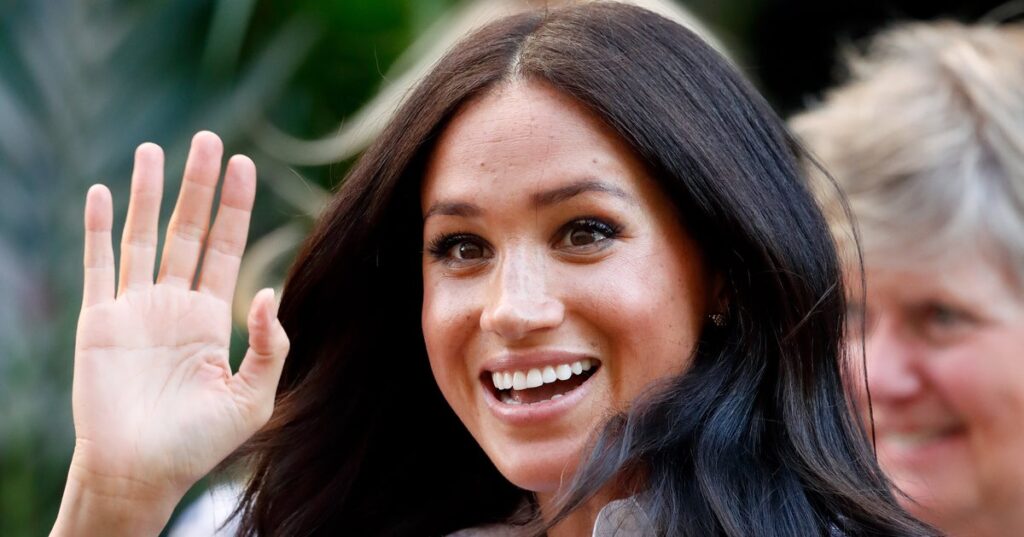
Meghan Markle has given herself a title that may even be worse than her lifestyle hacks.
On Friday, the Duke and Duchess of Sussex visited Batyr, an Australian youth mental health charity, to speak with teenagers about the damaging effects of social media.
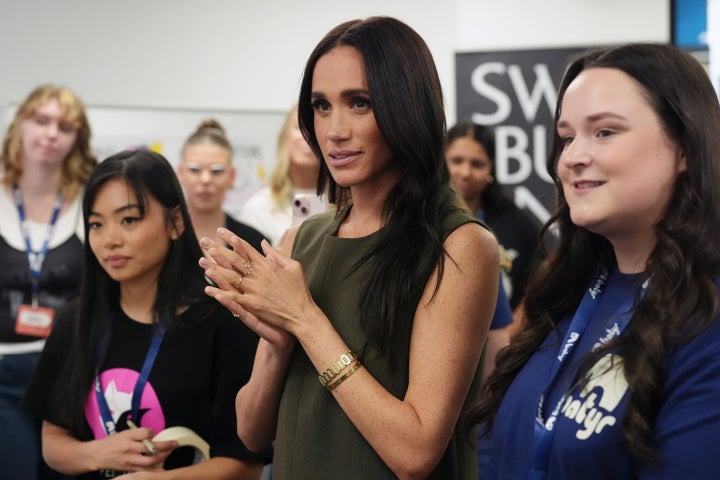 Meghan, Duchess of Sussex, meets advocates during a visit to Batyr, a mental health engagement program, at Swinburne University of Technology on April 16, in Melbourne, Australia.
At one point during their conversation, Markle got candid about the online vitriol that has been slung her way for the past decade, which began even before Prince Harry confirmed their relationship in 2016.
“For now, 10 years — every day for 10 years — I have been bullied and attacked,” Markle said in a YouTube video that included snippets of the conversation published by the Royal Family Channel. “And I was the most trolled person in the entire world, man or woman … but, I’m still here.”
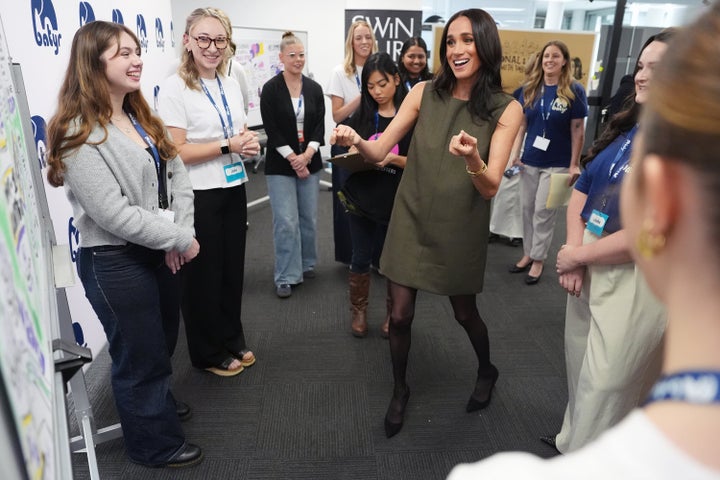 The duchess speaks with advocates during a visit to Batyr.
“And when I think of all of you and what you’re experiencing, I think so much of that is having to realize that you know that industry,” Markle said, likely referring to big tech companies like Meta and YouTube. “That billion-dollar industry, that is completely anchored and predicated on cruelty to get clicks — that’s not going to change. So you have to be stronger than that.”
Elsewhere in the conversation, Prince Harry spoke about how the Australian government enacted a ban on social media for children under age 16 last year.
“Australia took the lead,” he told the young adults in attendance. “Your government was the first country in the world to bring about a ban.”
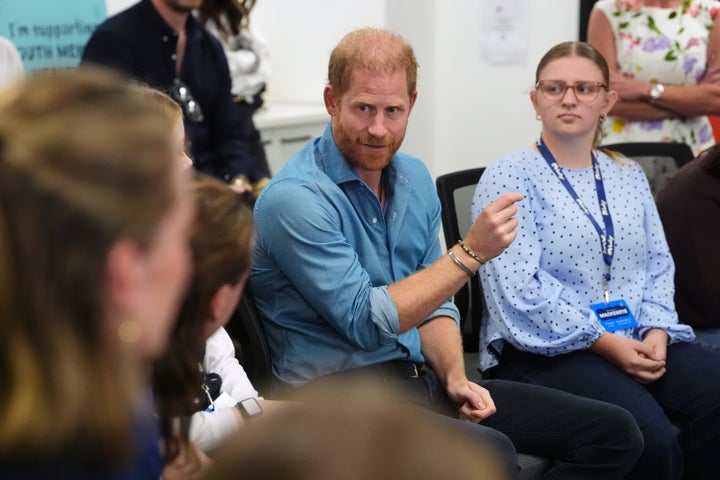 Prince Harry, Duke of Sussex, takes part in discussion group with young advocates on a visit to Batyr.
But his praise also included a dash of criticism.
“So many countries have now followed suit,” he said. “But it should have never got to a ban. It should have never, ever got to a ban. But now that the ban is in place, now what follows? Because the companies themselves have to be accountable. And there’s no way that young people should be punished by getting banned from something that should be safe to use no matter what.”
Proposals for similar legislation in the U.S. — like The Kids Online Safety Act — have faced major pushback since President Donald Trump took office. KOSA, which had more bipartisan support in 2024, is now causing some critics to ring the alarm bell over concerns that the law could be exploited by fierce backers like the the Heritage Foundation to censor content for young adults regarding LGTBQ rights, gender affirming health care, sex education, birth control, and abortion, according to the digital rights advocacy group Fight for the Future. The same group also warns that age verification on social media platforms may “ramp up” online surveillance.
“All lawmakers will claim that they are [enacting age verification] to protect youth from some harm, but they fail to mention the convenient power it hands to government to control and chill speech they oppose, and even punish their critics,” Ari Cohn, the lead counsel for tech policy at the Foundation for Individual Rights and Expression told The Guardian in March.