
In 2013, action legends Sylvester Stallone and Arnold Schwarzenegger teamed up to headline Escape Plan. While the two had appeared in Expendables films together, this was the first time they were starring together in a movie, making Escape Plan a bit of an event for genre fans. Unfortunately, the film wasn’t much of a critical darling (it netted a 50% score on Rotten Tomatoes), but it was an entertaining enough throwback carried by its two leads. Escape Plan was also moderately successful at the box office, bringing in $137.3 million worldwide against a budget in the $54-70 million range. That was a good enough performance to warrant a follow-up, which is now a hit on streaming.
For the week of April 13th-19th, Escape Plan 2: Hades was the No. 9 movie on Netflix globally. During that time, it accumulated 3 million views and was watched for a total of 4.6 million hours. This was the film’s first week placing in Netflix’s top 10. It narrowly beat out Anaconda to secure the ninth spot.
Sylvester Stallone Teams Up With A Different Action Star in Escape Plan 2 (But It Was Bizarre)
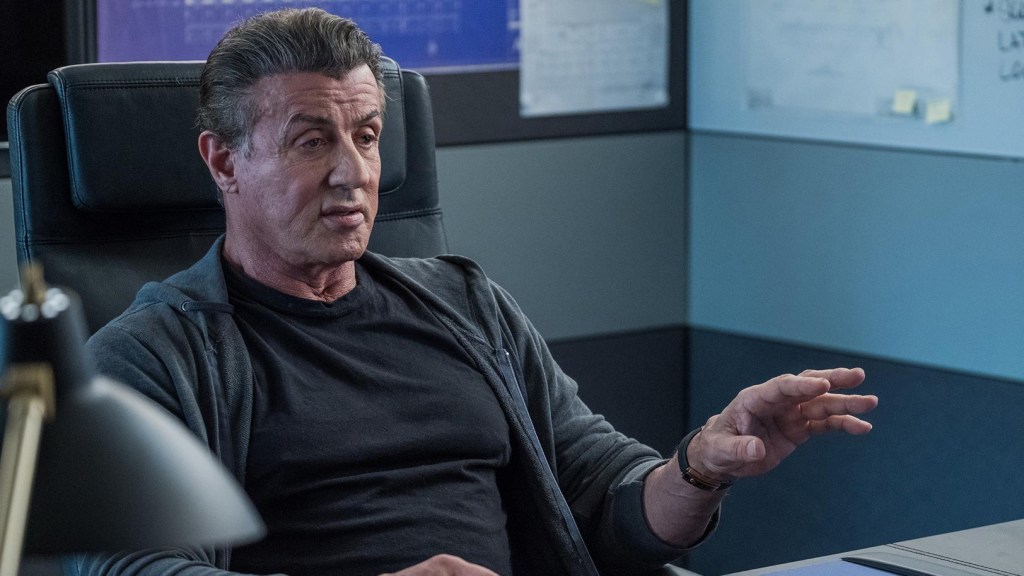
Schwarzenegger opted to pass on Escape Plan 2 to focus on other projects, so the filmmakers had to find a replacement co-star for Stallone. Dave Bautista signed on for the sequel, and the movie was marketed around that pairing. While it lacked the history of Stallone and Schwarzenegger, the team-up was still an interesting proposition. By the time Escape Plan 2 came out, Bautista had cemented himself as a fan favorite, charismatic action star thanks to his performances as Drax in the Marvel Cinematic Universe. However, Escape Plan 2 wasn’t really the Stallone/Bautista vehicle it was advertised as. The two had limited screen time; the film’s main character is actually portrayed by Huang Xiaoming.
This shift in approach was likely due to the fact that the original Escape Plan was a much larger hit in international territories. It grossed only $25.1 million domestically, meaning over 81% of its worldwide total came from overseas markets. Escape Plan was particularly successful in Asia and Europe. With that in mind, crafting the sequel in a way to appeal to those international audiences was a priority, which is why the film focuses on Xiaoming’s new character. The U.S. market was essentially an afterthought here; Escape Plan 2 didn’t have a domestic theatrical run. It was released straight to video in America while playing on the big screen in Russia and China.
While Escape Plan 2 made sense from a business perspective, the changes unfortunately didn’t help much. The film was widely panned, receiving a 7% score on Rotten Tomatoes. Even Stallone expressed displeasure with the way the film turned out, lambasting the awful experience of making it. Escape Plan 3: The Extractors was more of the same, skipping theaters in the United States while earning largely negative reviews. It’s strange that a franchise that was initially built around the ballyhooed pairing of Stallone and Schwarzenegger ended up as a disposable direct-to-video series, but that shows just how much things have changed since their heyday in the 1980s and 1990s. Escape Plan would have been one of the biggest films of the year had it been made when the stars were in their prime.
Escape Plan 2: Hades isn’t available on Netflix in the United States, so all of those streaming views come from international territories. Considering the franchise’s history, that makes a great deal of sense. Escape Plan has always been more of a draw overseas than in America, so international Netflix users were happy to check the sequel out this week. Hopefully those viewers don’t mind the misleading marketing that positioned Stallone and Bautista as the co-leads.
What do you think? Leave a comment below and join the conversation now in the ComicBook Forum!