
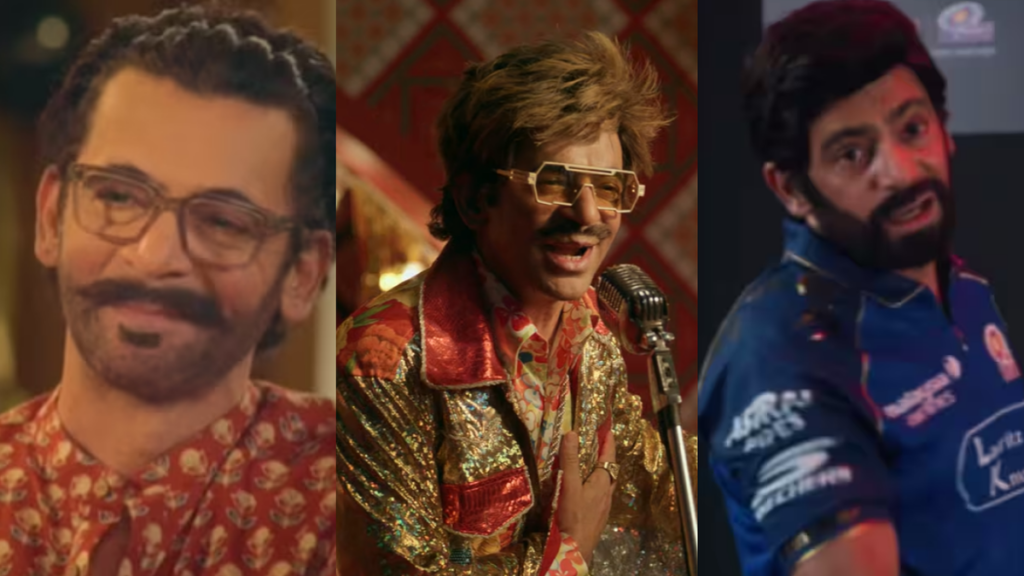
Sunil Grover has long been a familiar face in Indian comedy, but his recent run across screens suggests a shift, from being a popular performer to becoming a format that brands are actively building around.
The trigger appears to be a mix of timing and visibility. On The Great Indian Kapil Show (now on Netflix), Grover’s return and subsequent performances, particularly his mimicry of Aamir Khan in an early episode this year, quickly found traction online.
Clips circulated widely, drawing attention not just to the accuracy of the impersonation but to his broader range as a character-driven performer.
Alongside this, recurring personas like “Diamond Raja”, a flamboyant orchestra-style character, began gaining their own recall.
For brands, that recall has translated into opportunity.
Characters that travel beyond the show
Unlike traditional celebrity endorsements that rely on a fixed persona, Grover’s appeal lies in his ability to switch identities often within the same performance. That flexibility is now being mirrored in how brands are deploying him.
Shortly after the Aamir Khan mimicry episode gained traction, a promotional film tied to Aamir Khan Productions’ project Happy Patel featured Grover reprising a version of the actor.
The campaign leaned into familiarity while adding a layer of parody, something that has become a recurring theme in his brand collaborations.
Then comes Screen Awards 2026, which made a comeback after seven years, marking its return with hosts Alia Bhatt, Zakir Khan, Saurabh Dwivedi and Sunil Grover. The show was streamed on Sony LIV and aired on Sony TV.
Ahead of the show, Grover also featured in teaser-led ad films styled as an interview setup inspired by Golmaal, where he plays both interviewer and interviewee, echoing the film’s dual-act format to underline a merit-over-connections narrative.
At the awards itself, he appeared in multiple avatars from Aamir Khan to Javed Akhtar, blurring the line between performance and hosting, which drew strong audience appreciation and online traction.
Streaming platform Netflix has also tapped into this adaptability.
In campaigns linked to IPL partnerships, Grover appeared in different character skins, first mimicking cricketer Rohit Sharma in a Mumbai Indians-themed spot and more recently reprising his “Diamond Raja” persona for a Sunrisers Hyderabad campaign. The messaging stayed a consistent entertainment-led promotion, but the character lens kept shifting.
From mimicry to marketing tool
What’s notable is that brands are not just casting Grover; they’re casting his characters.
Travel platform Agoda brought this versatility into play in a campaign featuring Ekta Kapoor and Chunky Panday, where Grover took on dual roles and leaned into mimicry-driven humour to anchor the narrative.
Sprite’s recent campaigns are a case in point. In March, Grover featured in a brand film for the beverage.
And in April, he fronted the launch of a mint-flavoured limited edition variant. Both executions leaned into his comedic timing, but more importantly, they positioned him as a recognisable, repeatable face within the brand’s communication.
Asian Paints, meanwhile, used him in a more narrative-driven format. In the campaign, Grover plays a dual role, including the flamboyant character “Dampinder” – a personification of dampness itself.
The ad plays out as a romantic spoof, where this intrusive character disrupts a couple’s intimate moments, turning a functional problem into a character-led narrative.
This marks a subtle shift. Instead of building long-term brand associations around a static identity, advertisers are experimenting with modular celebrity use where the same individual can serve different narrative roles depending on the campaign.
Why now?
Part of this surge can be attributed to the ecosystem Grover is currently operating in. The move of The Kapil Sharma Show to Netflix has expanded its digital reach, making its characters more shareable and meme-friendly.
In a content environment driven by short-form recall, characters like “Diamond Raja” or specific mimicry clips are easier to extract, remix, and circulate.
At the same time, advertising itself is leaning more into humour, parody, and pop culture references, formats where Grover’s strengths naturally fit.
There’s also a practical advantage. In a landscape where celebrity endorsements can feel repetitive, character-driven performances offer brands a way to stand out without moving away from familiar faces.
A broader pattern in celebrity usage
Grover’s current trajectory also reflects a broader shift in how brands are thinking about celebrity.
Instead of relying solely on star power, there is increasing emphasis on performance versatility and content adaptability. Comedians and creators who can generate multiple narratives are becoming valuable because they allow brands to plug into different moments without starting from scratch each time.
That said, whether this momentum sustains will depend on how creatively brands continue to use him. Character-led marketing runs the risk of becoming predictable if overused, especially when the same tropes begin to repeat across campaigns.
From mimicry on a comedy show to multi-brand campaign appearances, his journey underscores how content virality can quickly translate into commercial visibility provided it aligns with what brands are currently looking for.