
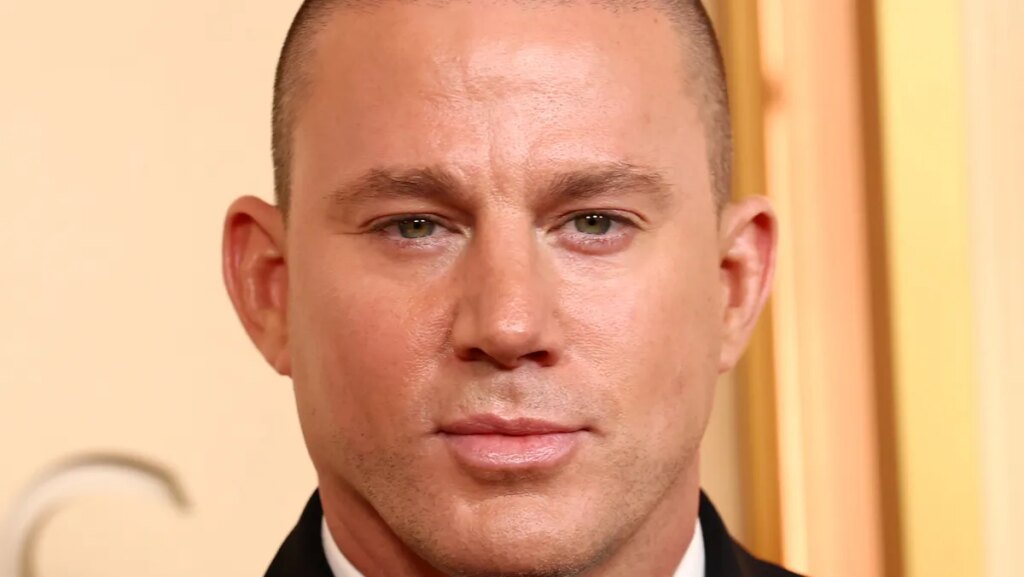
Wait… is Channing Tatum’s post about what I think it is?
If you found yourself wondering that after the “Roofman” star, 46, reportedly shared a cryptic message on his Instagram Stories on Monday, then, congratulations, you’ve been “vaguebooked.”
Vaguebooking involves writing something intentionally mysterious on social media in order to generate buzz and get reactions from people as they try to figure out what your post means. Most of the time, experts say, vaguebooking boils down to a plea for attention on the part of the poster.
Following reports and speculation of his ex-fiancée Zoë Kravitz’s engagement to Harry Styles, the actor shared a poem on his Instagram Stories, per People and HuffPost: “My brain and heart divorced / a decade ago / about who was to blame about how big of a mess I have become / Eventually, they couldn’t be in the same room together.”
Does Tatum’s post have anything to do with Kravitz and Styles? Who knows. And, in the era of “vaguebooking,” that ambiguity could very well be the point.
“These kinds of posts from friends or family are vague enough to make everyone curious and emotional enough to invite concern. And suddenly the comments start rolling in: ‘Are you OK?’ ‘What happened?’ ‘Sending love!'” Monica Berg, author of “Rethink Love: 3 Steps to Being the One, Attracting the One, and Becoming One” and host of the podcast “Spiritually Hungry,” previously told USA TODAY.
“Vaguebooking − especially when it involves relationships or exes − reveals a desire for external validation,” she added.
Why do people ‘vaguebook?’
It’s likely most social media users have encountered “vaguebooking” at some point. Maybe we’ve even done it ourselves.
What the behavior expresses, Berg added, is a deeper desire to be seen. “Vaguebooking” might have emerged in the era of social media. But seeking validation has been around as long as civilization itself.
“When we post something cryptic or emotionally charged, hoping others will read between the lines, what we’re really expressing is our longing to be seen, heard and understood,” Berg previously told USA TODAY. “But seeking that recognition through ambiguity won’t provide us with what we really want − connection.”
And, when you get wise to “vaguebooking,” it’s hard not to see it for what it is when it crops up on your social media page.
“Vaguebooking can feel manipulative, and many find it downright irritating,” Berg added. “Before dismissing the post though, acknowledge that at its core is a sincere desire for connection. While you don’t have to comment on the post, maybe you can check in with that person by sending a text or a DM.”
Are you a ‘vaguebooker’? Try this instead
The prevalence of vaguebooking also speaks to the breakdown of communication skills more broadly. So, if you catch yourself guilty of vaguebooking, it might be time to stop and reflect. What’s driving you to post this way on social media? What’s really behind this behavior, and what’s a better way to address it?
“Conflict is an inevitable element of the human experience,” Melvin Williams, associate professor of communication and media studies at Pace University, previously told USA TODAY. “Yet, society still struggles with developing appropriate conflict resolution techniques and coping mechanisms. As a result, vaguebooking becomes a passive-aggressive pacifier to soothe the discomfort of explicitly addressing disagreements and communicating one’s feelings.”
And, as much as you can, try to keep your communication style direct, respectful and honest. That goes for in-person as well as online.
“Allow yourself to fully experience your feelings, and if needed, seek professional assistance,” Williams added. “Behind this ambiguous practice lie human beings with unexpressed emotions seeking cathartic releases, conflict resolutions and emotional support online.”