
4 View gallery

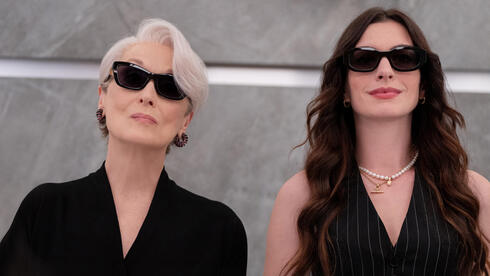
The closing scene of “The Devil Wears Prada 2” ends with Andrea Sachs (Anne Hathaway) entering Miranda Priestly’s (Meryl Streep) office wearing a blue wool vest, a moment that nods to the unforgettable — and perhaps most quoted — scene from the original film released 20 years ago. In that scene, Sachs was humiliated for her choice of a blue sweater picked up from a cheap fashion retailer after she scoffed at a debate over two “cerulean blue” belts, prompting a brief but thorough lecture on the hierarchy of the fashion industry. Another reference to the belts appears at the start of the sequel, one of many callbacks woven throughout the plot.
That is largely the problem: “The Devil Wears Prada 2” is so preoccupied with quoting the original that it struggles to justify itself as a standalone film.
The sequel reunites all the characters from the first movie. Any expectation that they have moved forward in their lives is quickly dispelled — the plot makes clear they are essentially in the same place.
In brief: Andrea Sachs is fired from her job as an investigative reporter just before receiving an award for a series she wrote. She returns to Runway magazine, where she worked 20 years earlier, at the recommendation of publisher Irv Ravitz, this time as the magazine’s head of content.
4 View gallery
(Photo: Courtesy of Forum Film)
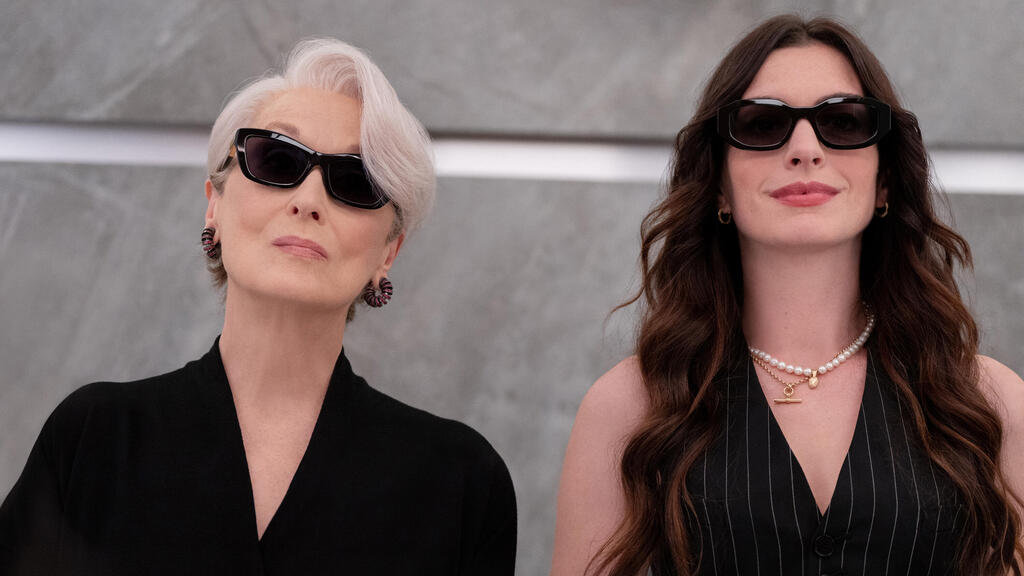
There, she reunites with the formidable editor Miranda Priestly, who resumes her role in a less devilish form, dulling the sharpness of her character. Of the complexity Streep brought to the role in the original, little remains beyond eye rolls and unamusing gestures, such as a moment when she is asked to hang up her own coat instead of tossing it to staff.
Despite online backlash against Hathaway, she maintains charm and credibility throughout the film, as does .
While the film is an agreeable comedy, it is not one audiences waited two decades to see. Viewers familiar with — and able to recite — the original will experience a sense of déjà vu. Not only is the plot structure similar — Andy is once again called upon to rescue Miranda despite a lack of gratitude — but the same power dynamics are at play, particularly the tension between a powerful, established woman and a younger woman finding her way.
In keeping with contemporary sensibilities, the film features a more diverse, nonwhite cast, reflecting changes at Vogue magazine — the inspiration for Runway — over the past six years.
4 View gallery
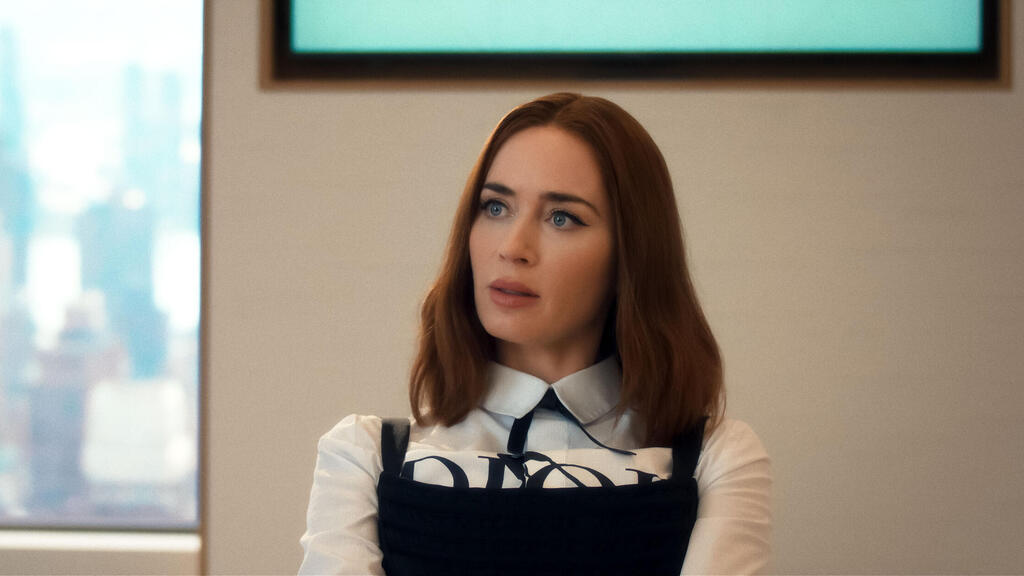
Emily Blunt as Emily Charlton
(Photo: Courtesy of Forum Film)
Despite being set in the offices of a fashion magazine, “The Devil Wears Prada 2” is not truly a film about fashion. Brief cameos by designer Donatella Versace and model Heidi Klum do little to change that. Instead, the story focuses on the shifting media landscape and the way journalists and glossy print magazines have been sidelined by the digital world and endless scrolling on social media. As Priestly puts it in one of the film’s more candid lines: “The September issue” — the magazine’s most important issue of the year — “is now the thickness of dental floss.”
The storyline is not entirely fictional. Anna Wintour, widely seen as the real-life inspiration for Priestly, has in the past decade become global chief content officer of Condé Nast, a role offered to Priestly in the film. But in the two decades since Vogue was considered the industry’s bible, its influence has waned as its digital platforms and social media presence have grown. In other words, while in 2006 Vogue set the agenda in fashion and consistently excluded those who did not fit a narrow, white and thin beauty ideal, today it largely offers more of the same content seen across social media and competing fashion and entertainment sites, with little chance of delivering the kind of relevant or groundbreaking material it once did.
The film fails to address the deeper issues behind the collapse of print magazines in favor of often mediocre social media content, and it offers no meaningful alternative. On the contrary, without revealing spoilers, the plot ultimately preserves the status quo and leaves power firmly in Priestly’s hands. That is how the system works. Evidence of this can be seen in Wintour’s cooperation in promoting the film, including a joint cover with Streep in Vogue’s May issue and a tie-in to a Met Gala-like event that opens the film, timed to coincide with the real event next Monday.
The film’s lack of relevance is also evident in its visuals. From characters dressed in ways detached from real life — with the exception of Hathaway’s more casual looks, including a vintage Maison Margiela jacket over a white ribbed shirt — to the presence of designers who now feel like relics, such as Marc Jacobs commenting on his own designs, and the repeated appearance of Italian designer Brunello Cucinelli, a leading figure in so-called “quiet luxury.”
One of the film’s more successful jokes comes from art director Nigel Kipling (Stanley Tucci), who points to a garment and says: “That’s quiet luxury — you’ll need a hearing aid for it.” Aside from poking fun at a trend that has already passed, the film fails to recreate the humor of the original. It is so busy pandering to audiences and reminding them of the 2006 plot — from the cafeteria soup scene to the line “A million girls would kill for this job” — that it neglects to deliver new jokes. That is, assuming a gag about why model Kendall Jenner, of the Kardashian family, is called “Ken-dull” lands at all.
4 View gallery
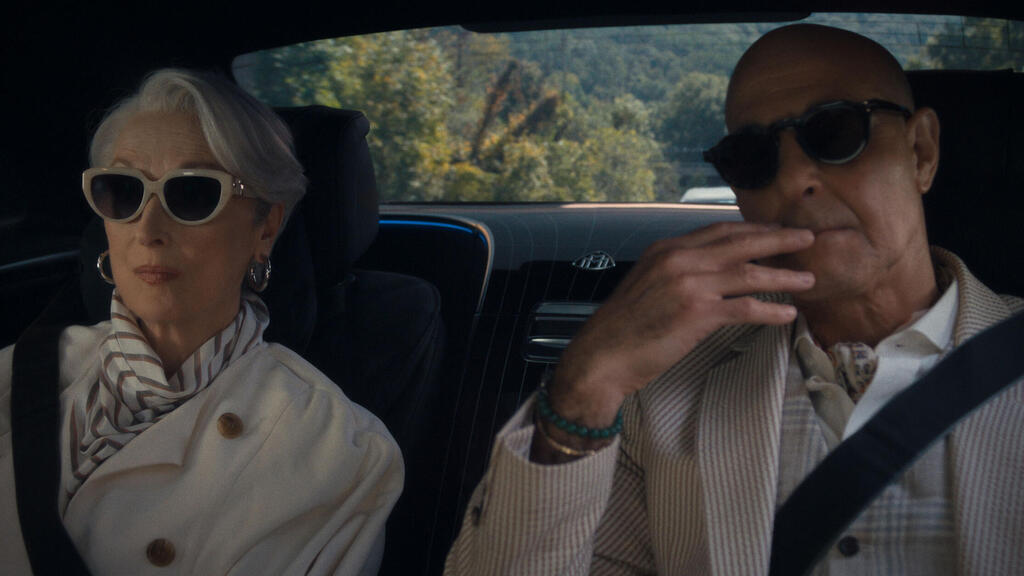
Stanley Tucci as Nigel Kipling
(Photo: Courtesy of Forum Film)
“The Devil Wears Prada 2” sets out to depict the changes in the fashion industry and publishing world over the past 20 years, but in practice it zealously preserves the same power structures, hierarchy and aesthetic, which now feel outdated. It responds to a media landscape that has evolved into a faster, more decentralized digital discourse with recycled nostalgia. In that sense, perhaps this is its most meaningful takeaway: not only are glossy magazines struggling to remain relevant, but even as they fade, the old order they represent continues to hold power.