
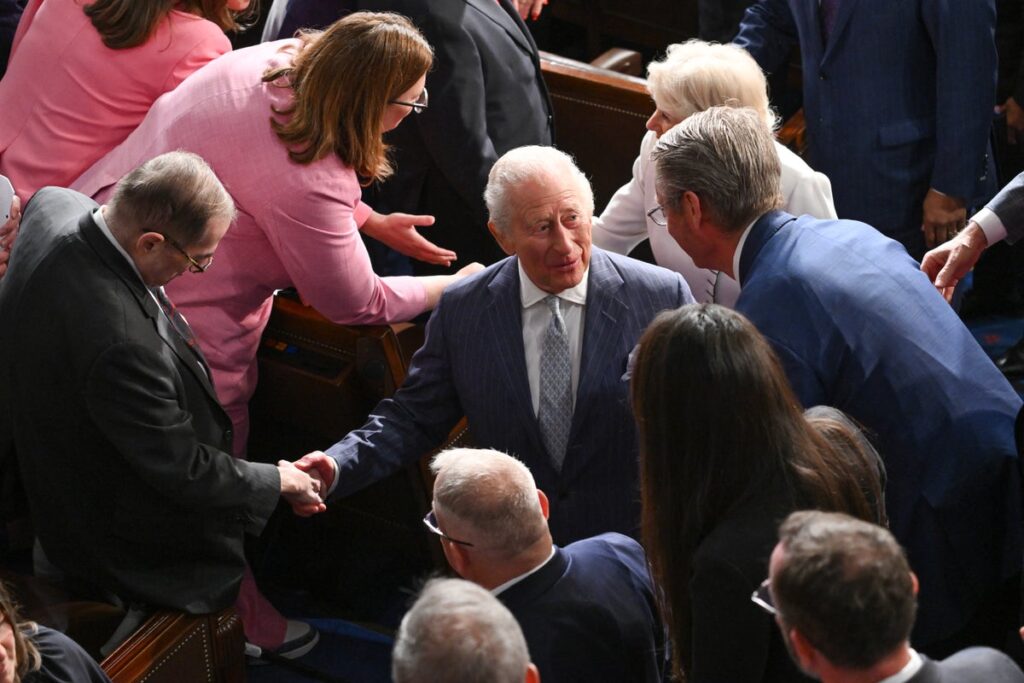
The omens weren’t exactly auspicious. In the build up to King Charles’ address to the US Congress, the royal family has weathered some of the most scathing headlines in living memory, many of them focusing on the monarch’s younger brother Andrew and his friendship with convicted sex offender Jeffrey Epstein.
The question of whether Charles would meet Epstein’s victims, too, has hung over his visit to the States like a dark cloud. And then there was the not-so-small matter of President Trump’s scornful assessment of Keir Starmer’s leadership abilities, not least that Churchill-invoking slight that seemed emblematic of the dire health of the “special relationship”.
So when the King stepped up to the podium, with Vice President JD Vance and a room full of Republican and Democrat political heavyweights looking on, expectations were not, shall we say, high. In fact, just before the King set off across the Atlantic, an IPSOS poll suggested that only one third of Brits believed that his visit could have a positive impact. The best we could hope for, it seemed, would be business as usual, the sort of polite diplomatic soothing that royals can deliver in their sleep.
But over the half hour that followed, something truly remarkable happened. Speaking with a bold sense of purpose and glint in his eye, Charles, the first royal to address Congress in 35 years, managed to pull off the impossible. A speech which won over some of the royal’s most sceptical critics. As one BBC commentator observed: “It was like warching the underdog winning the cup against all expectations.”
It was also a charm offensive that was laced with deliciously understated rejoinders to Trump. They were disguised cleverly enough to avoid puncturing the pride of a notoriously prickly president – and avoid yet another Truth Social meltdown. While the president has recently seen fit to unleash tirades at the Pope, there was no ire directed at King Charles after his gentle jibing. Indeed, Trump later called the speech “great” and even joked that he was “jealous” of Charles’ performance).
There were pointed references to the importance of NATO, to the need to defend “Ukraine and its most courageous people”, and to the British Navy, whose “old” warships Trump so recently mocked. As the speech reached a powerful conclusion, the King seemed to subtly remind the president that words have consequences. “America’s words carry weight and meaning, as they have since Independence,” he said. “The actions of this great nation matter even more.”
Charles was met with rapturous applause – and 12 standing ovations (his message was only meant to last 20 minutes, but the clapping ended up stretching out the run time). But what is perhaps most striking about his address is the way it has resonated not just with the King’s staunch supporters, but with those who are usually unenamoured by the monarchy.
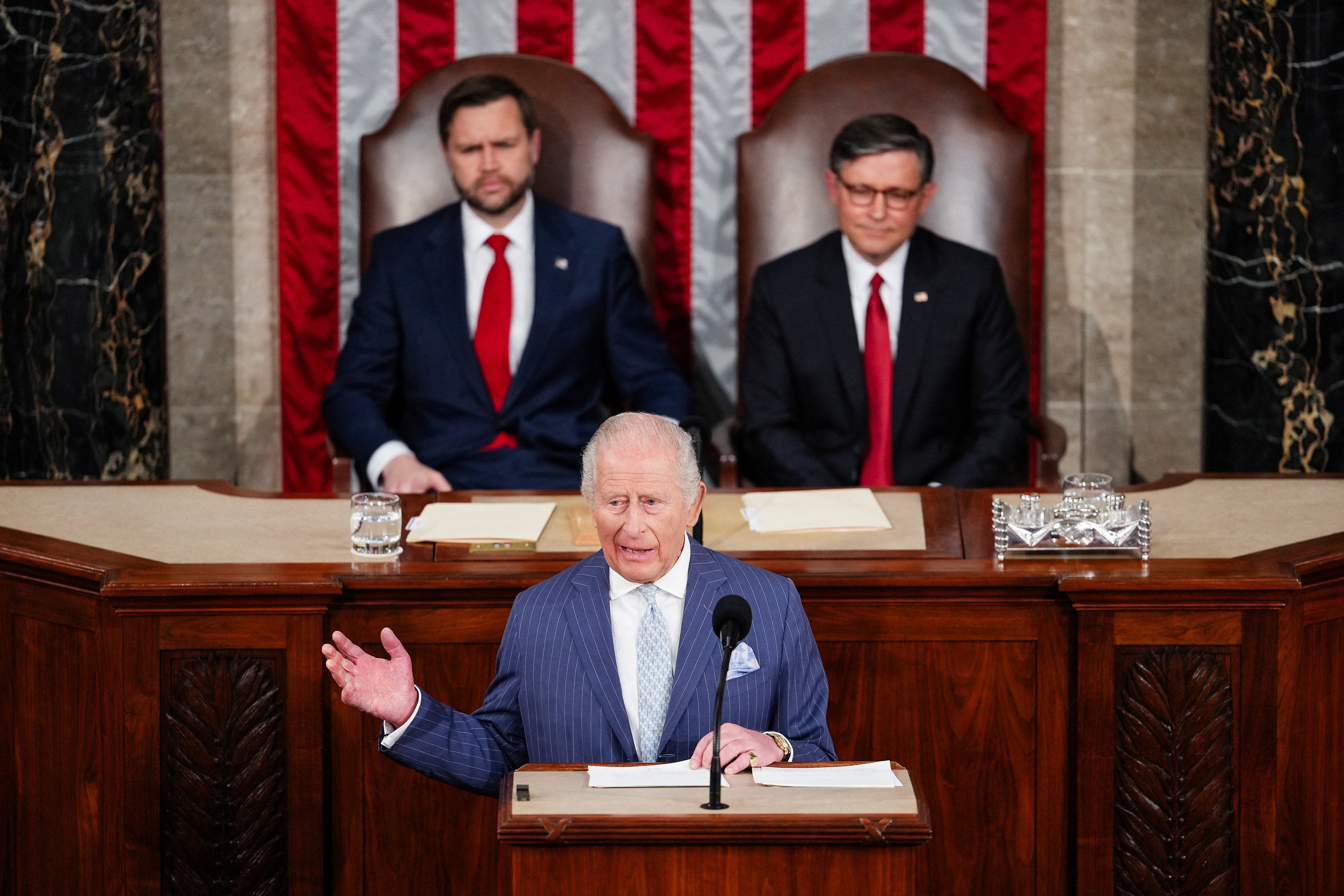 Vice President JD Vance, left, looked on as Charles gave his speech (Reuters)
Take this from Alistair Campbell, a staunch republican (in the British sense), for instance. “Excellent speech by King Charles,” he wrote on Twitter/X, praising his “clarion cry for Ukraine, for NATO, for nature and the environment, for democracy and the checks on power”. His ultimate verdict. “I loved it. Loved the confidence in British and American values.”
Emily Maitlis, the journalist whose notorious Newsnight interview catalysed the downfall of Andrew Mountbatten-Windsor, was similarly effusive. “He did a sort of Love Actually speech, but written by Plato,” she said on The News Agents podcast.
Meanwhile, those tuning in at home like Ann, a lifelong anti-monarchist from Nottingham, found themselves charmed. “I am no royalist – in fact the opposite, sometimes I’d like to get rid of the lot of them,” she says. “But Charles was good. Very good. The content was excellent, the delivery was perfect, not his usual plumminess.” He was, she adds, “funny” and managed to get his points across “in a really a very British way”.
So has Charles finally worked out how to win over his detractors – and step out from his mother’s shadow, and do things differently, but just as effectively?
His speech may have shown anti-royalists “the point of what a monarch can do,” suggests historian and royal biographer Hugo Vickers, “which is that it’s nothing to do with party politics. It’s about the United Kingdom and taking the long view, a diplomatic view, about the long term special alliance between America and England,” Vickers says.
When the late Queen Elizabeth addressed Congress in 1991, she was wholly positive in her approach, opting for a “conciliatory” tone. Charles has taken a more strident tack. It is certainly difficult to imagine his mother referring so directly to contentious international issues such as the Ukraine conflict and Trump’s scorn for NATO. “[Elizabeth] didn’t have to do that because relations were pretty good and she was just reinforcing it,” Vickers says, adding. “We’re living in a politically sensitive time, and this was where the king really excelled himself.”
Understated sense of humour, seems to have played a big part in the speech’s success, too, with the King poking gentle fun at Britain’s bizarre traditions and quoting Oscar Wilde to mock our differences “in language”. The New York Times even went so far as to claim that Charles “worked the House Chamber like a stand-up comedian”.
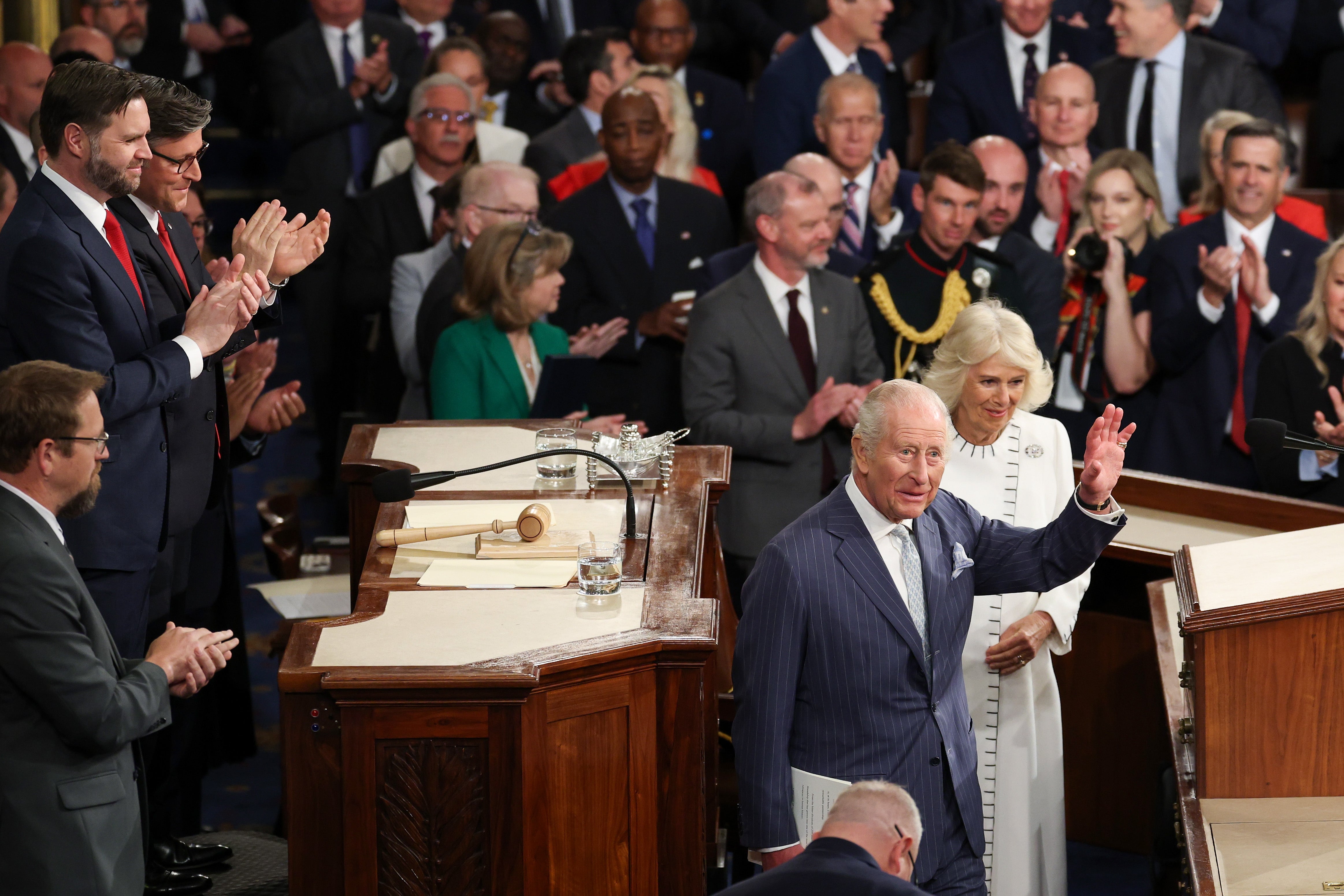 The King received 12 standing ovations during his speech (Getty)
While it wasn’t exactly Live at the Apollo, drawing upon the very British ritual of taking the mickey, seemed designed to appeal to viewers on his own side of the Atlantic as much as the politicians in front of him. As the historian Andrew Lownie, author of a scathingly critical biography of Andrew Mountbatten-Windsor, put it, the address was “in the great British tradition of using humour to deliver criticism”.
The broadcaster Andrew Marr was similarly full of praise, willing to do an about turn on his preconceptions of the royals’ US visit. “It really was an excellent speech,” he told The Independent. “I had to apologise to my listeners yesterday, because I was against this visit from the beginning, but after hearing that speech I had to admit I was wrong.”
I was against this visit from the beginning, but after hearing that speech I had to admit I was wrong
Andrew Marr
The king’s eference to the Magna Carta – and it being “the foundation of the principle that executive power is subject to checks and balances, which received particularly strong applause – stood out for particular admiration from Marr. “He got the bit about the Magna Carta exactly right, so much so that he got applause from both sides of the House, that was really something,” he said. “That was a very fine and delicate line to tread, and he did it perfectly.”
Perhaps the most surprising source of support for the King’s speech, though? The younger generation, who aren’t known for being flag-waving monarchists. In 2023, a YouGov poll found that less than one third of Gen Z respondents believe the royal family is good for Britain. Yet Chloe Combi, an expert in Gen Z and Gen Alpha, has found that this particular address chimed with their own sense of “youthful anger at the Trump administration”.
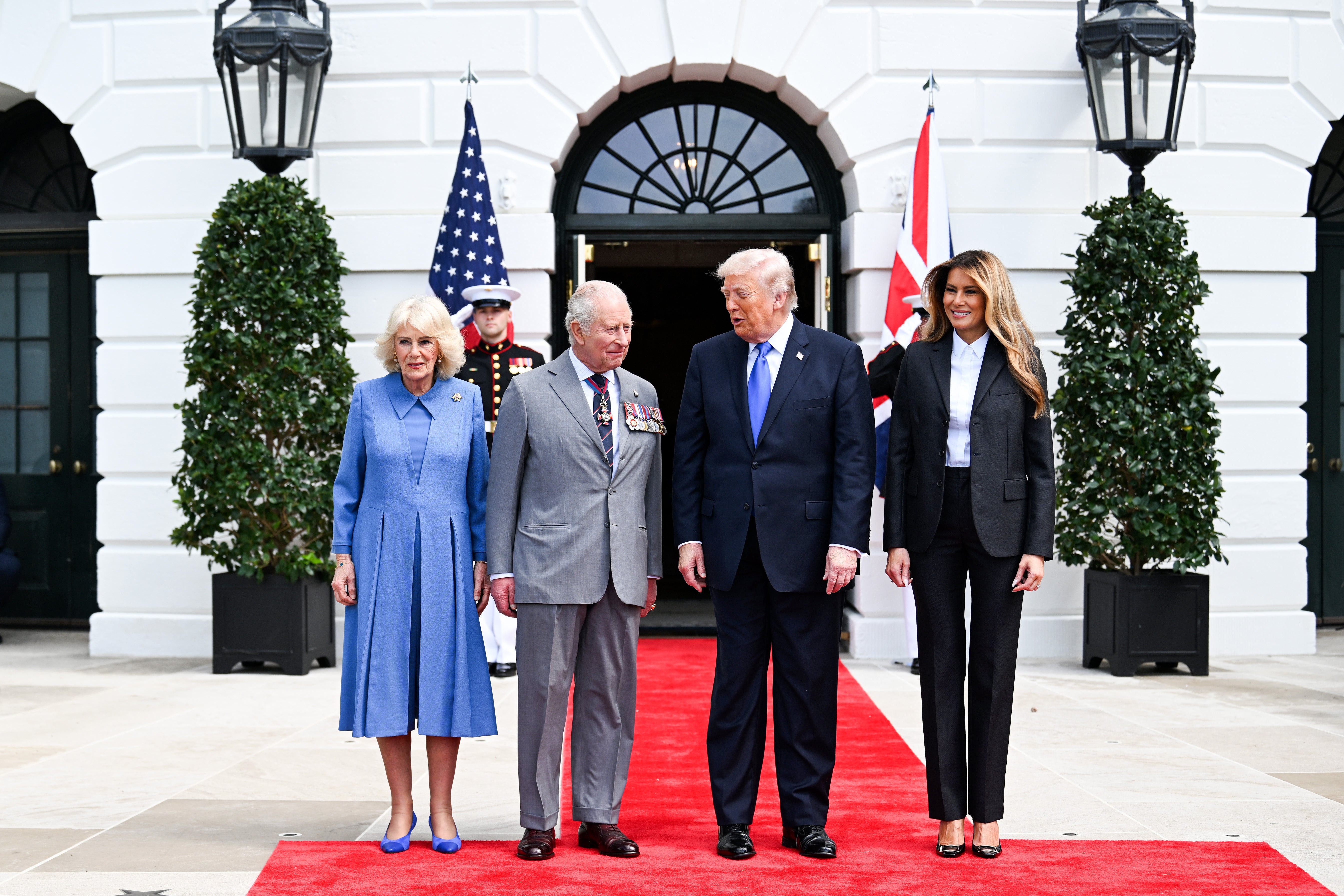 President Trump didn’t appear to be bothered by any of the subtle rejoinders in Charles’ address (PA)
In his references to the UK and the US’s “vibrant, diverse and free societies” and “the overreach of the rule of law”, they saw Charles as willing to speak out in defence of vulnerable groups, say Chloe.
Plus, Charles has a reputation as “a climate aware person”, and the need to protect the environment acted as something of a refrain throughout. “Lots of governments have really deprioritised green issues, which remain quite important to young people”. What’s particularly striking, though, is that while so many attempts “to try to package” the younger royals to appeal to Gen Z “have kind of failed”, Combi says, “they’ve responded to a much older member” of the family.
At the grand age of 77, Charles appears to have finally found his voice. Whether his newly converted fans continue to listen remains to be seen. But, for now, we have been reminded why there was little doubt behind palace walls that this trip should go ahead.
As one reader of Lownie’s surprising words of praise replied: “It was succor for the relationship, the American Resistance and the world. Superb; Charles met the moment of a lifetime in the grand Churchillian tradition.”