
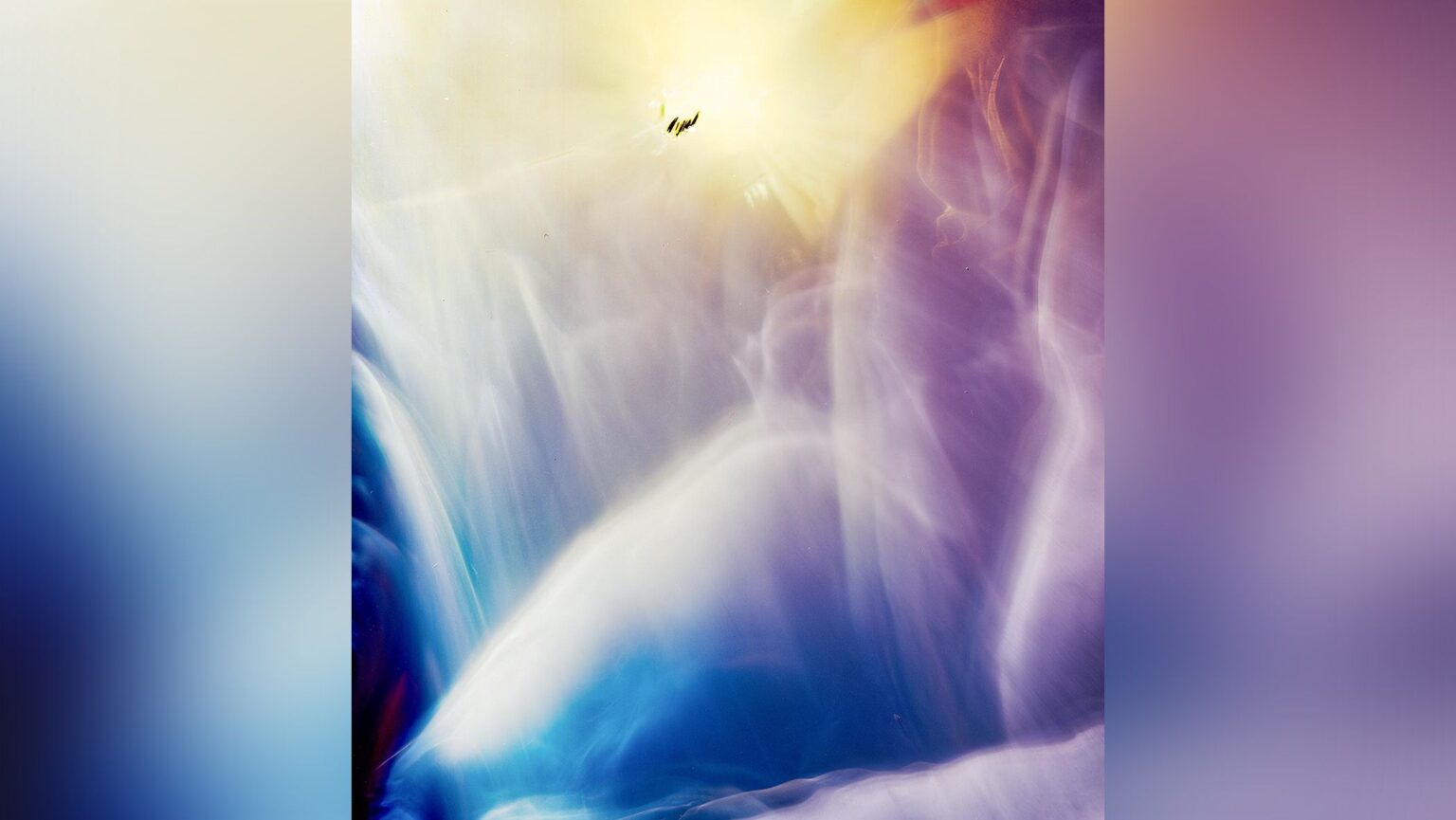
A film photographer has done what no other in history has by capturing images of the very fabric of the universe.
Tom Liggett, a photography student at Bournemouth University, sent blank negative film, sealed in a plastic bag, to a dizzying height of 120,000 ft (36.5 km) using a helium balloon.
Up in the stratosphere, at an altitude three times higher than commercial airlines cruise, cosmic rays burned themselves into the emulsion of Liggett’s film, revealing ethereal patterns not visible to the human eye.
Article continues below
You may like
Speaking to the BBC, Liggett said: “We’ve kind of deduced it to be UVC (short-wavelength, high-intensity) radiation, the radiation that exists above the ozone layer, because obviously there’s no filter up there.”
“Then cosmic radiation and muons from black holes, like billions of light-years away,” he added.
Liggett spent two months testing different photographic emulsions under varying levels of radiation—including hospital X-rays—to determine which would hold up best in space.
By keeping the negatives sealed in a lightproof ‘dark bag’, Tom ensures that the resulting marks on the film were the direct result of UVC rays, muons, and high-energy particles physically striking the emulsion. The outcome is a series of haunting, celestial abstracts forged from black holes and solar radiation.
He then approached the US-based marketing agency Filmed In Space, which sends clients’ products to the upper reaches of the stratosphere with an onboard camera to record promotional materials.
After traveling to the launch site in New York, Liggett watched as, on May 02 2025, the weather balloon carrying his film began its journey to 120,000 ft. High above Earth, the balloon traveled a further 417,000 ft laterally before popping and returning to the surface, with Liggett recovering it using a tracking device.
Speaking to the BBC about the images he later developed in the lab at Bournemouth University, Liggett said, “I actually think it’s a more accurate representation of space than a photograph is,” adding that: “It’s capturing the actual molecular formula of space.”
What to read next
Liggett later changed the name of Project X to Helios I, submitting the cosmic prints as his second-year university final project.
And according to an Instagram post earlier this year, he’s already sent film to space twice more, with the results of projects Helios II and Helios III to be published later this year, although Liggett hasn’t specified when.
“Going into this, all I wanted was a speck of dust or something,” says Liggett. “Even if it was a completely blank image with a tiny alteration in the film, I would have been happy. But to get these celestial abstract results, which are forged from black holes and the sun’s radiation… I was very shocked, but really happy. I’ve turned a dream into a reality and it feels surreal!”

Tom Liggett and his helium balloon (Image credit: Arts University Bournemouth)You might also like
Hubble captures images of an “ethereal” spiral galaxy located 380 million light-years from Earth.