
Credit: Far Out / Warner Bros.
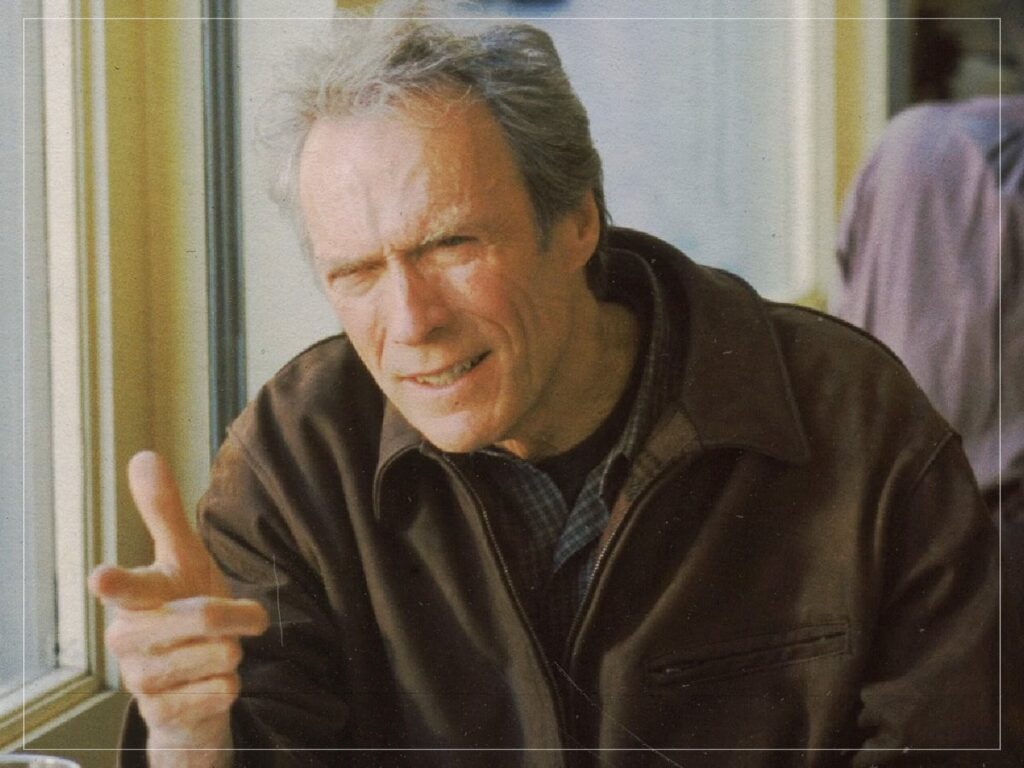
A cinematic love story doesn’t necessarily have to be a romance. Clint Eastwood gained plenty of experience in that regard when he began diversifying from the stoic face of the revisionist western into an all-rounder happy to try his hand at almost any genre.
1985’s The Bridges of Madison County arguably stands out as the pinnacle, with Eastwood and Meryl Streep possessing chemistry for days in the Academy Award-nominated tale of the star-crossed photographer falling hard for a housewife during his latest assignment.
Obviously, there are many different forms of love. Eastwood voiced his frustrations on trying to get one of his most celebrated productions off the ground because the people he was trying to convince couldn’t wrap their heads around a drama ticking off several different boxes at once.
Fortunately, Eastwood and his Malpaso Productions company have a long and storied relationship with Warner Bros, so the studio was always willing to give him the benefit of the doubt. Although it was admittedly marketed at least partially as an underdog sports drama of which there have been many formulaic examples over the years, Million Dollar Baby was anything but.
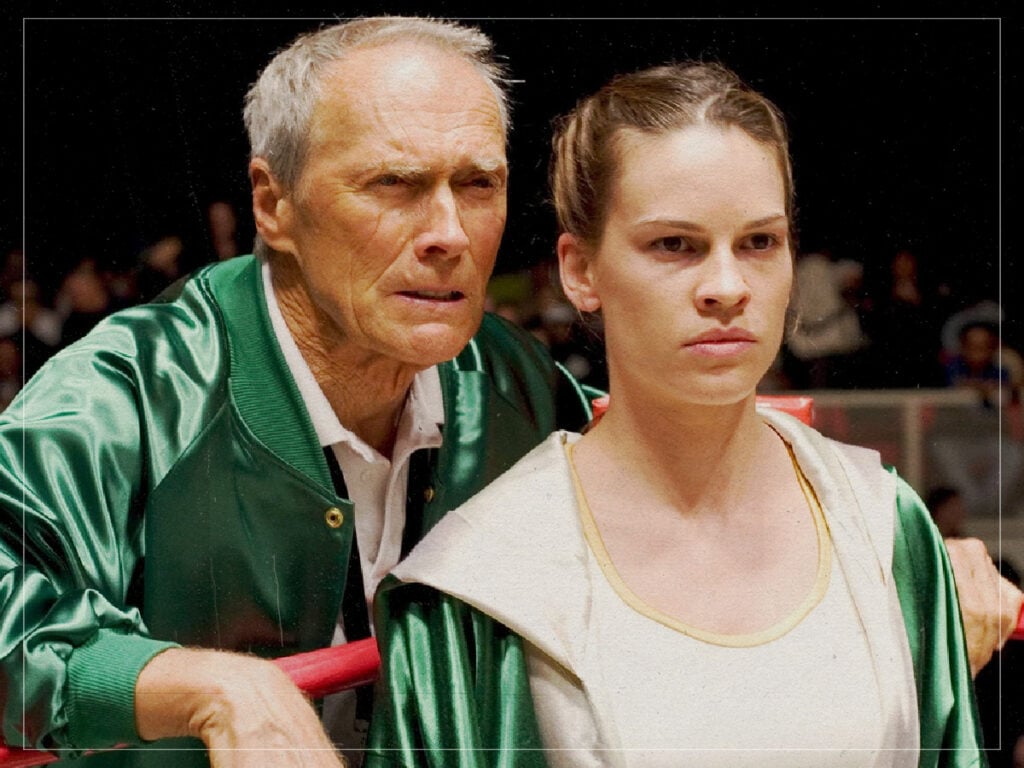
Eastwood’s veteran trainer, Frankie Dunn, has decided that the best way to embrace his old age is to keep everybody at arm’s length except Morgan Freeman’s trusted confidant, Eddie Dupris. However, when Hilary Swank’s Maggie Fitzgerald catches his eye, his initial disinterest in training her thaws as a close bond begins to form between them.
 Credit: Far Out / Warner Bros. Pictures / Lakeshore International
As the star and director explained to Today, Million Dollar Baby is about “searching for families, people with dreams of success, and trying to claw their way to the top”. That theme is keenly felt through the relationship between Frankie and Maggie, especially after the accident that turns both of their worlds upside down.
“She becomes his daughter, right, or his surrogate daughter. It’s a love story, father-daughter love story,” he said. “When I tried to sell the idea of making this film, everybody said, ‘Well, a boxing film and a lady boxing film?’ I said, ‘No, no, it’s not a boxing film, it’s a love story.’” Thankfully, Warner Bros managed to wrap its head around Eastwood’s simple view of the material, and the studio reaped the rewards.
That distinction was crucial to understanding what Eastwood was trying to achieve. The boxing ring may have provided the setting, but the emotional core of the film lay in the relationship between its central characters, exploring themes of connection, loss and surrogate family rather than sporting triumph.
In retrospect, that perspective is what allowed Million Dollar Baby to resonate so deeply with audiences. By framing the story through an emotional lens instead of a conventional genre template, Eastwood delivered a film that transcended expectations, proving that its power came not from the punches thrown, but from the bond at its heart.
Eastwood won another two Oscars for ‘Best Picture’ and ‘Best Director’, while Swank and Freeman took home trophies of their own. It’s clear from watching Million Dollar Baby that it is very much a love story between a surrogate father and daughter. Still, for whatever reason, the people in the boardroom weren’t quite able to grasp that for themselves until the film’s director spelt it out in no uncertain terms that pugilism was only a small part of it.
ADD AS A PREFERRED SOURCE ON GOOGLE  The Far Out Clint Eastwood Newsletter
All the latest stories about Clint Eastwood from the independent voice of culture.
Straight to your inbox.