
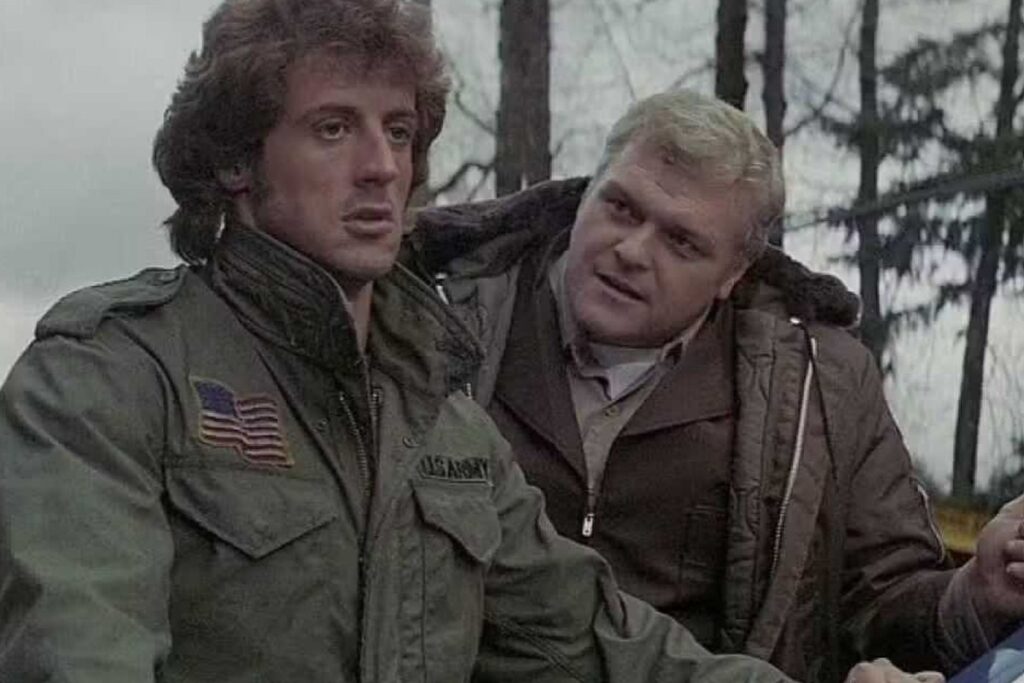
Tensions flared on Rambo: First Blood when Kirk Douglas, first cast as Colonel Trautman, quit after clashing over script changes with director Ted Kotcheff. Producers Andrew Vajna and Mario Kassar replaced him with Richard Crenna, while Sylvester Stallone stayed aboard after softening the script, and the 1983 film went on to become a major hit.
Before John Rambo stormed the box office in 1983, tempers flared behind the camera as a Hollywood legend clashed with the film’s direction and walked away. Kirk Douglas had been set to play Colonel Trautman, but his push to reshape lines collided with Ted Kotcheff’s insistence on the script that Sylvester Stallone had already softened to humanize the character. Producers Andrew Vajna and Mario Kassar watched the standoff escalate until Douglas exited and Richard Crenna stepped in. The shoot finally steadied, and the movie that nearly buckled under ego and rewrites became a touchstone for the trauma carried home from Vietnam.
A pivotal moment in ’80s action cinema
Some origin stories are tidy, but not this one. The first Rambo film, First Blood, lurched through doubt, clashing egos, and last‑minute rescues before landing in theaters on October 22, 1982. The result reframed the action hero for a new decade, and gave Sylvester Stallone a role that spoke directly to the scars many Vietnam veterans carried home.
An uncertain start for Sylvester Stallone
Before cameras rolled, the project looked shaky. Robert De Niro, Al Pacino, Dustin Hoffman, and Burt Reynolds all passed, with Reynolds even warning Stallone to steer clear. Stallone did the opposite, but only after reshaping the script. He pushed hard so Rambo wouldn’t kill anyone, and he cut dialogue to a minimum, building a character driven by silence and survival rather than bravado.
The Colonel Trautman dilemma
The real fault line opened with the mentor role, Colonel Trautman. Legendary star Kirk Douglas initially signed on, then demanded new lines and scene changes once production neared key sequences. Director Ted Kotcheff, backed by producers Andrew Vajna and Mario Kassar, resisted. The standoff grew untenable as Douglas rejected dialogue he had previously approved, and he ultimately chose to walk away.
A very early movie poster for “First Blood” having Kirk Douglas as Col. Trautman before he was replaced. #rambo #rambofirstblood #sylvesterstallone #kirkdouglas #80s #movies pic.twitter.com/Ihrtc7OEZS
— TheLanJam 🇺🇸🇨🇦 (@thelanjampod) April 22, 2024
Richard Crenna to the rescue
Time was slipping, and the production needed stability. Enter Richard Crenna, who stepped in with virtually no runway. His steady presence reset the tone on set, and his sparring yet empathetic rhythm with Stallone became the film’s moral compass. Crenna’s Trautman brought authority and a hint of regret, grounding the cat‑and‑mouse chase with a human tether to Rambo’s past.
A cultural and commercial triumph
Against the odds, the film hit a nerve. Distributed by Orion in the US, it earned roughly $125 million worldwide on a lean budget, turning a small‑town standoff into a global phenomenon. More than spectacle, it captured post‑war dislocation through a bruised, highly capable drifter who wanted peace more than payback. Today, the series endures, with the franchise currently available on major US platforms, including Max.