
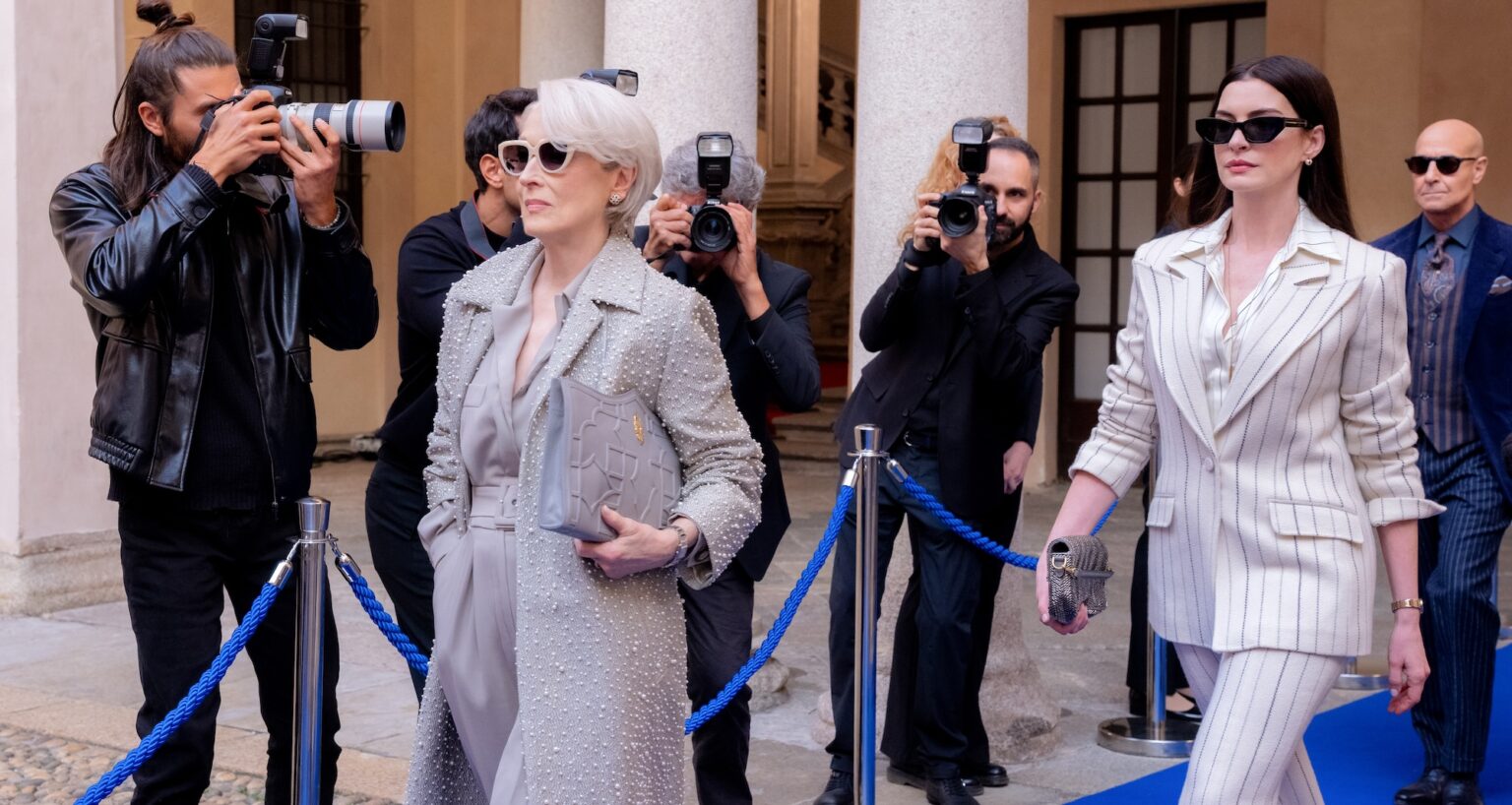
To be clear, this is not to besmirch Marvel’s prowess. The reason they don’t have their usual May opening weekend is because the studio is regrouping before the hard-press on Avengers at the end of the year (Spider-Man movies for Sony notwithstanding). However, the success of The Devil Wears Prada 2 says more than just the priceless value of audiences’ nostalgia, even if it does signal 2000s and Y2K member berries are now in full bloom.
That’s all well and good, but really… it’s just nice to see an adult-skewing, female-leaning comedy strutting in vogue despite studios continually being afraid to take a bet on those audiences. By virtue of its legacy sequel nature, none of the leads in The Devil Wears Prada 2 are under the age of 40, and the subject matter has far more to do with 21st century workplace situations—particularly the timely subject of print journalism’s rapid collapse—than it does “romantic” clichés often expected in women-led movies. Or, for that matter, the dangling keys of bloated CGI and childhood IP-excess at the multiplex.
Take the aforementioned Thunderbolts* from last May, a movie I personally enjoyed and think is one Marvel’s stronger efforts in this decade. The film still had a reported budget of $180 million, with anonymous sources suggesting to trades it’s possibly much higher. Conversely, Prada 2 reportedly cost $100 million, a number on the steeper side for a comedy due to actors and filmmakers being able to bargain higher for a sequel to a beloved classic, with the original’s director David Frankel and screenwriter Aline Brash McKenna also returning. Still, $100 million for a summer blockbuster that opened bigger than Michael—a huge hit in its own right, but with an enormous price tag due to behind-the-scenes troubles—is chump change in the modern era where most blockbusters come with budgets closer to a quarter or third of a billion dollars.
Those budgets are obviously influenced by large VFX demands, the commonplace need for extensive reshoots during post-production, and myriad other factors that come with making four-quadrant tentpoles that skew often toward the interest of teenagers. And for more than a decade, studio resources have gone by and large to investing in almost only that kind of entertainment, especially during the summer months.
There are exceptions, of course. Probably the most headline-grabbing of which is 2023’s pink tidal wave in Barbie, albeit that was still an IP-heavy comedy relying on childhood interest and nostalgia. But there’s also the decidedly not kid-friendly rom-com Anyone But You, which grossed $220 million during the holidays in 2023 while in the shadow of Avatar: The Way of Water; last December’s darker laugher The Housemaid ($401 million globally) also cleaned up, and a retinue of “prestige” arthouse comedies have still been able to make nine figures globally, a la The Menu or Poor Things.
The audience does appear to be there for comedies and especially those in underserved demographics largely forgotten by studios. Whether IP/franchises are needed to bring them out of their homes remains to be seen, really, since you can count on one hand the number of women-led laughers that have been released as summer tentpoles by their studios in recent years. Two out of the three were Barbie and Devil Wears Prada 2; the third was the Jennifer Lawrence-led No Hard Feelings, which underperformed at $87 million worldwide.