
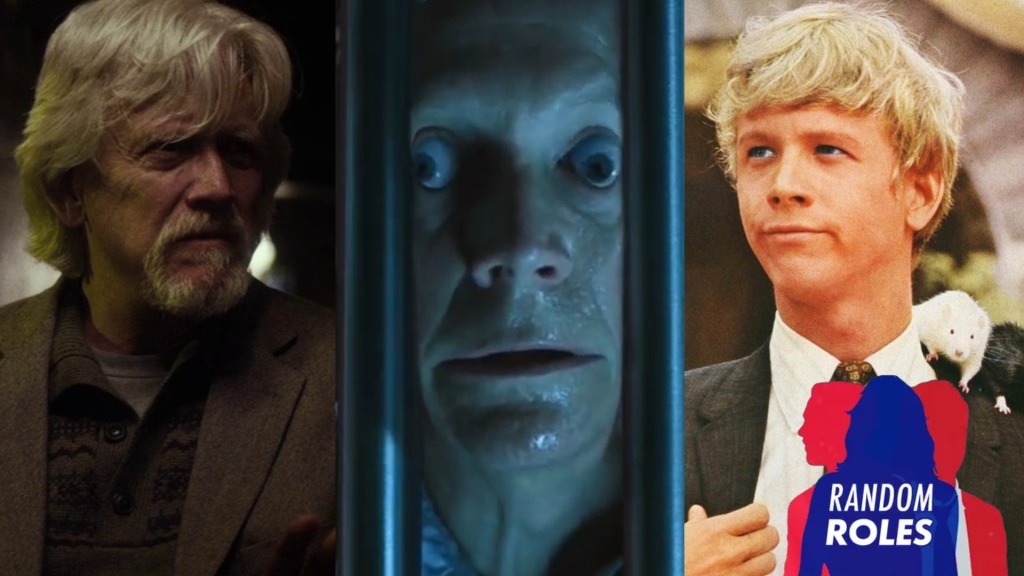
Welcome to Random Roles, wherein we talk to actors about the characters who defined their careers. The catch: They don’t know beforehand what roles we’ll ask them to talk about.
The actor: Since making his debut in 1969 as one of the stars of Last Summer, Bruce Davison has racked up over 300 credits across TV and film. Additionally, he’s managed to bounce from genre to genre, doing horror (Willard), comedy (Spies Like Us), superhero films (X-Men), and sci-fi (The Lathe Of Heaven) while still pulling an Oscar nomination for a high-profile, ripped-from-the-headlines film like Longtime Companion. Currently, Davison can be seen co-starring with John Pyper-Ferguson and Lou Diamond Phillips in Casa Grande, which is an example of Davison’s summation of life as a character actor: “I go where I’m kicked.”
The A.V. Club: How did you find your way into this film?
Bruce Davison: I found my way through Lou. Lou Diamond Phillips is an old friend. God, we worked together—it must’ve been twenty-some years ago now—on a miniseries called The Triangle that we shot in South Africa. But we’ve known each other through a 35-year poker game that we were playing on Wednesday nights with a fella named Norby Walters, who was one of the last Damon Runyon characters in Hollywood. He did [the annual Oscar party] Night Of 100 Stars, and had the biggest rolodex ever. There were a handful of us that would play every Wednesday night. It was only for $75, and it wasn’t about the money, it was about the fact that you’d be playing with Sid Caesar or Harvey Korman or Jerry Vale. Burt Reynolds and Rod Steiger! You’d play poker and it was all about the conversation every night. That’s where Lou and I spent an awful lot of time in the last 25 years. The game’s finally ended; Norby’s passed away.
AVC: You don’t have a massive part in Casa Grande, but you do square off with one of the leads.
BD: Right! I’m where I usually am: between a rock and a hard place, the two leads. I’m a character actor, y’know? I go where I’m kicked. It’s always been the best way to survive as an actor, to be the supporting parts. You play interesting, memorable characters, and as Robert Aldrich told me, “You can raise a family in this town.” You won’t be rich, but you can carry on!
AVC: I didn’t know quite how dark a turn it was going to take by the end. I was impressed.
BD: It’s a fascinating picture. The characters have such complexity. And it’s really nice to have a Latino point of view with a lead character like that, that Lou brings so much to. The families, you can’t start calling one the villain or one the victim. They have all of those things going between the two of them, fighting over the same stuff that you fight in every genre, whether it be a procedural or a Western or a period piece. It’s always, “What’s going to change?” Somebody’s going to change something, but someone else is gonna try to hold on to what’s of value, and boom, you’re in a clash.
Last Summer (1969)—”Dan”
AVC: How did you find your way into acting in the first place?
BD: I was up at Penn State. I started as an art major, and a friend challenged me to audition for something that said “Open Auditions” on the door. And I walked in, and I didn’t get the part, but I was terrified into finding out that there’s a place for a weird person like me. And they said, “Well, all the actors are up in this place called the Green Room.” It’s where Gene Kelly first started dancing, in Schwab Auditorium. So I started up the stairs, and I thought, “Yep, I’ve found my family.” So that’s what happened: I just ended up being one of the loud show-offs!
AVC: Last Summer must’ve been an audition situation.
BD: Yes, it was. Auditioned over and over for weeks for Frank and Eleanor Perry. In the meantime I was going to what is now the Tisch School at NYU. I was in the first class that started. There was Bud Cort, Jeannie Berlin, Barry Bostwick, André Gregory, Liz Torres, Mary Beth Hurt—all kinds of people were in that first class.
AVC: What do you remember about making your first film? Were you intimidated, or were you too naïve to be intimidated?
BD: I had no idea what the hell I was doing. I look at it now, and think, “I was so lucky to be thrown into that.” Because I didn’t have a clue what I was doing or where I was going. I was just very lucky to be given great dialogue by Eleanor and great direction by Frank. He was doing a film that was breaking ground for the first time in America. It had a very violent rape scene, similar to The Virgin Spring by [Ingmar] Bergman, which he had seen. The film had been lost for 40 years, and it’s finally going to be coming back out, on Blu-ray.
Deadman’s Curve (1978)—”Dean Torrence”
BD: There was this old cowboy stuntman named Richard Farnsworth who went on to become Richard Farnsworth the great actor. But he was in Ulzana’s Raid, [which I did] when I was a kid, and he said, “I’ve got a son that’d be a good stuntman double for you. His name’s Diamond.” So Diamond actually does all the skateboard stuff in Deadman’s Curve.
AVC: Were you a Jan and Dean fan going in?
BD: Yes, but it was interesting, because I knew their music, but then Jan [Berry] had this horrible accident at Dead Man’s Curve, right around Sunset, which used to be a really horrible place. But they had written the song about it before his accident!
Spies Like Us (1985)—”Mr. Ruby”
BD: I knew John Landis from when he was a gaffer. He was working on some Clint Eastwood movie [Kelly’s Heroes] in Yugoslavia, back when it still was Yugoslavia. But Spies Like Us was fun because it was all over the world. I got to spend months in London, being treated like royalty in a hotel. I was lucky to get into a big picture like that. And Dan [Aykroyd] and Chevy [Chase], it’s always wonderful to be playing straight men with them. Steve Forrest and I had a wonderful time, and William Prince. We were always in the dugout—a place called W.A.M.P., I think—ruling the world.
AVC: There were a lot of fun cameos. I always think of B.B. King.
BD: That was a wonderful day, because I worked with B.B. King, I worked with one of the Coen brothers, I worked with all kinds of actors who would just come in to do bit parts, which is what John Landis did. He’d have Costa-Gavras be an extra! That was amazing. And Joel and Ethan Coen, well, it was just Joel, but they hadn’t made a film yet, and Landis said, “I just saw the rough cut [of Blood Simple], and these guys are scary, they’re so damned good.” And it ended up being the truth!
It’s My Party (1996)—”Rodney Bingham”
BD: Randal Kleiser and I used to run against each other in high school track back in Pennsylvania. And when he came out to USC, he was roommates with George Lucas. He was making Freiheit as Lucas’ student film, then he wrote a student film that I did with Jeanette Nolan and Barbara Rush called Peege, which is now in the Library Of Congress. It’s a wonderful little short, if you ever get a chance to see it, about the last visit he had with his grandmother. That’s how I got to know Randal, so Randal and I have been friends for 60 years! He said, “C’mon, I’m getting all my friends together to do this film,” and he’d written a script. And I said, “Well, you’ll never get this made, but you should do it.” And he damned well did! It’s a very personal, autobiographical film about Randal’s life.
X-Men (2000) / X2: X-Men United (2003)—”Senator Kelly”
BD: I’m sort of melted already by the end of X-Men, so I end up being Mystique in X2. I had to walk with my knees together. [Laughs.] But, yeah, those films, it was just a kick. I had worked on Apt Pupil with Bryan Singer, so I got cast as Senator Kelly, and it was the beginning of a snowball that’s been rolling downhill ever since.
AVC: One reader who suggested that I ask you about your X-Men experience specifically said, “Every time I see him, I imagine his face turning into water.”
BD: Yes! Well, I told Bryan, “Listen, man, just have one shot of me rolling down a drain. Water rolling down a drain. Because I can come back anytime! And he said, “No, the machine has to work. You have to die.” I said, “It’s a comic book movie! What are you talking about?” [Laughs.] I never got that shot of rolling down the drain. Otherwise I’d still be working!
Lords Of Salem (2012)—”Francis Matthias”
BD: I’ve always been a fan of Rob Zombie. He’s one of the most outrageous people I know. And wonderful! Shooting the film was a joy. I got beaten to death by Dee Wallace with a rubber frying pan, which was great, because Dee’s played my wife I can’t tell you how many times. We just did another movie called The Godmother that we shot in Las Cruces that hopefully will be coming out soon.
The Strawberry Statement (1970)—”Simon”
BD: That was my first Hollywood movie. I had just done Last Summer, and I had to come out to audition. I was about to do Ah, Wilderness for Circle In The Square, and I had an opportunity to go to Hollywood to audition for this part, and my agent at the time gave me the money to go. My agent couldn’t meet me, because he was burying his client, Sharon Tate. That’s how long ago that was. But that was my first Hollywood film: I fell in love with Kim Darby, we ended up in San Francisco, I had all this attention, I thought I was the king of the world. I remember the AD turned around and said, “You kids are so lucky.” I thought, “Well, I don’t know about that.” But we were.
AVC: That movie has a great soundtrack.
BD: The best soundtrack ever! Because Mike Curb was head of music there at MGM Records, all the people that were just taking off were under contract there, so you’ve got Joni Mitchell, Crosby, Stills & Nash, Country Joe And The Fish, Neil Young, Buffy St. Marie. All their songs are in the film, and it’s the best soundtrack of any movie I’ve ever made, out of 360 of ’em. It is the best album, if you can get it!
The Lathe Of Heaven (1980)—”George Orr”
BD: That was by Ursula K. Le Guin, who was the grande dame of science fiction, or as she would call it, speculative fiction. It was a great piece for public television with a shoestring budget. I tried to make it again years later but got aced out of that. But I got to see Ursula years later up in Toronto, because Hume Cronyn, he was a mentor, the woman he was with at the time [Susan Cooper] was good friends with Ursula. So Ursula and I reconnected after many years.
Short Cuts (1993)—”Howard Finnigan”
BD: With Robert Altman! This is a funny thing: I was with a big agency, six guys in my trailer, because I had been nominated [for an Oscar] with Longtime Companion. And then I lost, and I couldn’t get one of ’em on the phone. But in the meantime, there was one of these parties where I got to meet Robert Altman, and I said, “I saw you on the street one time, but you looked so angry, I didn’t want to come up and interrupt you. But I would do anything—I’d read the phone book for free—for you.” So the next day I got a call from one of these agents: “We’ve been working on this film called Short Cuts, and we’ve gotten you an audition with Mr. Altman!” So I go down to his house, and he’s in his bathrobe when he opens the door, and he says, “You ever make bread?” I said, “No.” He said, “Well, I’m doing that right now!” So I walk in, and he said, “So I’m doing Short Cuts, and I’ve got this part, and Jeff Daniels fell out. You want to do it?” I said, “Yeah!” He said, “Don’t you want to read the script or anything?” I said, “No!” He said, “Okay, well, let me call Andie [MacDowell], because I told her I’d let her know who was playing the part. But if it’s okay with her…” And it was! So there you go, that’s how I auditioned for Robert Altman.
AVC: That pretty much parallels just about every Altman audition story I’ve ever heard.
BD: Oh, yeah. He said, “I want you to play a newscaster badly.” Because I was on the television all through the other episodes. The greatest cast that ever lived is in that movie, and I play in the background as a newscaster. He says, “I want you to be like one of those local news guys that doesn’t really do the news. So just read the script badly.” So we go to work, and I figure the way to do that is to emphasize every word as much as you did the word before it, because that’s the way they seem to talk.
So I was doing that, and I was working with Jerry Dunphy, who was a local guy in L.A., and we finished by noon. We’re driving away, and we’re all sitting in the car, and I say, “I think he’s gonna fire me.” So I said to [Altman], “Did you want something else?” And he said, “No, you’re the actor. It’s fine. You’re the actor. Do what you want!” That was my intro to Altman. There was nobody who loved actors more than him. He just loved them. But he was upset that I didn’t go to the rushes. Because it was a wine and cheese party every night to watch the rushes, and I hate watching myself. So he thought, “Okay, be a stuck-up snob, then!” [Laughs.]
Longtime Companion (1989)—”David”
BD: That was a script by Craig Lucas, directed by Norman René, which was during the height of the holocaust of the AIDS epidemic. And I auditioned for them in New York and got the part, and I never thought anybody would ever see it.
But we’re in the middle of shooting in an apartment, and the people who owned the apartment found out it was about AIDS, and they went crazy, and they were trying to throw us out. And it was the middle of the night, and they were trying to find the producer to give the people another grand. And I look down on Riverside Drive, and in the middle of July it’s all snowed in, and there are 40 buses and trucks all next to this snow, with 400 extras in ’40s costumes. So I walk down there while they’re trying to work this out, and I see Ron Silver and Paul Mazursky, two friends of mine, sitting on chairs at three in the morning. And I say, “God, if I could just get an opportunity to be in a big film and get paid for once in my life and have a trailer, it would be amazing.”
A year later, I’m nominated for an Oscar for Longtime Companion, and I’m sitting at the Academy Awards, and I feel a tap on my shoulder, and it’s Ron Silver. He said, “The movie was Enemies. It lasted a weekend. Be careful what you wish for.”
Willard (1971)—”Willard Stiles”
BD: I walked onto the Paramount lot, auditioned, did the scene for Danny Mann and the producer, and they said, “Okay, that’s good, that’s good, but you gotta meet your co-star. You gotta see if you get along with your co-star.” So they take me out to Van Nuys, to this little house with a garage in the back. And a guy named Moe DiSesso opens it up, and he’s got 600 rats, all refrigerated in cages there. And they take one out the size of a bunny and put it on my shoulder, and the rat looks at me, and I just tickle it, and I said, “How ya doin’?” And they said, “You got the job, kid.”
AVC: Did you have any idea what kind of impact that would have on your career?
BD: No idea. I remember a manager saying, “Who’s gonna go see a movie about rats, for god’s sake?” [Laughs.] It was great working with Ernie. I asked Ernie Borgnine what’s the best acting advice he could give me, and he said, “Never go to bed angry at your wife. If you gotta stay up ’til three, if you gotta stay up for three days straight, work it out. But never go to bed angry with your wife.” I said, “That’s great.” He had the worst day when a rat ran up his pant leg. He didn’t love that.
AVC: Did you have any ill experiences with your co-star?
BD: No, and I had 600 of them! They just saved the shot of me being eaten alive for the last shot of the movie, in case I did have one. [Laughs.] There were no special effects back then. It was, “Lie down on the floor, we’ll put chicken wire around you.” Then they smeared it with peanut butter, they dumped 600 rats on the kid, and then shot the end. And they’re, like, “If we get it, we get it. If he gets bitten or dies or something, we can still make the movie!”
AVC: Did you have any residual rat PTSD?
BD: No, it didn’t bother me. The frustrating part was that because there was no CGI and no special effects or anything, we’d do 30 takes getting a rat to run into a briefcase. You want them to run up the steps? You gotta build steps that are upside down and just dump ’em down the steps, so when they all fall down, it looks like they’re running up! It was all stuff like that. And a lot of it was improvised, too. I’d have a wheelbarrow full of rats, and I’d just improvise with them. One would hang on my thumb, and I’d be, like, “C’mon, you guys are worse than rabbits!” We improvised an awful lot of that stuff.
High Risk (1981)—”Dan”
Kiss My Grits (1982)—”Dolin T. Pike”
AVC: On my list of projects to ask you about, Kiss My Grits is probably the most obscure. I’ve never even seen it, and it doesn’t appear to be streaming anywhere.
BD: It’s funny that you’d bring something like that up, because how I got that film, that’s a story in and of itself! I got that job because I was doing another film called High Risk, and we’re in the middle of Palenque in the jungle and the Mayan ruins, and I’m with Jim Brolin, and we’re hogtied. And Anthony Quinn comes in for his two weeks, and he comes in, and he takes over, he’s doing this and that and everything else, and everybody’s just standing in the way. And he has 30 banditos with him, so he does what he wants! And I had an Angels baseball hat, and I lost it in the rapids that we got washed down. And I said to the director, “Put it on one of the guy’s heads, like he found my Angels hat. And then at the end, when we escape, I’ll hit him over the head and get my hat back!” And he said, “Oh, that’s a good idea. Okay, we’ll do that!”
So anyway, Quinn doesn’t know this, and he comes down, and we’re hogtied up, me and Brolin, and he’s going on, doing this and that, and he’s improvising. And he takes out a newspaper toward the end of the scene, and he looks at it, and he says, “Hey, gringos, you want to see something funny? The Indians beat the Yankees!” [Cackles.] And I look up from my hogtie, and I say, “How’d the Angels do?” And he goes… [Long pause.] “They lost.” And they say, “Cut!” And he comes up to me, and he looks at me, and I think he’s gonna kill me. And he says, “I loved the way you took that scene from me, the way you dominated that. I got a picture I want you to do! You’re playing this character named Dolan T. Pike.” He produced [Kiss My Grits]! So that’s a long, shaggy-dog story, but that’s how I got that movie!
Titanic II (2010)—”James Maine”
BD: Titanic II was two days that I got when I really needed the money. I was in a helicopter, and I taped all my lines on the dashboard and just read ’em off, and they said, “Okay, here’s a check, pay the rent.” When you’re a character actor, you’re not gonna get rich, and it was just a pretty grim time. So I’ve gotta say, that was not at the top of my list of great experiences in the film business.
Seinfeld (1996-1997)—”Wyck Thayer”
BD: That was great! The best part of all of that was Michael Richards’ girlfriend at the time, he split up with her three years later, and I married her! So she’s been my wife for 20 years. And Jason [Alexander] has been a good friend. We did a play years later called Native Gardens that I did with Frances Fisher that he directed. But [Seinfeld] was a blast! When I asked Jerry, “Do I really have to audition for this?” he said, “Well, we’re all adults here…” [Laughs.]
Grace Of My Heart (1996)—”John Murray”
BD: Illeana [Douglas] has been a friend over the years, and, y’know, it’s one of those ones I regret. I wish I would’ve really gone for the bone more in the love scenes. [Laughs.] I wish I would’ve been more aggressive. I think it would’ve made my character more interesting than to make him as passive as I played him. I think if he were a more aggressive lover, it would’ve made the film work better…for my part, anyway!
Short Eyes (1977)—”Clark Davis”
BD: That was tough. That was a hard one. I had seen the play and figured, “I’ve got to do this, because this is the most challenging thing I can possibly think to do.” I’ve got a 15-minute monologue in the middle of that film that stops everything dead, and it’s the most flesh-crawling monologue. “Short Eyes” is a child molester! And it was written by Miguel Piñero while they were all in prison at Ossining, and Joe Papp played it, and it won the Obie. And they all died within five years of that period of time, because it was a precarious lifestyle. So we’re making a film of that, and we’re shooting in the Tombs, which is a nightmare of a place downtown that they’ve since rebuilt. It was one of the most challenging, difficult parts I ever played. And one of the most rewarding, by seeing what finally went into the can and what we made. It’s unfortunate, because nobody has seen it. But you never know when that’s gonna happen. The producer died or something, and it just disappeared. But it was kind of the grandfather of what became Oz, because the first AD on that film became the producer of that show!
The Wave (1981)—”Ben Ross”
BD: That’s the greatest script that should be done now, and everybody should see it, and it should be required that children see it in high school. It’s about a teacher who can’t explain the Holocaust to his students. They don’t understand how those German people could’ve done that. So he starts an experiment in his class, and he starts working with them, and he says, “Okay, we’re gonna learn strength through discipline. Okay? Now we’re gonna learn strength through unity, just this special little group called the Wave. And now we’re gonna have strength through action.” And within a week he has kids beating each other up at their lockers, and the parents are getting crazy, and he says, “Just give me two weeks.”
And they do. And he turns them into Wave members, and only they are allowed to be part of that group, and they go in, and they lock the doors, and they all sit there, and he says, “Now, the real leader of the Wave movement is going to come forward, and we can do this in the schools, we can do it in the colleges, we can do it in the factories, we can do it in our country, we can do it in politics! Our leader will expose himself tonight!” And they all sit there with their doors locked, with their arm badges and their banners, and they sit there, and they say, “There’s no leader, is there?” And he says, “Yes, there is. Here he is.” And it’s Hitler. He’s leading the Hitler Youth. And he says, “It’s not ‘those people,’ it’s us. Everybody will be blindly led by a leader that tells them that they’re better than everyone else.”
AVC: I wish that wasn’t something that people needed to see today, but…
BD: But it is.