
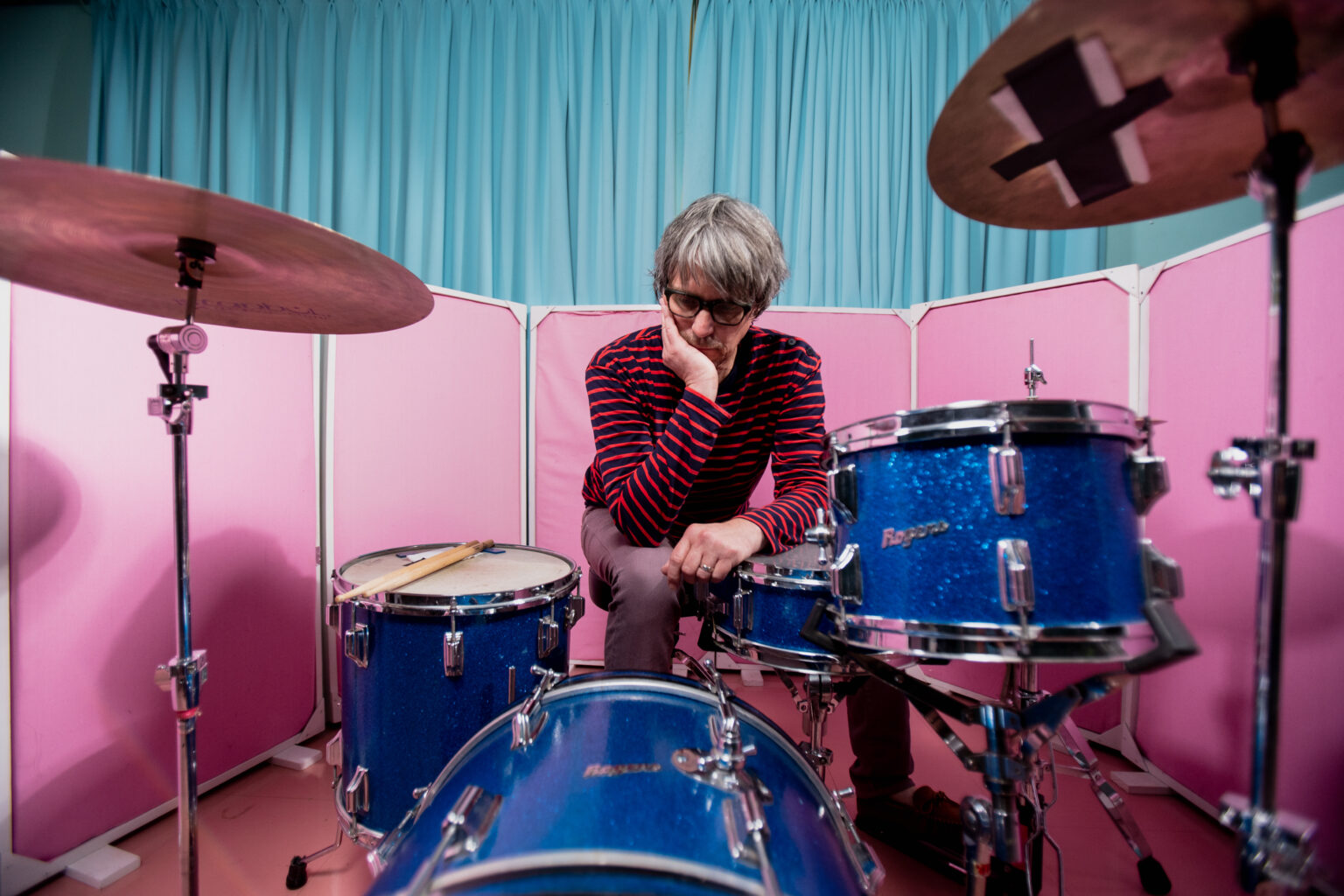
Wayne Coyne’s longtime musical partner on his decades in the Lips, his ouster from the band during addiction treatment, and his upcoming solo debut album
For 33 years — as they evolved from underground noise freaks to ’90s alternative darlings to symphonic auteurs to bubble-surfing festival spectacle to elder statesmen of weird — the Flaming Lips had one consistent secret weapon: Steven Drozd. Though he joined as a drummer, bringing a Bonham-esque intensity to 1993’s Transmissions From The Satellite Heart, Drozd soon expanded to other instruments, particularly after the departure of guitarist Ronald Jones, and played a crucial role in crafting the wide-eyed orchestral grandeur of landmark albums The Soft Bulletin and Yoshimi Battles The Pink Robots.
The multi-instrumentalist’s skewed psych-pop sensibility, melodic instincts, and airy falsetto are embedded in the soul of the Lips’ discography. However much turmoil the Lips have weathered, Wayne Coyne could always count on Drozd to help bring his zaniest ideas to musical life.
Suddenly, everything has changed. Last year, Drozd was conspicuously absent from Lips concerts, and in December, he confirmed that he was out of the band after deciding not to tour anymore. What initially seemed like an amicable parting of ways took a messier turn when Coyne weighed in with a cryptic post of his own. “The reason he left is sad and infuriating,” the frontman posted on Instagram before Christmas. “It is HIS responsibility to tell everyone what happened.” (Through a representative, Coyne declined to comment for this article.)
I reached out to Drozd in February, and a month later he wrote back and graciously agreed to speak. These days, he’s holed up at home in Oklahoma City, working on his first-ever solo album, which he hopes to release in the fall. He looks at the Lips’ tour dates and feels a sense of relief that he doesn’t have to hop a plane to Greece or Jakarta. The touring life is behind him.
When I interviewed Drozd, in mid-April, we talked for an hour and he seemed to still be processing the strange way his Lips tenure had ended. I will let him tell that story, and many others, in his own words. The chat begins… now-now-now-now-now-now-now-now-now.
It’s been about four months now since you sort of announced that you’d left the Flaming Lips. How are you doing?
STEVEN DROZD: They’re touring probably more now than at any time in the recent past. So it’s good for them. But when I see all those tour dates, all I think is I’m just glad I’m not touring. I think maybe I had got to the end of the line for me being on the road. I’m glad to not be touring. So that part of it is great.
I got the sense that over the last few years, you were pretty burnt out on being on the road.
DROZD: Definitely. I think for whatever reasons — some personal reasons and some family stuff — touring was getting harder and harder for me. Everything reached a climax when my daughter went missing in Seattle towards the end of that Weezer tour back in 2024.
I remember reading about that at the time. That was obviously a very upsetting incident.
DROZD: Yeah. It’s hard to get back into it because it really was traumatic. She was missing for three days. We didn’t know what was going on.
That’s a horrible situation to go through. Was that when you were just like, “I need to stop touring”?
DROZD: Yeah. It was at the end of that run. I actually went to treatment for drinking after that happened. I came home, and I went to treatment for a couple of months. Got out of treatment, and then I relapsed around the holidays. And then I went back to treatment, and then Wayne just stopped communicating with me then. So the way it ended is really sad because it didn’t have to end that way. I went back to treatment, and he just stopped communicating with me. I haven’t heard from him since January 3, 2025. That’s been weird, you know.
That is very sad. You and Wayne had a close musical partnership for 33 years. I know you’ve been pretty public about your experiences with addiction and drug issues in the past…
DROZD: Yeah. I have to consider my family. I try to be honest, but I can’t be too brutally honest because it’s just too much for my family, you know what I mean?
I understand. So, 2025 is when the Flaming Lips were on tour and you were not on tour with them. You were just kinda doing your own thing.
DROZD: Yeah, so what happened was, I went back to treatment and like I said, Wayne didn’t communicate with me. They decided to go ahead and do some shows in Australia without me. And they found a person to play my parts and make that a show together. I think it went well enough where they thought, “Well, Steven’s not here with us now and maybe he’s not coming back.”
But no one really told me anything forever. I just assumed that maybe after some time that Wayne and I would communicate again. But that didn’t happen. So, by the summer of last year — summer going into fall — I knew. Between you and me, I knew it was over and that was it and I just wasn’t gonna be back in the Flaming Lips and I kinda accepted it. And just been working on my own stuff and accepting that’s my new reality. It has been hard in a lot of ways, though. It’s weird not being on the road. I’m glad I’m not on the road. But it’s still weird not being on the road. I’m just so used to it.
I’ve noticed a shift that’s happened in the Flaming Lips over the past five years. It feels like Wayne has kinda steered the band towards being more of a nostalgia act, with all the Yoshimi 20th anniversary shows. It’s been quite a while since the Lips put out a new album. I think it was 2020 that American Head came out?
DROZD: Yeah. That was supposed to come out in June of 2020. I think it ended up coming out in September.
So it’s been five and a half years. That’s a pretty significant span of time since the last album. It just seems like the Lips are more of a touring attraction rather than a band that’s putting out new material and evolving. Was that something you had noticed?
DROZD: I do know that they’re working on new stuff. I’m not exactly sure what state it’s in or how far along they are. But I do know they’re working on stuff because a friend of mine is actually working with Wayne. A guy who runs a studio here in Oklahoma City — he’s great. So I know they’re doing new music. But I think right now they’re just focused on, like, “How much touring can we do while people will care about this show?” As far as a new album, I can’t really say.
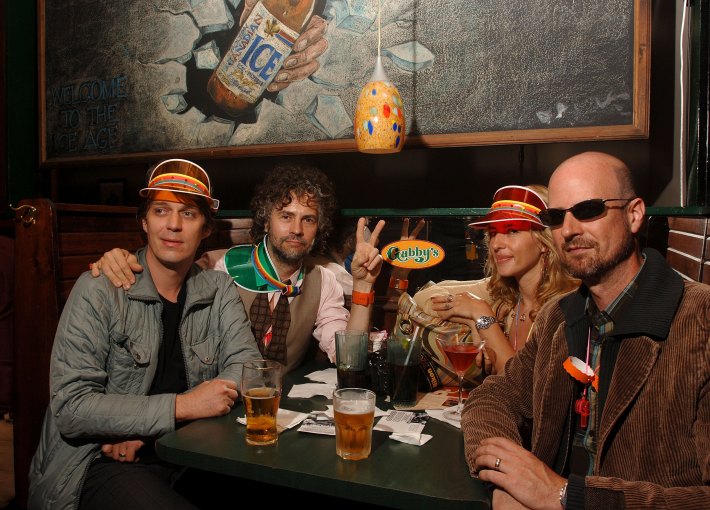 TIFF 2006 (Darryl James/Getty Images)
Were you all in on doing the Yoshimi Battles The Pink Robots 20th anniversary tour stuff?
DROZD: It’s fun sometimes, but after a while it got to be kind of a grind, you know. You’re doing this show and you know the show really well, so you can do the show and not have to think about it too much. But it’s not as fun as doing a different set every night, by any means.
When I first fell in love with the Lips 20 years ago, the exciting thing was that there was always something new. There was always new material that was exciting. There was always a new album on the horizon, and it was always gonna be very different from the last album. That was part of what attracted me to the band.
DROZD: Yeah. Well, things change over time. Nothing can stay the same. So whatever it is now, it’ll change from what it is now. It is weird for me. I haven’t really talked to a lot of people about any of this, really. So it is strange to be talking about the Flaming Lips in the past tense for me. But that’s where we are.
I mean, it’s weird for me, too. A lot of fans, myself included, regarded you as the musical heart and soul of the group for many years. Especially after Ronald Jones left and you expanded to other instruments besides drums. You took such an enormous role in the band and you orchestrated so much of the incredible music on The Soft Bulletin and Yoshimi.
DROZD: Yeah…
You were a huge part of the Lips for so many years. So it’s a big deal that you’re not in the band anymore.
DROZD: Yeah, it really is. I guess my ego told me it would be an even bigger fracture than it was. But it feels like people are just kinda moving on. And you know, what can you do? I just have to say that I’m working on my own new music and hoping to have a record out in the fall. I was saying summer, but now summer doesn’t look like that’s gonna happen. I got like four or five songs now, and I’m just working away, trying to get together a whole record. As much as people care about a new album by anybody, I hope there’s people that care to hear what I’m doing.
I think a lot of Flaming Lips fans have been waiting a long time wondering what a Steven Drozd solo album would sound like. This is your first solo album under your own name?
DROZD: Yeah. I did a soundtrack called The Heart Is A Drum Machine for a documentary — this was a long time ago — but I did original music for that. As far as my own official record that I’m claiming to be my own record, this will be the first one, yes.
How does that feel?
DROZD: I’m excited about it. I think a lot of people will think it just sounds like the Flaming Lips, probably. Because all the shit that I did in the Flaming Lips, that’s just me, you know what I mean? I would say it’s like psychedelic pop music. It’s like Flaming Lips music, except I’m singing all of it.
And you’re producing it yourself and playing every instrument yourself?
DROZD: Yeah. I’m working with a friend of mine down in Norman, Oklahoma, at Trent Bell Labs. I’m playing all the instruments and doing all the singing and writing all the stuff. It’s all me, so it’ll be just me. I might try to get a couple of guest vocals on a couple of things. Talking to Micah Nelson — he’s gonna do a cover of a Willie Nelson song with me. We’re trading tracks back and forth. I put out a couple of covers over a couple of months. I did a Codeine cover on New Year’s that I released. And then I did a cover of “Let There Be Rock” by AC/DC. I’m not sure if you’re aware of any of that stuff.
I’ve seen little snippets of music that you’ve posted on Instagram. It always sounds very intriguing. It’s always like a little tease of what’s to come.
DROZD: Yeah, the idea is to get people interested. I’m really terrible with Instagram. I’m trying to get better. But even in the next week or two, I’m trying to post some more content that’s actually some original music that I’m doing. More than, like, just five seconds. I don’t have a label yet. I know people are interested. I know there’s a few labels I can talk to. People are asking me, “Are you gonna tour?” My head’s not there yet. I can imagine getting a band together. I know there’s some people that would be interested in playing live music with me. But I don’t know exactly if I’m ready to jump into that part of music again.
Do you have songs that you wrote when you were in the Lips that feel like they’re more suitable to your solo record that you were saving?
DROZD: No. I mean, anything I ever wrote for the Lips, I wrote for the Lips. A song like “Race For The Prize” — that took me like five tries before Wayne was interested in that. Usually I ended up, at some point, selling Wayne on whatever idea it was that I had, you know what I mean? So I don’t have any leftover material…
What was different about the fifth try versus the first four?
DROZD: Well, the first try, it sounded like Dinosaur Jr.
Really? Like a specific Dinosaur Jr. song? Or just them in general?
DROZD: Just the J Mascis “wah” sound [imitates high-pitched guitar noise: waaaaaaaaooooooohhhh]. I can hear them doing a cover of it. That was my first version. And then the second version, I think at one point he said it sounded like a car commercial. So I had to keep trying. The demo I did, where the one part was really heavy, big drums and distorted strings and the next part was like the car commercial part, I think finally he saw some appeal and he started getting involved in it. But back to your question about leftover material, I don’t really have any leftover stuff, you know? All the stuff I’m working on now is stuff I’ve done in the last year.
Is it weird not to have to run it by Wayne? You’re in charge of everything you put out now.
DROZD: Well, I miss the lyric writing. That’s not something that comes naturally to me. And I feel like the harder I try, the worse it gets. Whereas he can just go to the bathroom and come back 15 minutes later with the lyrics for a whole song. He’s got a real serious talent for that, you know what I mean? And I do miss that.
But yeah, it is weird. This is just all on my own. I just got used to working with just the two, him and me. We did that a lot. American Head — it looks like it’s a whole band. But I think I played every instrument on every song except for two parts. That was definitely just a Wayne and me endeavor, with Dave Fridmann; it’s his studio. It is strange just being by myself and doing this. The stuff I’ve played for people, I’ve gotten really good reception. I’ve gotten really positive feedback about the stuff I’ve shared so far.
I’m really excited to hear it. My hope is that this interview will drum up some excitement about your album coming out later this year.
DROZD: Yeah. The thing is, some of this is hard to talk about, because I don’t wanna trash-talk the Lips, you know? The way the whole thing ended is just really sad.
Yes, I feel that. I’m not trying to write something salacious or anything like that. I just wanted to talk to you candidly and give you a chance to reflect on what went down and what’s happening with your music now. When you first announced that you had left the Lips, it kinda felt like you posted that on Threads without meaning for that to become a public thing.
DROZD: That’s true. That really was like a Gen X-er accident on Threads. I really thought it was just between me and this one guy.
Threads is very confusing to navigate! I don’t think you’re the only person who’s made a flub like that. It seemed like this whole thing blew up without you intending it to. I figured there’s a chance for more of a longform conversation about your departure.
DROZD: Yeah. No one was saying anything. No one was communicating anything with me. I still talk to Matt and Tommy [the Lips’ drummer and bassist, respectively]. Not on a regular basis. But I ran into them and was friendly and whatever. But no one was saying anything about any of it. And my flub on Threads did open the door to say, “Well, this has happened and someone’s got to address it.” But that’s not the way I wanted it to go down at all.
In the Lips fan community on Reddit or on Facebook, people were definitely wondering, “Where’s Steven? Why isn’t Steven on tour?” People were noticing that and wondering. But also, I feel like it was a big deal when Michael Ivins left the band five years ago and Wayne didn’t have much to say about that. From my perspective, that seemed kinda hush-hush.
DROZD: Yeah. It was almost like, “We’ll see if anyone notices,” you know? Not to say anything about Michael — I actually just texted with him earlier today. He has a band. I think they’re touring right now. I think maybe he was surprised by how little attention it got, you know, when he left the group.
Back in the day when I first became a Lips fan, you, Michael, and Wayne — that was like the classic lineup to me. Like how the classic Pink Floyd lineup was the ’70s lineup with both Roger Waters and David Gilmour. That was the classic Lips lineup, and you just had this unspoken creative collaboration that was so fruitful, and you really complemented each others’ skills. It was surprising when Michael was gone from the band and there wasn’t any public acknowledgment of it.
DROZD: There wasn’t really any acknowledgment of it, yeah. That was a shame.
It seems like it’s kinda shifting to this dynamic where the Flaming Lips are just Wayne and whoever he hires to be his backing band.
DROZD: Well, some of the guys have been in the Lips for a while. I mean, [keyboardist/guitarist] Derek’s been there since 2009.
That’s true.
DROZD: But I agree with you. It’s the Wayne show. And whatever you think of that, all that stuff’s onstage and all the cool lights and video imagery and all that stuff. I think people are totally cool with it, you know what I mean?
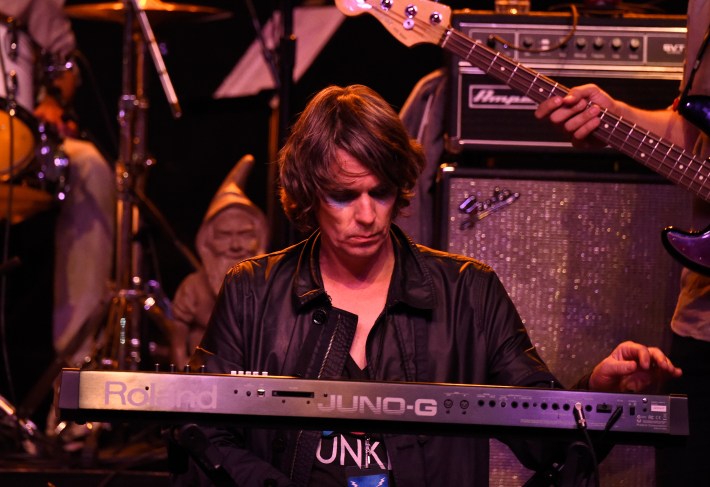 LA’s Fonda Theatre, 2014 (Frazer Harrison/Getty Images)
I was surprised by the Instagram statement that Wayne put out in December when you revealed that you left the band. He posted, “The reason he left is sad and infuriating and it’s his responsibility to tell everyone what happened. What he told everyone was a lie.” Do you want to respond to that at all?
DROZD: I’ll tell you what I told you. I went back to treatment. And he just stopped talking to me. That was it. That was me basically being fired from the group. So, you know, I didn’t leave. I was fired. I guess you could say I left because I’m the one that went to treatment, you know what I mean, and didn’t play the shows that were coming up.
I was just surprised that Wayne would post something so… petty. Rather than just expressing gratitude for your many years of contributions. I mean, you were an incredible part of the Lips for 33 years.
DROZD: You’d think. I was surprised, too. It was upsetting. It upset my family. And people in Oklahoma City are all like, “Wow, what’s going on with that?” I’m like, I don’t really know what to tell you. It’s just — it’s poopy, the way it all ended. And there’s nothing I can do to change that. I went to treatment. And came home. And I relapsed around Christmas and went back to treatment. That’s when Wayne, he just stopped talking to me. And that’s how it ended.
I feel like if it was a band like Oasis — I’m not comparing us to Oasis — but another band that had been around as long as we’ve been around, they would’ve just canceled the shows and let me go to treatment and get myself taken care of and I could come back and we’d continue playing. But that’s not how it went at all.
It is sad. It is a sad thing for such a fruitful musical collaboration to end so suddenly and so unexpectedly.
DROZD: Unexpectedly, and with no real finality to it. It feels like a question mark at the end of it, really, in a way. Even though I’m the person living it. And I know for real that I’m not coming back.
I’d love to talk about way back in the day, when you first joined the band in the early ’90s. You were 21 or 22. How did you first get invited to join the Lips?
DROZD: Yeah, I was 22. Long story short, I had moved from Austin to Norman, Oklahoma, in the summer of 1991. I was playing with this band called Janis 18. They were from Norman, but they had lived in Austin, and I joined them. They were sick of Austin, and I said, “What the hell, I’ll follow you guys to Norman.” So I came to Norman. Nothing was happening. I’m living at this house where there’s an eight-track recording studio, so a lot of bands do demos and recording there. It was kind of a hub for cool musicians in the area.
One day, Wayne and Michael showed up at the house. They’d done some demos at this place. They were like, “We saw a video of you playing with Janis 18. And we were wondering if you’d wanna come play with us and see if it’s a good fit.” A year before that, I would have been like, “I don’t really know anything about the Flaming Lips.” But by the time I met them, they were one of my favorite bands. The Jesus Lizard and Nirvana and Dinosaur Jr. — those were the bands that I liked. The Flaming Lips were in that group of bands. And on top of that, they had a really nice drum kit that they’d just bought. So I went to go jam with Wayne and Michael. We played for about an hour. And it was great. We knew then it was gonna work out.
I joined as the drummer. But I was writing songs. I started writing songs in 1992 and sharing stuff with Wayne. Even there’s some stuff on Transmissions From The Satellite Heart — those are songs that I started that Wayne helped me write.
Your drum sound was such a massive part of those ’90s albums. Especially Transmissions. Those raw, booming drums kinda sounded like the ghost of John Bonham.
DROZD: Sure, I’ll take that [laughs].
That distorted drum sound on “Slow Nerve Action” — that was something you brought to the band.
DROZD: That was intentional. This place I was living, it was an eight-track studio there. But also, these guys were masters of the four-track. This would’ve been around the same time as Sebadoh started doing four-track stuff. We’d distort the hell out of the drums with the four-track. Just clipping the four-track, you know? When we were doing “Slow Nerve Action,” I was like, “Well, can we do it like we do with a four-track tape, just distort the hell out of it?” It wasn’t tape distortion. It was an effects unit rack — like a Yamaha something. And we liked that so much on “Slow Nerve Action,” we decided to distort the drums to some degree on every song on the record. So all the songs ended up being with distorted drums.
It was just something I was interested in doing. Luckily, the other guys thought that was a cool idea and we all embraced that crazy drum sound.
And then a few years later, Ronald Jones left the band. Did you think you guys would hire a new guitar player? When did you realize you just needed to take on all these other instrumental roles?
DROZD: I think we knew that we weren’t gonna replace him. We weren’t gonna find somebody that was gonna do what he had done. So we were thinking along the lines of doing something different. We didn’t know exactly what it would look like. But we were definitely interested in doing music that wasn’t so guitar-driven. Once Wayne and I realized that we were on the same page with that, we started sending demos — four-track demos, actually — back and forth to each other, and a lot of songs came together in a really short period of time in late 1996 and early 1997. I mean, The Soft Bulletin came out in 1999. But some of those songs were written at the end of 1996, like “Race For The Prize.” We started working on that in demo form together at the end of 1996. But back to your question, we knew when Ronald was leaving that we weren’t gonna find anybody even close to what he does.
He made such remarkably bizarre sounds out of that guitar. I have no idea how he even did that.
DROZD: He was so unique. We just knew that there was no one in league with him. And we took that as a sign that it was time for us to change, so that’s what we did.
Are you guys still in touch with Ronald at all?
DROZD: No, he has been out of the public eye since the late ’90s. I think he lives at home, maybe? I’m not really sure. I think Wayne may be in touch with his brother? But I haven’t spoken to Ronald since the ’90s.
That brings us to Zaireeka, one of the most unique albums ever made. My memories of listening to Zaireeka on four different CD players back in college just completely blew my mind open. I hope you look back at that record and just know how incredible it is.
DROZD: Oh yeah. When we were working on it, it felt special. You know, originally, Wayne wanted to do a lot more than just four CDs. I think he wanted to do 10? My memory’s a little fuzzy. But Scott Booker, the manager, talked him down to four or whatever. One thing that was really smart is Scott told Warner Bros. that we would make Zaireeka and The Soft Bulletin on one budget so they wouldn’t have to give us extra money to make Zaireeka. And there were songs that we thought we were gonna record for Zaireeka that ended up being Soft Bulletin songs. “Race For The Prize” was actually a contender for a song on Zaireeka. But it just wasn’t working. So we put it on a separate pile, like, “OK, this is gonna be for this record that’s gonna come out after Zaireeka.”
Looking back on that, I rigged up a system so I could listen to it at home. I had my main stereo system, and then I had three boomboxes. And I rigged a system where I’d use two fingers, a tongue, and a toe to start all four players at the same time. And I had two of the boomboxes on extension cords so I’d spread them out around the living room.
Any band that can talk Warner Bros. into releasing an album as wild and imaginative as Zaireeka must be the most charismatic band in the world.
DROZD: [laughs] Well, you know, Ronald left, and that meant that we weren’t touring. We were a little invisible for a little while. And that coincided with Warner Bros. firing a lot of groups. Because the quote-unquote “alternative nation” dream was kinda over.
It’s kinda crazy that the Lips are still on Warner Bros. all these years later.
DROZD: Yeah, somehow, miraculously. The right people at Warner Bros. really fought for us to keep us on. And we never demanded a lot of money or anything like that, so I think they were always happy to keep us around, you know?
Of all the albums you made with the Flaming Lips, is there one that you feel the most proud of?
DROZD: I go through phases of what my favorite is. It’s funny, because when we were making Embryonic, I didn’t enjoy a lot of that process. But now when I hear the record, I really enjoy Embryonic. The most proud of? Probably The Soft Bulletin. In spite of where we were from and what was going on and everything, the fact that we made that record, I’m really proud of that for sure.
Those songs have a certain timeless quality, a real emotional resonance to them.
DROZD: Yeah, yeah, definitely. The Soft Bulletin, kind of like Zaireeka, some of it felt pretty special when we were actually doing it. A lot of times you’re working on something and you’re just working on something. You’re hoping to feel inspiration at all. And sometimes you don’t feel any inspiration; you just keep working away. Then, years later, you’re like, “Oh, that turned out really great.” But [during] The Soft Bulletin, there were definitely moments where it felt like, “This is something kind of special.”
You mentioned Embryonic as well. What was exciting about that album is that it kinda felt like the Lips were on this trajectory for a while where the music was getting more polished and more commercial and then Embryonic was like a total shock to the system. Totally brought you back to this raw, aggressive, freaky sound.
DROZD: Yeah. It could have been At War With The Mystics part two, the way it started. ‘Cause it started with some heavy, slow, kinda pop songs. And then Wayne was just like, “This really isn’t working. It just feels like the same old same old.” He had this idea to just say, “Fuck it, let’s just do something wild. Just take a completely left turn.” And that’s what we did, and it took us a little while to get our bearings. But by the time we finished the record, it felt like it’s a double album and it really works, I think. When I hear it now, I think it really works well as a double album.
Is there a Lips album that you feel like should have been better? That didn’t live up to what you had hoped?
DROZD: I guess Oczy Mlody. I wish I’d been a little more involved in it. There were some songs I didn’t really get involved in on that. That’s not to say that it’s not a great record. But the one I feel the least connected to is Oczy Mlody.
Going back to the early 2000s, the Yoshimi era, that was around the time that the Lips’ live show became much more visual-oriented, with all these stage props and the giant bubble. Did that make it more challenging to focus on the music?
DROZD: For a while there, I would get irritated by new things that came into it. But then I realized, that’s why people are coming to these shows. I mean, there’s a music part of it. But a lot of people come to shows for that. They want to see the dancers onstage and they want to see the big plastic bubble. The other part of it is, that happened real organically. It wasn’t like Wayne had some blueprint made up and we were just gonna follow it. It all happened really just by, “Oh, why don’t you put on this elephant costume? Why don’t you wear this? Michael, why don’t you wear this zebra costume? And oh, why don’t we get a bunch of women to dress up like Dorothy from The Wizard Of Oz and dance on either side of the stage.”
I would get used to things as they happened. And then another part of it was, I felt less pressure that the music — I mean, I still was playing the music — but it felt like there was all this other stuff to embrace besides just the music. So it took a little bit of the pressure off.
Before your departure from the band, were you guys working on a new Flaming Lips album?
DROZD: We had a couple of songs that Wayne and I were working on. I think they’ve just fallen by the wayside. We had two, maybe even three, that we had started working on that were in different stages of completion. I’m not sure what’s gonna happen with those songs now.
Did it become harder to work on new music after Michael left the band? It kinda seems like that slowed at some point in the early part of the decade.
DROZD: Well, I think COVID was what did that. American Head was finished and ready to come out, and then COVID hit. It kinda took the wind out of our sails, you know? We did do shows in the middle of COVID. But to me, it just wasn’t as fun, you know, playing in the bubble. It just felt kinda disconnected from the crowd. The slowing of writing — I think that just happens over time, you know? We consciously were aware we put out a lot of stuff in a short period of time, like the Heady Fwends, all these extra collaborations. I think it just felt right to slow the pace a little bit.
And more than anything else, I think Wayne having kids would have slowed stuff down. Just because you have to take that time when your kids are first born, you know what I mean?
That’s right. Wayne had kids pretty late in life, if I recall correctly.
DROZD: Yeah, 2019 was his first one. So that kinda coincides with some things slowing down a little bit. I wouldn’t point to one thing specifically. I think it’s just a lot of things. Some of it is, we get older, you know?
Do you hope that there will be some kind of reconciliation between you and Wayne?
DROZD: I would hope so. I’m not counting on it. But I would hope that that could happen down the road at some point.
You’re open to it?
DROZD: I’m open to it, yeah.
The Flaming Lips were a big part of your identity for so many years. It must be a little trippy to try to reconfigure that.
DROZD: It’s weird, yeah. So much of my identity. I’m one of the Flaming Lips guys. And now I’m not. I used to be in the Flaming Lips. And it feels weird to say that. All I can do is just deal with it the best I can, you know?
There’s such a vast network of brilliant musicians who used to be in the Flaming Lips. Obviously, you and Michael and Kliph and Jonathan Donahue from Mercury Rev and Ronald. You said you’re not in touch with Ronald. But do you stay in touch with the other former members?
DROZD: I’m casually in touch with Michael. In fact, he texted me today — they’re on the road and they’re looking for a cymbal. I was telling him about the music stores that are still open in this area. And I’ve heard from Kliph recently. After everything went down, he texted me, just to check in on me. Which I thought was sweet. I know when Keith Richards passes — if he passes before I do — Kliph’s gonna text me on that day.
You mentioned you hope to put out your solo album in the fall. Do you have an album title in mind?
DROZD: Right now, I’m calling it Laugh Out Loud Rest In Peace. Just six words. No commas or anything.
How did you settle on that title?
DROZD: I was texting with Eric Slick from Dr. Dog. He’s a friend of mine. He’s one of the coolest guys I know right now. And he’s been really supportive of me. He actually did the mix on the “Let There Be Rock” cover. And he put some drums down on one song. I’m not sure if I’m actually gonna complete this one song. We were texting. I think he texted — I forget who we were talking about — but it was “LOL RIP.” I was like, oh, that’s funny. Laugh out loud rest in peace. I just liked the way that sounds. Like, embrace life, and then when you’re done, you’re done. Laugh out loud and rest in peace. It’s got a nice ring to it.
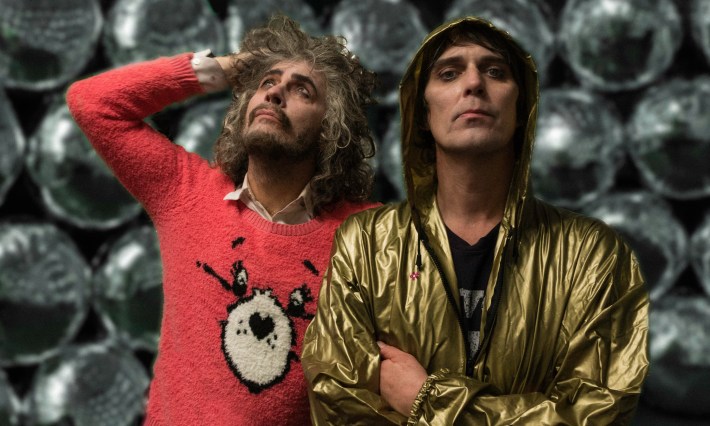 George Salisbury