
Kylie Jenner, the youngest KarJenner and one of the most successful celeb-entrepreneurs of our time, recently re-engineered her clothing line, KHY. What was once primarily a hot spot for emerging talent to collaborate on collections modeled by Jenner (Dilara Findikoglu, Entire Studios, and Atlein, to name a few) was rebranded as Jenner’s personal fashion label, rooted in her hometown of Los Angeles. It was an interesting pivot for the billionaire — whose first new collection “Born in LA” featured $490 studded carpenter jeans that sold out within a day — as she shifted the narrative. Turns out, having just her name on it wasn’t enough; the product needed a refresh and the brand needed a reconnection with her customer.
The celebrity brand is a revenue path as old as time, with several avenues of entry for those looking to boost their net worth. There are the juggernauts of culture who start a brand for constant modern-day currency — think Selena Gomez with Rare Beauty, Ariana Grande with r.e.m., and Lady Gaga with Haus Labs — and there are those who work their way up to the “founder and CEO” level, like Alix Earle did with her instant skin care hit, Reale Actives. The first set can basically sell water to a fish and will always find a way through, even if their businesses don’t always hit on what’s happening. The path to success for the second category is seemingly simple: Go viral, get 1 million Instagram followers, and start your own business.
However, consumers and superfans alike are starting to grow tired of the same song and dance from their favorite A-listers. It seems like celebrities (or their teams) think once they reach a certain level of fame, they need to start peddling products to their fan bases. This isn’t without evidence of success — just ask any KarJenner — but without the right narrative behind their choices, customers are catching onto the disingenuous nature of some of these business deals. People like Millie Bobby Brown (who recently expanded her beauty brand to include affordable clothing) are clearly not invested in the creative aspects of brand-building, while others are flashes in the pan (RIP Addison Rae’s Item Beauty). There are also only so many new beauty, fashion, and lifestyle products you can come up with without treading familiar ground.
There are, of course, exceptions to this rule. Take Hailey Bieber’s Rhode. What started as a simple skin care line — “one of everything really good” was the tagline, however grammatically questionable that phrase is — has blossomed into a carefully considered business rooted in genius marketing and intentional expansion. Not only is she capitalizing on her fame by selling the product with selfies (the lip-treatment phone case is also a free marketing tool, after all), but the products are tested with skin care experts and actually deliver on their promises. Remember when she caught flak for a grainy lip-tint formula? The team openly addressed the comments and reworked the formulation. Team this with a savvy creative team that casts faces of the moment like Harris Dickinson, Sarah Pidgeon, and yes, her own hubby, and it feels like work is actually being done to capture customers who might not even know (or, frankly, care) who Bieber is. Product first, face second is the best way to go, despite the whole point ostensibly being that it’s Bieber who is selling it to us. But if the suite of skin care and makeup can’t stand on its own, then what is the point?
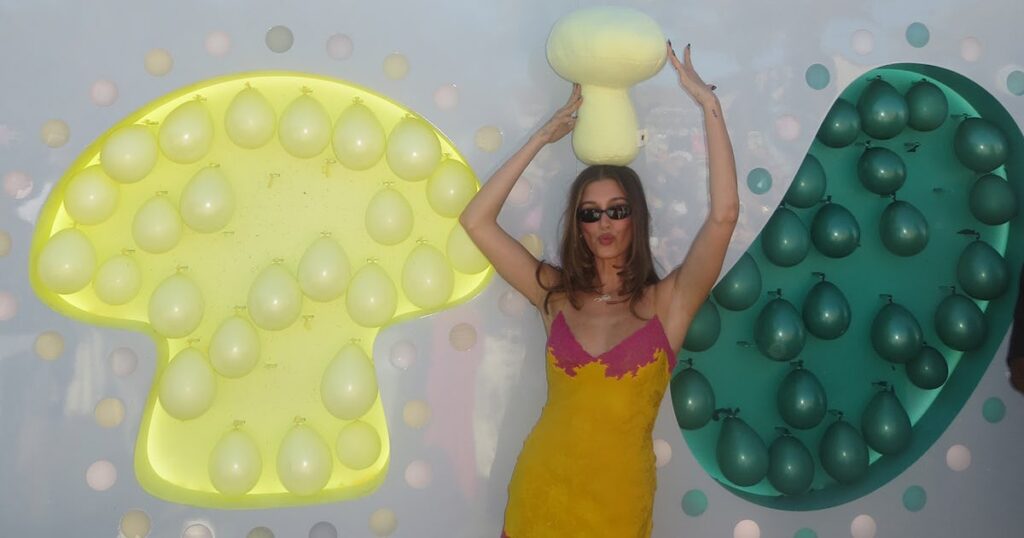
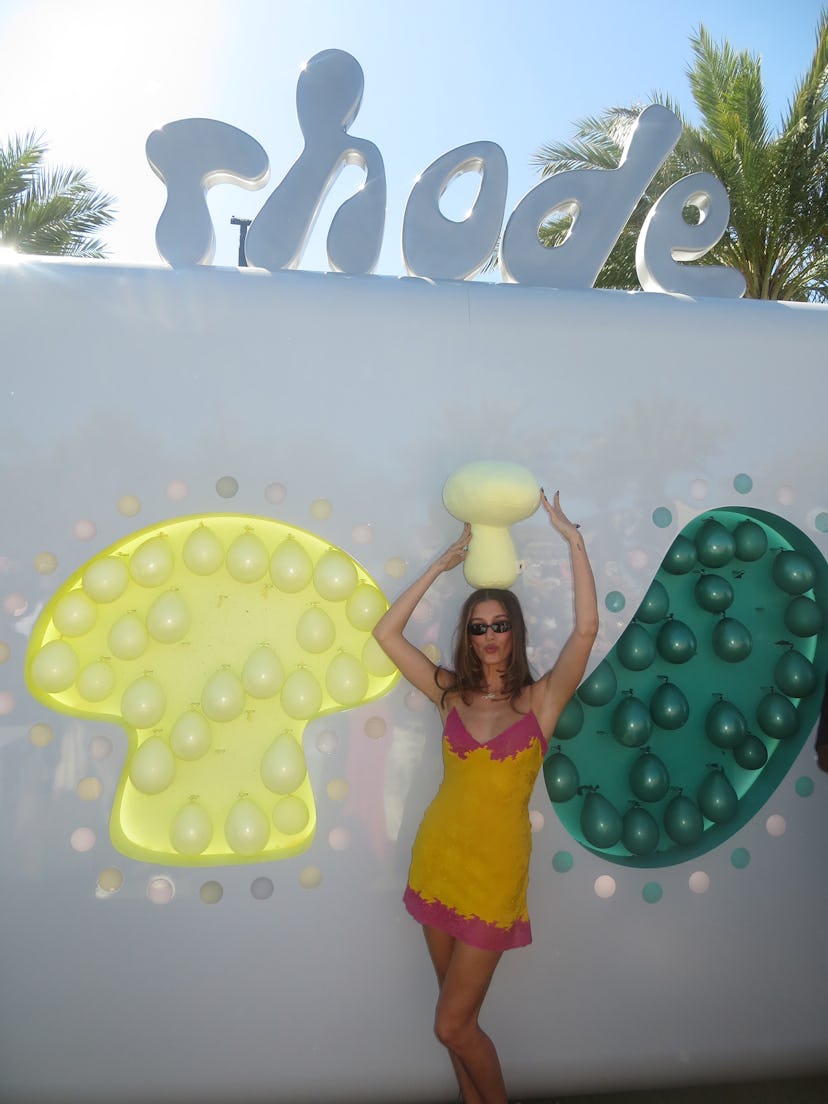
There was no place quite like Coachella to conduct a vibe check on how the stars’ brands are holding up. Revolve Festival had booths for Leah Kateb’s Skylar fragrance line, and Kendall Jenner’s 818 Tequila hosted its own mini festival featuring her liquor alongside Kylie’s rebranded K2O hydrating electrolytes (which was formerly a hard-seltzer endeavor — that’s a story for another day). Unsurprisingly, Rhode won the influencing festivities. Their single-brand activation had bespoke cocktails, drinks, a dart-throwing game, ample mirrors for selfies, and of course, a curated bag of essentials in custom bags upon exit. It felt like somewhere Bieber would actually want to hang out (and she did), and it also demonstrated how celebrities need to connect on a personal level with their fans (aka customers) if they want to last.
Any celebrity can sign a contract with a fragrance, jewelry, or clothing line, but if they want to branch out on their own now, it’s not a given their fans will respond in kind. Sure, they can plaster their name on something and expect immediate sales. But what happens a year down the road when the brand still exists? The celebrity-started companies that will last know that they can: 1. Provide a service not found anywhere else, and 2. Operate and exist without their star behind it. The second point is ironic, given that the company starts around the star, but it turns out you can’t sell that much new makeup to adoring fans. It has to be, in the words of Rhode, really good. And based on the package I just received from Kylie’s KHY, with 100% Cone Mills American cotton denim made right here in the U.S., she’s ready to do just that.