
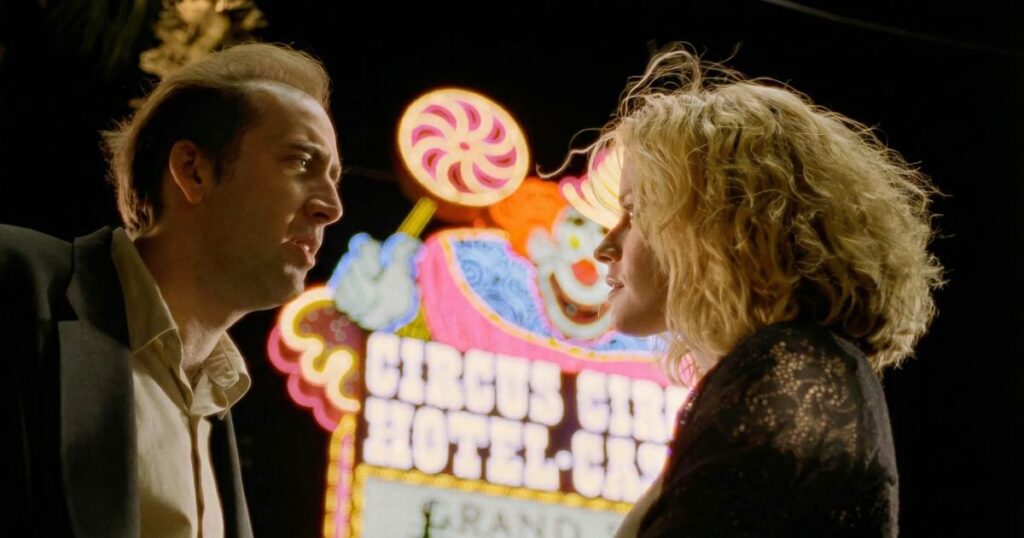
An empathetic, unflinching drama about a screenwriter determined to drink himself to death, Leaving Las Vegas was an unorthodox hit made by a maverick creator. Mike Figgis’s film, which he wrote and directed, having adapted John O’Brien’s novel, sees Nicolas Cage play Ben Sanderson, an alcoholic whose addiction leads to him becoming unemployed, friendless and divorced. In Los Angeles, Ben draws out his life savings and cashes his severance cheque before heading to Vegas. Amid the strip malls, casinos and sleazy motels that fill the desert town, he meets sex worker Sera (Elisabeth Shue) with whom he forms an understandably dysfunctional relationship in his final days.
Some 30 years since Cage won Best Actor for his performance at the 1996 Academy Awards, the piece hasn’t become any cheerier with age, but it rings true as a desperate, sad portrayal of life on the down slope. Cage carries the crumpled weight of Ben’s addiction with each desperate glance, manic laugh and grimace, while Shue plays Sera like a living sigh, her performance essentially saying, “I understand but am so, so exhausted,” the unofficial mantra of people living among addicts.
Fine acting aside, the film is peppered with blackly comic moments amid the emotional devastation. Sin City’s harsh neon and dissolute heartbreak are captured pristinely in Super 16mm, shot by cinematographer Declan Quinn and – on second camera – the director himself, who also composed the sorrowful jazz score. With a new restoration bringing Leaving Las Vegas back into view, Figgis spoke freely and at length about the film’s genesis, production and aftermath on a video call from his studio.
Lou Thomas: How did you first come across the novel?
Mike Figgis: I was in Hollywood working on post-production. I’d done Mr. Jones [1993], then an HBO film with Juliette Binoche [Women and Men 2, 1991]. I was in the process of doing The Browning Version [1994], produced by Ridley Scott. Those projects started off from best intentions and had all gone pear-shaped for me. I’d been in a terrible clash with the studios, with HBO, ultimately, also with The Browning Version. One of the contentious issues was the music. I wrote the score for – and they fired me off – all of those films. I was having big issues with scripts, trying to make them better. I was at an all-time low and not acknowledging the fact that things were pretty grim.
I had decided to get out of the film business. I was very unhappy in Los Angeles, feeling creative but totally blocked. I had a small group of loyal, good friends, one called Stuart Regen. Stuart came from New York and ran an art gallery in Santa Monica. His mother [Barbara Gladstone] was a big deal in the New York art world and he had represented Robert Mapplethorpe. He also represented director Matthew Barney. Stuart had optioned the rights, and he gave me the book, but I didn’t read it for quite a long time because I was preoccupied with my life. But because he was a dear friend, I got really guilty, and the third time he said, “Have you had a chance?” I sat down and started reading it.
What were your first impressions?
I remember very quickly being drawn in. The subject matter was very close to what I’d been trying to do with Mr. Jones but had been utterly thwarted by the inane suggestions: “You’ve got to make it more cheerful,” “It’s got to have a happy ending but make it funnier.” It started to coalesce in my mind. I’d been dreaming of shooting on Super 16 and going back to a version of what I had before I was a filmmaker, which was very minimalistic performance art, where you invented things and improvised.
I always wanted to try and create a cinema environment for myself where I could continue doing that. I didn’t have the highest expectation of being able to raise the money, because my credit rating had gone down quite a lot. I was known as a troublemaker, someone who, my agent informed me, didn’t understand the social contract. It’s definitely not a book you read and think “This is a film.” It’s all very, very dark and done with [lots of ] dialogue. I thought, “This is fascinating. I wonder if I can convert this.” That was the genesis of writing a script.
Did the author’s death have any bearing on the making of the film?
No. I knew Stuart had met John, because he bought the film rights. We talked about what an interesting guy he is. My guess is that John was totally preoccupied with his own demons at that point. We had started pre-production, then Stuart called me and said, “It’s very sad news, he’s committed suicide.” Later on, when I got to know his family, they weren’t surprised, and they said the novel is a suicide note. A very articulate one.
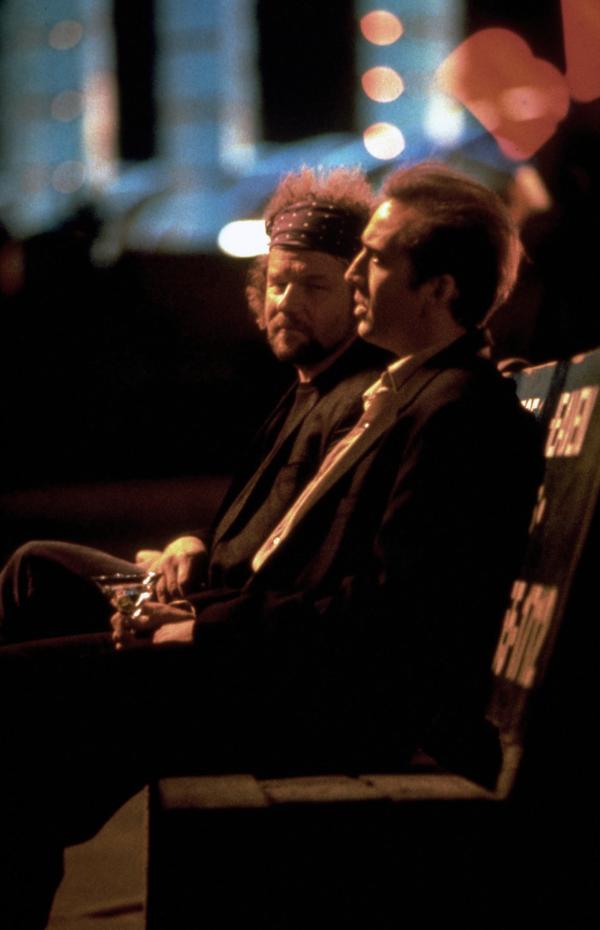 Mike Figgis and Nicolas Cage on the set of Leaving Las Vegas (1995)Courtesy Studiocanal
How was Nicolas Cage cast?
There was a fabulous agent – the last of the great, romantic agents – called Ed Limato. He was larger than life and had a mansion up in Hollywood Hills. His Oscar parties were always the best. He’d represented Richard Gere, Michelle Pfeiffer, everybody. He was the top agent, until Mike Ovitz was taking over that world. He represented Nicolas briefly. Nicolas has never held on to an agent or a manager for longer than 10 minutes. In that period, Ed was representing him, and we were friends. He hadn’t given it to anybody else. The next thing, boom, Ed said, “He wants to send you a fax.” He called himself Spooky Blue ’cause he was in some hotel under the false name of Spooky Blue. I kept the fax, but unfortunately faxes fade, so I have a blank sheet of paper on which this message was written saying, “I love this so much. I beg you, don’t give it to anybody else.”
He rented a suite at the Chateau Marmont for two weeks before the shoot, where we rehearsed, ate and he comped everything. He and I halved our fee in order to OK the budget. Neither of us ever got paid, but we both got paid quite handsomely for our next films. In the case of Nicolas, 20 million.
It’s probably the best thing Elisabeth Shue has done. Could you tell me about her casting?
I met Elisabeth casting a film called The Hot Spot, which fell apart before Dennis Hopper took it over and directed his version of it. When I was casting that, I met Elisabeth. I’d seen Adventures in Babysitting [1987], which I loved. She shone out of that. When I met her, we did a two-hour reading and she was amazing. Ultimately, I didn’t direct the film. I also had provisionally cast Uma Thurman in that role, and apparently that devastated Elisabeth.
Then Elisabeth had some family tragedies, so went through a very dark period, and I bumped into her a couple of years later developing Leaving Las Vegas. We got nicely drunk together and I apologised. I said I have this other thing, I haven’t shown it to anybody else, but I want you to do it. It was always in my mind, I always wanted to work with her again. So the two lead parts were not cast in any conventional way. They were one-stop shopping. Most of the casting was done through your mates. Danny Huston was like my kid brother at that point and Julian Lennon, Laurie Metcalf, all those people, came for a day, had fun.
Apparently Nic went binge-drinking in Dublin and Elisabeth went and interviewed some Las Vegas prostitutes. To what extent did you encourage that research?
I didn’t, no. Elisabeth, I got these great clothes from Vivienne Westwood. I’d become friends with Vivienne. I told her, I’m doing this low-budget movie. “Oh, I’ll give you some clothes.” She gave me all Elisabeth’s costumes. Elisabeth would go out on Sunset [Boulevard], on the darker part, with her future husband watching from a car, and she would walk up and down, like a hooker. Nicolas got a driver, a Rolls Royce, and the suite at the Chateau. I did a couple of nights drinking with him and it was too much. He got very drunk every night. They both did whatever it took.
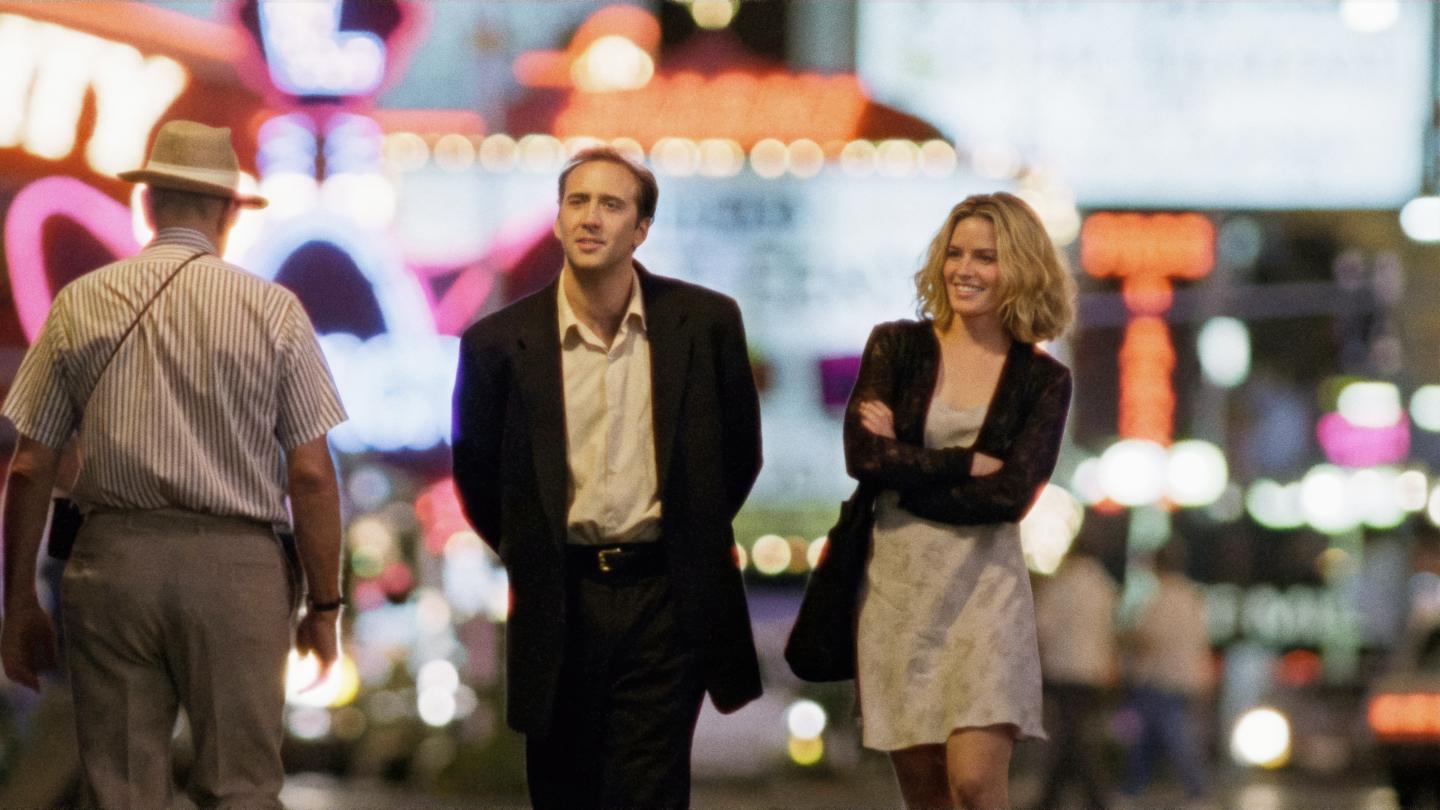 Leaving Las Vegas (1995)Courtesy Studiocanal
There are many varied depictions of alcoholism on film from In a Lonely Place to Harvey [both 1950], even things like Arthur [1981]. Did you look at any films about alcoholism before you made the film or were there any that had any impact on it?
The only one I happened to see – I’d become friends with Albert Finney – was Under the Volcano [1984], which is my favourite drunk film. There are similarities between Albert’s character and Under the Volcano, and there’s a very focused intelligence in the alcoholism and the suicidal vibe to it. I did talk to Albert about it, made no bones about this big influence on me, and projected that on to Nic.
We talked about the possibility of doing the film drunk, and I said no. I didn’t have time or the budget for that. It would have been terrible. Albert said, “Advise him not to.” He had some nice little hints: “Have some scotch, dip your finger in it, make your mouth wet with scotch, then do your take.” That gives you the memory of alcohol. That’s what you need. Don’t be drunk.
Albert did a really nice thing. He said, for him, being a drunk was when you put a glass down on the table, it’s like a moon landing. You don’t crush it down. Your hand is not shaking. When you sit down, you’re demonstrating that you’re not drunk, even though you’re drunk; that reverse psychology. Nic’s a great actor, so I shared as much of it as possible, then he brought his own version to it.
Was the reasoning behind shooting it on Super 16 – financial, artistic or a bit of both?
It was a totally aesthetic choice which happened to fit in with the idea that it was cheapest; also because it would imply smaller and less equipment, vans not trucks. Along with that came my whole idea to not use cranes and not do all that fucking boring bullshit. Just handheld or stick it on a tripod.
We were shooting two cameras. Declan Quinn was the DP; he would light it. We discussed how minimal the lighting would be. He’d do the master, and while he was doing that, I just found a second angle, so I was second camera. I had my own too. That was a consideration. I owned a 16 millimetre, so I’d find all the close-ups. I also knew the script better than Declan. I could anticipate what was gonna happen because I’d written it.
That’s always a challenge with DPs, because they want lots of rehearsals and then they work out and move. Whereas if you wrote it, you don’t have to rehearse it. I could say to Elisabeth or Nic, “That was really good with what you did with your hands,” because I was close on the hands. All of those things become possible on Super 16, virtually impossible on 35. Or today, would be on an Alexa [digital camera]. Saying that, Alexa is even more complicated than 35.
Nicolas once said that he felt less intimidated by the smaller camera. Did any other actors mention that?
Everybody. We could extend that now to making a film like MegaDoc [2025] with basically a DSLR. At that point, you’ve reduced your advertising – the “I’m making a film” stuff, too. Also, your eyeline is now free. It was the beginning of that process of reductive filmmaking, approaching what I would call the style of intimate filmmaking. Nic was fascinated, to the extent that he was going to go and buy one, but then he did Con Air [1997] and probably changed his mind.
Is it true you shot some scenes in Vegas without permits?
To an extent. They wouldn’t give us permits, and the casinos didn’t want us to be in there. They didn’t like the script because of suicide, alcohol, those things. At that point, Vegas was trying to become this family venue, so we were fairly restricted, but we’d already made the realistic adjustment to go to another town called Laughlin, which is a geriatric version of Vegas just down the Colorado river. It’s not very far. It’s just much older people but looks the same.
While we were in Vegas, the minute you got out of the car, put the tripod on the sidewalk, some security guy would say, “You have no permission.” “No permission? It’s a public sidewalk.” “But it’s in front of our casino, we own the sidewalk,” and I went, “You own the sidewalk? Do you own the road? If I’m in my car, do you own me there?” They went, “No.” I said, “If I’m filming out of the window of my car on the road in front of your sidewalk, is that okay?” They go, “It’s fine.”
A lot of the shots were like that, driving around, using free electricity. Any indie filmmaker could do that. The scenes where he’s sitting, she comes up to him and says, “What are you doing? “I sold my car” – we didn’t control the traffic, but we must have had permission to shoot on that bit of pavement ’cause we had lights. It’s tempting to do a romantic lie and say we shot everything without permits, but that’s not strictly true.
Vegas has long had a reputation as a wild, dissolute place. What was the atmosphere like shooting there?
It was grim. The most depressing place I’ve ever been. A lot of overweight people wandering around like lost sheep. Nothing romantic about it. We stayed in the cheapest hotel we could find, and my room had that stucco, plaster effect on the wall. There were bloodstains on the ceiling of my bedroom. Someone had committed suicide two weeks earlier.
Did you have any difficulties with any of the locals or anyone else?
We almost had an accident in a helicopter. The pilot had been a Vietnam vet, not necessarily the best thing you should be hearing, having seen Apocalypse Now [1979]. They had just built the pyramid [Luxor Las Vegas hotel and casino]. I’d love a shot flying around it, because it also has a laser coming out of the top. Declan and I were strapped in, but the doors were open, they’re not proper camera pods. We’re just hanging on. I’m feeling really nauseous flying and suddenly he just swoops down the entire side of the of the pyramid, really close. Afterwards I went, “That was amazing.” He said, “Whoops, sorry. I got caught in a downdraft, that wasn’t supposed to happen.” Luckily, I just thought he was a brilliant pilot.
The film was a big critical and commercial success. Nic got the best actor Oscar. Elisabeth got nominated. To what extent did you expect the plaudits the film received?
Zero. I don’t think Nic did either. I remember going to LA to show Nic the film on a crappy tape. We’d made plans to have dinner afterwards. He fed me all these cocktails. I just got off the plane, had jetlag, was getting really smashed. We watch the film, smoke cigars. When it finished, he went, “I don’t know what’ll happen to the movie, but it’s been a great ride, Mike. You take care, good luck.” I said, “Aren’t we going to dinner?” He said, “I’ve got to go meet some models at this club.” He pushed me to my car. It’s getting dark on a Friday night in Los Angeles, I’m completely drunk. I get lost on the way home, end up in the wrong side of the Valley. I’m petrified I am gonna get stopped by the police and go to jail. For 25 years, I kept thinking, “He said we were going to have dinner.” He thought it was gonna bomb. So, his expectation was like mine.
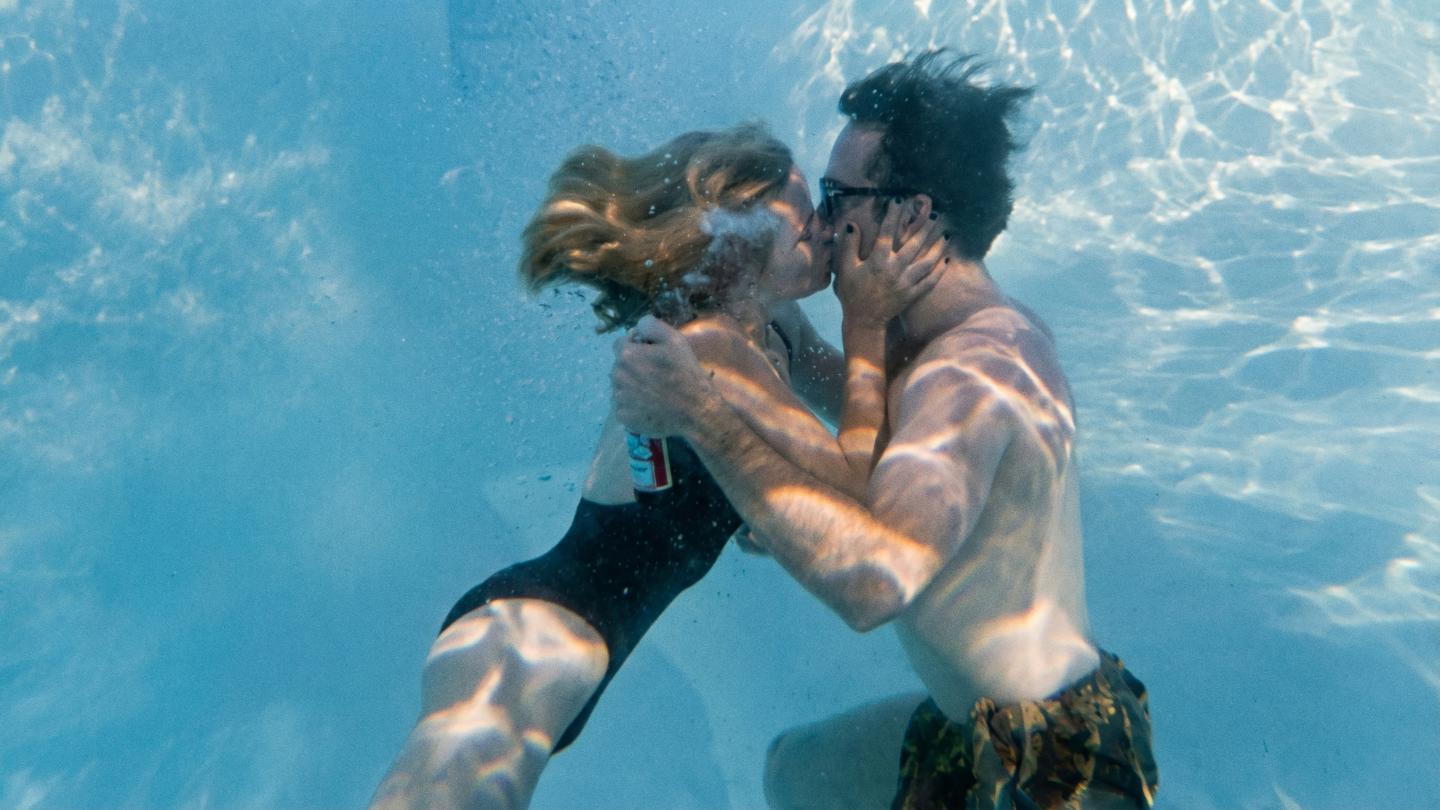 Leaving Las Vegas (1995)Courtesy Studiocanal
We were struggling trying to sell it. Nobody wanted it. The usual suspects: Miramax, Fox Searchlight, everybody turned it down. Until MGM and [executive] John Calley showed interest and started pushing it a little bit. There’s a guy in Vegas who had predicted who’s gonna get an Oscar, and he was always right: he mentioned Leaving Las Vegas. It started to change quite quickly. The Oscar nominations came out and there’s a fucking camera crew outside my very small little house. You go through customs, they check your passport: “Good luck next week, sir.” Bonkers. I know it’s not permanent, because I’m not a 21-year-old. I’ve been through so much performance art bullshit, I not only understand failure, I quite relish it. Success is very strange, but it ain’t permanent.
How do you feel about the film now you look back at it?
I’m grateful, because what happened next was entirely set up by the success of the film. I was critically out and financially. I suddenly get very good paydays for the next couple of movies. I knew that it wouldn’t last forever, because I had two choices. I could either make a lot of money and join the Ridley Scott Club and get a very nice house. Or this is my green light to go back into funky filmmaking, which I knew had a limited economic possibility. But I did milk it for a bit. Timecode [2000] was made possible by the combination of the critical moment, but also the economic moment.
I saw Leaving Las Vegas six weeks ago in Berlin and I hadn’t seen it for a long time. The new print looked pretty good. Sounded great. It’s nice to be able to have that much time to acknowledge. In the present everything’s bullshit. You make a film, somebody says, “I think it’s a work of genius.” Let’s see in 20 years time if it’s got any legs, that’s the only test. The films I watch now tend to have survived at least 30 years. I don’t mind watching them again, I’ll always see something new. Whereas next year’s Oscar nominations have zero appeal to me because the process is so suspect.
Leaving Las Vegas is out on 4K UHD and Blu-ray in a new 4K restoration from 18 May.