
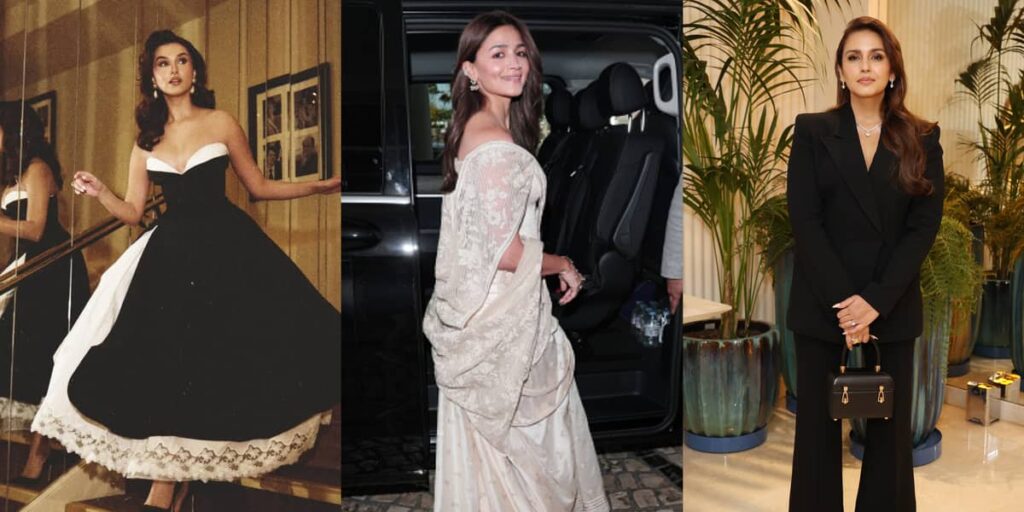
From sculpted corsets and vintage glamour to handwoven sarees and Punjabi-inspired tailoring, the Indian contingent at the 79th edition of the Cannes Film Festival has not come to the French Riviera to play safe. This year’s Cannes has felt less like a red carpet and more like a moodboard for Indian fashion’s global moment. Somewhere between old Hollywood elegance, Indian textile storytelling and a few delightfully dramatic jewellery choices, Indian celebrities have managed to dominate conversations without trying too hard. Well, mostly.
And leading the charge? Alia Bhatt, who has quietly built one of the strongest Cannes fashion diaries by an Indian actor in recent years.
Alia Bhatt
Alia’s Cannes wardrobe this year has followed one clear mood — romance, elevated through couture. Her opening appearance in a peach-toned Tamara Ralph gown with a dramatic plunging neckline and flowing drape immediately set the tone. Soft, elegant and refreshingly free of unnecessary theatrics, the look relied on clean glamour rather than shock value.
Her hand-painted structured ballgown, created by artist Basuri Chokshi and textile artist Yash Patil, turned out to be one of the most striking fashion moments from Cannes this year. Inspired by the French Riviera, the ensemble resembled wearable art without veering into costume territory — imagine lavender fields, sunlit coastlines and couture-level craftsmanship stitched together with remarkable precision.
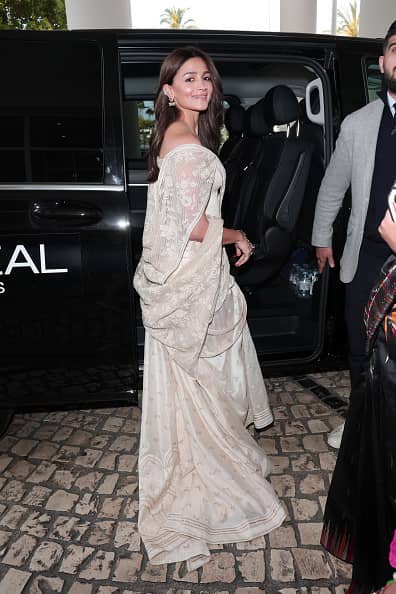
Then came the now-viral Tarun Tahiliani draped concept saree at the Bharat Pavilion. Victorian corsetry met Indian draping, complete with a nath, haathphool and sculpted folds that gave full apsara-meets-period-drama energy. At one point, the internet collectively decided this was exactly what global red carpet fashion should look like when Indian stars travel abroad — rooted but not predictable.
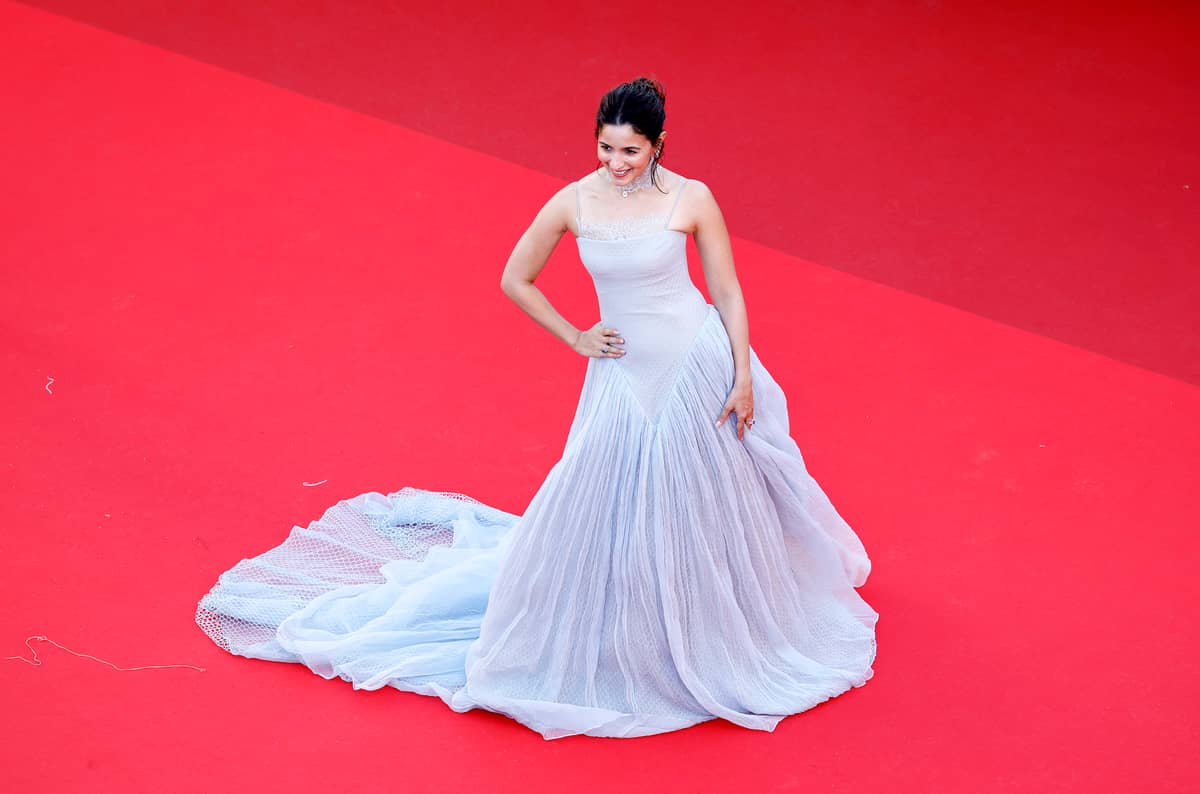
Her pale blue Danielle Frankel gown leaned softer and more princess-coded, layered with lace and organza. While some fashion watchers found it slightly muted for Cannes standards, the styling, diamonds and delicate updo saved the moment beautifully.
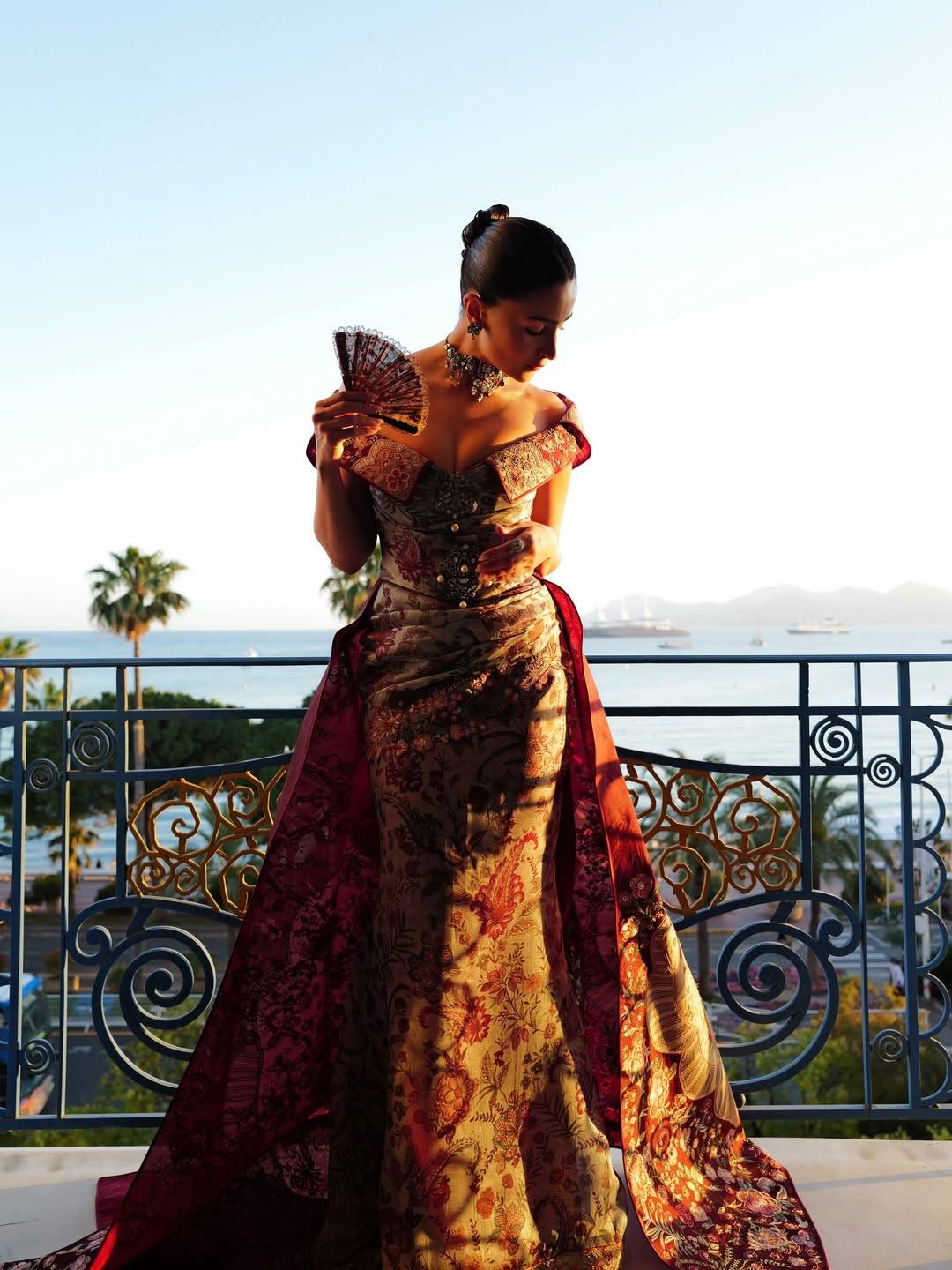
And just when it seemed she had exhausted every variation of romance possible, Alia arrived at a dinner celebration in a burgundy Tarun Tahiliani “corseted chinoiserie” ensemble inspired by archival chintz florals. The sleek bun, deep neckline and diamond bow necklace gave regal Maharani-at-a-European-soirée vibes. Somewhere in the middle of all this, Alia managed to make corsets feel surprisingly wearable.
Tara Sutaria
If Cannes had an award for consistency in aesthetic storytelling this year, Tara Sutaria would probably win it.
Tara’s debut Cannes wardrobe has been unapologetically vintage. No loud theatrics. No “look at me” gimmicks. Just sharply curated old-Hollywood glamour with a modern edge.
Her first appearance in a black-and-white Helsa gown immediately recalled 1950s Riviera dressing. Structured bodice, sweetheart neckline, lace-trimmed hemline, pearl earrings and cat-eye sunglasses — Audrey Hepburn would have approved.
Her second look, an all-black Rhea Costa ensemble with opera gloves and corsetry, shifted into darker, film-noir territory. Add Saint Laurent sunglasses and vintage Chanel earrings, and suddenly Cannes looked like a monochrome thriller.
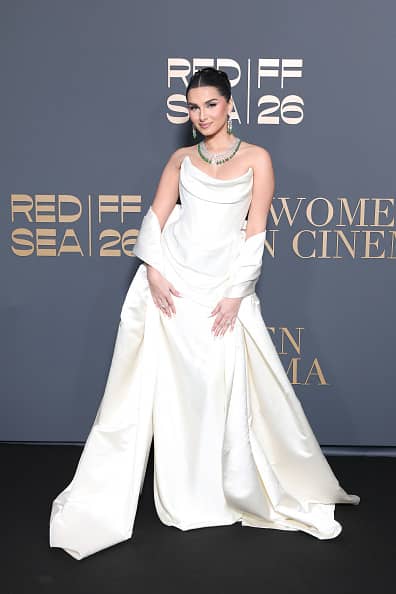
But her standout moment arrived at the Women in Cinema Gala in a white satin Vivienne Westwood gown with signature corsetry. Styled with emerald-and-diamond jewellery, the look was dramatic without screaming for attention. In a festival season increasingly obsessed with viral dressing, Tara’s commitment to timeless silhouettes has been oddly refreshing.
Huma Qureshi
While most celebrities head to Cannes armed with tulle and sequins, Huma Qureshi decided structured denim deserved a luxury moment too.
Her sculpted halter-neck denim dress, complete with a bold gold zipper and hourglass silhouette, brought a surprisingly fresh energy to the festival. It had hints of biker chic, Y2K glamour and old Hollywood styling rolled into one sharply tailored look. The voluminous waves and chunky gold earrings only amplified the bombshell aesthetic.
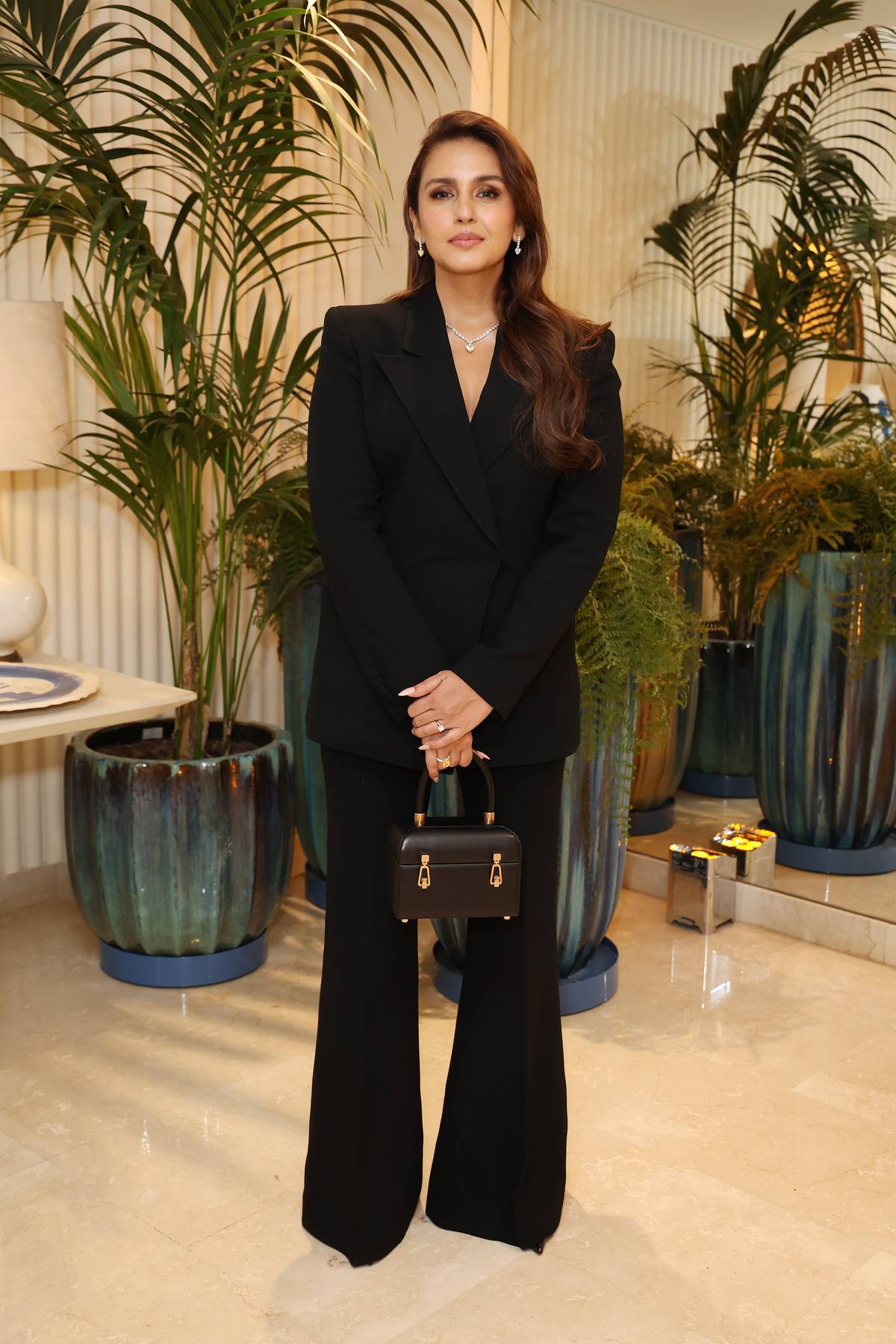
At the Women in Cinema Gala, Huma switched directions with a sharply tailored black Gabriela Hearst suit that focused entirely on clean structure and silhouette. It was less princess fantasy, more powerful executive who accidentally wandered into Cannes looking fabulous.
Aditi Rao Hydari
Aditi Rao Hydari kept things classic with a black-and-white halter-neck gown at a L’Oréal Paris event. Minimal jewellery, soft waves and glowing skin ensured the look stayed elegant rather than overstyled. In Cannes language, that almost counts as rebellion. She is yet to walk the red carpet, but judging by her appearances over the past few years, anticipation is already running high.
The regional stars making fashion matter
Beyond Bollywood, regional Indian cinema and creators have had a particularly strong presence at Cannes this year.
Kalyani Priyadarshan made her debut in a deep purple strapless gown by Indian label Itrh, paired with jewellery by Kalyan Jewellers. Her insistence on going “head-to-toe Indian” felt significant at a festival where global luxury labels usually dominate the conversation.
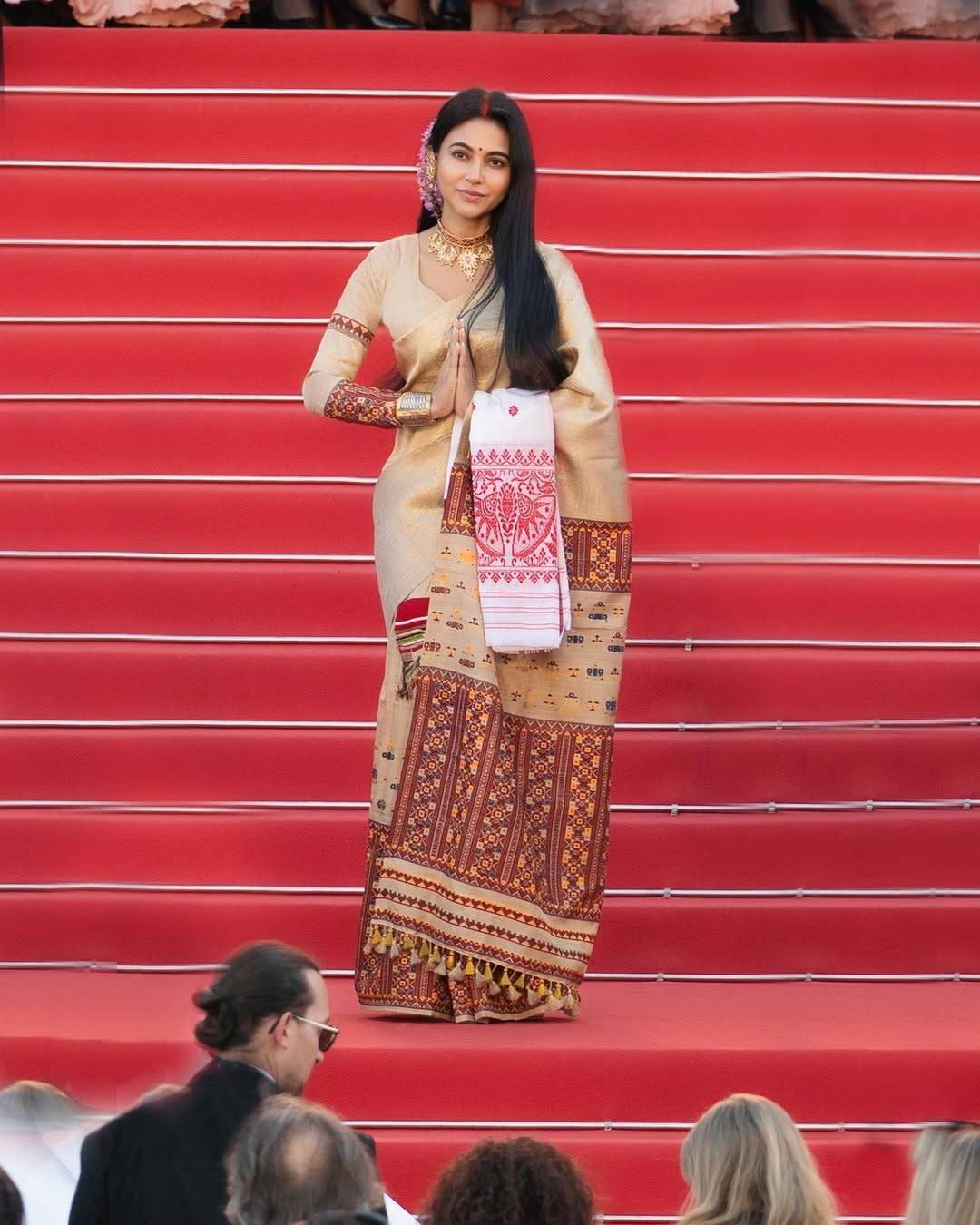
Aimee Baruah continued representing Northeast Indian textiles through traditional Karbi attire from Assam, bringing indigenous craftsmanship to one of fashion’s biggest global stages.
 Aimee Baruah
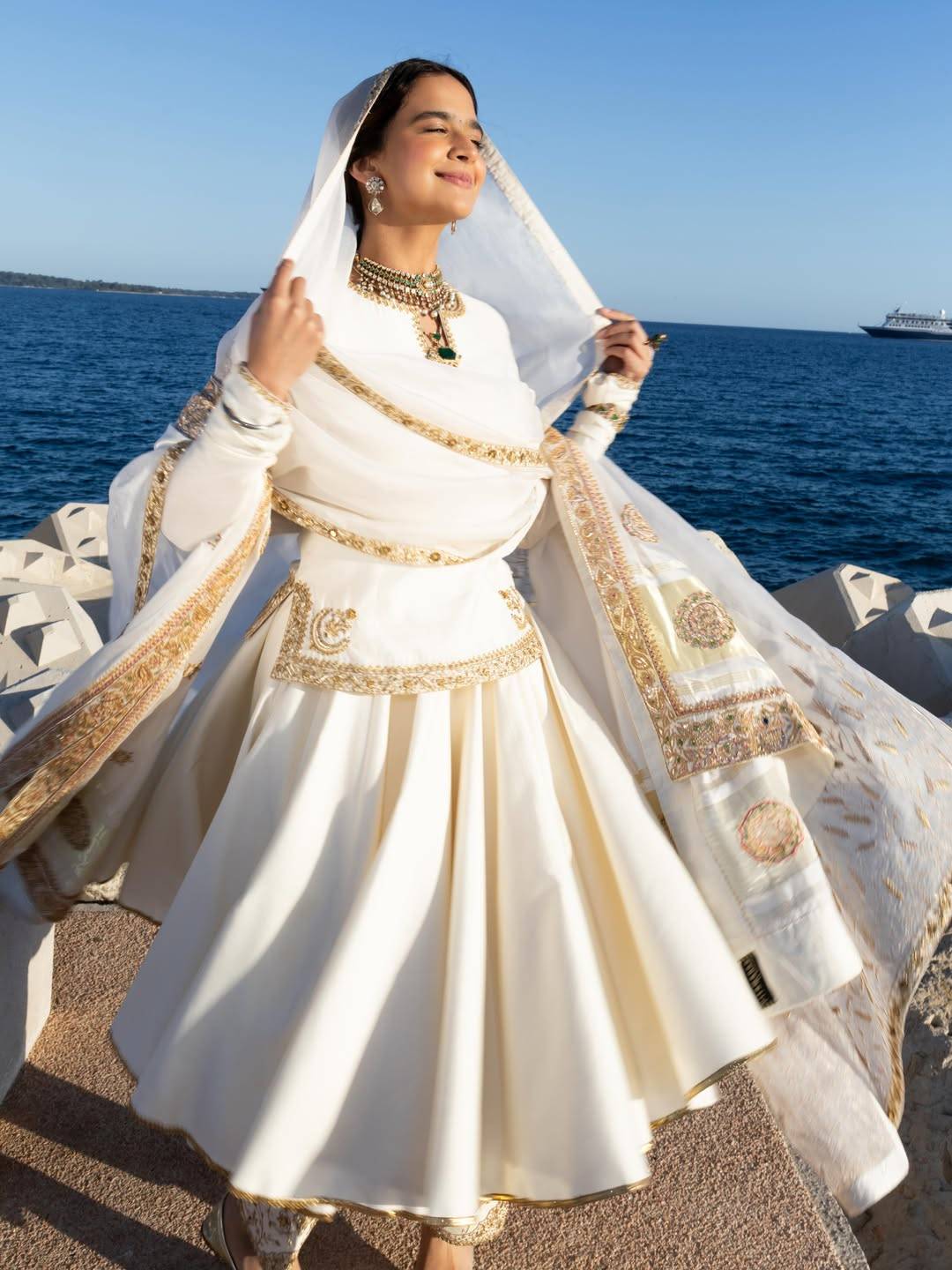
Punjabi actor Roopi Gill also made an impression in an ivory ensemble featuring double dupattas and wheat-inspired motifs celebrating Punjab’s agricultural identity.
 Roopi Gill
The interesting thing about Cannes 2026 is that Indian celebrities no longer seem desperate to “fit” international fashion standards. The mood has shifted. Corseted sarees, handwoven textiles, Indian jewellery, regional craftsmanship and archival fabrics are now appearing beside global couture labels without looking out of place.
There is also noticeably less costume dressing this year (except Urvashi Rautela, of course). The fashion feels more personal, more edited and far more confident. Even when celebrities leaned fully into drama, the styling rarely felt random.
Pictures: Getty Images and Instagram
!function (f, b, e, v, n, t, s) {
if (f.fbq) return; n = f.fbq = function () {
n.callMethod ?
n.callMethod.apply(n, arguments) : n.queue.push(arguments)
};
if (!f._fbq) f._fbq = n; n.push = n; n.loaded = !0; n.version = ‘2.0’;
n.queue = []; t = b.createElement(e); t.async = !0;
t.src = v; s = b.getElementsByTagName(e)[0];
s.parentNode.insertBefore(t, s)
}(window, document, ‘script’,
‘https://connect.facebook.net/en_US/fbevents.js’);
fbq(‘init’, ‘877586283401283’);
fbq(‘track’, ‘PageView’);