
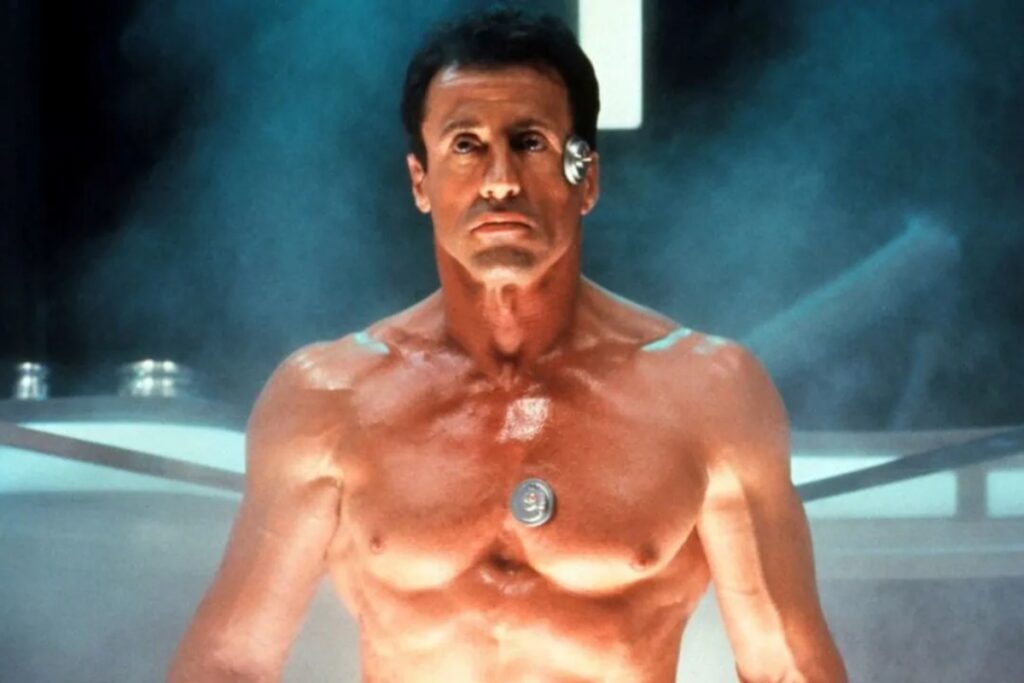
Back in 1993, Warner Bros.’ Demolition Man teamed Sylvester Stallone with Wesley Snipes for a jokey, 1984-esque tour of a sanitized future packed with autonomous cars, cryo-prisons, and tickets for swearing. Here, Mathieu revisits its satire, the infamous “three seashells,” and the filmmakers’ aims amid today’s politics and culture.
Sylvester Stallone and Wesley Snipes crash into a future of spotless streets and strict manners where driverless cars glide past kiosks that fine you for swearing. The pop weirdness is legendary, from cryogenic prisons to the riddle of the three seashells, yet the satire still nips at today’s politics and culture. Mathieu sifts the laughs and explosions for what the filmmakers were really saying, and why their polished dystopia won’t stop provoking arguments. The result is a look at a 1993 spectacle that keeps doubling as a mirror.
A 1993 classic that still sparks conversation
Released in 1993, Demolition Man paired Sylvester Stallone and Wesley Snipes in a vividly sterilized future Los Angeles, where civility is enforced like law. The movie collides high-octane action with sly satire, layering wild gadgets over a society allergic to risk. Three decades on, its predictions and provocations still circulate online and around dinner tables, not least because America keeps catching up to its jokes.
Technology as prophecy: the film’s futuristic features
Self-driving cars slice through traffic. A cryogenic prison freezes problems in place, then thaws them out with unintended consequences. F-bombs trigger instant fines from wall speakers. And yes, the cryptic “three seashells” still beg for a user manual. These bits felt outlandish in 1993. Today, they read like playful sketches of trends we now debate seriously, from algorithmic civility to automated safety.
A lighthearted but sharp critique of control
The film’s humor works as cover for sharper questions. How much order is too much order? Warner Bros. packaged the commentary inside chase scenes, quips, and a candy-colored future where danger is politely deleted. This is the case when culture gets sanded down to prevent offense. The result is a world that looks peaceful but treats dissent like a design flaw, not a civic right.
Understanding the creators’ intent
Director Marco Brambilla’s big-screen debut balances silliness with bite, and that balance keeps viewers guessing. Was it a warning about technological dependence, a ribbing of moral panics, or both? The blend resists a single answer, which is why the film keeps breathing. In addition to Stallone’s gruff time-capsule routine, Sandra Bullock becomes the audience’s proxy, charmed by nostalgia yet wary of chaos.
More than just Stallone vs. Snipes
It is easy to remember the hero-villain duel and forget the mirror aimed at us. The movie runs a fleet 115 minutes, moves like a summer thrill ride, and still leaves space for arguments about freedom, safety, and who gets to decide the line between them. The box office agreed at the time, and repeat viewings have only deepened its cult. In the U.S., it is widely available to rent or buy on major digital stores. That accessibility keeps its ideas in motion, because the future it teased is no longer purely hypothetical.