
 Play Brightcove video
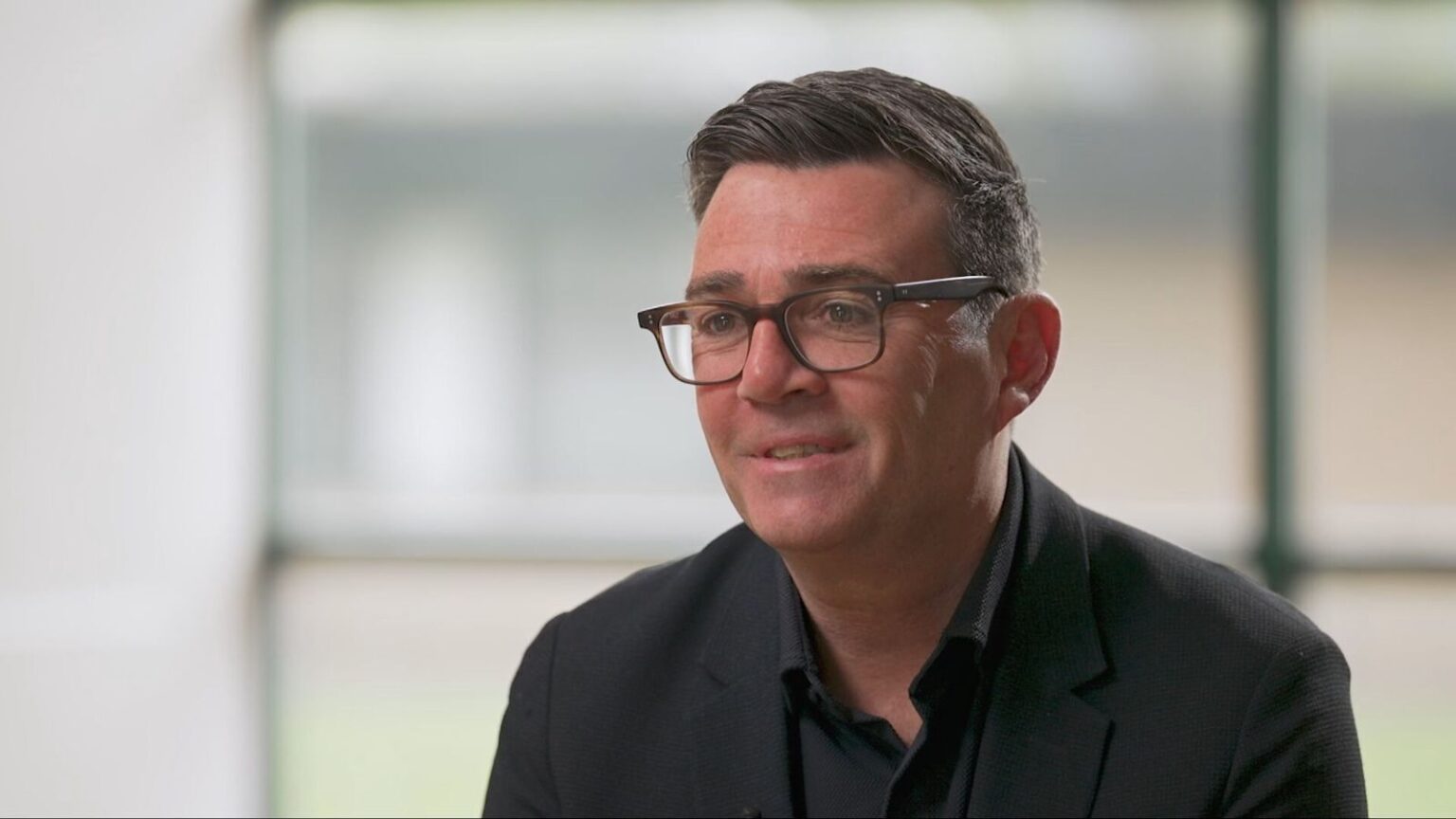
In his first sit-down interview since launching his bid to return to Westminster, Andy Burnham has said becoming an MP would be the “first stage” in his fight to change Labour and the country.
Burnham is widely expected to launch a leadership challenge against Keir Starmer, if he wins the by-election in Makerfield later this year.
Asked if he wanted to be the leader of the Labour Party, Burnham said: “I will take that fight as high as I can take that fight, because I think the country does need to change,” he told ITV News’ Daniel Hewitt.
“I’ve indicated that always in my role as Mayor, that one day I will seek to return to Westminster. So I’m saying that now and I don’t know whether people here feel that that’s something they want to support, but that is the first stage and I’m not getting ahead of myself.” “It’s for others to decide as well whether I’m the person to lead that fight forward. I want this by election to be a change moment for British politics.”
Prime Minister Sir Keir Starmer and Andy Burnham. Credit: PA
Burnham spoke on Saturday with ITV News in Makerfield, a constituency on the border of Greater Manchester and Merseyside. It is the Mayor of Greater Manchester’s first interview since he was cleared to run as a candidate in the by-election by the Labour Party’s ruling body the NEC – after the current MP Josh Simmons quit to make way for him to stand. Asked why, when he has spent the past decade being critical of Westminster, he wants to come back, Burnham said he thinks country is broken. “Everyone can feel that the country’s not working, it’s not where it should be and politics isn’t working. It works for some people in some places, but not all people in all places.”
If he wins the by-election and becomes an MP, Burnham is widely expected to mount a leadership challenge against Sir Keir Starmer. It is expected the by-election date will be set on June 18, with some reports suggesting Burnham is looking to become leader by summer. Amid widespread rumours he is ultimately set to launch a bid for Number 10, Burnham refused to answer whether he had confidence in Keir Starmer as Prime Minister. “I’ve always worked with [Starmer] and I do have, you know, confidence in him as a person,” he said. In a bid to distance himself from the current government, Burnham also refused to say whether he wants Starmer to join him on the doorstep, insisting he is running a “different campaign” to the Prime Minister. “I’m saying different things to a degree, in terms of what the government has been saying. “If people want to come and join the campaign, then, you know, [they can] but I’m not saying everybody must come and join […] because it is a different campaign.” “I’m standing on a call for change aren’t I? I think we need to change Labour to some degree so we can change politics, change the country.”
Despite the fact he is not yet an MP, Burnham is widely seen as the favourite in a race that could include the former Health Secretary Wes Streeting and former Deputy Prime Minister Angela Rayner. Burnham praised Rayner, who he called his “close friend” – and the other potential front-runners Streeting and current Energy Secretary and former Labour Leader Ed Miliband. “All through my career I’ve supported Angela. I’m close friends with Angela,” he told ITV News. “Wes Streeting is an incredibly capable politician, as is Keir, as is Ed Miliband. And as you know, there’s so many.” But he will first have to win in Makerfield – which is not an easy challenge. The parliamentary seat is currently held by Labour but Reform UK came second in the 2024 General Election, and have recently been gaining support. In nearby Wigan, Reform took 24 out of 25 seats up for grabs in the local elections last Thursday. Despite their political differences, Burnham said Farage had always been “perfectly friendly”. “I’ve only met him a couple of times. I. He was perfectly, you know, friendly”.
“I get on with people, I try and work with people, but obviously I don’t agree with his political views.” Burnham was upfront about the challenge Farage’s party poses to Labour. Asked if he understood why people were voting for Reform, he said: “100%.”
“Because my party and other parties have let them down. We’ve got to a point where life has become unaffordable and the status quo just hasn’t delivered for them. And they’re sending a message, aren’t they? And rightly in my view that, you know, this just isn’t good enough.” “It’s time for politics to respond to that message rather than promising breakfast clubs or this, that and the other. No, I’m saying to you, Dan, we’ve got to now hear what they’re saying.” For Burnham, it seems time has come to “take it on”. The challenge of beating Reform – and fixing his party. “So, yeah, there’s an element of risk. But, you know, I’ve taken the view that the time has come for me to some ways, you know, take it on and say, here’s what I think.”
Unlike former Green Party leader Caroline Lucas, Burnham won’t be calling for other parties on the left of British politics – the Greens or Liberal Democrats – to stand aside. “I’m not going to sort of sit here today and pontificate about what other parties should do in this by election. That’s honestly up for them” he told ITV News. “I will only just focus on what we need to do. There’s always an element of that. But the main thing is being really clear myself in what I am saying and why I believe that hopefully should be worthy of people’s trust and support. So that’s the approach I’m bringing to this.”
Subscribe free to our weekly newsletter for exclusive and original coverage from ITV News. Direct to your inbox every Friday morning.
Over the course of the interview, Burnham elaborated on how he feels the Labour government, under Sir Keir Starmer, has failed to change the country in the ways he thinks are needed. He sees Britain’s current course as one of decline. “I think Britain started on a path in the mid-1980s that is the path that has led us to where we are today. It started with de-industrialisation in these parts. I was growing up here, the miners strike, this was a mining area and that was devastating. As well as the loss of other industry, de-industrialisation, deregulation. “For me we need a different path that puts those things back under public control, makes them more affordable. “The path that Britain has been on for 40 years, in my view, has been the wrong path. It’s taken us to this place where people can’t afford life’s basics, they can’t afford a few pints at the weekend, they can’t afford a holiday. And that’s why they’re saying to politicians, do better. This is not good enough. And they’re right to say that. I’m saying there’s a new path here, new politics to build a new economy for Britain.” “That is the main question in this by-election. Are people happy to stick on the path that Britain’s been on for 40 years or do we want new path?”
He has previously signalled he would support Britain rejoining the EU. He said it was not a focus for this by-election – but didn’t completely shy away from what he called a longer term case. “In the long-term there is a case for that, but I’m not advocating that in this by-election. In fact, what I am saying is focus now domestically. Britain has got to focus very much on the here and now and the issues that are affecting people.”
Burnham has faced tough questions about what his potential policy platform of increased public ownership could mean for market stability. Borrowing costs jumped to an 18 year high on Friday – the same day that Labour leadership speculation hit new highs with rumors of a potential Burnham challenge to Starmer. On Saturday, Burnham insisted his economic plan was credible and that he would stick to the current fiscal rules.
“Number one, I have never said you can just ignore the bond markets,” he insisted. “I said that politicians have placed Britain in hock because of the way in which we lost control of our finances and public spending. And that goes back to what I said to you before when we, if you like handed away control of energy, water, housing, that has left Britain in a weak position when it comes to public spending. You can’t. “How can you control public spending if you’re chasing rents in the private rented sector through the benefits system. How can that be done? “Let me say this really clearly. I support the fiscal rules. There needs to be a plan to get debt down, but beyond that, we need to change politics and take the turbulence out of British politics because that is a cause of uncertainty that then has that impact in the markets.”
From Westminster to Washington DC – our political experts are across all the latest key talking points. Listen to the latest episode below…