
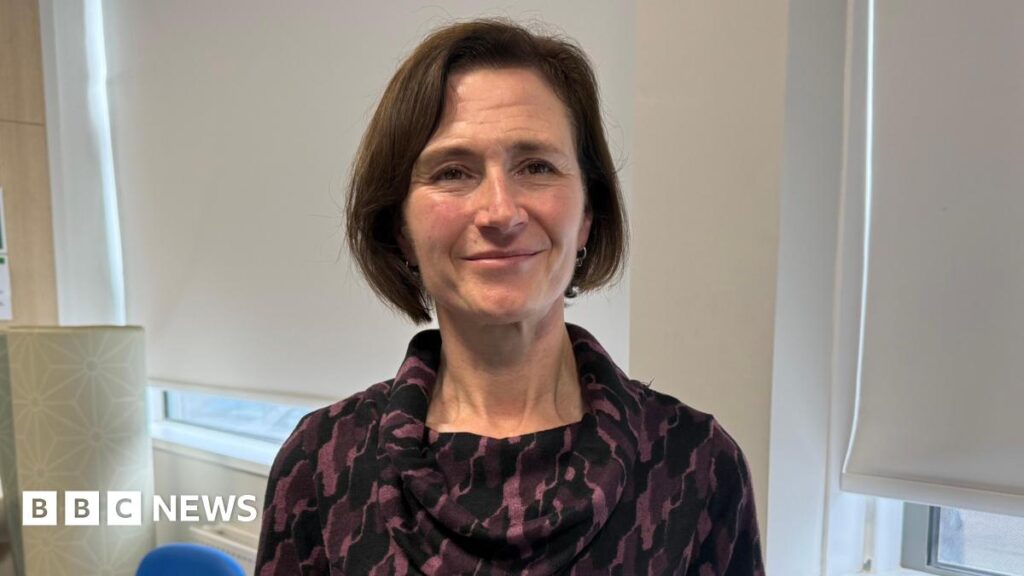
“When I was in hospital and they said you’ve lost your language, I knew what the word language meant,” said Morris, from Cardiff.
“But how could I lose my language? Because in my mind I still had all the words.
“My speech therapist has given me a chance to rejoin the world because when you have aphasia, external you’re in your own mind and it’s really hard to find the words.”
Morris was a barrister and a law professor, whose work was her life.
But after the accident seven years ago, she went from being an articulate and commanding speaker to not having a voice.
She also went from reading legal documents to children’s Ladybird books.
Aphasia is a condition that makes it difficult to communicate, affecting speaking, reading and writing, and often follows a stroke or brain injury.
Morris was at Llandough Stroke Unit for three months where she had to learn to speak all over again.
After being discharged from hospital, she continued to have speech language therapy at home.
“When you grow up, talking is automatic, but when you lose it again as an adult, it isn’t because your brain is trying to find the right word to get a sentence out so it is very tiring,” Morris added.
“When they say you have recovered your speech, I think I haven’t recovered my speech at all because my speech is totally different.
“Because you’re always having to find different words and you have to go around the houses to say what you want because you forget the words, so you do feel you lose some of your identity.”