
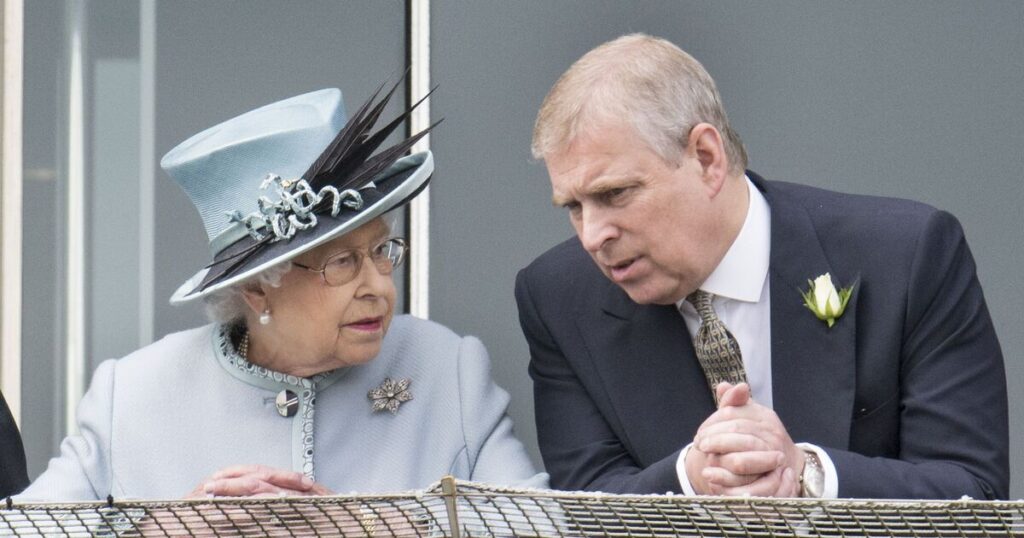
The late Queen Elizabeth was “very keen” for her son Andrew Mountbatten-Windsor to take on a “prominent role in the promotion of national interests”, and specifically asked for him to be appointed as UK trade envoy, new documents reveal. Then-chief executive of British Trade International, Sir David Wright, said in a memo that the monarch saw her son as being “a natural fit” for the job.
In a memo to the then-foreign and trade secretaries on 25 February 2000, Sir David Wright wrote: “The Queen’s wish is that the Duke of Kent should be succeeded in this role by the Duke of York. The Duke of Kent is to relinquish his responsibilities around April next year. That would fit well with the end of the Duke of York’s active naval career.
“The Queen is very keen that the Duke of York should take on a prominent role in the promotion of national interests.
“No other member of The Royal Family would be available to succeed the Duke of Kent. The Duke of York’s adoption of his role would seem a natural fit.”
At the time of writing, the late Queen’s cousin, Prince Edward, Duke of Kent, often represented British trade interests abroad in various related roles.
Lib Dem leader Sir Ed Davey asked the Government to release all papers related to the Government’s creation of the role of special representative for trade and investment and Mountbatten-Windsor’s appointment to it in 2001. It is supposed to include advice regarding Andrew’s suitability for the appointment, due dilligence and vetting by Tony Blair’s Government.
Andrew’s role as trade envoy gave him access to senior Government and business contacts worldwide. He stepped down from the role in 2011 when he came under fire for his links to Epstein.
He received no salary for travelling around the world and for promoting Britain’s business interests at home, but he faced criticism for the thousands of pounds spent each year on his expenses and travel.
A ministerial statement on the publication of the files is also expected on Thursday afternoon.
The Department of Business and Trade was leading the work to trawl through records spanning “multiple legacy bodies and formats”, trade minister Sir Chris Bryant said in March.
“We have established a process with the Cabinet Office and Thames Valley Police to ensure that any material released does not prejudice the police investigation,” he said at the time.