
Another edition of the Cannes Film Festival is nearing its end, and as we’ve come to expect from arguably the film calendar’s most prestigious event, a whole host of stellar new films have debuted.
This year, I was lucky enough to attend the festival on behalf of Radio Times. I managed to squeeze in 26 screenings in seven days, in addition to two other films from the programme I’d seen previews of before arriving on the Croisette.
Much had been made ahead of the festival about the relative lack of major American studio films in comparison to previous editions, but there was plenty to feast on from the world of cinema.
I saw films from everywhere, from France to South Korea and Morocco to Costa Rica, and while there were one or two duds in the line-up, the vast majority of films were fascinating and in some cases truly masterful.
If you’ve ever wondered what it’s like to attend the festival, you can rest assured that it’s pretty hectic and – as you’ve probably heard – standing ovations are a very common feature. In fact, just the Cannes Film Festival logo got a round of applause in just about every screening I attended!
Anyway, I’ve rounded up 11 highlights I saw at the festival below, with the caveat that a couple of major films, such as The Man I Love, premiered after I’d left.
But in no particular order, here are my standouts to add to your watchlist ahead of their eventual UK releases.
Want to see this content?
Accept and continue
11 films from Cannes Film Festival 2026 you need on your watchlist1. Teenage Sex and Death at Camp MiasmaWant to see this content?
Accept and continue
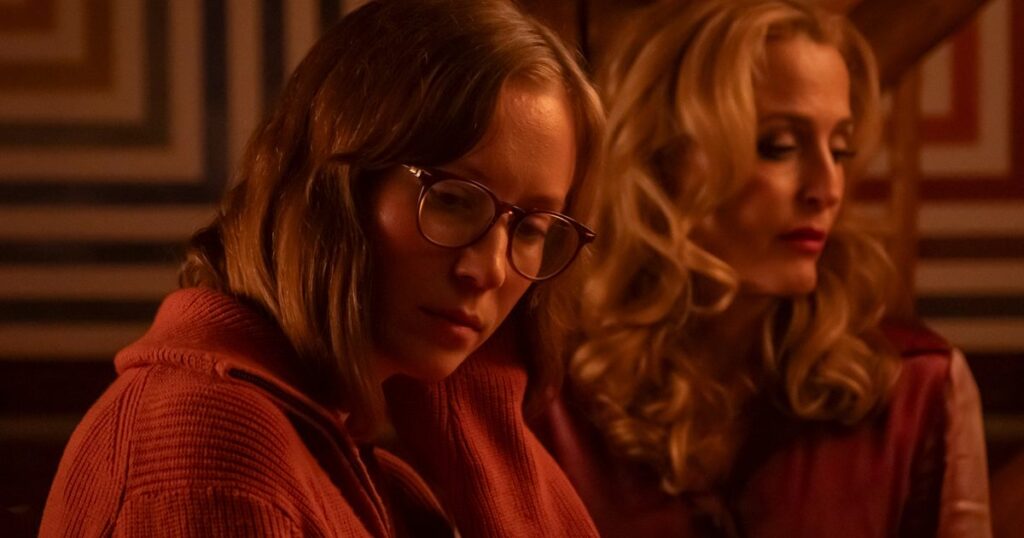
After showcasing an incredible talent for creating spellbinding, dreamlike works with both their first two features (We’re All Going to the World’s Fair and I Saw the TV Glow), hopes were high for Jane Schoenbrun’s third film as writer/director – and it’s safe to say those expectations have been well and truly met.
The slasher-inspired Teenage Sex and Death at Camp Miasma opened the Un Certain Regard strand of the festival and was greeted with a succession of rave reviews, being labelled an instant cult classic.
The film stars Hacks’s Hannah Einbinder as an emerging queer filmmaker attached to reboot the fictional Camp Miasma slasher franchise, who travels to meet the original’s now largely forgotten final girl (Gillian Anderson) at her home on the set of the first film.
What follows is a mesmeric and evocative experience that merges fantasy with reality to explore themes relating to art, identity, sexuality, desire and otherness. It’s an endlessly engaging and often very funny film, equipped with arresting imagery, gorgeous design and no shortage of gleeful gore.
Read our full Teenage Sex and Death at Camp Miasma review
2. Hope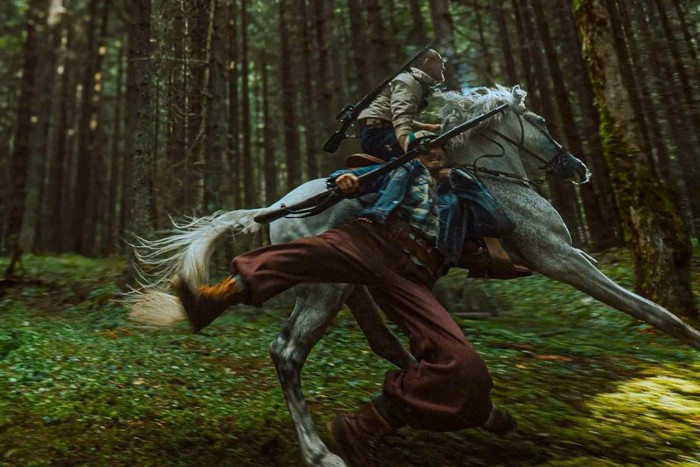
Hope NEON
The last film from South Korean director Na Hong-jin was the creeping, occult-themed horror epic The Wailing – released to rave reviews a decade ago – but his latest effort is a very different sort of genre picture.
In fact, this film is very different from just about any film ever shown in the Cannes competition line-up – a creature feature blockbuster that’s an all-action experience from beginning to end. It follows the crazy events in a village located near the heavily fortified Demilitarized Zone (DMZ) when it comes under attack from a mysterious and terrifying threat.
While the film is not without its flaws, including some pretty shoddy CGI, it’s riotously entertaining enough – and completely bonkers enough – to overcome those drawbacks.
The cast is mainly Korean, with key roles for Hwang Jung-min and Squid Game’s Jung Ho-yeon, but there are also parts for major Hollywood stars Michael Fassbender and Alicia Vikander. To say that the married pair are unrecognisable is an understatement.
Read our full Hope review
3. Fjord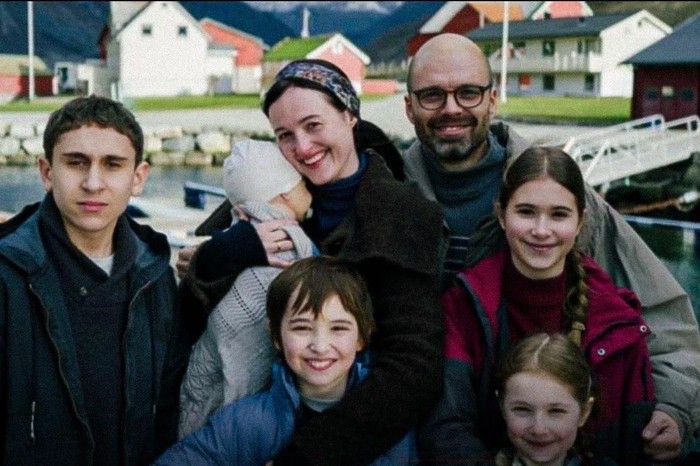
Renate Reinsve and Sebastian Stan in Fjord NEON
Acclaimed Romanian auteur Cristian Mungiu previously won the Palme D’Or for his 2007 film 4 Months, 3 Weeks and 2 Days, so the prospect of him collaborating with two recent acting Oscar nominees in Sentimental Value’s Renate Reinsve and long-time Marvel star Sebastian Stan was always an exciting one. Thankfully, this Norway-set film lives up to that promise.
It’s a knotty, complex moral tale that functions both as a fascinating conversation piece and a first-rate work of thoroughly engrossing drama, exploring events when the couple, Lisbet and Mihai Gheorghiu, relocate with their five young children from Romania to a small village in the former’s Norwegian homeland.
Although they are initially welcomed with open (if privately suspicious) arms by their amicable new neighbours, it doesn’t take long before their deeply conservative religious values see them rub people up the wrong way. Soon, their children are taken away by child services after possibly spurious accusations of child abuse from one of the teachers at the local school.
What follows is a transfixing drama that poses several thorny questions, with Mungiu’s sharp dialogue and unshowy direction – full of long takes and visually interesting blocking – expertly drawing us into the case. It’s all richly compelling stuff – a culture war drama that’s provocative without being sensationalist.
Read our full Fjord review
4. FatherlandWant to see this content?
Accept and continue
Pawel Pawlikowski is another acclaimed director whose latest project was hotly anticipated at the start of the festival, and the Polish filmmaker delivered a fascinating film that forms a spiritual trilogy with his two previous efforts, Ida and Cold War.
It’s a finely-tuned, typically accomplished piece of work that follows revered, Nobel Prize-winning German novelist Thomas Mann (Hanns Zischler) and his daughter Erika (Sandra Hüller) as they travel across Germany in 1949, attending celebrations to honour the author in both the West and East of the then newly divided nation.
Over the course of their journey, we regularly find the pair driving past bombed out buildings and destroyed infrastructure, with the film making the case that – barely four years on from Nazi rule – it’s not just physically but emotionally and morally that the country and its citizens continue to lie in ruin.
The leading performances are both stellar, and though at barely 80 minutes long, it’s perhaps a little slight, this is a bleakly atmospheric tale that leaves the audience with plenty to chew on.
Read our full Fatherland review
5. All of a Sudden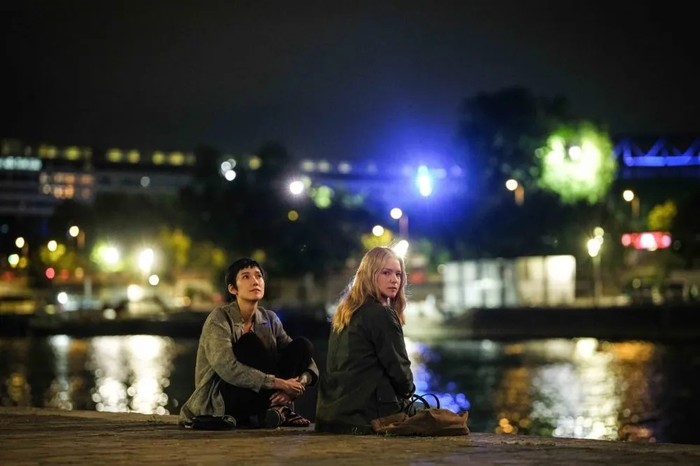
All of a Sudden Festival de Cannes
If Fatherland is a little slight, the same can not be said for this masterful new film from Japanese writer/director Ryusuke Hamaguchi (Drive My Car), which unfolds across more than three utterly captivating hours.
French actress Virginie Efira turns in a simply wonderful performance as the director of a Parisian nursing home who has a chance encounter with a Japanese playwright, Mari Morisaki (Tao Okamoto). She ends up quickly forming a deep and meaningful connection with her after learning that her new friend is suffering from a terminal illness.
It’s a deeply compassionate and quietly radical film that makes the case for kinder, gentler human relationships, and it somehow accomplishes that task without slipping into mawkish or twee territory.
Hamaguchi has a magical ability for crafting lengthy dialogue scenes between characters that never become dry or patience-testing, and this continues a mightily impressive streak for the director.
6. Tangles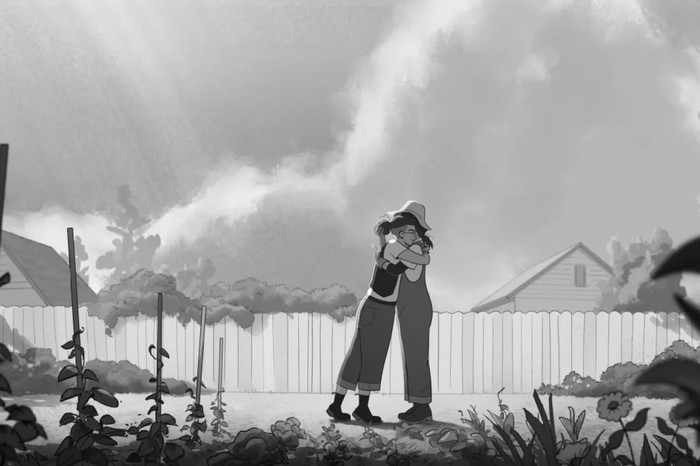
Tangles
This moving debut feature from filmmaker Leah Nelson played in the Special Screenings section and is up there with the very best films the festival had to offer.
A profoundly affecting portrait of Alzheimer’s, it is based on the autobiographical graphic novel by Sarah Leavitt and follows 19-year-old Sarah, who is just starting to adjust to her new life in San Francisco when she learns that her mother is suffering from the illness.
The film is gorgeously animated, almost entirely in monochrome, save for some striking flashes of colour which normally appear in the bold, imaginative and sometimes surreal sequences that allow us a peek into Sarah’s imaginative headspace.
Meanwhile, the starry voice cast – including Julia Louis-Dreyfus, Abbi Jacobson and Seth Rogen – all deliver terrific performances. It’s a real triumph – a film that, though devastating, is not without moments of true beauty.
7. Minotaur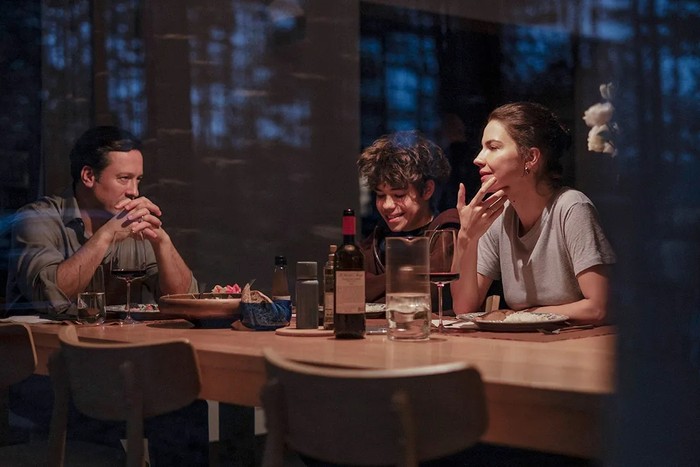
Minotaur Cannes Film Festival
Russian filmmaker Andrey Zvyagintsev hadn’t made a film since his very well-received Loveless in 2017 – at least in part due to a severe Covid-related illness. But he made an acclaimed return to Cannes with this bleak noir-tinged film about political corruption in his homeland.
An adaptation of the 1969 Claude Chabrol film The Unfaithful Wife – which also inspired Adrian Lyne’s 2002 Unfaithful starring Diane Lane and Richard Gere – but transposed to modern Russia against the backdrop of Putin’s war, it’s a serious, at times very cold film with an excellent pay-off following a patient build-up.
Zvyagintsev, who now lives in France, shot the film in Latvia, given that its fiercely critical stance on the Russian authorities would have made it impossible to make in Russia. The result is an honest, angry, riveting film that could well win the festival’s top prize.
8. Club Kid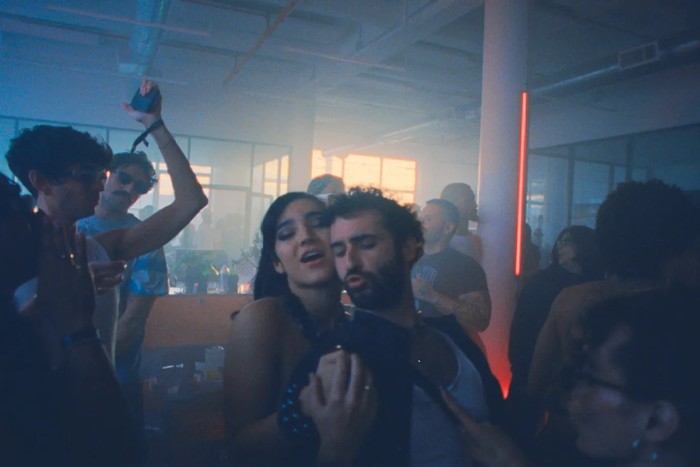
Club Kid Adam Newport-Berra
This directorial debut from Jordan Firstman – a comedian who rose to fame for posting skits to Instagram Live during the pandemic – is probably the biggest breakout hit of the festival, selling to A24 for $17 million.
It’s easy to see why it attracted such a bidding war: this is a hilarious, heartwarming and very likeable film that follows a washed-up party animal (played by Firstman himself) after he suddenly discovers he has a 10-year-old son he hadn’t previously known about.
When he is forced to become the child’s main caregiver, plenty of hilarious antics ensue as Firstman’s character is forced to adapt his wild lifestyle to his new parental duties, and he slowly realises that fatherhood is more rewarding than he could ever have possibly imagined.
9. Everytime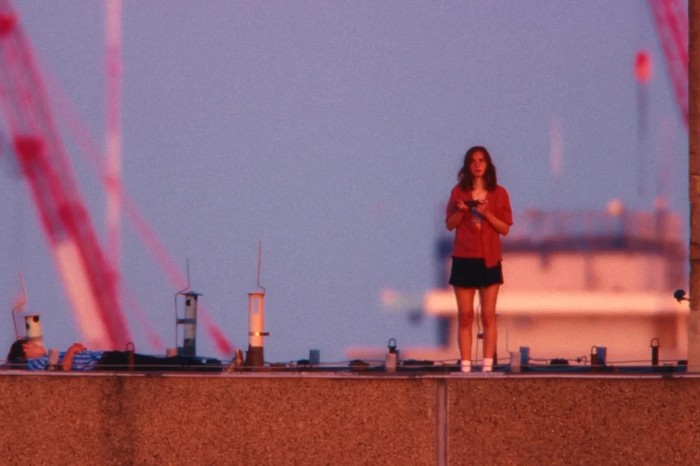
Everytime Cannes Film Festival
Sometimes you watch a film that unexpectedly blows you away, and Everytime very much fit that description for me at this year’s festival. Written and directed by Austrian filmmaker Sandra Wollner (The Trouble With Being Born), it played in the Un Certain Regard section and was arguably the very best film I saw at Cannes.
It explores events after an avoidable tragedy leads to the death of a teenage girl, with the film following her mother, younger sister and boyfriend in the aftermath of the disaster as they come to terms with their terrible loss.
It’s a piercing and poetic portrait of grief that transforms into something much stranger in its final act. Beguilingly odd but profoundly resonant, the film shares a cinematographer (Gregory Oke) with Aftersun and is every bit as achingly beautiful.
10. The Unknown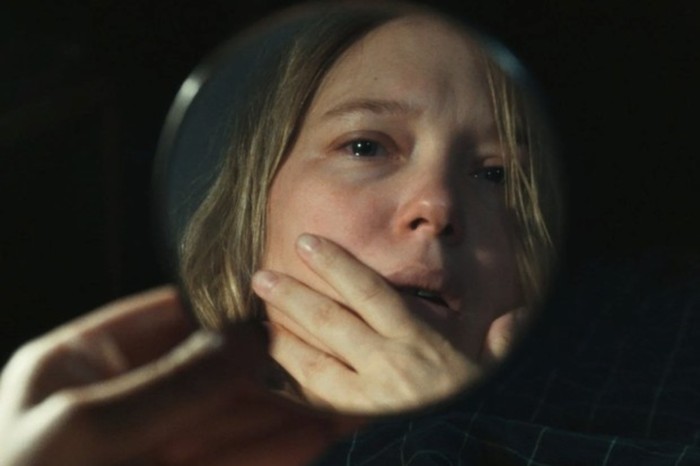
The Unknown Cannes Film Festival
Another of the stranger films in the selection, this unusual body-swap fantasy was part of the competition line-up and is the third feature of director Arthur Harari, who was also a co-writer of the 2023 Palme d’Or winner Anatomy of a Fall.
It stars Lea Seydoux and Niels Schneider as characters who fall victim to a bizarre entity that causes people to swap bodies after having sex, which leads to plenty of existential musing on the nature of identity.
The film could arguably have been a little tighter, and certainly meanders at times, but on the whole it’s an extremely compelling and fascinating watch anchored by a pair of terrific leading performances.
11. Words of Love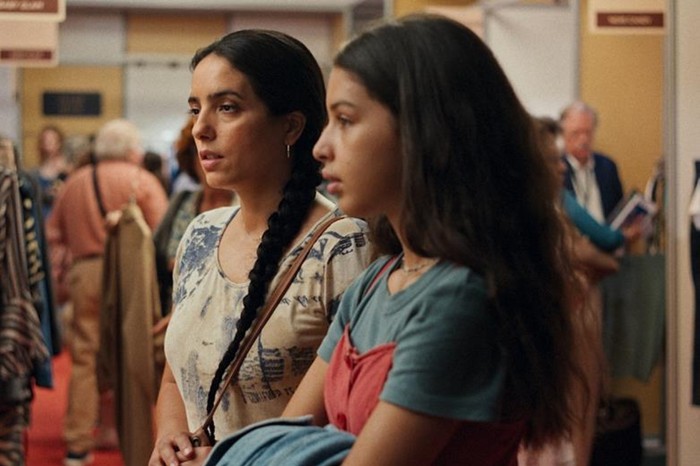
Words of Love
Finally, another film from the Un Certain Regard section, this feature from Rudi Rosenberg follows a teenager as she tries to get in touch with the father she has never known – and frequently fails in her ambitions.
While that might make it sound like a serious drama, this is actually a light-hearted and very funny film, with much of the comedy coming from the delightful supporting characters, including her perfume-obsessed younger brother and an excellent dog named Vanilla.
It’s not the most adventurous film in the line-up, but few can match it for heart and pure enjoyment factor – with the film achieving a nice dose of sentimentality without dipping into anything overly cheesy.
Check out more of our Film coverage or visit our TV Guide and Streaming Guide to find out what’s on. For more TV recommendations and reviews, listen to The Radio Times Podcast.