
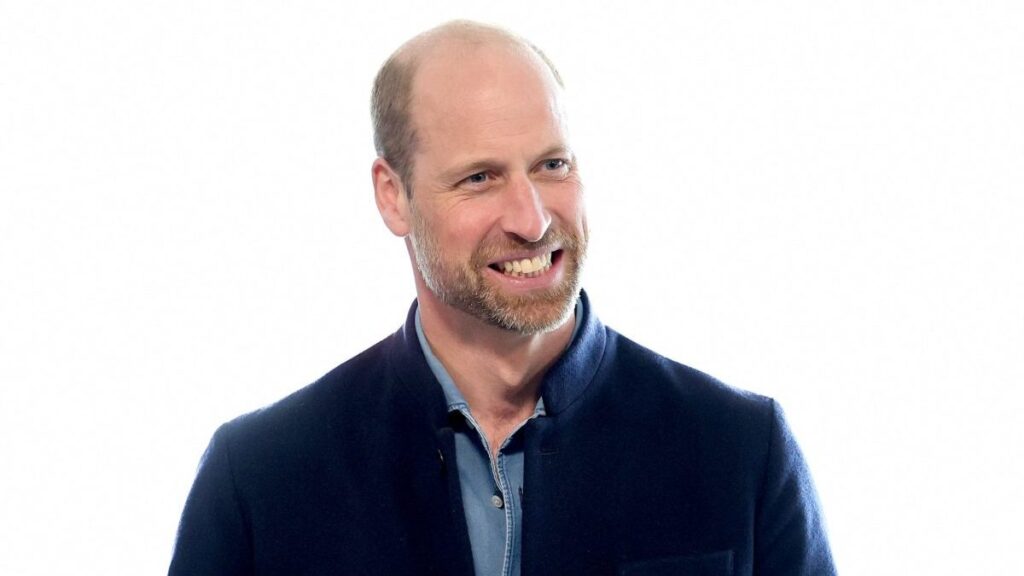
Prince William is on a charm offensive. He is putting his best foot forward to make the monarchy more tangible and charitable to us average Joes.
In an interview with The Sunday Times, William attempted to address criticism of shocking oversights that meant the Duchy of Cornwall (the financial estate owned by the sitting Prince of Wales) was charging lifeboat stations, NHS hospitals and schools rent. During a visit to new social housing projects funded and built by the Duchy, he said he wants the £1-billion estate to be a ” force for good”.
Alongside his father’s push to slim down and modernise the monarchy, the strategy seems to be working – the institution remains broadly popular. According to YouGov, nearly two-thirds of Brits want to keep the monarchy, and six in ten think it is good for the country.
There is, however, one exception. Among 18- to 24-year-olds, just 39 per cent think the monarchy is “good for Britain”, making it the only age group surveyed without majority support.
For Gen Zs like me, the Royal Family does not act as the same social glue that it does for older generations. Our introduction to the monarchy has been a scrappy series of public barneys and PR missteps. Primed on a diet of brainrot and episodes of The Crown, we have watched “Megxit” unfold on Oprah, spread “Katespiracies” on X – and pondered visits to Pizza Express in Woking.
Yes, older generations lived through the Annus Horribilis, the War of the Waleses and Sarah Ferguson’s “toe-gate”. But there was a steady hand on the tiller in the form of the late Queen, whose dignified gravitas enabled her to remain above it all. Gen Z is slightly less likely to view her favourably than older generations, but she is still overwhelmingly popular, with 72 per cent having a favourable view.
By contrast, King Charles has not had time to build up the level of stature enjoyed by his mother during her 70-year reign. He is also tainted by his own colourful past – as it’s hard to respect a King who once said he wished he were his mistress’s tampon. Therefore, it is unsurprising that 18- to 24-year-olds are the only age group with a net-negative view of him.
The single biggest challenge to the Royals’ legitimacy is, of course, the succession of scandals that Andrew Mountbatten-Windsor has left in his wake. Charles and William have attempted to stem the possible contagion to their reputations by vehemently distancing themselves and booting him out of his mansion. But there is one aspect of this that no number of public statements and heartfelt wishes to victims can fix: Mountbatten-Windsor, who has always denied any wrongdoing, was living his life of luxury, immorality and alleged criminality on the public dime.
As a recipient of the Sovereign Grant and expenses from his role as Trade Envoy, the state was lining his pockets – even if he protested many times, it wasn’t enough. Mountbatten-Windsor has now been cut off from the public purse by his relatives Charles and William, but the damage remains. He has collectively mugged us off.
Mountbatten-Windsor may have drawn a spotlight to it, but the sense of unfairness that we as taxpayers subsidise the Royals’ lavish lifestyles extends beyond Mountbatten-Windsor. Just 7 per cent of 18 to 24-year-olds surveyed by YouGov said they thought the Royal Family were “very good value for money” when comparing the Sovereign Grant to the role they play for the country.
As the first generation growing up confidently worse off than our parents, the contrast is jarring. Our wages and living standards have stagnated while housing costs have spiralled.
For our parents and grandparents’ generations, the Royal Family provided a welcome distraction from the mundanity of everyday life. This was because many of these events captured the aspirations of the era in which they happened. Hopeful for better lives, many of the postwar generation bought their first TVs to watch the Queen’s coronation; Boomers marvelled at Princess Diana’s poofy but fashion-forward 80s wedding dress and Gen Xers shed real tears at her death; millennials bought into the meritocratic fantasy when commoner Kate married her prince.
But now, rather than being a distraction from a turbulent world, the chaos surrounding the Royal Family mirrors that instability. It has highlighted just how much of an anachronism a hereditary monarchy in the 21st century really is. William may be attempting to modernise it quickly, but for Gen Zs like me, it will take something spectacular to elicit more than a characteristic eyeroll.