
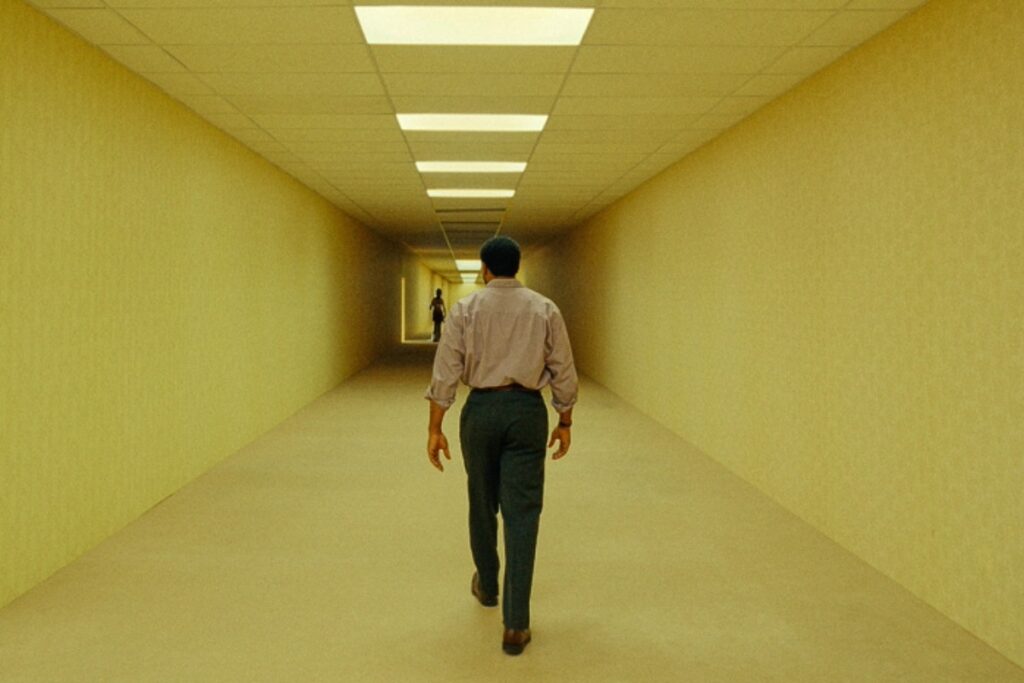
$81 million for 20-year-old Kane Parsons’ Backrooms made it A24’s biggest opening and the weekend’s No. 1. Curry Barker’s Obsession reached $26 million in its third frame, a rarity since E.T. in 1982, as the $10 million and $750,000 chillers beat the softer start of Star Wars: The Mandalorian and Grogu despite a $165 million-plus budget.
Two shoestring horror projects just stole the weekend from a galaxy-sized franchise. Twenty-year-old Kane Parsons turned his analog-horror phenomenon into Backrooms, a $10 million chiller that stormed to an $81 million debut, setting a new A24 opening high. Curry Barker’s Obsession kept surging with $26 million in its third frame, a crowd-fueled rise rarely seen since E.T. in 1982. Meanwhile, the pricier The Mandalorian and Grogu stumbled out of hyperspace, underscoring how word of mouth can outgun marketing might.
A surprising box office shake-up
Every summer, the box office crowns its heavyweights, yet some weekends rewrite the pecking order. This is the case now, as Backrooms and Obsession surged past franchise muscle and rewired expectations. While families turned out for spectacle, younger crowds and horror die-hards found something stickier. Word spread, tickets followed, and the numbers forced a double take, especially next to Star Wars: The Mandalorian and Grogu.
Record-breaking numbers at opposite ends of budgets
Kane Parsons’ feature debut, Backrooms, opened to a stunning $81 million domestic haul, a new high-water mark for distributor A24. The surprise ran deeper with Curry Barker’s Obsession, a microbudget thriller reportedly made for just $750,000. In its third weekend, it still drew about $26 million, echoing a rare pattern not seen widely since the early 1980s. Meanwhile, the Star Wars entry, produced at a reported $165 million, slid below projections.
The stories and styles behind these films
Parsons built momentum online with an analog-horror series, then translated that eerie, liminal dread to theaters. The feature’s stark spaces and creeping soundscapes resonated with teens and twenty‑somethings who discovered it on social feeds first. Barker’s Obsession takes a different route, nodding to a cult TV premise and drilling into psychological menace. Both films trade scale for tension and precision, and audiences rewarded that focus.
The clash between buzz and branding
Backrooms and Obsession didn’t win because they shouted louder. They won because people kept talking after the credits. Early crowds seeded TikTok edits, Reddit threads, and texting chains, building a loop that kept weekend curves bending upward. Jon Favreau’s big-screen outing brought brand awareness in spades, yet buzz proved more nimble than branding, especially with younger moviegoers chasing what felt immediate and shareable.
What these results mean for Hollywood
Studios track returns per dollar, and the math here is hard to ignore. When a scrappy chiller multiplies its cost many times over while a legacy tentpole fights for footing, development slates start to shift. Expect more open doors for sharp concepts, quicker greenlights, and bets on new voices like Parsons and Barker. Will this recalibrate a franchise-heavy playbook, or simply broaden it? For now, the little films are punching high and landing clean.