
According to a new report in The Sunday Times, Prince William reportedly wants non-working royals out of rent-free palace homes. But the line he’d be drawing has no legal meaning… and the monarchy sharpened it, in the first place, to manage the Sussexes.
But before we get to that, a warm royal welcome to Sarah F., the newest member of The Fascinator’s Royal Court! 👑
Now, before anyone asks: no, this is definitely not Sarah Ferguson subscribing to keep tabs on her media coverage. (At least, that’s what I’ve been told.)
By becoming a Founding Member, Sarah has officially joined the inner circle where the royal tea is hot, the history is deep, and the commentary is delightfully detailed. Thank you, Sarah, for joining! Your generous support helps keep The Fascinator thriving, and I’m so grateful to count you among our ranks.
Want to follow Sarah’s example and claim your place at court? Founding Members receive all the benefits of a paid subscription, plus a personal thank-you and newsletter shoutout. Consider this your invitation:
Here’s the headline that got everyone talking: the Prince of Wales is said to be planning a crackdown on royal rental agreements when he becomes king. According to Roya Nikkhah, William (still) wants the monarchy to be “fit for purpose in the modern era,” which in this instance means looking hard at who lives where and on whose dime.
The two ideas floated most prominently this week, thanks to an earlier report from the National Audit Office (NAO) are banning royals from subletting their homes, and stopping non-working royals from living rent-free in palaces. Both point at the same problem that William is clearly trying to be seen solving.
 Forest Lodge in Windsor Great Park, William and Catherine’s £300k-per-year “forever home.”
When the NAO published its review of how the royal family’s properties are managed, it was something of a continuation of the controversy over the former Prince Andrew’s lease on Royal Lodge. The findings were not flattering. Andrew, who signed a 75-year lease in 2003 and has paid only a token “peppercorn” rent since, was still permitted to sublet three (out of eight) cottages on the estate, reportedly earning as much as £180,000 a year doing so.
Pay almost nothing yourself; collect rent from tenants. The optics speak for themselves.
The same report confirmed something quieter but, to my mind, more revealing. The King is personally covering the rent on his nieces’ homes through the Privy Purse: Beatrice at St James’s Palace, discounted to 68 percent of open-market value, and Eugenie at Ivy Cottage in Kensington Palace, at 64 percent.
Both princesses—the daughters of Andrew and Sarah Ferguson—are routinely, accurately, and universally described as non-working royals. The wire copy running across every outlet this week put it plainly: the King’s nieces are non-working royals who both have independent jobs. Beatrice is married to an evidently well-off property developer. And yet, they are receiving a subsidy from the sovereign’s private funds.
 Princess Beatrice and Edo Mapelli Mozzi, followed by Princess Eugenie and Jack Brooksbank, arriving at the wedding of Peter Phillips and Harriet Sperling on June 6th, 2026.
The York sisters’ cousin, Prince William, also keeps rent-free lodgings in Apartment 1A at Kensington Palace—one of seven official residences the Royal Household provides to its working royals at no cost, in exchange for their duties.
However, William does pay a real market rent for his and Catherine’s private Windsor “forever home.” £307,200 a year goes to their lease on Forest Lodge, under twenty-year terms that the Crown Estate had independently valued. No peppercorns there. As for their private country house, Anmer Hall on the Sandringham estate, the Waleses are thought to occupy it rent-free, as it was described as a wedding gift from the late Queen.
But there is the other wrinkle that the current coverage keeps skating past.
“Working royal” is not a legal category. There is no statute, no letters patent, no constitutional instrument that confers it. It is a convention, a practical description of who turns up in the Court Circular carrying out engagements on the sovereign’s behalf. The household decides what events are on the list who’s on the roster. The roster seems to be shaped by the Crown’s needs in any given year as much as it is by proximity and age. Which means the designation and the housing are mutually reinforcing by design.
You get the rent-free home because you’re a working royal; you’re counted among the working royals partly because you occupy the role the home comes with.
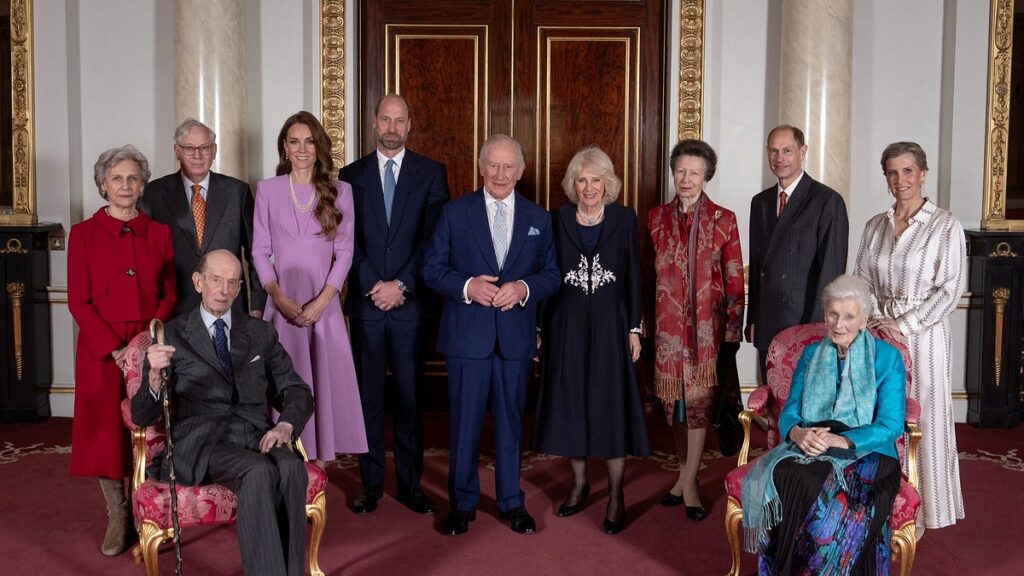
That circularity matters once you apply William’s proposed rule to the actual people it would touch. Eleven royals currently have palace accommodation tied to their duties, and two of them are the figures who make a blunt “non-working royals out” policy genuinely awkward: the Duke of Kent and Princess Alexandra, the late Queen’s first cousins, now 90 and 89.