
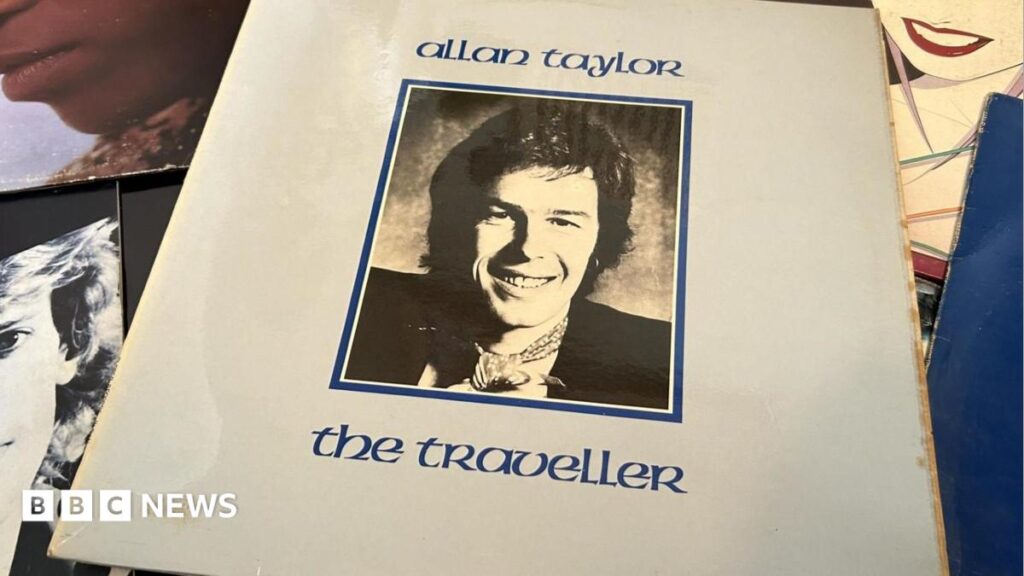
Although he had been writing and performing for years by that point, Taylor’s travels around Europe helped him truly find his voice in the early 1980s, he says. In fact, he can pinpoint the moment.
“I found my voice at about two o’clock in the morning in a bar in Brussels.”
After a gig, he looked around at “the bartender just wiping the glasses, and the joker who’s trying to get a drink out of everyone, and the street ladies”.
“I just sat there and I thought, everyone’s got a story here, and all I had to do is write it down. Which is what I did and called it Win or Lose, and that was the start of my own way.”
Taylor’s dramatic and poignant storytelling style combined European influences with folk and country. “It was my sound, and that started to make a big difference.”
His tone of voice matured, too, gaining a depth and wisdom that at times put him in the same league as Leonard Cohen and Johnny Cash.
Taylor re-recorded the title track from The Traveller (and the LP’s standout song Cold Hard Town) on his 1996 album Looking For You, with his now-signature style making the updated versions mellower and arguably better.
If Sheeran hasn’t discovered Taylor’s later catalogue yet, he should.
Perhaps a cover version could be on the cards. It’s Good To See You, also from The Traveller, has been covered more than 100 times – including by US country star Don Williams, Greek singer Nana Mouskouri and German folk veteran Hannes Wader.
That helped raise Taylor’s profile in northern Europe. Now, Warsaw, Bonn and Berlin are the cities with his most monthly listeners on Spotify.
Taylor says he is among the last of a generation of troubadours who experienced and wrote about the “romance of the road” from the 1960s, 70s and 80s.
“There’s not many of us left who can remember what happened or what we did and what it was like, and I think young people are interested,” Taylor says. “I think that’s why Ed is interested.”