
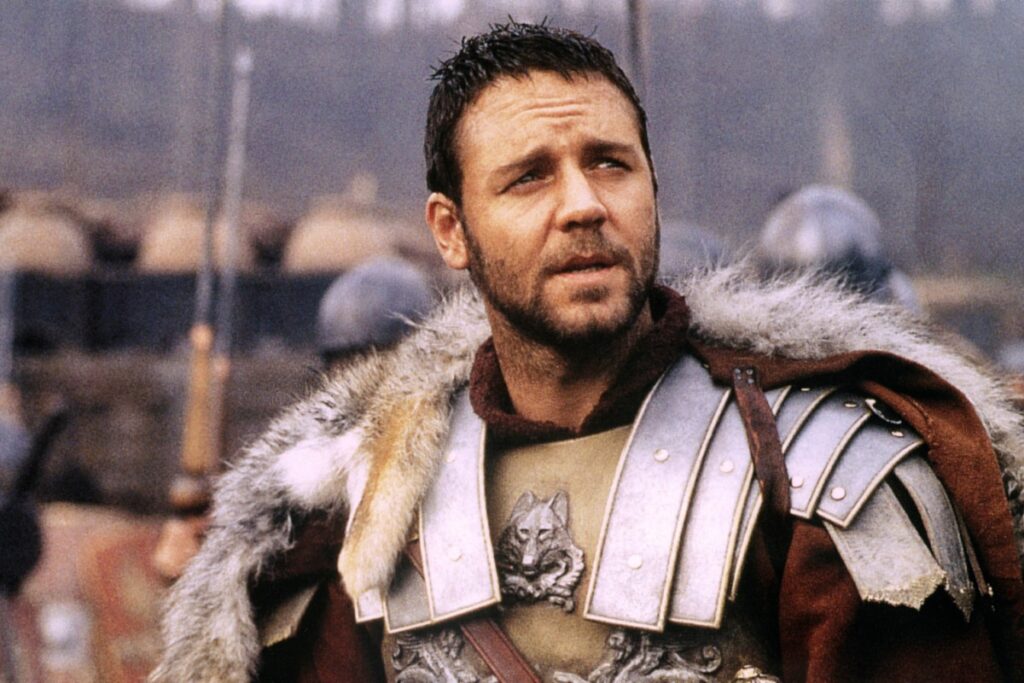
“There are only two rules,” Russell Crowe told students during a Taormina Film Festival masterclass in Sicily, where he also received a career achievement award. The actor boiled his advice down to attention to detail and collaboration, then used dance as a metaphor for how every role on a film set has to move in sync.
In Taormina, Sicily, Russell Crowe took the stage at the Taormina Film Festival with a career award in hand and a room full of students and young cinema enthusiasts listening closely. The masterclass quickly narrowed to what he called two essentials in cinema: “attention to detail” and “collaboration.” To make it stick, Crowe reached for a dance metaphor, insisting that filmmaking only works when everyone knows their steps and moves in sync.
A masterclass moment at the Taormina Film Festival
Some career advice lands softly, then stays with you for years. That was the mood when Russell Crowe stepped in front of students and young film hopefuls at the Taormina Film Festival in Sicily, where he was honored for his international body of work. Speaking plainly, the actor offered a compact lesson drawn from decades on sets big and small.
Crowe, now 62, has long been associated with large-scale storytelling, including Gladiator, but his tone here was more workshop than victory lap. He addressed the day-to-day realities that shape a performance, the parts of the job that happen long before a camera rolls.
Two rules: detail and collaboration
After the session, Crowe summarized his message with a line he said he gave the students: there are only 2 rules in cinema, attention to detail and collaboration. It is simple phrasing, but it points to two pressures every actor eventually meets. One is private, the other is shared.
Detail, as he framed it, is the quiet work of knowing what you are doing and why. It can be the rhythm of a line, the weight of a prop, or the logic of a character’s choice. When that preparation is missing, an audience may not name the problem, but they often feel it.
Why filmmaking always belongs to a team
Collaboration, in Crowe’s view, is not a courtesy. It is the basic operating system of a film set, where actors, directors, producers, cinematographers, and craftspeople depend on one another to make any scene function. This is the case whether you are leading the cast or delivering a single, crucial moment.
His point also widens the spotlight. An actor’s best work can be shaped by the lighting, the blocking, the costume choices, or the pace a director sets, and all of that happens through constant coordination, not solo inspiration.
The dance metaphor that makes it click
To make collaboration feel less abstract, Crowe reached for a metaphor: dancing with a partner. He was not arguing that performers need to become trained dancers, but that partner work teaches timing, space, and responsiveness, the same instincts that keep a scene alive (and keep a production moving).
Isn’t that what most of us want from a movie anyway, the sense that everyone on screen is listening? Crowe’s advice, shared publicly on June 22, 2026, suggests that longevity comes from treating every role like both a craft project and a group effort.