
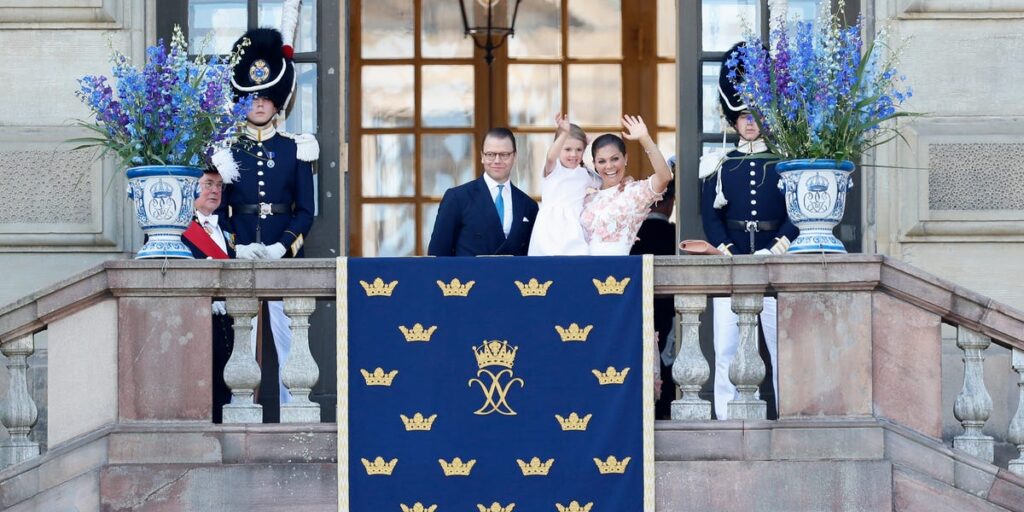
The Swedish monarchy is among the oldest in the world, right up there with the Danish royal family. With a lineage that traces over 1,000 years, going as far back as the Vikings, the throne is currently held by the House of Bernadotte.
Founded by common-born French military commander Jean-Baptiste Jules Bernadotte, the reigning dynasty is a true rags-to-riches story that begins in 1810, when the Swedish Parliament elected him as Crown Prince. After the childless Holstein-Gottorp monarch, King Charles XIII, died in 1818, Bernadotte took the name of Charles XIV John and ascended the throne. Thus marked the end of the Holstein-Gottorp dynasty and the beginning of the House of Bernadotte.
With that new royal title, the House of Bernadotte also inherited a number of palaces and royal residences, some of which they continue to use today. Below, ELLE Decor breaks down the palaces where Sweden’s current monarch, King Carl XVI Gustaf, and the rest of the House of Bernadotte live and entertain.
Stockholm Royal Palace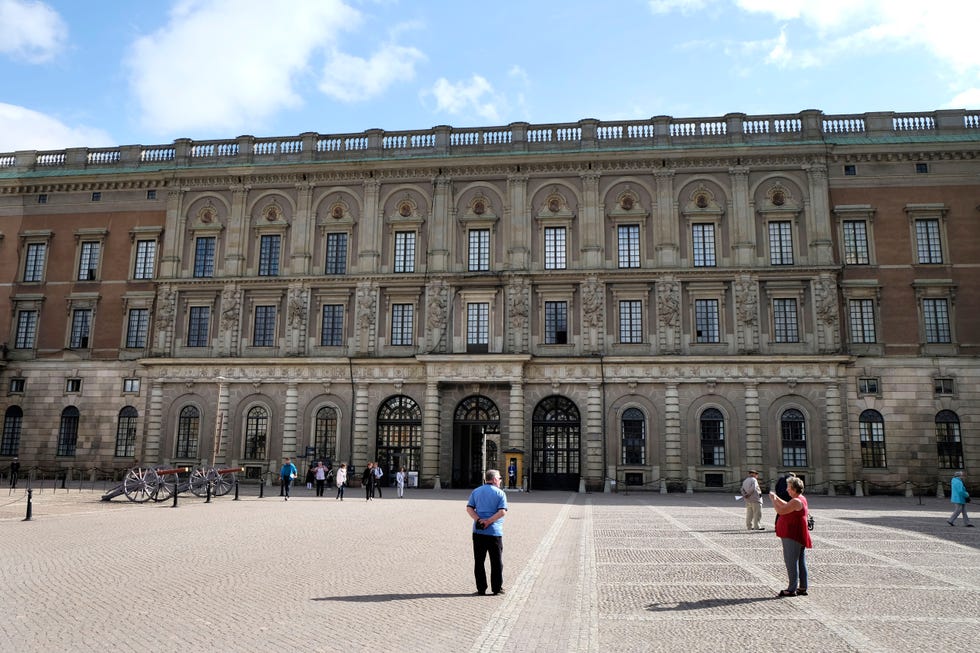 UCG//Getty Images
The exterior of Stockholm Royal Palace.
Also known as Kungliga slottet, the Stockholm Royal Palace functions as the workplace for the Swedish monarch. The Italian Baroque palace dates back to 1697, when architect Nicodemus Tessin the Younger began construction on a new royal estate to replace Tre Kronor castle, which had burned down earlier that year. Built on the ashes of the medieval fortress in Stockholm’s Old Town (Gamla stan), Kungliga slottet was officially finished in the mid-18th century by Carl Hårleman and Carl Fredrik Adelcrantz.
Today, it stands as one of the largest palaces in Europe, according to the official Kungliga slottet website—with over 600 rooms across 11 floors. Designed in a Baroque style, the facade features an ornate medley of cleanly carved brick and sandstone. Meanwhile, interior hallmarks include dramatically arched ceilings and sweeping marble staircases—all accented with plenty of intricate gilded gold detailing. It’s often used by the royal family for state visits and formal ceremonies.
Drottningholm Palace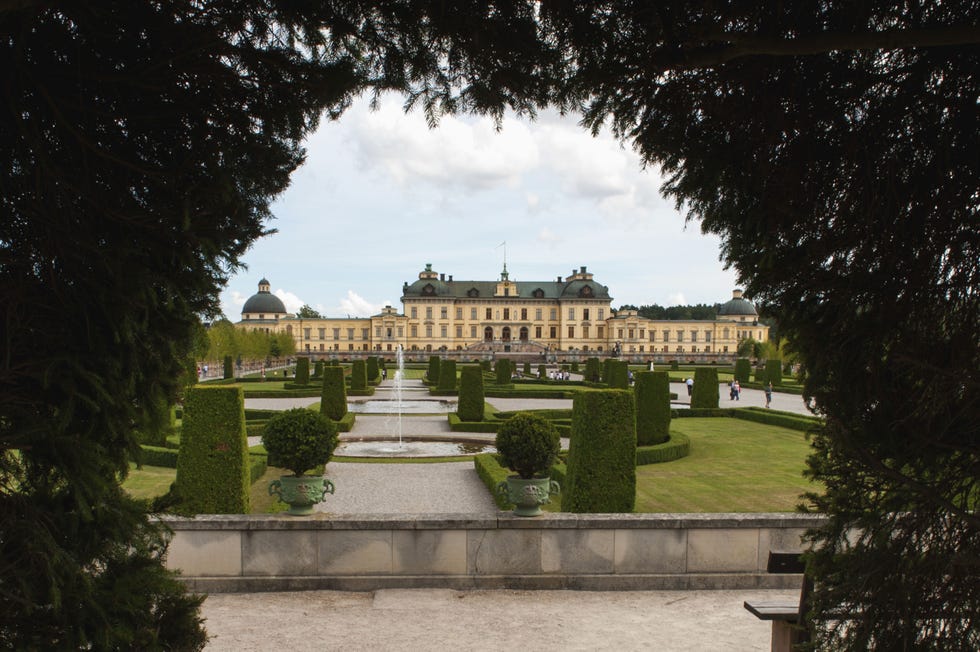 Design Pics Editorial//Getty Images
Exterior of Drottningholm Palace
If Stockholm Royal Palace is the Swedish monarch’s formal workplace, then Drottningholm Palace—located on the serene island of Lovön in Lake Mälaren, about ten miles west of Stockholm—is their private sanctuary. Drottningholm (which translates to “Queen’s Island”) was commissioned in the 17th century by Queen Hedvig Eleonora, after a fire destroyed the original Drottningholm Palace. She tapped Nicodemus Tessin the Elder, father to the same architect who started the design of Stockholm Royal Palace years later, to fashion her a new estate. Inspired by the Baroque grandeur of Versailles in Paris, the architect created a palace so resplendent, it would later become a UNESCO World Heritage Site.
According to the Swedish Royal Palaces website, Drottningholm remains one of the country’s best-preserved royal castles. Many of Nicodemus’s original interiors remain intact, along with the numerous additions made by future monarchs—such as the Drottningholm Slottsteater, which is the world’s only 18th-century theater that still uses its original hand-operated machinery, as well as the Rococo-meets-Chinoiserie Chinese Pavilion.
Gripsholm Castle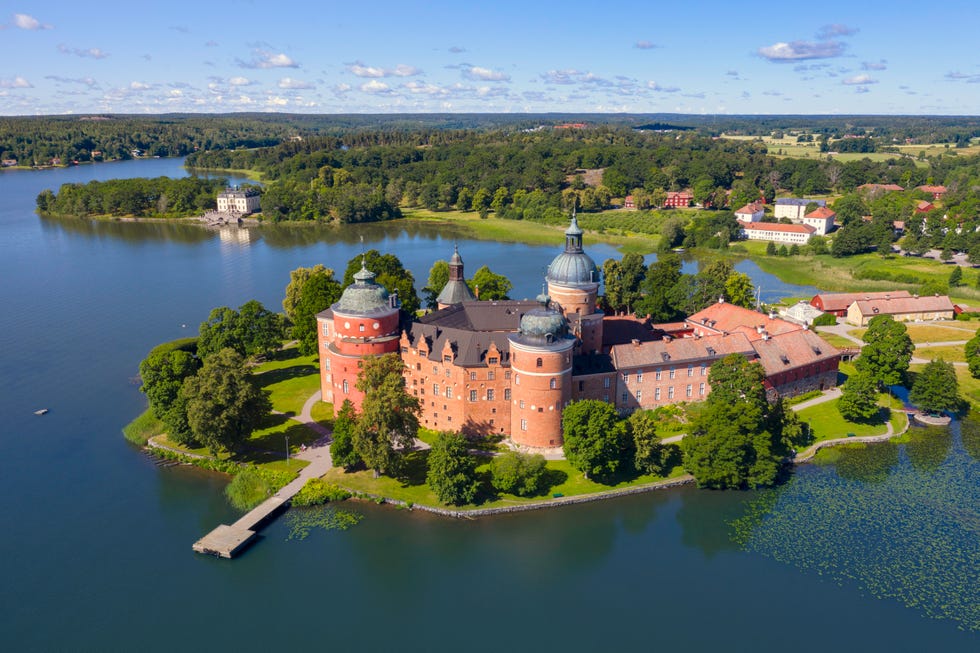 Marcus Lindstrom//Getty Images
An aerial shot of Gripsholm Castle.
Though Gripsholm remains part of the King’s real estate portfolio, it’s less a private royal residence and more of a Swedish cultural heritage site. Widely considered “one of the finest examples of Vasa Renaissance architecture,” the fortress was originally built by Bo Jonsson Grip sometime in the 14th century and later reconstructed under King Gustav into the current castle in the 16th century.
While the castle’s exterior remains its best-preserved aspect, the Swedish Royal Court states that some of the original interiors dating as far back as King Gustav I Vasa’s reign remain—including the dark-paneled and whimsically painted Duke Karl’s Chamber. Today, the castle functions largely as a museum.
Strömsholm Palace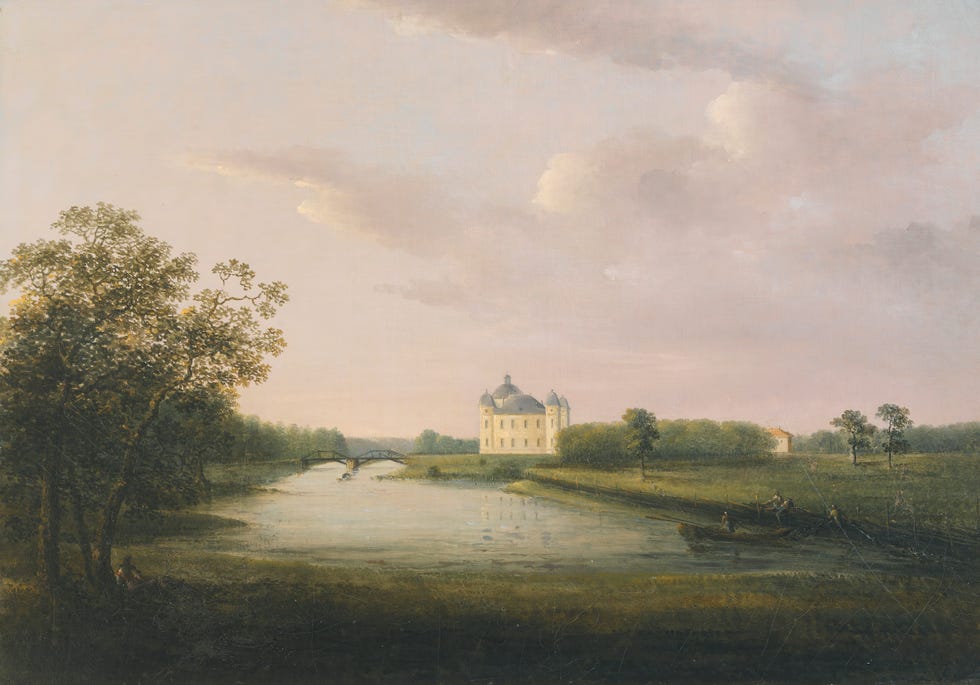 Heritage Images//Getty Images
A motif of Strömsholm with the palace in the distance.
Strömsholm was constructed during King Gustav Vasa’s reign in the 16th century, when the monarch built the estate on an island in the Kolbäck River. In the 1660s, Queen Dowager Hedvig Eleonora commissioned Nicodemus Tessin the Elder—who also worked on Drottningholm Palace—to create the palace we know today. These days, the property’s expansive meadows and fields are used for a riding college and animal hospital.
Stenhammar Castle
Long before Stenhammar became a royal Swedish residence, it was known as Slädhammar—a sprawling countryside estate in Flen from the 14th century. The current structure was built in 1658 by its then owner, Baron Johan Rosenhane, who renamed the property Stenhammar. The castle was sold to various owners in the years that followed, until it ultimately fell into the hands of Robert von Kræmer in 1870. When von Kræmer died in 1903 with no heirs, he left the palace in the hands of the state—stating in his will that “Stenhammar should be leased for life to a prince of the Royal Court with succession rights to the throne.”
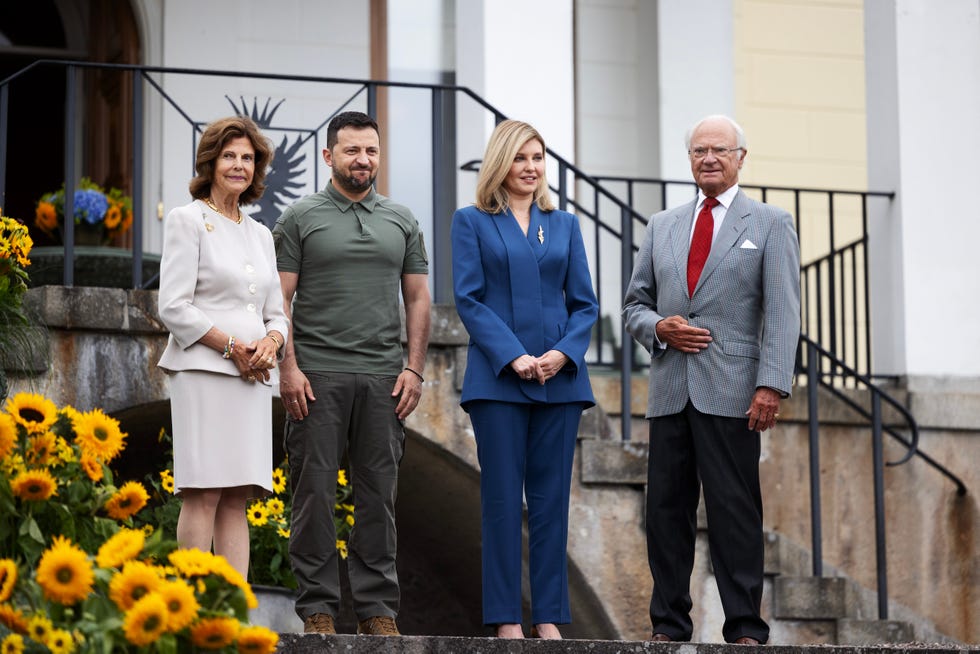 Nils Petter Nilsson//Getty Images
Queen Silvia and King Carl XVI Gustaf receiving Ukrainian President Volodymyr Zelensky and his wife Olena Zelenska.
As such, the estate went to Prince Wilhelm, with King Carl XVI Gustaf ultimately taking over the lease. Today, King Carl and his wife, Silvia, occasionally use the home as a countryside retreat, and even fully moved into the property to self-isolate during the onset of the pandemic. More recently, the king and queen used the palace while hosting Ukrainian President Volodymyr Zelensky and his wife, Olena, during a 2023 visit.
Tullgarn Palace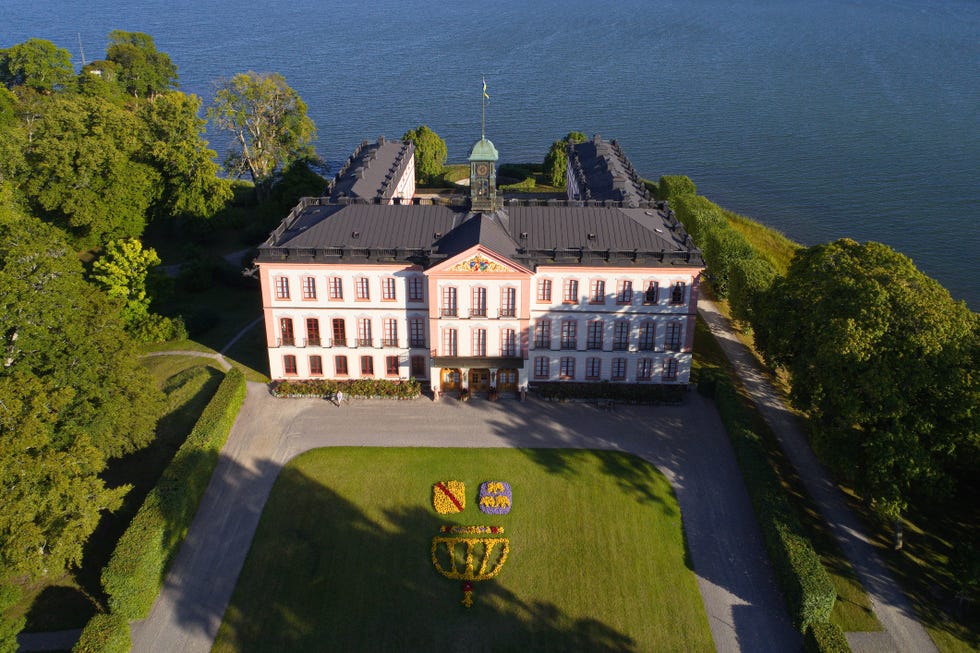 Roland Magnusson//Getty Images
Aerial shot of Tullgarn Palace.
Tullgarn became part of the royal portfolio in 1772, when the Swedish parliament acquired the property for King Gustav III’s youngest brother, Duke Fredrik Adolf. Its proximity to the Baltic coast made it an ideal summer palace, and it became a favorite retreat of Crown Prince Gustav and Crown Princess Victoria in the 19th century.
The Swedish Royal Court describes the palace’s interiors as “among the finest Gustavian interiors in the country”—influenced in large part by Fredrik’s travels to France and Italy, as well as Victoria and Gustav’s own travels and souvenirs. The rooms are brimming with elegant details, from the intricate door-lintel ornamentation and ceiling friezes in the Red Drawing Room to a charming breakfast room designed by Victoria and Gustav to evoke the warmth of a traditional German tavern.
Rosendal Palace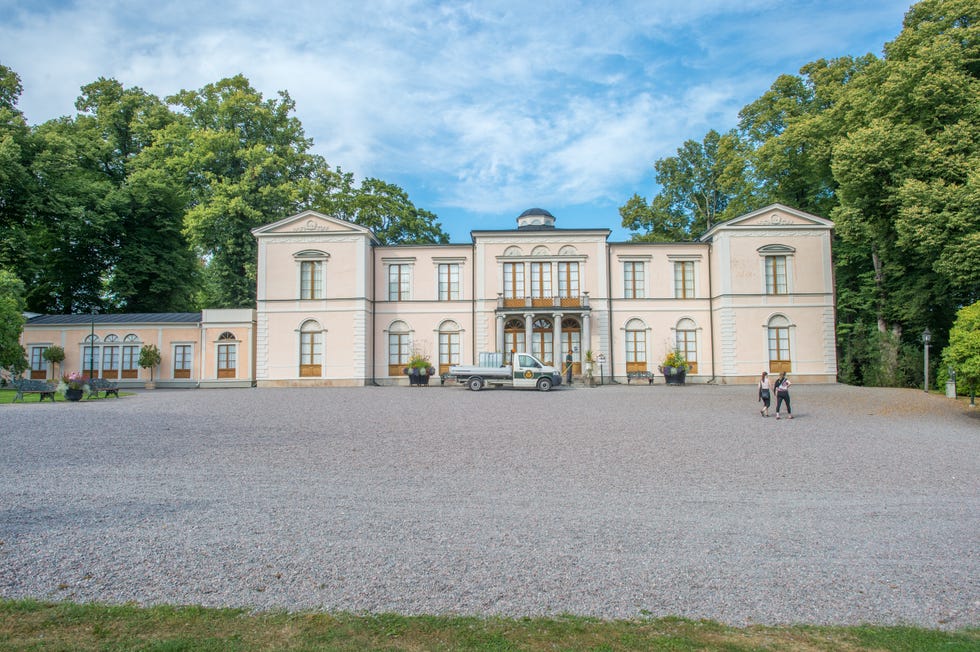 Rolf_52//Getty Images
Exterior of Rosendal Palace.
Located on Sweden’s island of Djurgården, Rosendal Palace was the first of a few things: It was one of the first homes built for Karl XIV Johan, the first of the modern Bernadotte line. Designed by Fredrik Blom in the 19th century, the villa also ushered in the Swedish Empire style, a Swedish version of the French Empire style that would come to be associated with King Karl Johan.
Haga Palace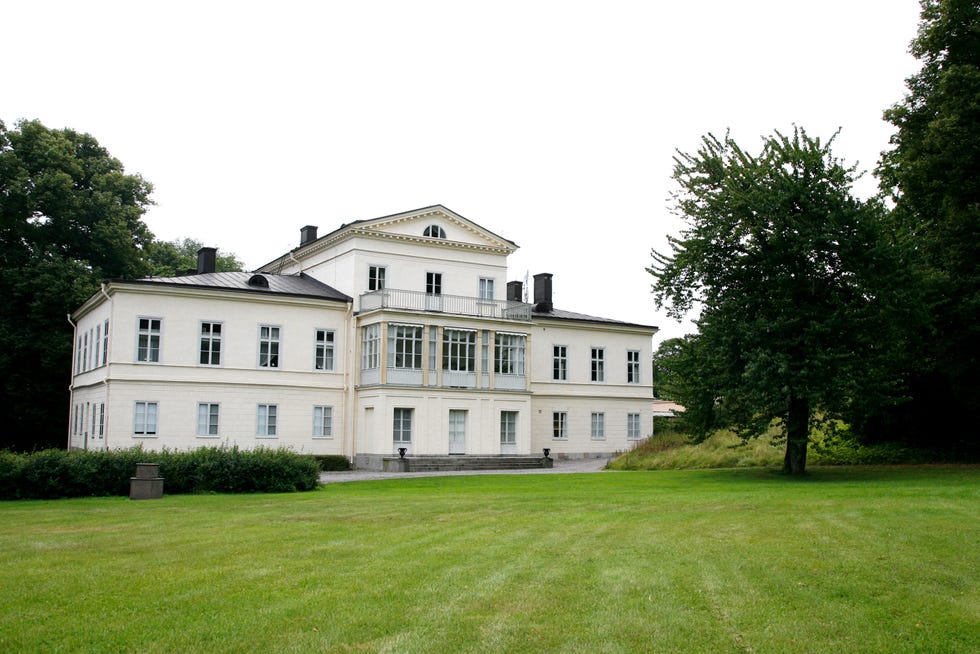 Christopher Hunt//Getty Images
Exterior of Haga Palace.
Though much of Drottningholm Palace is open to the public, the Swedish royal family’s other private residence, Haga Palace, remains more exclusive—with photographs of the grounds strictly prohibited. Located north of Stockholm in the sprawling Haga Park, the residence’s understated design stands in contrast to some of the other royal estates. When King Gustav IV Adolf commissioned the palace in 1802, he eschewed the grand Rococo and Baroque styles that made Drottningholm and Stockholm Royal Palace so recognizable, instead opting for an elegantly restrained Neoclassical pavilion.
According to the Daily Express, the Swedish government briefly used the palace to receive foreign guests in the 1960s. It was transferred back to the king in 2009 and then underwent renovations so Crown Princess Victoria and her husband could move in. The princess, prince, and their two children have lived at the 41-room residence ever since. Though Haga remains off-limits to the public, Victoria and her family have shared the occasional image of the family home. Images published by the Daily Express in 2021 showcase clean and airy interiors balanced with a cozy countryside flair.
Ulriksdal Palace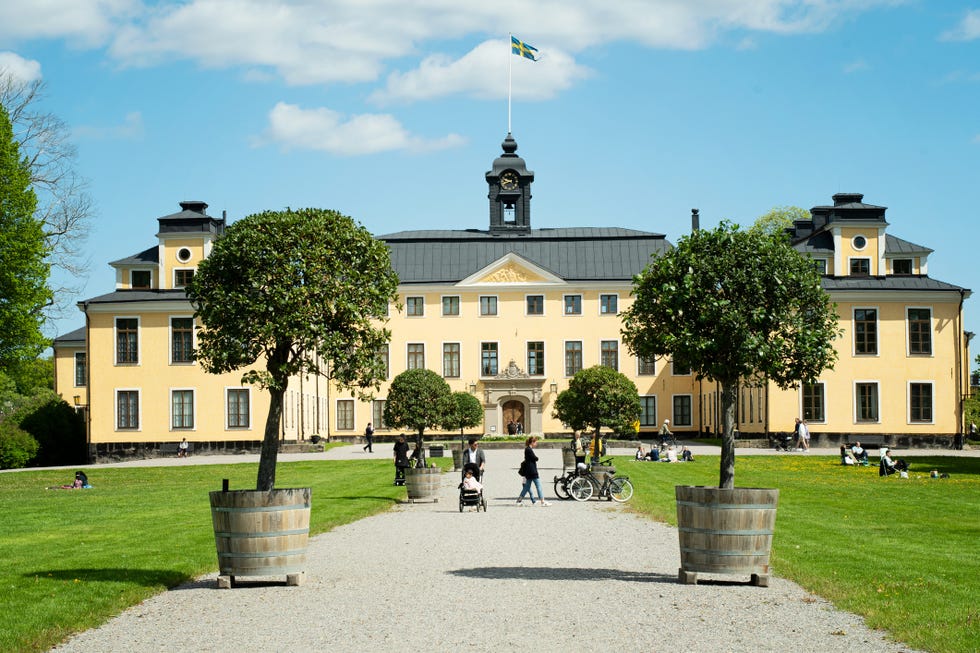 Susie Hedberg//Getty Images
The exterior of Ulriksdal Palace.
Ulriksdal Palace has taken many different forms since it was first constructed in the mid-17th century. Originally known as Jacobsdal, the estate was built as a Renaissance-style house for the most powerful man in the country, Constable of the Realm Jacob De la Gardie. Queen Dowager Hedvig Eleonora later bought the property in 1669 and gave it to her grandson Prince Ulrik, at which point the palace became known as Ulriksdal.
Royals stopped residing at the palace in the years that followed, until it fell back into the hands of Crown Prince Karl XV in the 18th century. He sought to model the property into a “romantic mediaeval castle,” according to the Swedish Royal Court website. Those interiors underwent changes in the 1920s to reflect the Swedish classicism design that was popular at the time.
Rosersberg Palace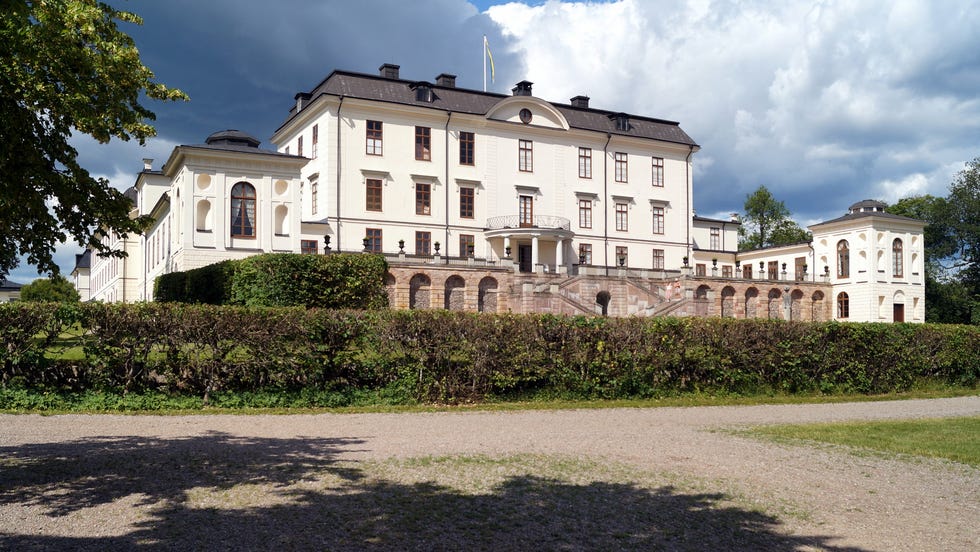 ARK NEYMAN//Getty Images
Exterior of Rosersberg Palace.
First built in the 1630s in the vision of the German-Dutch Renaissance style and later modernized with Baroque details, Rosersberg is a palace that appears frozen in time. The property has remained largely untouched since its last residents, King Karl XIV Johan and Queen Desideria, died in the 19th century.
Solliden Palace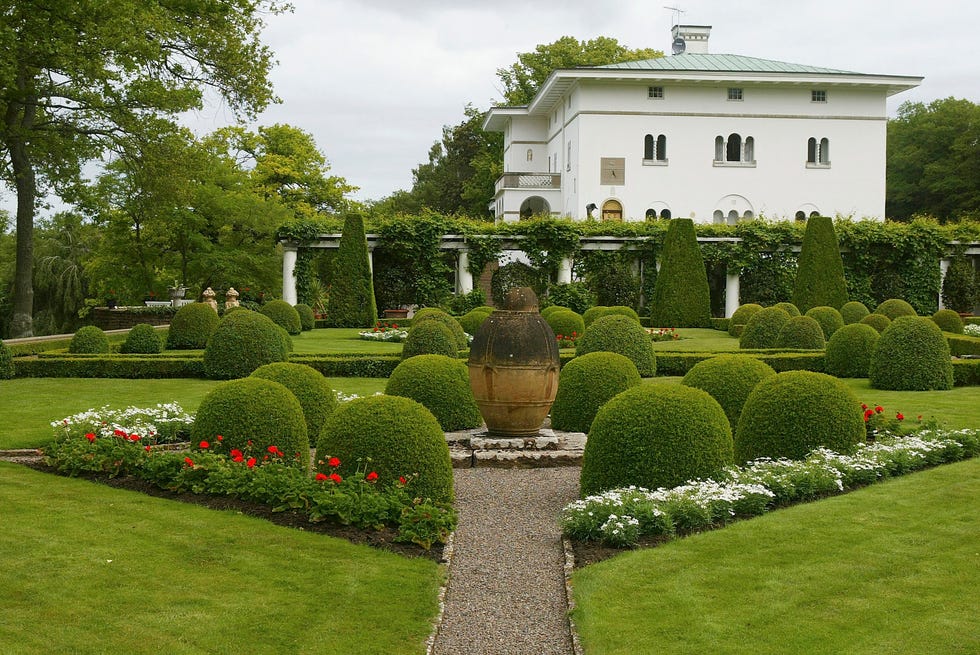 Pascal Le Segretain//Getty Images
Exterior of Solliden Palace.
Located on the southern Swedish isle of Öland, Solliden serves as the royal family’s summer retreat and where the family gathers to take their annual summer portrait. It was originally built by the current king’s great-grandmother, Queen Victoria, in 1903 to aid the monarch’s declining health. Working with the architect Torben Grut, who would later work on Sweden’s 1912 Olympic stadium, the queen modeled the airy island sanctuary after Axel Munthe’s hilltop, oceanside paradise, Villa San Michele, on Capri. She sourced Italian statues, and even collected tile stoves to sprinkle throughout the seaside family home.
The villa-inspired vacation spot has been passed down through the royal family ever since, making it a personal property of the royal family. Though the palace itself remains a private residence, Victoria’s husband King Gustaf V opened the grounds’ verdant gardens to the public upon his wife’s passing in 1930. The 36-acre estate offers a lush landscape, divided into individual areas inspired by various regions. There’s the bucolic English Park, filled with sprawling lawns, plus a Renaissance-inspired Italian garden that offers a romantic getaway, complete with a waterfall that seamlessly trickles into the Dutch Garden.