
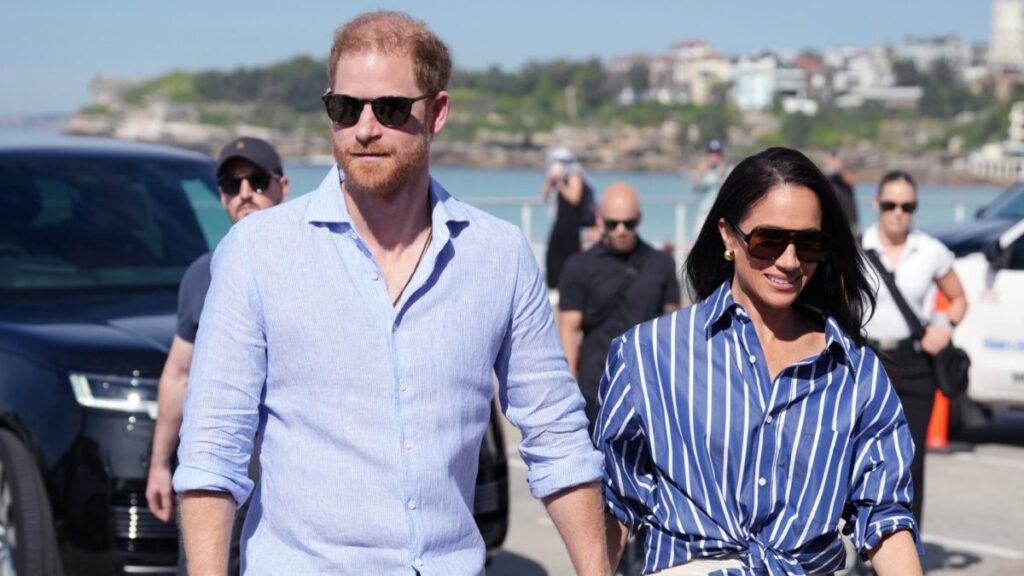
With Prince Harry due to arrive in Britain next month, the familiar row over his security entitlements has resurfaced. It is believed that the Duke of Sussex is reconsidering bringing his wife Meghan and two children, Lilibet and Archie, to the UK after his request for police protection was rejected.
Supporters argue he remains uniquely vulnerable. Critics point out that he chose to stop being a working royal and cannot expect the same privileges to continue indefinitely. However, this time, there is a significant new piece of detail that changes the equation – and answers the question of who should pay for it.
Buckingham Palace has, for the first time, disclosed the King’s personal tax payments: £12.9m in the last financial year alone, more than £30m since Charles succeeded his mother. With an estimated personal fortune at around £1.8bn, and with the Duchy of Lancaster producing tens of millions in annual revenues, the King’s financial position has never been clearer. This prompts an obvious question: why is he not paying privately to protect his son, his wife and grandchildren?
According to The Sun, the King has indeed offered to help, while other reports claim Harry is having second thoughts about his family accompanying him on the trip. If both claims are true, it seems the offer wasn’t enough.
This is no longer really an argument about whether taxpayers should foot the bill. Nor is it about whether Harry has enough money and should fund it himself. Thanks to Netflix, Spotify, Penguin Random House, inheritance and other ventures, the Duke and Duchess of Sussex are themselves thought to be worth many tens of millions of pounds. The point is that neither of those facts addresses the central issue.
Harry’s security risk exists because he was born into the Royal Family, it is not dependent on whether he undertakes engagements on its behalf. He stopped being a working royal, but he did not stop being Princess Diana’s or the King’s son. He did not stop being one of the most recognisable people on the planet. Anyone intent on harming a member of the Royal Family is unlikely to concern themselves with the distinction between “working” and “non-working” royal before choosing a target.
That’s why this increasingly feels less like a constitutional issue and more of a family one. Charles has the private means to ensure his son and grandchildren receive appropriate protection without asking the British public to pay a penny. The cost would be negligible relative to his wealth.
There may be practical reasons. Palace officials may argue that funding Harry’s security privately would blur constitutional boundaries or create awkward precedents – both valid concerns. But, surely, they are ultimately outweighed by something simpler. A father who possesses extraordinary private wealth can materially reduce the risk faced by his son because of the family into which that son happened to be born. Most fathers would not hesitate.
Charles has worked hard to project an image of a more compassionate, emotionally intelligent institution than previous generations. This decision sits uneasily with that ambition.
You do not have to admire every decision Harry has made to reach that conclusion. You may think Spare was self-indulgent, the Netflix series and the public family rows deeply regrettable. None of that changes the reality that his security profile is unique. Nor does it absolve a father of moral responsibility, simply because his adult son no longer works in the family business.
The King’s newly disclosed finances have unexpectedly stripped away the argument about affordability. What’s left is a question of will. And that is a much harder one for Buckingham Palace to answer.